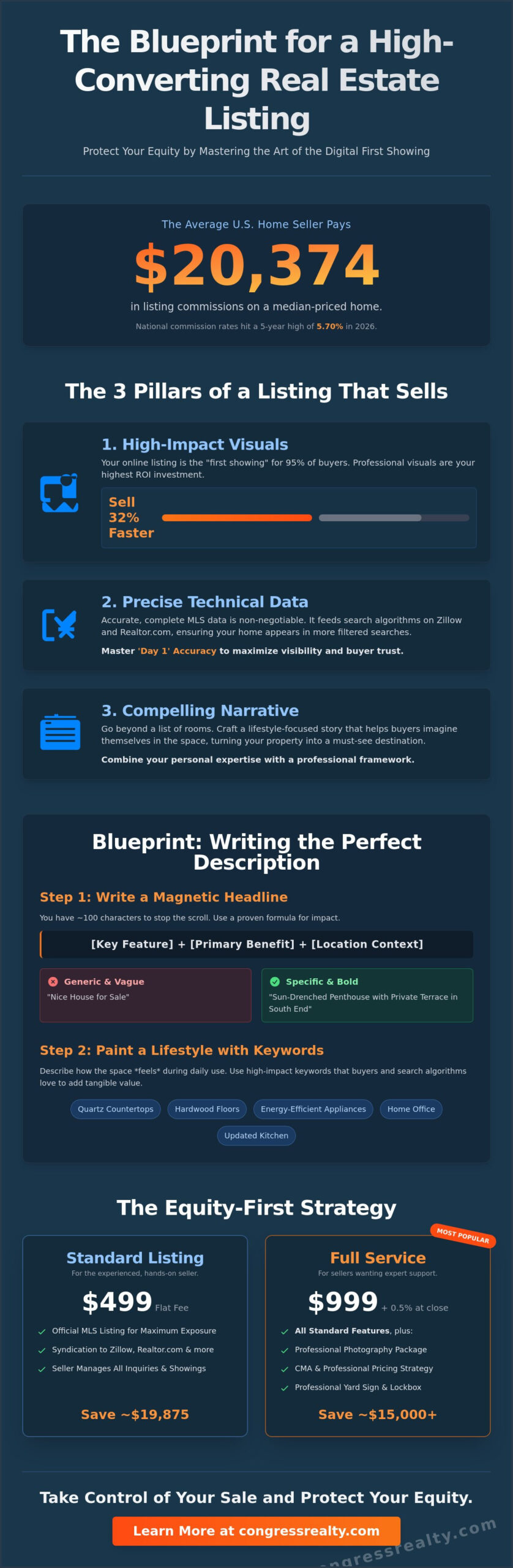
In 2025, the median FSBO home sold for $55,000 less than agent-assisted properties, a staggering gap that often wipes out the very commission savings you are trying to protect. This equity loss happens because most owners don’t know how to price your home for sale fsbo using the same professional databases and logic that the industry pros use. You have likely felt the anxiety of staring at conflicting online valuations while worrying your home might sit on the market for months. It is a valid fear; with median listing prices down 2.7% year-over-year as of June 2026, there is no room for pricing errors.
This guide empowers you to master the art of property valuation so you can maximize your profit and sell faster. We will show you how to leverage a professional Comparative Market Analysis (CMA) to find your home’s true “sweet spot.” You are about to learn how to weaponize market data to trigger a bidding war, ensuring you keep your hard-earned equity and that full 3% listing commission in your own pocket. We will walk through the exact steps to interpret current inventory levels and set a price that forces buyers to act immediately.
Key Takeaways
Identify your highest leverage point by mastering the “Initial Listing Window” and setting a psychological baseline that controls future negotiations.
Learn the professional method of filtering historical “Sold” data against current “Active” competition to build a data-backed price bracket.
Discover how to price your home for sale fsbo using strategic models like “Event Pricing” to intentionally drive buyer demand and multiple offers.
Gain clarity on the “Cost vs. Value” reality to avoid overestimating the impact of home improvements on your final asking price.
Replace inaccurate automated online estimates with a professional Comparative Market Analysis (CMA) to secure the most precise valuation possible.
The High Stakes of FSBO Pricing: Why Day One Matters
The first 14 days your home is live on the market represent your highest leverage point. This “Initial Listing Window” is when your property is a “New Listing,” triggering automated alerts to thousands of motivated buyers who have saved searches in your area. If you miss this window by overpricing, you lose the momentum that drives bidding wars. Knowing how to price your home for sale fsbo requires understanding the Anchoring Effect. This psychological principle means your initial asking price becomes the mental baseline for every negotiation that follows. If you anchor too high, buyers simply walk away; if you anchor correctly, you create a sense of value that forces immediate action.
Many sellers fall into the trap of “testing the market” with an inflated price. This is a dangerous gamble. In a rebalancing market where median listing prices dropped 2.7% year-over-year in June 2026, overpricing usually leads to chasing the market down with successive price cuts. These cuts often end in a lower final sale price than if the home had been priced correctly from the start. A precise, data-backed price signals to buyers that you are a professional and serious seller. When you list as For Sale By Owner (FSBO), your price is your first and most important marketing tool. It proves you’ve done the homework and aren’t just guessing at your home’s worth.
The ‘Stale Listing’ Trap
Your Days on Market (DOM) is a public clock that works against you. Once a listing passes the 30-day mark without an under-contract status, buyer perception shifts from excitement to suspicion. This is when “vulture buyers” emerge. These are opportunistic shoppers who target stale listings with aggressive low-ball offers, assuming the seller is now desperate to move. You can avoid this by understanding Market Velocity. Market Velocity is the speed at which homes in your specific tier are currently selling.
The Psychology of Price Brackets
Modern buyers don’t browse; they filter. Major portals like Zillow and Realtor.com use $25,000 or $50,000 increments for their search tools. If you price your home at $505,000, you are invisible to every buyer who capped their search at $500,000. Pricing at $499,000 instead of $505,000 isn’t just about a $6,000 difference; it’s about potentially doubling your pool of views. Using “just under” pricing is a tactical maneuver that ensures you appear in the maximum number of search results while still capturing the attention of those searching in the next bracket up.
How to Conduct a Professional Comparative Market Analysis (CMA)
Success starts with data, not a “gut feeling” or a generic online estimate. To understand how to price your home for sale fsbo, you must look at the market through the eyes of an appraiser. This means conducting a Comparative Market Analysis (CMA) that focuses on four key pillars: sold, active, pending, and parity. You need to stay within a strict 1-mile radius of your property and only compare homes with similar architectural styles. A ranch-style home doesn’t compare to a three-story Victorian, even if they share the same zip code. By narrowing your focus, you eliminate the noise and find the true value of your equity.
Historical data tells you where the market has been, but active listings tell you where it is going. In 2026, with national housing inventory up 1.8% year-over-year, buyers have more choices than they did in previous seasons. You aren’t just selling a house; you’re competing for a limited pool of qualified buyers who are carefully weighing every option. Analyzing pending sales is your secret weapon here. While sold data might be 90 days old, a pending sale reflects what a buyer was willing to pay just last week. This real-time sentiment is the most accurate indicator of whether your pricing strategy will trigger immediate offers.
Step 1: Selecting Your Core Comps
Professional agents use the “Rule of Three” to build a reliable valuation. You should identify three sold properties from the last 3-6 months to establish a historical baseline. Next, find three active listings to see who you’re competing with today. Finally, track three pending sales. These represent the most recent buyer sentiment and current price points. Ensure your comps have a square footage within a 10-20% margin of your own. Don’t include “outlier” sales, such as distressed foreclosures or family-to-family transfers, as these don’t reflect the broader market trends that will affect your sale.
Step 2: Analyzing the Data Points
Once you have your nine core comps, calculate the average Price per Square Foot (PPSF). This metric helps you normalize differences in home size across your bracket. You must also adjust for “Time on Market.” If a comp sold in 48 hours six months ago when inventory was lower, it might have commanded a premium that isn’t available in today’s rebalancing market. To get this right, you need to learn how to read the list of multiple listing services data just like a licensed broker would. This level of detail ensures you aren’t leaving money on the table or scaring away qualified buyers with an unrealistic number.
Analyzing these data points manually can feel overwhelming, but it’s the only way to maintain control over your profit. If you want to ensure your strategy is bulletproof, consider using a professional Comparative Market Analysis (CMA) to verify your findings against the most current MLS records. This professional infrastructure gives you the same advantage as a traditional listing agent without the high commission costs.
Fine-Tuning: Adjusting for Property Nuances and Upgrades
Establishing your baseline through a CMA is only half the battle. To truly understand how to price your home for sale fsbo, you must account for the specific nuances that make your property unique. Many sellers fall into the emotional trap of the “Cost vs. Value” fallacy. Just because you spent $50,000 on a high-end kitchen remodel in 2024 doesn’t mean you can automatically add $50,000 to your asking price. Real estate valuation isn’t a 1:1 reimbursement scheme; it’s a measure of market demand. You’re looking for the price that reflects your home’s utility relative to the active competition you identified in the previous step.
Your lot also dictates your price ceiling. A corner lot, a cul-de-sac location, or a home backing into a greenbelt commands a “Lot Premium” that can shift the needle by several percentage points. Conversely, you must objectively quantify the “Condition Gap.” If your roof or HVAC system is nearing the end of its functional life, buyers will spot it immediately. High-quality Professional Photography helps justify a higher tier price by framing these nuances in the best possible light, but your final number must still respect the physical reality of the structure.
The Upgrade Multiplier
Not all improvements are created equal. When adjusting your price, use a weighted list: kitchens and primary bathrooms offer the highest return, followed by flooring and then landscaping. If an upgrade is older than five years, you must apply a depreciation lens; what was “designer” in 2020 is merely “standard” today. Buyers value move-in readiness more than specific high-end finishes. Focus your pricing strategy on the fact that your home requires zero immediate capital from the new owner, which is a powerful psychological lever in a high-interest rate environment.
Repair Deductions
Be brutal when evaluating your home’s flaws. Smart sellers use the “Double Deduction” rule: buyers don’t just deduct the $5,000 cost of a new water heater; they deduct $10,000 to account for the “hassle factor” of managing the repair. This is why fixing minor cosmetic issues, like scuffed baseboards or dated light fixtures, offers the highest ROI on your listing price. You must evaluate your property through the eyes of a professional appraiser who is looking for reasons to devalue the asset. By pre-empting these deductions with a realistic price or a quick fix, you protect your equity from aggressive post-inspection negotiations.
Three Strategic Pricing Models for FSBO Sellers
Selecting the right pricing model is the final step in learning how to price your home for sale fsbo. Your choice depends entirely on your local inventory levels and your personal timeline. In a rebalancing 2026 market, you cannot afford to be passive. You must choose a strategy that dictates how buyers perceive your property’s value from the moment it hits the MLS. Secure your equity today by choosing a Standard Listing that puts you in total control of which strategy you deploy.
There are three primary frameworks for FSBO success:
Model 1: Event Pricing (The “Bidding War” Strategy). You intentionally price your home 5% to 7% below the fair market value established in your CMA. This creates a high-volume “event” that drives multiple offers and forces buyers to compete against each other rather than negotiating against you.
Model 2: Fair Market Strategy (The “Steady” Approach). You price exactly at the midpoint of your data bracket. This strategy is best for sellers who want a predictable, professional transaction and have the 30 to 45 days required for a standard market cycle.
Model 3: Premium Strategy (The “Unique Asset” Approach). This is reserved for properties with features that have no direct competition, such as a double lot or historical significance. You price 5% above the highest comp, but you must be prepared for a longer time on market.
When to Use the Bidding War Strategy
The “Event Pricing” model is high-octane, but it requires specific market conditions. Check your local inventory; with national active listings up 1.8% in June 2026, this strategy only works if your specific neighborhood has less than a three-month supply of homes. To make this work, set a “Review Date” for all offers, usually five to seven days after the listing goes live. This creates artificial urgency. Be aware of the “Low Appraisal” risk. If a bidding war pushes the contract price significantly above your CMA data, the buyer’s bank may not fund the full amount, requiring the buyer to bring extra cash to the table.
The Pivot: When and How to Drop Your Price
The market provides immediate feedback. If you don’t receive a written offer within the first 14 days, your pricing strategy has failed. Use the “Rule of 10” to diagnose the problem: if you have had 10 showings and zero offers, the market is telling you your price is at least 5% too high. You must execute a price drop decisively. Don’t “nickel and dime” the market with small $2,000 reductions. Instead, make one significant move that puts you into a new search bracket. Use the How to Sell Your House Without a Realtor framework to manage this timeline effectively and keep your momentum alive.
Leveraging Professional Tools for Pricing Precision
Stop relying on generic algorithms that don’t live in your neighborhood. While automated valuation models provide a rough starting point, they lack the nuance required for a successful equity-first sale. Learning how to price your home for sale fsbo with precision means moving beyond “Zestimates” and into the world of professional brokerage data. You need tools that reflect the rebalancing 2026 market in real time, not based on data from three months ago. With median listing prices down 2.7% year-over-year as of June 2026, using outdated information is a recipe for a stale listing.
Professional precision is about more than just a number; it’s about the infrastructure that supports that number. You have already done the hard work of analyzing comps and adjusting for upgrades. Now, you must verify those findings using the same databases that appraisers and lenders use to validate home values. This final step ensures that once you find a buyer, the deal actually closes at your chosen price point without being derailed by a low appraisal or aggressive post-inspection demands.
Professional CMA vs. Zestimate
Automated “Zestimates” often lag behind actual market shifts by 60 to 90 days. In a fluctuating market where inventory is up 1.8%, a three-month delay can lead to a price that is dead on arrival. A professional Comparative Market Analysis (CMA) provides human-verified data that accounts for recent local changes that an algorithm simply cannot see. You can request a professional CMA directly through our platform to cross-reference your own research. This gives you the confidence to stand firm during negotiations, knowing your price is backed by the most current industry data available.
The Power of the MLS in Pricing
The most powerful research tool in real estate isn’t a consumer app; it’s the Multiple Listing Service (MLS). When you use Congress Realty’s Standard Listing, you gain the professional infrastructure used by traditional agents. This access allows you to see “Sold” data that isn’t always public, including seller concessions and actual closing dates. You can also track the “Back on Market” history of your competition. If a nearby home fell out of escrow twice, that tells you something about the local appraisal environment or common inspection hurdles in your area. Managing your listing directly through the MLS allows you to react to market feedback instantly, adjusting your strategy before your listing loses its “new” status.
Finalizing your price requires a blend of hard data, intuition, and an understanding of current market velocity. Use your calculated PPSF as the anchor, but stay flexible enough to respond to the foot traffic your listing generates. Once you are under contract, our Transaction Management service ensures that your price holds through the appraisal and inspection phases. This professional support prevents buyers from chipping away at your equity after the initial excitement of the sale has faded. You remain in command of the process, supported by the tools and expertise needed to maximize your final profit.
Take Command of Your Equity Today
You now have the framework to transform your home from a simple listing into a high-demand market asset. By mastering how to price your home for sale fsbo, you’ve moved beyond the guesswork of automated estimates and into the realm of professional-grade valuation. You understand how to weaponize the initial listing window, filter raw data through a CMA, and select a pricing model that dictates buyer behavior. Pricing is no longer a source of anxiety; it is your most powerful tool for a fast and profitable sale.
Ready to put your strategy into action? Get a Professional CMA and List on the MLS for a Flat Fee to access the same industry databases the pros use. Congress Realty has spent over 20 years empowering sellers to bypass the traditional 3% listing commission while providing the professional infrastructure needed for success. Every listing includes professional CMA support to ensure your chosen price point is backed by real-time market data. You have the knowledge and the strategy to succeed. Now, it’s time to take control of your financial future and let the market work for you.
Frequently Asked Questions
Should I price my home higher to leave room for negotiation?
No, you should not price your home higher just to leave room for negotiation. Overpricing kills your Initial Listing Window momentum and often leads to the stale listing trap. In the June 2026 market, where national listing prices have dropped 2.7% year-over-year, buyers are hunting for immediate value. A correctly priced home often triggers a bidding war. This gives you more leverage than a high price that causes your property to sit until it loses its appeal.
How do I know if my FSBO listing price is too high?
Use the “Rule of 10” to diagnose your pricing strategy quickly. If you have had 10 showings but zero offers, the market is signaling that your price is likely at least 5% too high. Additionally, if your home has been active for more than 14 days without an offer while local inventory is up 1.8%, you are likely overpriced. Monitoring market velocity helps you decide how to price your home for sale fsbo effectively during the critical first two weeks.
Can I change my listing price after the house is on the MLS?
Yes, you have full control to change your listing price at any time once your home is on the MLS. One of the primary benefits of managing the process yourself is the ability to react to market feedback instantly. If you notice a lack of showing requests or if a new competitor enters the market at a lower price point, you can update your listing to remain competitive. Decisive adjustments prevent your property from becoming a stale listing.
Does a professional appraisal help in setting a FSBO price?
A professional appraisal provides a solid baseline for your home’s structural value, but it is often a backwards-looking tool. Appraisers use historical sold data, while a Comparative Market Analysis (CMA) includes active and pending listings to capture real-time market sentiment. While an appraisal can reassure you of the property’s worth, a CMA is more effective for choosing a strategic entry price that triggers buyer action in a fluctuating or rebalancing market.
How much does a Comparative Market Analysis (CMA) typically cost?
You don’t need to pay an extra fee for a Comparative Market Analysis when you use a professional listing service. We include a professional CMA as part of our Standard Listing package to ensure your pricing is accurate from day one. While some independent providers might charge for standalone reports, we believe this data is essential infrastructure for every seller who wants to maximize their final profit without paying a traditional commission.
What happens if my home doesn’t appraise for the agreed-upon sale price?
If your home doesn’t appraise for the contract price, you face an appraisal gap. The buyer’s lender will only fund up to the appraised value, which means the buyer must cover the difference in cash or you must lower your price. If neither party can agree, the deal may fall through. Using a professional CMA to set a realistic price helps minimize this risk before you even sign a contract with a buyer.
Is it better to price at a round number or use the ‘.99’ strategy?
It is better to use bracket pricing that aligns with search filters on major portals like Zillow or Realtor.com. Pricing at $499,000 instead of $500,000 captures buyers searching in the $450,000 to $500,000 range. While the “.99” strategy is common in retail, real estate success depends on search visibility. Choose a number that puts your home in front of the largest possible pool of qualified buyers based on standard search increments.
How do I handle buyers who ask for a ‘FSBO discount’ because there is no agent?
Handle “FSBO discount” requests by standing firm on your data-backed market value. Explain that your asking price is based on professional comp data, not on the absence of a listing agent. Learning how to price your home for sale fsbo correctly gives you the authority to defend your equity. The commission savings are your reward for managing the sale; they are not a credit for the buyer to claim during negotiations.
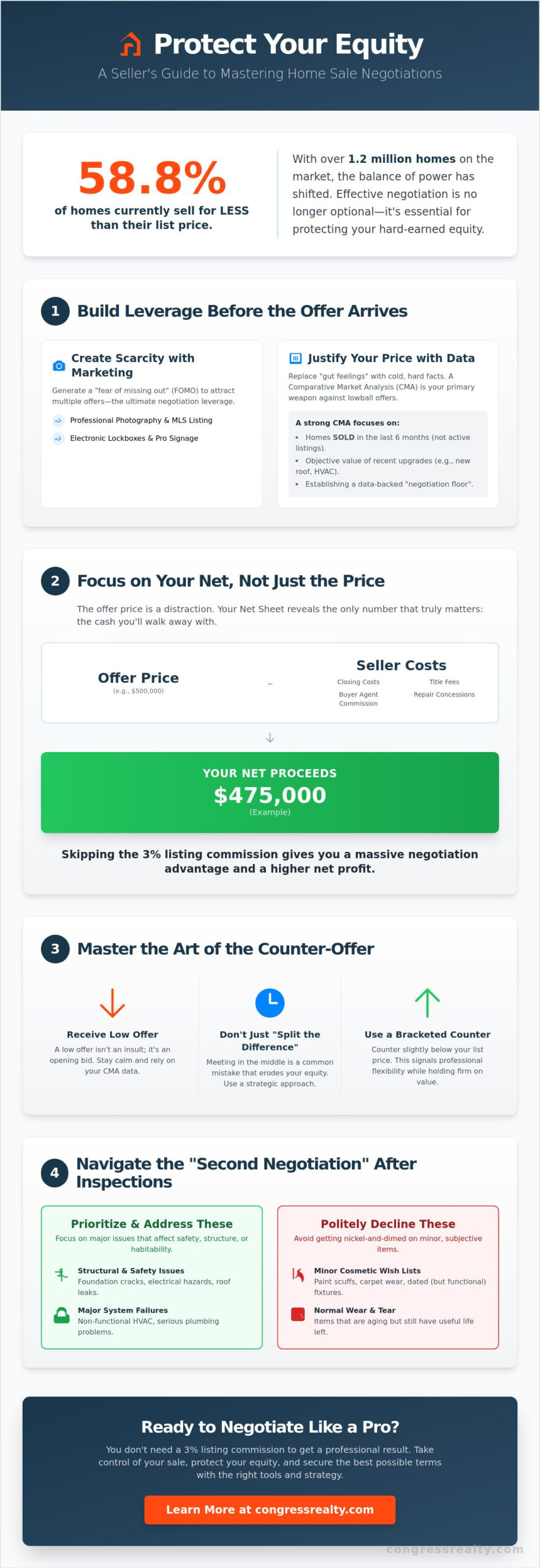
Did you know that 58.8% of homes are currently selling for less than their original list price? With inventory levels rising to over 1.2 million homes nationwide, the balance of power is shifting, making the skill of negotiating home sale price with buyers more critical than ever. It’s natural to feel a sense of dread when a lowball offer lands in your inbox or when a professional buyer’s agent pushes for aggressive concessions. You’ve worked hard to build equity, and the thought of losing it at the closing table is enough to keep any seller awake at night.
The good news is that you don’t need a traditional 3% listing commission to get a professional result. You can master the negotiation process while maintaining complete control over your transaction. This guide will empower you with the pragmatic tools needed to protect your proceeds and secure the best possible terms. We’ll break down exactly how to handle repairs, counter unfair offers, and use market data to move toward a successful closing with total confidence.
Key Takeaways
Ground your asking price in hard data with a Comparative Market Analysis (CMA) to build objective leverage before the first offer arrives.
Focus on your “Net Sheet” rather than just the top-line price to understand exactly how much you’ll keep after all concessions are calculated.
Master the art of negotiating home sale price with buyers by using bracketed counter-offers that show professional flexibility without caving on your equity.
Navigate the “second negotiation” after inspections by prioritizing structural and safety issues over minor cosmetic wish lists.
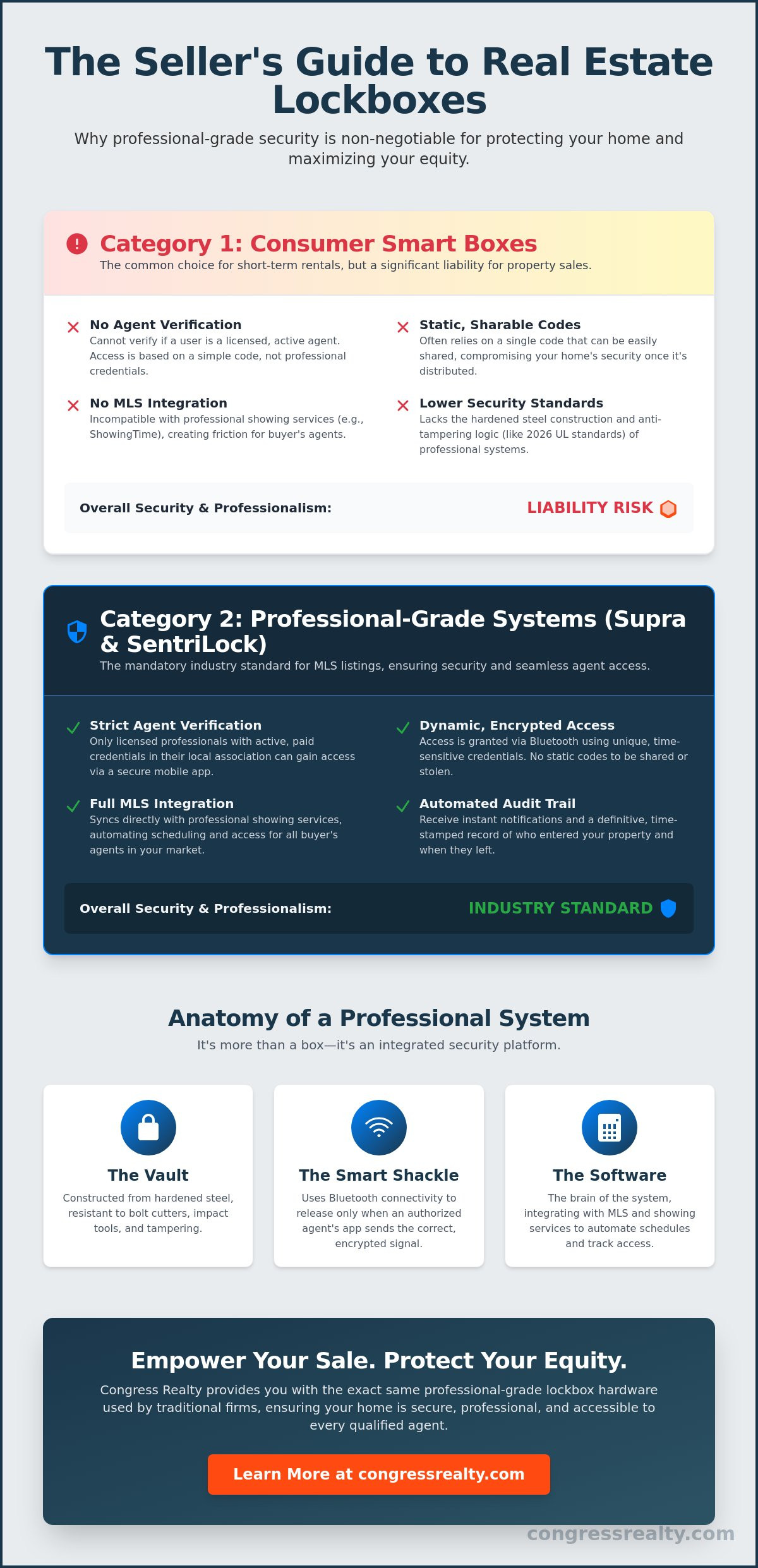
Use professional tools like electronic lockboxes and the MLS to maintain industry parity while enjoying the financial freedom of a fixed-cost listing.
Preparation: Building Your Negotiation Leverage Before the Offer
Leverage in real estate isn’t something you find; it’s something you build. Many sellers make the mistake of waiting for an offer to arrive before thinking about their strategy. True power in negotiating home sale price with buyers begins weeks before your home hits the market. It starts with replacing “gut feelings” with cold, hard data. When you walk into a transaction with a clear understanding of fundamental negotiation principles, you position yourself as a professional advocate for your own equity. You aren’t just a homeowner; you are the lead strategist in a high-value financial transaction.
The Role of the Comparative Market Analysis (CMA)
Your primary weapon for price justification is a professional Comparative Market Analysis (CMA). This document is the evidence you’ll use to shut down lowball offers before they gain momentum. To build a solid case, you must identify “true” comps. Look for homes that have sold within the last six months rather than focusing on active listings. Active prices represent what sellers hope to get, while sold prices represent what the market actually supports.
A detailed CMA also allows you to account for specific home improvements. If you’ve recently installed a new roof or upgraded your HVAC system, these aren’t just maintenance tasks. They are value-adders that provide a data-backed “no” to buyers trying to chip away at your price. Use this data to establish your “negotiation floor” so you never feel pressured to accept an unfair deal.
Creating Scarcity Through Marketing
High-end digital marketing and professional photography are non-negotiable tools for this. They drive traffic and increase the likelihood of multiple-offer scenarios, which is the ultimate leverage. When buyers see a listing that looks pristine and professional—the kind of high-quality presentation seen at Ray Lyon Realty—they perceive it as a high-demand asset.
Professional infrastructure also signals your seriousness as a seller. Utilizing tools like an electronic lockbox and a professional yard sign tells buyer’s agents that you are organized and prepared. This removes the “amateur” stigma often associated with independent selling and prevents professional agents from trying to out-maneuver you. By presenting a polished, professional front, you set the stage for a bidding war rather than a desperate hunt for a single buyer.
The relationship between listing price and sale price is a delicate balance. A strategic listing price, supported by your CMA, invites competition. When multiple buyers compete, the negotiation dynamic shifts entirely. You stop defending your price and start choosing the best terms from a position of strength.
Evaluating the Initial Offer: Separating Signal from Noise
Receiving your first offer is a major milestone, but don’t let the excitement cloud your financial judgment. The top-line price is often a distraction designed to capture your attention while hidden costs lurk in the fine print. Successful negotiating home sale price with buyers requires you to look past the sticker price and focus on the actual cash you’ll walk away with at closing. By adopting a methodical approach to offer evaluation, you can filter out weak proposals and focus on the deals that actually move the needle.
Calculating Your Net Proceeds
Your net proceeds are the only number that truly matters at the closing table. Net proceeds represent the final amount of cash you receive after all sale-related expenses, liens, and commissions have been deducted from the gross sale price. To find this figure, you must subtract closing costs, title fees, and buyer agent commissions from the total offer price. One of the most effective seller negotiation tactics is to maximize this number by controlling your expenses. When you skip the traditional 3% listing commission, you immediately increase your negotiation floor. This financial buffer allows you to be more flexible on the sale price while still netting more than a seller paying full-service fees. If you need help tracking these variables, using professional transaction management services ensures every dollar is accounted for accurately.
Vetting the Buyer’s Financials
A high offer price is worthless if the buyer can’t secure financing. In the 2026 market, you must distinguish between a pre-qualified buyer and one who is fully pre-approved. A pre-approval letter indicates that a lender has already verified the buyer’s income and assets, making the deal much more likely to close. If you receive an all-cash offer, you might consider accepting a slightly lower price in exchange for the certainty and speed it provides. Additionally, pay close attention to the earnest money deposit. A substantial deposit signals a buyer who is serious and has skin in the game, whereas a small deposit might indicate a lack of commitment.
Watch out for “red flag” contingencies that could jeopardize the sale later. While some contingencies are standard, excessive requests for home sale contingencies or unusual closing timelines can be deal-killers. If you encounter a lowball offer, don’t take it personally. Respond with a data-backed counter-offer based on your CMA. This keeps the conversation going and signals that you are a pragmatic seller who knows the market value of your property. By keeping your emotions in check and focusing on the data, you maintain the upper hand in every interaction.
The Art of the Counter-Offer: Moving Beyond the Sale Price
After you’ve vetted the buyer’s financials, it’s time to craft your response. Negotiation is a dialogue, not a zero-sum game. Start by acknowledging the offer and thanking the buyer. Maintaining a positive, professional tone prevents the transaction from becoming adversarial. This level of professionalism is a hallmark of expert representation, such as that provided by Robert Caicedo Real Estate. When negotiating home sale price with buyers, you should use a “bracketed” counter-offer. This involves meeting them partway between their offer and your list price. It demonstrates flexibility while signaling that you won’t accept a lowball figure. This approach keeps the buyer engaged while protecting your equity.
Momentum is your best friend in real estate. Always set a short expiration for your counter-offer, typically 24 to 48 hours. This creates a sense of urgency and prevents the buyer from “shopping” your offer to other sellers. Once you reach a verbal agreement, move quickly to get it in writing. Professional oversight ensures that every term you’ve fought for is accurately reflected in the contract. You’re in the driver’s seat, and setting these boundaries keeps the process moving toward your desired result.
Negotiating Terms vs. Dollars
Sometimes, the best way to protect your proceeds is to negotiate terms rather than the sale price. For example, an “As-Is” clause can be incredibly valuable. You might accept a slightly lower price in exchange for the buyer agreeing to take the property without any repair obligations. This eliminates the risk of expensive surprises later. Other powerful bargaining chips include flexible closing dates or seller leasebacks. A leaseback allows you to stay in your home for a set period after closing, which can save you thousands in temporary housing or double-moving costs. These non-monetary wins often provide more peace of mind than a few extra dollars in the sale price.
Handling Multiple Offers
If your marketing strategy has worked, you may find yourself juggling multiple contracts. This is the ultimate position of strength. Use a “Highest and Best” deadline to force buyers to put their most competitive terms forward simultaneously. When comparing these offers, look beyond the top-line number. An FHA loan might offer a high price but comes with stricter appraisal requirements and a 6% seller concession limit. A Conventional loan or a cash offer is often “cleaner” with fewer strings attached. Managing these moving parts requires precision. Utilizing professional transaction management ensures you don’t miss a deadline or a critical contingency while balancing multiple interested parties.
Handling Post-Inspection Negotiations and Concessions
Many sellers breathe a sigh of relief once a contract is signed, only to be blindsided by the inspection report. In the real estate industry, this period is often called the “second negotiation.” It’s the moment when buyers may try to claw back some of the sale price by highlighting every minor flaw in the property. Mastering the process of negotiating home sale price with buyers requires stamina during this phase. You must distinguish between legitimate safety hazards and a buyer’s “wish list” of upgrades. Your goal is to keep the deal on track without letting your equity bleed away through death by a thousand cuts.
Your original Comparative Market Analysis (CMA) remains your best defense here. If you priced the home accurately based on its current condition, you’ve already accounted for the age of the roof or the dated kitchen. Remind the buyer that the price they agreed to reflects the home as it stands. By staying grounded in the data you gathered during your preparation phase, you can push back against requests that aren’t rooted in structural or safety requirements.
Repair Credits vs. Physical Repairs
When an inspection reveals a valid issue, you generally have two choices: fix it yourself or offer a repair credit. Offering a credit is almost always the superior financial move for a seller. Credits are safer for sellers because they eliminate the risk of being held liable for “bad” repair work or delays caused by contractors. If a buyer presents an inflated estimate for a repair, don’t take it at face value. Get your own independent contractor quotes to challenge their numbers and keep the negotiation realistic. Cosmetic defects are typically not grounds for price renegotiation in a standard contract. Focusing strictly on “red flag” items like electrical hazards or foundation issues keeps the conversation professional and limited in scope.
The ‘Take It or Leave It’ Threshold
Before the inspection even begins, you should determine your “walk-away point.” This is the maximum amount you are willing to credit or spend before the deal no longer makes financial sense. Having this threshold in mind prevents emotional decision-making in the heat of the moment. You also need to be prepared for appraisal gaps. If the bank determines the house is worth less than the contract price, a new negotiation begins. You can ask the buyer to cover the difference, meet them in the middle, or stick to your price and risk the deal. If the buyer tries to walk away without a valid contractual reason, their earnest money deposit serves as your leverage. To ensure you have the professional support needed to handle these complex late-stage disputes, consider utilizing professional transaction management to protect your interests until the final signature is dry.
Navigating Negotiations Without a 3% Listing Commission
Negotiating home sale price with buyers becomes a lot less stressful when you aren’t starting from a 3% financial deficit. In a traditional model, you’re often pressured to hold out for a higher price just to cover the cost of the agent’s commission. When you remove that high-cost barrier, your “negotiation floor” drops significantly. This doesn’t mean you should accept less for your home. Instead, it means you have the financial breathing room to make strategic concessions that a commission-burdened seller simply cannot afford. You are in a position of unique competitive strength because your overhead is lower than almost every other listing on the block.
Congress Realty functions as your professional back-office support, providing the infrastructure you need to command respect in the marketplace. You maintain professional parity with every other listing by utilizing the Multiple Listing Service (MLS), professional photography, and an electronic lockbox. Buyers and their agents won’t see a “for sale by owner” amateur; they will see a serious, organized seller who has the same tools as a high-priced brokerage. This level of professional presentation is vital for negotiating home sale price with buyers because it prevents them from trying to exploit a perceived lack of experience.
The Flat Fee Competitive Advantage
Consider the math of a typical 2026 transaction. If you sell your home for $500,000 using a fixed-cost model, your net proceeds will likely be higher than if you sold that same home for $510,000 through a traditional agent charging a 3% listing fee. In that scenario, you’d be paying out $15,300 in listing commission alone. By choosing a smarter path, you can actually afford to be more flexible on your price to attract a wider pool of buyers while still keeping more of your equity. You aren’t just saving money; you are buying the flexibility to close deals faster.
Direct communication is your other secret weapon. When you are selling a house without an agent, you eliminate the middleman. You don’t have to wait for a listing agent to play “telephone” with the buyer’s agent. You hear the buyer’s concerns directly and can offer immediate, pragmatic solutions. This speed often keeps a deal alive when it might otherwise stall in a traditional communication chain.
Your Empowerment Checklist
Success in 2026 requires the right tools and a clear process. Use this checklist to ensure you are fully prepared to lead your own transaction:
Professional MLS Listing: Ensure your home is visible on the same databases used by every real estate professional.
Expert Valuation: Use a Comparative Market Analysis (CMA) to justify your price with hard evidence.
Professional Signage: Use a professional yard sign and post to signal a serious listing.
Transaction Management: Secure end-to-end oversight to ensure all legal paperwork is handled with precision.
Success in the 2026 housing market requires a shift from emotional reactions to a data-driven strategy. By grounding your listing in a professional CMA and focusing on your final net proceeds, you’ve already won half the battle. Master the art of negotiating home sale price with buyers by staying objective during inspections and using your lower overhead to out-position competing listings. You don’t need to pay a high-percentage commission to get professional results or maintain total control over your transaction. It’s about being the smartest person in the room, not the one with the most expensive agent.
Since 2002, Congress Realty has empowered thousands of savvy sellers to bypass traditional industry costs. Our fixed-cost fee structure ensures you know exactly what you’re paying upfront, while our Full Service Listing includes professional Transaction Management to handle the complex paperwork. You deserve a partner that provides the necessary infrastructure and then lets you lead the process with confidence. You’ve done the work to build your equity; now it’s time to keep it.
No, you aren’t obligated to accept the highest price offer. Often, a slightly lower offer with fewer contingencies, a flexible closing date, or all-cash financing is more valuable than a high-priced offer with risky strings attached. Evaluate the buyer’s financial strength and the speed of the transaction. Focus on your net proceeds and the likelihood of the deal closing without a hitch. The “best” offer is the one most likely to reach the closing table.
Can a buyer back out after we agree on a price?
Yes, a buyer can back out if they have active contingencies in the contract, such as inspection, financing, or appraisal clauses. These provide legal exits if specific conditions aren’t met. To minimize this risk, vet the buyer’s pre-approval letter and request a substantial earnest money deposit. Once all contingencies are waived, the buyer’s deposit is usually forfeited if they choose to walk away without cause. Professional transaction management helps track these critical deadlines.
How much should I counter-offer if the price is too low?
When negotiating home sale price with buyers, your counter-offer should be based on the hard data found in your Comparative Market Analysis (CMA). Avoid emotional reactions to lowball offers. Instead, use a “bracketed” approach by meeting the buyer partway between their offer and your list price. This signals professional flexibility while protecting your equity. Always justify your counter with specific market comps to keep the negotiation grounded in reality and professional logic.
Is it better to fix things before listing or offer a credit?
Offering a repair credit is generally better than performing the repairs yourself. Credits eliminate your liability for the quality of the work and prevent closing delays caused by contractor schedules. If you choose to fix items, focus only on structural or safety issues. Cosmetic defects are rarely worth the investment before a sale. Providing a credit lets the buyer handle the project to their own taste after closing while you move on.
What happens if the house appraises for less than the negotiated price?
If an appraisal comes in low, a new negotiation begins to bridge the appraisal gap. You can ask the buyer to pay the difference in cash, lower your sale price to the appraised value, or meet in the middle. If neither party can agree, the buyer can typically walk away with their earnest money. Use your CMA data to challenge a low appraisal if you believe the valuation is inaccurate based on recent local sales.
Do I still have to pay the buyer’s agent commission?
While the 2026 market offers more transparency, paying a buyer’s agent commission is still a common practice to attract the widest pool of buyers. However, this amount is entirely negotiable. By using a fixed-cost listing model, you save thousands on the listing side, which gives you more room to offer a competitive buyer’s agent fee without hurting your bottom line. Always define this fee clearly in your MLS listing to maintain professional parity.
How do I handle a buyer who wants to negotiate after the contract is signed?
Negotiations after a signed contract should only occur if new information comes to light, such as during the home inspection. If a buyer tries to renegotiate price without a valid contractual reason, stand your ground. Point back to the agreed-upon terms and your original market data. Utilizing professional transaction management can help you navigate these high-pressure moments and keep the buyer focused on the original agreement rather than looking for late-stage discounts.
What is the most important thing to include in a counter-offer?
The most critical element of a counter-offer is a short expiration deadline. Typically, giving a buyer 24 to 48 hours to respond maintains transaction momentum and prevents them from using your offer to shop for other properties. Clearly state your price, any adjusted contingencies, and the deadline. This firm boundary shows you are a serious, organized seller who values a swift and professional closing process. It forces the buyer to make a decision.
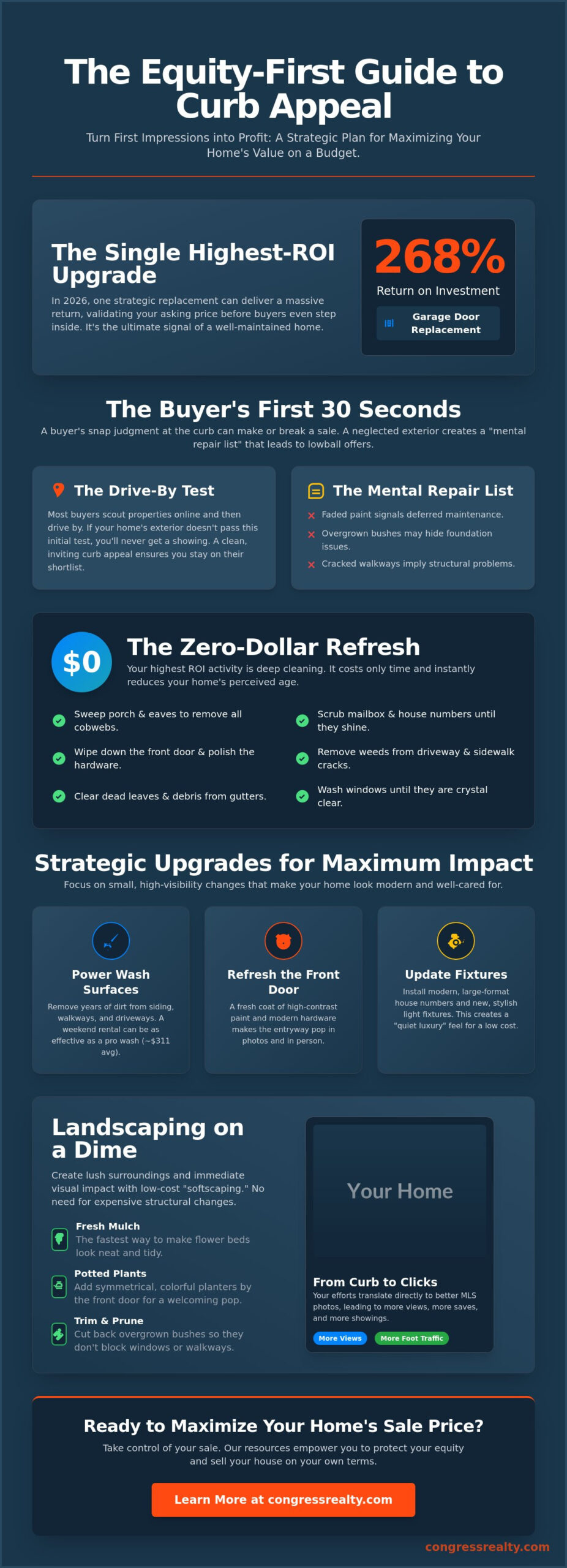
What if you could increase your home’s value by thousands without spending a fortune? In 2026, a strategic garage door replacement can deliver up to a 268% return on your investment. If you’re wondering how to improve curb appeal on a budget, you’re likely focused on one goal: protecting your equity. It’s common to worry that a tired exterior or a messy yard will invite lowball offers. You want your property to stand out in MLS photos and command a premium price, but the scale of maintenance can feel overwhelming when your budget is tight.
This guide focuses on tactical, high-impact changes that validate your asking price the moment a buyer pulls up. We’ll explore everything from the “quiet luxury” of earthy neutral tones to the strategic use of layered lighting and modern house numbers. Discover how to take full control of your home’s first impression and maximize your final sale price using simple, professional strategies designed for the savvy, independent seller. By the end of this article, you’ll have a clear, step-by-step plan to transform your exterior and increase foot traffic without overspending.
Key Takeaways
Treat curb appeal as a tactical equity strategy that signals the overall health of your property to potential buyers before they even step inside.
Prioritize deep cleaning and decluttering as your highest-ROI activities to instantly reduce the perceived age of your home at zero cost.
Learn how to improve curb appeal on a budget by focusing on high-contrast entry points and modern fixtures that make your home pop in digital listings.
Utilize low-cost softscaping techniques to create immediate visual impact and lush surroundings without the heavy expense of structural hardscaping.
Connect your physical exterior upgrades to professional photography to maximize click-through rates and increase foot traffic from the MLS.
The ROI of First Impressions: Why Curb Appeal is an Equity Strategy
Think of your home’s exterior as the psychological entry gate for buyer trust. It isn’t just about having a pretty garden; it’s about signaling that you’ve cared for the property. Curb appeal acts as a visual shorthand for the overall health of the entire home. When a buyer sees a peeling front door or overgrown weeds, they don’t just see a weekend project. They see a potential money pit. Most buyers perform a “Drive-By Test” before they ever book a showing. If the exterior doesn’t pass, they keep driving. By learning how to improve curb appeal on a budget, you ensure your home stays on their shortlist. These low-cost improvements serve as a tactical defense for your Comparative Market Analysis (CMA) value. They prevent buyers from using minor cosmetic flaws as leverage to chip away at your equity.
The Psychology of the Buyer’s First 30 Seconds
Buyers decide if they like a house within 30 seconds of pulling up to the curb. This snap judgment is hard to reverse. If the exterior looks neglected, the buyer’s brain starts building a “mental repair list” before they even turn the key. They assume that if you didn’t mow the lawn, you probably didn’t service the furnace or fix the leaky roof either. Common items on this mental list include:
Faded paint suggesting deferred maintenance.
Overgrown bushes that hide structural issues.
Cracked walkways that imply foundation trouble.
Dirty windows that suggest a lack of general care.
This negative perception leads directly to lower offers. A clean, well-maintained exterior replaces that anxiety with confidence, allowing the buyer to focus on the home’s features instead of its flaws. You want them thinking about where their furniture will go, not how much a new driveway will cost.
Protecting Your Equity Through Visual Validation
A polished exterior justifies your asking price on the MLS. It provides the visual validation needed for successful how to sell your house on your own strategies. When you bypass traditional high-commission models, every dollar of equity you protect stays in your pocket. Using how to improve curb appeal on a budget techniques helps you avoid appraisal red flags that can derail a sale. It also prevents buyers from asking for credits at the closing table for simple fixes you could have handled for $100. You’re not just decorating; you’re securing your financial return and maintaining command over the negotiation process.
The Zero-Dollar Refresh: High-Impact Cleaning and Decluttering
Before you spend a single dollar on new mulch or hardware, look at what you already own. Cleaning is the highest ROI activity for any seller because it primarily costs your time rather than your capital. A deep, thorough scrub creates a “sparkle” that significantly lowers the perceived age of your home. Buyers associate a clean exterior with a well-maintained interior; if the outside is spotless, they assume the hidden systems are too. When you learn how to improve curb appeal on a budget, you start by removing the “visual noise” that distracts from your home’s architecture. Understanding Why It Matters When Selling a Home helps you stay focused on these high-impact, low-cost tasks that protect your equity.
Use this “Grand Clean” checklist to prepare your home for the market without opening your wallet:
Sweep the porch and eaves to remove all cobwebs and wasp nests.
Scrub the mailbox and street numbers until they shine.
Wipe down the front door and polish the handle and kickplate.
Clear dead leaves and debris from gutters and visible flower beds.
Remove any weeds growing in the cracks of the driveway or sidewalk.
Power Washing and Window Clarity
Removing years of grit from siding and driveways is transformative. While a professional house wash averages approximately $311 according to 2026 data, many homeowners find that a weekend rental or even a high-pressure garden hose attachment can achieve similar results. Be careful with your surfaces. Use lower pressure on vinyl siding to avoid trapping water behind the panels; brick can handle more force but watch for crumbling mortar. Crystal-clear windows are equally essential. They don’t just look better from the street. They also allow more natural light to flood your interior, making your home look larger and more inviting in photos. Before you list, consider requesting a Comparative Market Analysis (CMA) to see how your refreshed home compares to recent sales in your area.
Decluttering the Exterior Landscape
Your goal is to present a blank canvas where a buyer can imagine their own life. Remove all “lifestyle” items that clutter the view. This includes children’s toys, tangled garden hoses, worn-out patio furniture, and empty planters. These items act as visual hurdles that stop a buyer’s eye from appreciating the home’s structure. Take the time to edge your walkways. Creating a sharp, professional line between your grass and the concrete costs nothing but effort, yet it provides a high-end look instantly. Finally, prune any overgrown bushes that “hide” the house. If a buyer can’t see the windows or the front door from the street, they’ll feel a subconscious disconnect from the property. Open up the view to invite them in.
Strategic Upgrades Under $200 for Maximum Impact
Once your home is spotless, it’s time to focus on “touch points.” These are the specific features buyers see and interact with as they approach your entrance. High-ROI upgrades don’t require a contractor or a massive loan. Instead, you should prioritize color and contrast to make your property stand out in digital listings. By spending less than $200 on strategic materials, you can create a premium aesthetic that justifies your asking price. Understanding how to improve curb appeal on a budget means knowing where a few dollars go the furthest. According to the National Association of REALTORS® 2023 Remodeling Impact Report, these small exterior refreshes are highly effective at recovering their costs during a sale.
The Front Door Transformation
The front door is your home’s handshake. While a full steel entry door replacement can yield an ROI of up to 216%, you can achieve a similar visual effect with a quart of high-quality paint. In 2026, the average cost to professionally paint a front door ranges between $125 and $225, but a DIY approach costs significantly less. Follow current market trends by choosing “statement” colors like navy, emerald green, or matte black. These shades provide the “quiet luxury” aesthetic that modern buyers crave. Don’t stop at the paint. Replace dated, tarnished hardware with a new handle set and deadbolt. A heavy, modern handle in a brushed nickel or matte black finish signals security and quality the moment a buyer reaches for the door.
Lighting, Numbers, and Mailboxes
Old, builder-grade light fixtures can make a 2010 home look like it’s from the 1990s. Swap out yellowing or rusted lanterns for modern, geometric fixtures. Layered lighting is a key 2026 trend, so ensure your porch light is bright and welcoming for evening drive-bys. Next, look at your house numbers. Modern, 10-inch aluminum numbers are available for around $28.80 each and provide a massive boost to readability and style. Finally, refresh your mailbox. If it’s mounted to the house, ensure the finish matches your new door hardware. If it’s at the curb, a fresh coat of black spray paint and new numbers can make it look brand new. Use the “Rule of Three” on your porch: a clean doormat, a single high-quality planter, and your new lighting. This creates a balanced, staged look that looks incredible in professional listing photos.
Landscaping on a Dime: Softscaping for the Camera
Stop thinking about expensive hardscaping projects like stone patios or retaining walls. While these additions are beautiful, they rarely offer the immediate, budget-friendly return you need when preparing for a 2026 sale. Instead, shift your focus to softscaping. This involves using living elements, ground cover, and plants to create a lush, inviting atmosphere. If you’re looking for how to improve curb appeal on a budget, softscaping is your most effective tool. It allows you to create a high-end look that translates perfectly to the camera, which is essential for driving digital engagement on listing sites.
The Magic of Fresh Mulch and Edging
Dark mulch acts like high-definition makeup for your yard. It provides a rich, high-contrast background that makes the greens of your lawn and the colors of your plants pop. In 2026, materials for mulch cost between $25 and $100 per cubic yard. If you’re handling the project yourself, bagged mulch typically ranges from $3.25 to $6.50 per bag. This is a pragmatic investment that instantly cleans up the appearance of your flower beds. Focus your efforts only on the areas visible from the street and the primary path to your front door to maximize your savings.
Don’t overlook the importance of clean lines. Use plastic or brick edging to define your garden beds and stop grass from creeping into your mulch. This simple step creates a professional, manicured look that suggests a high level of care. It’s these sharp boundaries that catch the eye in MLS photos, making your property look like a premium listing even if you’ve spent very little effort and capital.
Seasonal Color and Potted Symmetry
Symmetry is a visual cue for quality. In traditional home design, balanced elements create a sense of stability and trust. You can achieve this easily by flanking your front door with identical planters. Use seasonal annuals to provide “color pops” rather than investing in expensive perennials that may not be in bloom when you list. For the 2026 market, shades of emerald green and navy are trending, but classic white or red flowers against dark mulch always perform well. Choose low-maintenance plants like marigolds or petunias that won’t wilt if you have a busy week of showings.
Once your exterior looks pristine, ensure your hard work is documented correctly. High-quality Professional Photography is the final step in translating these physical improvements into a higher final sale price. By focusing on these softscaping tactics, you maintain full command over your home’s presentation while keeping your equity where it belongs: in your pocket.
Capturing the Value: Curb Appeal for the MLS Listing
The primary goal of curb appeal isn’t just to look nice for the neighbors; it’s to stop the scroll. In the 2026 real estate market, your home’s digital storefront is its most important asset. If you’ve followed the steps for how to improve curb appeal on a budget, you’ve already protected your equity by creating a premium look. Now, you must translate that physical effort into digital engagement. High-quality professional photography is the bridge between your hard work and a buyer’s click. When writing your property description, don’t be modest. Highlight your “modernized entry” or “manicured softscaping” to signal that the home is move-in ready and meticulously maintained.
Before the photographer arrives or the first showing begins, use this final Listing Day checklist to ensure the exterior is flawless:
Mow the lawn on a high setting for a lush, carpet-like appearance.
Water the mulch and driveway to make colors look deeper and more saturated.
Hide all garden hoses, trash bins, and recycling containers completely out of sight.
Turn on all exterior lights, even during the day, to create a warm and welcoming glow.
Ensure your yard sign and post are perfectly level and free of dirt or grass clippings.
Optimizing Angles for the Digital ‘First Showing’
Identify the “hero shot” of your home’s exterior. This is usually a straight-on or slightly angled view that captures the front door, windows, and landscaping in a single, balanced frame. Timing is everything for these photos. The “Golden Hour,” which occurs just after sunrise or before sunset, provides a warm, soft light that makes your home’s colors appear richer and more inviting. Remove all cars from the driveway and the street directly in front of the house. You want the buyer to see a clear, unobstructed path to their potential new home without any visual clutter distracting from the architecture.
Yard Signs and Accessibility
A clean, professional yard sign and post act as a silent salesperson. It’s the first physical touchpoint for buyers who discover your home while driving through the neighborhood. Ensure the sign is placed prominently and that all walkways leading to the entrance are clear of debris. Accessibility is a key part of the buyer’s experience. Make sure your electronic lockbox is installed in an obvious, easy-to-reach location. Curb appeal creates the “Yes” before the buyer even enters the front door. By managing these final details, you maintain full command over the transaction and set the stage for a successful, high-value sale.
Secure Your Sale with Strategic Curb Appeal
You’ve learned that small, tactical changes like fresh mulch, deep cleaning, and a bold front door can deliver massive returns. By mastering how to improve curb appeal on a budget, you’ve transformed your home’s exterior into a high-performance sales tool. These efforts don’t just look good in professional photography; they protect your equity by validating your asking price before a buyer ever steps inside. You’ve built the value. Now it’s time to capture it.
Now that your home is ready for its hero shot, don’t let traditional commissions eat into your profits. With over 20 years of experience and national coverage for savvy sellers, we provide the professional infrastructure you need to succeed. Our flat-fee model saves you thousands in commissions compared to traditional high-cost industry standards. List your home on the MLS for a flat fee and keep your equity! Take full command of your transaction and keep the rewards of your financial intelligence. You’re ready to lead the way to a successful sale.
Frequently Asked Questions
How much should I spend on curb appeal when selling my house?
You should aim to spend between 1% and 2% of your home’s total value on exterior improvements, focusing strictly on high-ROI projects. Research for 2026 shows that specific upgrades like a garage door replacement can yield a return of up to 268%. If you’re learning how to improve curb appeal on a budget, prioritize the $200 “touch point” fixes. These small investments defend your equity and prevent buyers from mentally discounting your asking price before they enter.
What color front door sells a house fastest in 2026?
Navy, emerald green, and matte black are the top-performing front door colors for the 2026 market. These bold “statement” colors create a memorable focal point that stands out in digital MLS listings. If your home has a more traditional style, warmer earthy neutrals like clay, sand, or taupe are also highly effective. A professional door paint job typically costs between $125 and $225, making it one of the most affordable ways to modernize your home’s look.
Is professional landscaping worth it for a budget sale?
Professional landscaping is usually unnecessary for a budget-friendly sale because simple softscaping delivers a similar visual impact for much less capital. Focus on fresh mulch, which costs between $25 and $100 per cubic yard for materials. While professional installation averages between $77 and $94 per cubic yard, doing the work yourself keeps that equity in your pocket. Sharp edging and symmetrical planters are usually enough to pass the drive-by test and attract serious buyers.
Does pressure washing actually increase home value?
Pressure washing doesn’t change your technical appraised value, but it significantly increases the perceived value and helps you avoid lowball offers. Removing years of grit from your siding and driveway makes the entire property look years younger in professional photography. With an average professional cost of $311, it’s a pragmatic way to ensure your home looks premium. Clean surfaces signal to potential buyers that you’ve maintained the home’s core systems with consistent care and attention.
What are the most common curb appeal mistakes sellers make?
The most frequent mistake is ignoring the “Drive-By Test” by leaving visible deferred maintenance like weeds or dirty windows. Many sellers also over-personalize their landscape with unique statues or eccentric colors that don’t appeal to a broad audience. Stick to the “quiet luxury” trend of 2026 by using timeless materials and restrained, high-quality accents. Ensuring your home looks like a blank canvas allows buyers to imagine their own lives there, rather than focusing on your personal style.
How do I improve curb appeal if I live in a townhouse or condo?
Focus your efforts on the “touch points” you control, specifically your front door hardware, lighting, and immediate entryway. Even with HOA restrictions, you can still learn how to improve curb appeal on a budget by updating your house numbers or adding symmetrical planters. Modern aluminum numbers cost approximately $28.80 and provide an immediate style boost. These small, high-impact details distinguish your unit from others in the complex and suggest a higher level of interior maintenance.
Can I deduct curb appeal improvements from my taxes?
You generally cannot deduct curb appeal improvements as a standard annual deduction, but they can often be used to adjust your home’s cost basis. These costs are frequently classified as “selling expenses” or capital improvements. This classification can potentially reduce your capital gains tax when the sale is finalized. It’s a smart move to consult with a qualified tax professional to see how your specific exterior upgrades will impact your final financial return after the closing.
How quickly can I finish a curb appeal refresh?
You can complete a high-impact curb appeal refresh in a single weekend if you plan your workflow effectively. Most essential tasks, such as pressure washing, painting the front door, and spreading fresh mulch, require only a few hours each. By having your materials ready and focusing on the areas visible from the street, you can move from a cluttered exterior to a listing-ready “hero shot” in 48 hours. This efficiency helps you get your home on the MLS faster.
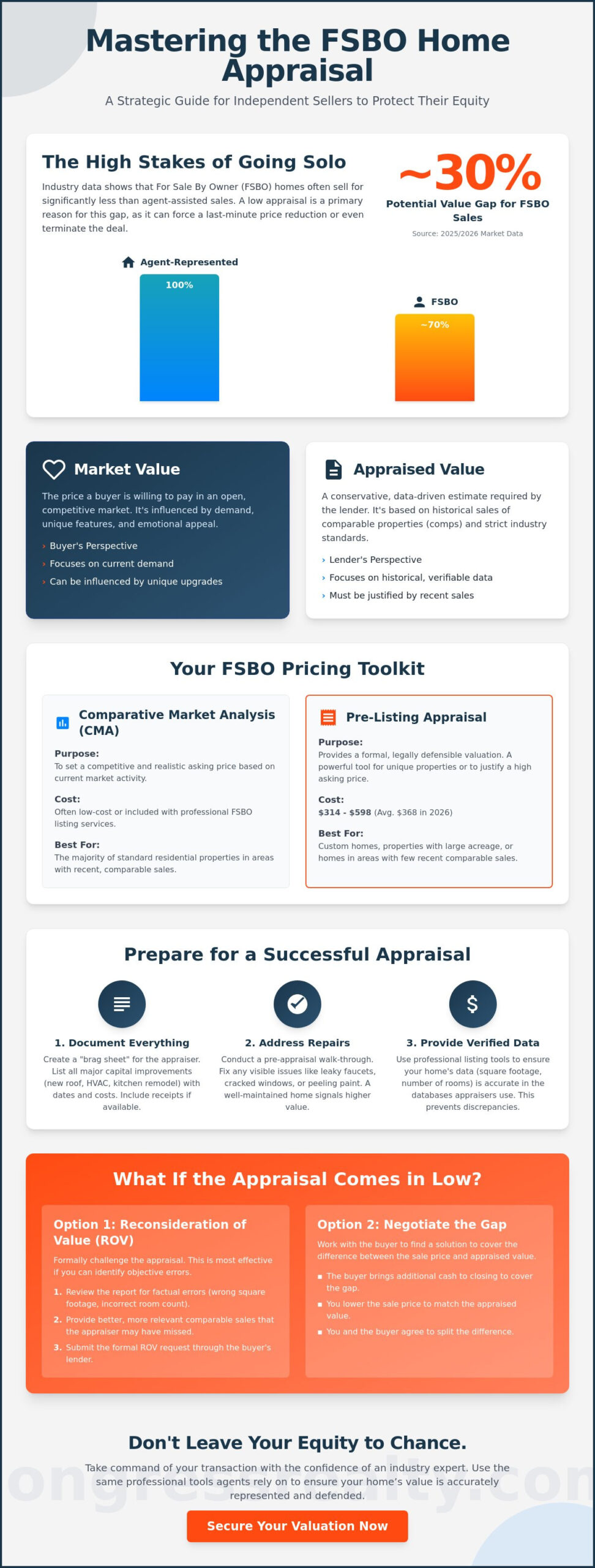
Did you know that in 2026, FSBO homes are reported to sell for about 30% less than those with agent representation? This staggering price gap often comes down to a single, high-stakes moment: the appraisal. It is the point where many independent deals falter because sellers feel unprepared to defend their valuation against a professional’s report. If you are worried that a low appraisal might sink your sale or force a painful price cut, you aren’t alone.
We understand that managing the fsbo home appraisal process solo can feel like a gamble when your equity is on the line. You deserve the same level of data and documentation that traditional agents use to protect their listings. This guide will show you exactly how to navigate the appraisal hurdle, from understanding the difference between a CMA and a formal valuation to preparing professional-grade records that help the appraiser see your home’s true worth. You’ll learn how to master the new UAD 3.6 reporting standards and secure a successful closing at the price you earned. It is time to take command of your transaction with the confidence of an industry expert.
Key Takeaways
Distinguish between a Comparative Market Analysis (CMA) used for setting your price and a formal appraisal required for buyer financing.
Prepare for the appraiser’s visit by documenting major capital improvements and conducting a proactive walk-through to address visible repairs.
Navigate the fsbo home appraisal process with confidence by learning how to provide appraisers with verified data that supports your asking price.
Understand your options for managing a low appraisal, including the specific steps for a Reconsideration of Value or negotiating price gap coverage.
Protect your equity by using professional listing tools that ensure your home’s data is accurately recorded in the databases appraisers trust most.
Navigating the FSBO Home Appraisal Process: Why It Matters for Your Sale
A home appraisal is a professional, unbiased estimate of your property’s value. Think of it as the silent partner in your transaction. While you and your buyer have agreed on a price, the lender won’t release the funds until a licensed professional confirms the asset is worth the investment. This step is where many independent sellers feel the most pressure. In the fsbo home appraisal process, you don’t have a listing agent to run interference or hand over a folder of comps. You are the primary advocate for your home’s value.
The appraisal directly impacts the buyer’s Loan-to-Value (LTV) ratio. If the house appraises for less than the contract price, the lender will only cover a percentage of that lower value. This creates a valuation gap that the buyer must pay in cash, or you must lower your price to close the deal. Managing this risk is a core part of learning how to sell your house on your own successfully. Since 2025 data shows FSBO homes often sell for 30% less than agent-assisted sales, protecting your agreed-upon price is vital for your bottom line.
The Difference Between Market Value and Appraised Value
Market value is the price a buyer is willing to pay in an open, competitive environment. Appraised value is a more conservative figure based on historical data and strict Real estate appraisal process standards. In a fast-moving 2026 market, these two numbers often diverge. Buyers might be eager to pay a premium for your unique upgrades, but appraisers look for settled sales from the last few months to justify the risk to the bank. They focus on what has already happened, not the potential of what might happen next.
Why the Lender’s Appraisal is the Ultimate Hurdle
It is a common misconception that the appraisal belongs to the buyer because they paid for it. In reality, the lender owns the process. Federal regulations mandate a firewall between the loan officers and the appraisers to prevent conflicts of interest. This is typically handled by an Appraisal Management Company (AMC). The AMC selects the appraiser, ensuring they are an independent third party who follows the Uniform Standards of Professional Appraisal Practice (USPAP). For a FSBO seller, this means you must be ready with professional-grade documentation the moment they walk through your door. You only get one chance to make a first impression on the person who holds the keys to your closing.
Pre-Listing Appraisal vs. Comparative Market Analysis (CMA)
How do you determine the right number for your home? In the fsbo home appraisal process, pricing is your most powerful tool. You have two primary options: the Comparative Market Analysis (CMA) and a formal pre-listing appraisal. While both help you understand your home’s value, they serve different strategic purposes. A CMA is an informal estimate based on market trends, while an appraisal is a legally recognized valuation performed by a state-licensed professional.
Cost is a major factor for independent sellers. A CMA is often included as a low-cost feature of a professional listing service. In contrast, a professional appraisal in 2026 averages $368, with a typical range between $314 and $554. For a standard single-family home, you might pay up to $598. It’s vital to remember that a pre-listing appraisal is for your benefit only. It does not replace the buyer’s lender-mandated appraisal. The bank will still hire their own independent appraiser to secure the loan.
When to Invest in a Professional Pre-Listing Appraisal
Most sellers don’t need a pre-listing appraisal, but certain “red flag” properties make it a smart investment. If your home is a unique custom build, sits on massive acreage, or is located in an area with very few recent sales, a professional valuation provides a solid baseline. It acts as a powerful marketing tool for FSBOs. By showing a signed appraisal to prospective buyers, you set a firm “ceiling” for negotiations. This prevents buyers from lowballing you and gives you a professional-grade defense for your asking price.
Leveraging a CMA to Set a Realistic Asking Price
For the majority of residential sales, a high-quality Comparative Market Analysis (CMA) is the most efficient way to start. A CMA focuses on “solds” and “actives” to gauge what buyers are actually paying right now. Don’t fall into the trap of relying on automated valuation models (AVMs). These algorithms often miss the value of your recent kitchen remodel or the impact of a quiet cul-de-sac. Using professional brokerage tools allows you to access the same data points that agents use, ensuring your price is competitive from day one. It gives you the confidence to lead the transaction without overpaying for unnecessary reports.
How to Prepare Your Home for the Appraiser’s Visit
The physical inspection is a high-stakes moment in the fsbo home appraisal process. While many sellers spend hours deep cleaning or landscaping, professional appraisers focus on structural integrity, safety, and data-backed improvements rather than your decor. To ensure you receive a fair valuation, you must treat this visit with professional rigor. Follow these four pragmatic steps to prepare your property for the inspection.
Step 1: Conduct a “pre-appraisal” walk-through. Identify and fix visible minor repairs like leaky faucets, peeling paint, or cracked window panes. These small issues can lead an appraiser to assume the home hasn’t been well-maintained.
Step 2: Gather receipts for all major capital improvements. Focus on high-impact projects from the last 5-10 years. Documentation proves the value of upgrades that aren’t immediately visible.
Step 3: Ensure all utilities are functional. The appraiser must test your appliances, HVAC, and water systems. If the utilities are off, you may face a re-inspection fee, which typically ranges from $100 to $250. Don’t forget to test your smoke and carbon monoxide detectors as well.
Step 4: Create the “Appraiser’s Package.” This is a professional folder you will hand to the appraiser upon arrival to provide them with the best possible data for their report.
Documenting Upgrades and Major Systems
Appraisers use specific forms that prioritize the age and condition of your home’s major systems. Create a clear “Improvements List” that highlights high-value items like the age of the roof, the SEER rating of your HVAC unit, and the date of any kitchen or bath remodels. For maximum impact, format this list with the project name, the year completed, and the approximate cost. If you’ve done hidden renovations, such as upgraded electrical wiring or new attic insulation, provide “before and after” photos. Ensuring these projects meet local standards is crucial for valuation; for instance, resources like swissbuild.co.uk provide guidance on building regulations to help homeowners confirm their work is fully compliant. This transparency helps the appraiser justify a higher condition rating in their final report.
The Appraiser’s Package: Your Secret Weapon
Since you don’t have a traditional agent to represent you, the “Appraiser’s Package” is your voice. Include a copy of the executed sales contract, your most recent Comparative Market Analysis (CMA), and your detailed list of improvements. A critical addition is the “Comps Sheet.” This is a list of 3-5 local sales that most closely resemble your home. By providing the appraiser with verified data on nearby sales, you help them find the most accurate benchmarks for your property. When the appraiser arrives, be polite and helpful, but give them space to work. Answer their questions directly without being “pushy” or hovering, which allows them to complete their task efficiently while respecting their professional independence.
Managing a Low Appraisal: Strategies for Independent Sellers
What happens when the appraisal report arrives with a number lower than your contract price? This scenario, known as a low appraisal, is a common hurdle in the fsbo home appraisal process. It doesn’t mean your deal is over. As an independent seller, you must step into the role of transaction manager to protect your equity. Stay calm and keep your focus on the data. You have three primary paths: challenge the report, negotiate the price gap, or cancel the contract and find a new buyer.
Challenging the Appraisal with Better Comparables
Appraisers are professionals, but they aren’t infallible. If you spot a factual error, such as incorrect square footage or the wrong number of bedrooms, you have grounds for a Reconsideration of Value (ROV). Review the report line by line. Did they miss the high-value sale that closed last week just two doors down? Use the professional tools from your Transaction Management service to pull a fresh set of comparables. When you contact the lender, present your findings in a concise, non-emotional letter. Highlight the specific data points that justify a higher valuation and ask for a formal review.
Negotiating the Price Gap with the Buyer
If the lender refuses to budge on the valuation, the ball moves to the negotiation table. Most buyers use an appraisal contingency to protect their earnest money. This gives them the right to walk away, but most still want your home. Ask the buyer to bridge the gap with additional cash. Since the lender will only loan based on the appraised value, the buyer must cover the difference out of pocket. You might offer to meet them in the middle to keep the momentum going. If the gap is too large and the buyer is unwilling to negotiate, remember that you are in control. You can choose to put the home back on the market and wait for a buyer with a different lender or a larger down payment. Your equity is worth the effort of finding the right partner for the sale.
Securing Your Equity with Professional Listing Tools
Appraisers don’t rely on public search portals for their final reports. They use the Multiple Listing Service (MLS) because it provides verified, historical data that isn’t available elsewhere. When you manage the fsbo home appraisal process, having your property listed on the MLS ensures that the appraiser sees a professional record of your home’s features and transaction history. This level of accuracy prevents common data errors that could lead to a low valuation. By using professional tools, you bridge the gap between independent selling and the rigorous standards of the appraisal industry.
The most significant advantage of this approach is the financial gain. Traditional models often demand a 3% listing commission just to get your home on the right databases. By choosing a professional flat-fee model, you maintain your equity while accessing the same infrastructure used by high-priced agents. You keep control of your money and your transaction, ensuring that every dollar of your home’s appraised value stays in your pocket.
How MLS Listing Enhances Appraisal Accuracy
An appraiser’s job is to find the most accurate “comps,” and they prioritize properties with detailed MLS histories. They look specifically for “days on market” and “seller concessions” to determine if a sale price was inflated. If your home isn’t in the MLS, the appraiser might struggle to verify your data, leading them to use less favorable comparisons. Professional photography also plays a vital role here. When an appraiser reviews the MLS listing, high-quality images influence their “Condition” rating of the property. You should use a flat fee mls listing to ensure your home has the professional visibility required to support a high valuation.
The Congress Realty Advantage: Professional Support Without the Fee
You don’t need to sacrifice professional quality to save on commission. A standard listing provides the essential infrastructure needed for a smooth appraisal, including placement in the databases appraisers trust most. Beyond the listing, our Transaction Management services help you navigate the complex hurdles of escrow and lender requirements. We provide the smart, utilitarian tools you need to lead the process yourself. Take control of your sale, protect your hard-earned equity, and close your deal with the confidence of an expert. The tools are ready; the next move is yours.
Take Command of Your Closing and Your Equity
Mastering the fsbo home appraisal process isn’t about luck; it’s about professional preparation and visibility. You now have the roadmap to prepare an unshakeable Appraiser’s Package and the strategies to negotiate a valuation gap with total confidence. By documenting your upgrades and leveraging verified market data, you ensure that your home’s true value is recognized by the lender and the buyer alike. Independent selling doesn’t mean being alone in the process. It means having the freedom to lead your own success.
Since 2002, we’ve empowered independent sellers to navigate these complex hurdles with national coverage and expert transaction management. We’ve saved our clients over $100M in commissions by replacing outdated, high-cost models with smart, flat-fee solutions. You don’t need a traditional agent to protect your equity. You just need the right professional infrastructure to back your decisions. List Your Home on the MLS for a Flat Fee and Save Thousands today. You’ve done the hard work of preparing your home for the market. Now, take control of the final steps and keep the equity you’ve earned. Success is within your reach.
Frequently Asked Questions
Who pays for the home appraisal in a FSBO sale?
The buyer typically pays the appraisal fee as part of their mortgage closing costs. While the lender orders the service to protect their investment, the buyer is responsible for the bill, which in 2026 averages $368. In some negotiations, a seller might offer to cover this cost as a concession, but it’s standard for the buyer to handle it as part of their loan application process.
Can I talk to the appraiser when they come to my house?
You are absolutely allowed to speak with the appraiser, but you must respect their professional independence. Use this time to hand over your prepared documentation, such as receipts for major system upgrades or a list of recent local sales. Avoid hovering or pressuring them to reach a specific number, as federal regulations require a firewall between the valuation and the parties involved in the transaction.
How long does the home appraisal process take in 2026?
The entire fsbo home appraisal process usually takes between seven and ten business days from the moment the lender orders the report. The physical inspection of your property is relatively quick, often lasting only 30 to 60 minutes. The remaining time is spent by the appraiser researching comparable sales and finalizing the report according to the new UAD 3.6 data standards required by November 2, 2026.
What happens if the appraisal comes in lower than my asking price?
A low appraisal creates a valuation gap that must be resolved before the lender will fund the loan. You can ask the buyer to cover the difference in cash, lower your sales price, or meet somewhere in the middle. If you believe the report contains factual errors, you can also work with the lender to request a formal Reconsideration of Value by providing updated data and better comparable sales.
Does a messy house affect the home appraisal value?
Cleanliness does not technically impact your home’s appraised value, as appraisers focus on the structure, fixtures, and permanent improvements. However, extreme clutter that prevents the appraiser from accessing the attic, crawlspace, or mechanical systems can hinder the process. A tidy home also creates a better impression of overall maintenance, which can subtly influence the “Condition” rating the appraiser assigns to the property in their final report.
Is a home inspection the same thing as a home appraisal?
A home inspection and an appraisal serve two completely different purposes in a real estate transaction. An inspector evaluates the physical condition and safety of the home’s systems to protect the buyer from hidden defects. An appraiser determines the fair market value of the property to protect the lender from over-leveraging the loan. You need both to reach a successful closing when the buyer is using traditional financing.
Can I use a pre-listing appraisal to prove my home’s value to a buyer?
A pre-listing appraisal is an excellent marketing tool that provides a professional baseline for your negotiations. While it won’t replace the lender’s mandatory appraisal, it gives you a legally recognized valuation to show prospective buyers. This is especially helpful for unique properties where a standard Comparative Market Analysis (CMA) might not capture the full complexity or the high-end upgrades of your specific home.
What are the most common things that fail a home appraisal?
Appraisals don’t fail in the traditional sense, but certain safety issues can trigger a “subject to repair” status. Common red flags include non-functional smoke detectors, peeling lead-based paint, or water heaters that aren’t properly strapped. If these items aren’t fixed, the appraiser must return for a re-inspection, which typically costs between $100 and $250. Address these small safety hazards before the visit to keep the fsbo home appraisal process moving smoothly.
Did you know that the average U.S. home seller now hands over approximately $20,374 in commission fees just to close a median-priced sale? With national commission rates hitting a five-year high of 5.70% in 2026, learning how to write a real estate listing that sells is the most effective way to protect your equity. You shouldn’t have to choose between professional market exposure and your financial intelligence.
It’s natural to feel anxious about managing this process independently. You might worry that your marketing will look amateur or that missing a technical detail on the MLS will leave your property sitting stagnant for months. We understand those concerns. This guide provides the professional framework you need to craft a high-impact presentation that triggers immediate showing requests while you maintain total control of the sale.
We’ll break down the essential steps to combine professional visual assets with precise data. From complying with new 2026 AI photo disclosure laws to leveraging the local MLS ecosystem, you’ll gain the tools to manage your transaction with absolute confidence and zero traditional listing commissions.
Key Takeaways
Master the three pillars of a high-converting listing—visuals, technical data, and narrative—to ensure your online presence acts as a powerful “first showing” for 95% of buyers.
Discover exactly how to write a real estate listing that sells by using a lifestyle-focused blueprint and magnetic headlines that highlight your home’s most valuable assets.
Learn why professional photography is your highest ROI investment and how to strategically select the “First Five” images that stop the scroll on major search portals.
Ensure your property ranks higher in buyer searches by mastering “Day 1” accuracy and navigating mandatory MLS disclosure fields with professional-grade precision.
Compare Standard and Full Service listing packages to determine which equity-saving strategy fits your experience level while maintaining the professional standards of a brokerage.
The Anatomy of a High-Converting Real Estate Listing
You only get one chance to make a first impression. In 2026, that impression doesn’t happen at the curb; it happens on a smartphone screen. Research shows that 95% of buyers view your digital listing as their “first showing.” If the presentation lacks professional polish, they’ll swipe past your property before they ever consider scheduling a visit. Learning how to write a real estate listing that sells requires a psychological shift. You must stop viewing yourself as a homeowner and start acting like a property marketer. A high-converting listing is a strategic asset built on three specific pillars: high-impact visuals, precise technical data, and a compelling narrative.
Professionalism is non-negotiable in today’s competitive market. Buyers are more tech-savvy than ever, and their expectations are shaped by high-end retail experiences. If your listing features dark, blurry photos or incomplete data, buyers assume the property has been poorly maintained. To command the best price, your listing must appear on the Multiple Listing Service (MLS) with the same level of sophistication as a traditional brokerage entry. This isn’t about fluff; it’s about providing the professional infrastructure that buyers and their agents trust.
Beyond the Description: The Full Marketing Package
Your listing is more than just a paragraph of text. It’s a data-rich profile that feeds the search algorithms on sites like Zillow and Realtor.com. When you provide accurate MLS data, your home appears in more filtered searches for specific features like “home office” or “updated kitchen.” High-quality media is equally critical. Listings with Professional Photography sell 32% faster than those with amateur snapshots. To bridge the gap between the digital world and reality, physical assets like a professional Yard Sign and Post signal to the neighborhood that you’re a serious seller who values quality.
The Financial Advantage of Self-Managed Listings
The traditional 3% listing commission is a relic of a high-cost industry model. On a median-priced home, that commission can cost you over $20,000 in hard-earned equity. By choosing a fixed-cost model, such as a Standard Listing or a Full Service Listing, you keep that money in your pocket. You’re the undisputed expert on your home’s best features, from the quiet morning light in the breakfast nook to the specific brand of the smart thermostat. When you combine your personal expertise with professional tools like an Electronic Lockbox and a Comparative Market Analysis (CMA), you maintain total control of the process while protecting your financial intelligence.
Crafting the Perfect Listing Description: A Step-by-Step Blueprint
Once you understand the pillars of a professional listing, it’s time to execute the narrative. Learning how to write a real estate listing that sells is about more than just listing facts. It’s about strategic communication. You need to guide a buyer’s imagination while providing the hard data they require to make a decision. Follow this five-step blueprint to turn your property into a must-see destination for buyers and their agents alike.
The Hook: Writing a Magnetic Headline
Your headline is the single most important string of text in your entire marketing package. On mobile devices, you have roughly 100 characters to stop a buyer from scrolling. A generic title like “Nice House for Sale” is a wasted opportunity. Instead, use a proven formula: [Key Feature] + [Primary Benefit] + [Location Context]. For example, “Sun-Drenched Penthouse with Private Terrace in South End” immediately identifies the unique value proposition. Avoid vague terms. Phrases like “charming starter” often function as industry code for “small and outdated.” Be specific and bold.
The Body: Painting a Lifestyle with Strategic Keywords
The opening paragraph should focus on lifestyle rather than a dry list of rooms. Describe how the space feels during daily use. You want to write killer listing descriptions that help buyers mentally place their own furniture in your living room. Use high-impact keywords that search algorithms and buyers love. Terms like “quartz countertops,” “hardwood floors,” and “energy-efficient appliances” add tangible value.
Mastering how to write a real estate listing that sells also means auditing every adjective. If a word doesn’t add specific value, cut it. Avoid red flag phrases that trigger lowball offers. Words like “motivated seller,” “handyman special,” or “must sell” signal desperation and weaken your negotiating position. Instead, highlight the property’s strengths through scannable bulleted lists. If you’ve used a Comparative Market Analysis (CMA) to price your home, you already know which features are currently commanding a premium in your neighborhood. Feature those prominently.
The Closing: Creating Urgency and Next Steps
End your description with a clear, active call to action. A passive closing like “call for more info” rarely drives results. Use active, low-friction prompts like “Schedule your private tour today” or “Submit your offer by Monday at 5 PM.” These statements create a sense of momentum.
Don’t forget the “private remarks” section for buyer agents. This is where you clarify showing instructions and mention that the Electronic Lockbox is ready for immediate access. This transparency reduces friction for the professionals who represent your buyers. It ensures your listing remains at the top of their showing list because you’ve made the process simple and professional.
Visual Storytelling: Why Photos and Signage Outperform Text
While understanding how to write a real estate listing that sells is vital for providing context, your visual assets do the heavy lifting of capturing attention. In a market where 100% of home buyers use the internet, your photos are the primary filter through which a buyer decides if your property is worth a visit. You aren’t just selling a house; you’re selling a vision of their future life. This is why professional visual standards are the cornerstone of an equity-first marketing strategy. Words provide the details, but images drive the emotional connection that leads to an offer.
The ROI of Professional Photography
Data confirms that listings with Professional Photography sell 32% faster than those featuring amateur shots. High-quality images with proper lighting and wide-angle lenses increase the perceived value of every square foot. Focus your attention on the “Rule of First Five.” These are the initial images a buyer sees on a search portal. You must prioritize the exterior curb appeal, the kitchen, and the primary suite to ensure they don’t scroll past. Professional angles and natural light dictate the perceived value more than any paragraph of text ever could. As of January 1, 2026, remember that California law requires a clear disclosure for any images that have been digitally altered or generated with AI. Transparency builds buyer trust. Providing the original, unedited photos alongside your professional set ensures you stay compliant while maintaining a polished, professional image.
Bridging the Digital and Physical Gap
Your marketing shouldn’t end at the computer screen. A professional Yard Sign and Post acts as a 24/7 silent salesperson for local traffic and neighbors who may know a potential buyer. This physical presence validates your online listing and signals that you are a serious, organized seller. It creates a sense of permanence and trust that a digital ad alone cannot replicate.
To truly professionalize the experience for buyer agents, use an Electronic Lockbox. This tool provides secure, tracked access to your home, removing the friction of manual key handoffs. By integrating these physical assets with your presence on professional industry databases, you provide a seamless transition from a digital click to a physical walkthrough. This level of organization reinforces your command over the sale process. It proves that you can manage the transaction with the same efficiency as a traditional brokerage while keeping your hard-earned equity intact.
Maximizing MLS Exposure and Technical Accuracy
Mastering how to write a real estate listing that sells means looking beyond the creative description to the rigorous technical data that powers search engines. Every MLS has a specific set of mandatory fields that act as digital filters for buyers. If your square footage, lot size, or zoning information is inaccurate, you risk being filtered out of the very searches you need to win. Accuracy on “Day 1” is paramount. The initial launch generates the highest algorithmic ranking on major portals. Making corrections later can reset your momentum and create unnecessary buyer skepticism.
Navigating Mandatory Disclosures and Data Fields
Treat your data checklist with professional discipline. Ensure you have verified the school district and neighborhood names. These are high-value SEO terms for buyers who prioritize location above all else. If you’re listing “As-Is”, be transparent without being negative. Focus on the potential and the price point rather than just the defects. This technical precision ensures your listing remains “Active” and attractive, reducing the likelihood of it falling into “Back-on-Market” status. This status often carries a negative stigma that you want to avoid. By providing comprehensive data from the start, you establish yourself as a reliable and professional seller.
Strategic Pricing: Using CMA Data to Win the Algorithm
Pricing is the most powerful lever in your technical arsenal. Buyers search in brackets. Pricing your home at $499,900 instead of $500,000 ensures you appear in the lower search tier while still being visible to those searching for “up to $500k”. To justify your number, you must rely on a Comparative Market Analysis. A CMA provides the hard evidence of what similar properties in your immediate area have actually sold for recently. This protects you from the “Price Drop” trap. Launching at the right price point is the difference between a quick sale and a house that sits stagnant on the market for months.
Managing your listing status is an ongoing responsibility. Moving from “Active” to “Pending” signals success to the market. However, if a deal falls through, your “Back-on-Market” status needs to be handled with a fresh narrative or a slight price adjustment to maintain buyer interest. This level of transaction management ensures you remain the expert facilitator of your own sale. You have the tools to manage these shifts with total autonomy and financial intelligence. Secure your spot on the professional industry databases today by selecting a Standard Listing package that puts you in command.
The Equity-First Strategy: Launching with Congress Realty
Mastering how to write a real estate listing that sells is only the first half of the equation. Even the most compelling description and professional photography won’t move the needle if they aren’t visible on the professional industry databases that buyers and agents actually use. To maximize your reach, you need the infrastructure of the Multiple Listing Service (MLS). This is the primary ecosystem used by traditional, high-commission brokerages. By choosing a fixed-cost model, you gain access to this essential network without sacrificing your home equity. You can sell a house without a realtor while maintaining the professional standards that modern buyers demand.
Standard vs. Full Service Listing Packages
We provide two distinct paths to help you maintain command over your sale. The Standard Listing package is designed for the savvy seller who simply needs the professional infrastructure to go live. It includes your MLS entry, professional signage, and the ability to upload your high-impact media. If you prefer more professional advocacy, the Full Service Listing provides additional valuation support and expert oversight throughout the process. Both models operate on a transparent, fixed-cost fee structure. This predictability is a direct counterpoint to the traditional 3% listing commission, which fluctuates based on your home’s sale price. You deserve to know exactly what your marketing costs are from the start.
From Listing to Closing: Your Command Center
Your journey doesn’t end when the listing goes live. Moving from “Listed” to “Sold” requires methodical Transaction Management. Congress Realty serves as your professional infrastructure, providing the tools you need to manage offers and navigate legal documentation with confidence. You’ll use an Electronic Lockbox to track showings and a Yard Sign and Post to capture local interest. By handling the logistics yourself, you avoid high-cost industry models and keep significantly more of your profit at the closing table. This is the essence of financial intelligence in 2026.
Before you launch, run through your final checklist. Verify your Comparative Market Analysis (CMA) one last time to ensure your price is competitive for current market conditions. Review your listing for “Day 1” accuracy, checking every data field for precision. Once you’re ready, hit publish. You are now in total control of the sale process, backed by the same professional tools used by the biggest names in the industry. Learning how to write a real estate listing that sells has prepared you to lead this transaction to a successful, high-equity conclusion.
Take Command of Your Home Sale
You now have the professional framework to transform your property into a high-impact listing. By combining lifestyle-focused descriptions with precise technical data and professional photography, you’ve mastered how to write a real estate listing that sells in today’s visual-first market. You don’t need to sacrifice your hard-earned equity to achieve a fast, professional sale. The tools used by high-commission brokerages are now directly in your hands.
Congress Realty has been an industry ally for savvy homeowners since 2002. We provide the national professional MLS coverage you need to reach the 89% of buyers who find their homes through the MLS ecosystem. Our fixed-cost pricing ensures total transparency. There are no hidden listing commissions to erode your profits at the closing table. Whether you choose a Standard Listing or a Full Service Listing, you remain the expert lead in your transaction.
What is the most important part of a real estate listing description?
The headline and the initial 100 characters are the most critical components of your listing. Most buyers view properties on mobile devices, so your first sentence must hook them immediately before they scroll past. Focus on a specific unique selling proposition like “Chef’s Kitchen” or “Panoramic Views” to ensure your property stands out in a crowded digital marketplace.
How long should a real estate listing description be in 2026?
Aim for a description length between 150 and 250 words. This range is ideal for 2026 search algorithms and keeps mobile users engaged without overwhelming them. Use this space to weave in lifestyle keywords and specific technical upgrades. Shorter descriptions often lack the detail needed to build an emotional connection, while longer ones risk losing a buyer’s attention.
Do I really need professional photos if my smartphone has a great camera?
Yes, professional equipment still significantly outperforms even the best smartphone technology. Professional Photography utilizes specialized wide-angle lenses and advanced lighting techniques to make rooms appear larger and more inviting. Since listings with professional images sell 32% faster, this is a vital investment. Remember that 2026 California laws require clear disclosures for any AI-altered or generated images.
What words should I avoid when writing my property listing?
Steer clear of “red flag” words like “motivated,” “must sell,” or “bargain.” These terms signal desperation and frequently invite lowball offers from predatory investors. Instead, use value-driven adjectives that highlight quality and durability. Learning how to write a real estate listing that sells involves protecting your negotiating power by focusing on the property’s strengths rather than your personal timeline.
How do I get my home listed on the MLS without a traditional agent?
You can access professional industry databases by using a Standard Listing or Full Service Listing package. These services place your home on the local MLS for a transparent, fixed fee rather than a percentage of your sale price. You maintain total command over the sale process while avoiding the traditional 3% listing commission. It’s a pragmatic choice for the financially intelligent homeowner.
Is a yard sign still necessary in a digital-first real estate market?
A professional Yard Sign and Post remains a powerful tool for capturing local interest and neighborhood referrals. It serves as a 24/7 advertisement for people driving through the area who may already love the neighborhood. While digital search is dominant, physical signage validates your listing’s legitimacy and creates a professional bridge between your online presence and the actual property.
Can I change my listing description after it is already live on the MLS?
You can absolutely update your listing details through your professional dashboard at any time. Active Transaction Management allows you to refine your message based on buyer feedback or recent market shifts. If you decide to add an Electronic Lockbox or update your pricing after reviewing a new CMA, you can reflect those changes on the MLS immediately to keep your listing relevant.
How do I write a listing for a house that needs significant repairs?
Focus on the “opportunity” and the “potential” of the space rather than the defects. Highlight the location, the lot size, or the architectural “bones” that can’t be easily replicated by newer builds. Be transparent about the condition to build trust, but keep the narrative focused on what the home could become. This approach attracts savvy investors and buyers looking for a rewarding project.
What if the only thing standing between you and saving tens of thousands in commissions was a small, secure box on your front door? You’ve decided to sell your home independently because you value financial intelligence and want to keep your hard-earned equity. However, it’s completely normal to feel a bit of hesitation about managing the logistics. You want the professional appearance of a high-end listing, but you also need to ensure that every person entering your property is a verified professional.
Selecting the right electronic lockbox for real estate is the most critical step in transitioning from a DIY seller to a savvy, independent homeowner in control. You don’t have to settle for basic consumer hardware that lacks the encryption and tracking required for serious transactions. This guide will help you discover how professional-grade lockboxes provide the same security and showing management tools used by top-tier agents while keeping your equity where it belongs.
We’ll explore the 2026 UL security standards for anti-tampering logic, explain why physical key cards are a thing of the past, and show you how to integrate trackable access into your daily routine. By the end, you’ll have the confidence to manage showings solo while maintaining the professional infrastructure your listing deserves.
Key Takeaways
Upgrade from basic consumer hardware to professional-grade systems that ensure only licensed agents gain verified access to your home.
Gain full command over your property by setting time-restricted showing windows and receiving instant notifications whenever someone enters or leaves.
Learn why a professional electronic lockbox for real estate is the essential tool for protecting your home while you maximize your equity.
Follow a simple, two-step process to place your device correctly and sync it with professional industry databases for automated management.
Understand how to leverage professional-level security to save thousands in commissions without sacrificing the safety or professional appearance of your listing.
An electronic lockbox is a high-security digital device designed to store property keys while tracking every instance of access. If you’ve ever asked yourself, What is a real estate lockbox?, think of it as a smart vault that acts as your professional gatekeeper. In an equity-first selling model, this device is your “silent agent.” It allows you to provide secure access to buyer’s agents without paying a 3% listing commission just to have someone open a door.
The industry has evolved significantly from the old mechanical “spin-dial” boxes of the past. Those legacy systems relied on static codes that were easily shared, forgotten, or compromised. Modern systems use Bluetooth-enabled technology to communicate directly with an agent’s smartphone. This shift ensures that an electronic lockbox for real estate is now the mandatory industry standard for professional mls services. It bridges the gap between independent control and professional-grade security.
Digital vs. Mechanical: Why Security Matters
Mechanical boxes are a liability because they use a single code for every visitor. Once that code is out, you lose control over who enters your home. Electronic boxes solve this by generating unique, encrypted credentials for every authorized visitor. The primary security benefit is the automated audit trail, which provides a definitive, time-stamped record of exactly who entered your property and when they left. This level of accountability deters unauthorized behavior and gives you total peace of mind.
The Components of a Professional System
Professional systems aren’t just plastic boxes from a hardware store. They are built with three core components designed for maximum security and seamless integration:
The Vault: This is the main compartment, typically constructed from hardened steel that is resistant to bolt cutters and impact tools.
The Smart Shackle: This part secures the box to your door handle or a railing. It uses Bluetooth or NFC connectivity to release only when an authorized agent’s app sends the correct signal.
The Software: This is the brain of the system. It integrates with professional showing services like ShowingTime or SentriKey to manage your schedule automatically.
By using these professional tools, you position your listing as a serious, agent-friendly property. You maintain the autonomy of a savvy, independent seller while using the exact same infrastructure as a traditional brokerage. It’s about working smarter to protect your equity.
Supra vs. SentriLock vs. Consumer Smart Boxes
Don’t make the mistake of thinking all digital locks are created equal. While a smart box from a big-box retailer might work for a delivery driver or a short-term rental, it’s a significant liability for a high-value property transaction. To maximize your equity, you need tools that speak the language of the professional brokerage world. The industry is currently dominated by two primary systems: Supra and SentriLock. These are the only devices that integrate directly with local MLS databases and verify the credentials of every person who approaches your front door.
Choosing the right electronic lockbox for real estate is about more than just convenience; it’s about compatibility. If your lockbox isn’t compatible with the local MLS requirements, buyer’s agents may struggle to access the home, which creates friction and can lead to missed offers. Congress Realty bridges this gap by providing you with the exact same professional hardware used by traditional firms, ensuring your home is accessible to every licensed professional in your market.
Professional Grade: Supra and SentriLock
These systems are built on a foundation of strict agent authentication. To open a Supra or SentriLock box, an individual must be a licensed professional with active, paid credentials in their local association. This creates a secure environment for your house selling journey. These devices use automatic updates, meaning access codes expire or change constantly to prevent unauthorized re-entry. Since SentriLock officially retired physical cards in 2024, everything is now managed through secure mobile apps, providing a seamless and trackable experience for every showing.
Consumer Grade: Smart Boxes and Keypads
Consumer smart boxes are excellent for contractors or Airbnb guests, but they are risky for professional home sales. Their biggest weakness is the lack of “agent-only” filters. When you use a consumer box, you’re responsible for manually vetting every person you give a code to. This adds an unnecessary layer of complexity to your schedule. Furthermore, these boxes can sometimes deter buyer’s agents. Professionals expect the security of an MLS-integrated system and may feel hesitant to enter a property using a generic code that hasn’t been verified through an official database.
You deserve the same level of security and professional appearance as any other listing on the market. By using professional-grade tools, you signal to the industry that you are a savvy, prepared seller. You can explore how these tools fit into our professional listing packages to help you save thousands in commissions while maintaining total control of your sale.
Security Features That Protect Your Home and Equity
Selling your home independently requires a level of security that matches your financial ambition. You aren’t just letting people into your house; you’re managing a high-value asset. A professional electronic lockbox for real estate provides the technical barrier needed to ensure that only verified professionals enter your space. By leveraging advanced encryption and physical durability, you protect your property and your peace of mind simultaneously.
Modern hardware for 2026 has reached new heights of resilience. Top-tier devices now feature a battery life of up to 10 years, ensuring your box never fails during a critical showing window. These units meet strict ANSI/BHMA Grade 1 or Grade 2 standards for physical strength. They also comply with UL 2050 and EN 1303:2021 tests for encryption and anti-tampering logic. This means your keys aren’t just behind a door; they’re behind a sophisticated digital fortress that is virtually impossible to bypass without authorization.
Forget the “One-Day Code” myth that plagued older systems. In the past, sellers worried about codes being written down or shared. Today, modern systems use secure, expiring digital keys. These keys are issued to an agent’s specific device and expire automatically once the showing window closes. This ensures that an agent who visited at 2:00 PM cannot return at 8:00 PM without a new, verified appointment. You maintain absolute control over the entry process at all times.
Monitoring the Audit Trail
Accountability is the greatest deterrent to unprofessional behavior. Every time the vault opens, the system records a detailed entry with the agent’s name, license number, and contact information. This digital footprint creates a complete history of everyone who has stepped inside. By reviewing these logs, you can easily follow up for feedback after a showing to gauge buyer interest. The existence of a detailed audit trail significantly reduces the risk of theft or property damage because every visitor knows their identity is permanently linked to their time in the home.
Controlling Showing Windows
Take command of your daily life by setting precise showing windows directly through your lockbox app. You don’t have to worry about late-night or early-morning “surprise” visits from overeager agents. If you need to block out a specific afternoon for a family event or a maintenance task, you can set “blackout dates” with a few taps. This feature ensures your home remains secure and private while you are at work or away on vacation. You decide when the door is open, and the technology enforces your rules without exception.
How to Manage Showings with an Electronic Lockbox
Managing the showing process doesn’t require a traditional agent’s intervention. By using an electronic lockbox for real estate, you automate the administrative tasks that typically consume a seller’s time. This technology allows you to act as your own coordinator, ensuring that every buyer’s agent has a seamless experience while you maintain total oversight of your home. It’s about using professional infrastructure to simplify your daily routine.
Your workflow follows a logical, five-step sequence that keeps you in command. First, place the lockbox where it’s visible and accessible. Second, sync the device with your online listing information. Third, configure your smartphone to receive push notifications for every event. Fourth, review and approve showing requests based on your personal schedule. Finally, use the digital access log to trigger and analyze agent feedback. This structured approach transforms a complex logistical challenge into a manageable, automated process.
Placement and Installation Tips
Effective placement is about more than just convenience; it’s about signal reliability. Avoid “hidden” spots behind thick metal pillars or deep inside recessed entryways that might block Bluetooth signals. Choose the front door handle or a sturdy, visible gate instead. Before your first showing, always test the shackle and the key bin to ensure they operate smoothly. Make sure the box is mounted at a height that is easily reachable for agents of all heights. A professional appearance starts with a functional and accessible entry point.
Integrating with Showing Services
A professional lockbox works in tandem with advanced mls sale scheduling tools. When an agent requests a time through the MLS, the system verifies their credentials and coordinates with your lockbox settings. For an extra layer of control, you can enable a “Call Before Showing” (CBS) code. This requires the agent to contact you directly for a secondary code before the box releases the keys. This ensures you are never caught off guard by a visitor.
Once a showing concludes, the system can automatically send a feedback request to the visiting agent. Since the software knows exactly when the agent left the property, the request arrives while the home is still fresh in their mind. This data is invaluable for making informed adjustments to your listing. If you’re ready to take charge of your sale with professional tools, you can get started with an electronic lockbox today as part of our listing packages.
Why Congress Realty Includes Electronic Lockboxes
Choosing to sell your home independently is a move rooted in financial intelligence. You recognize that your equity is a result of years of hard work, and you don’t want to see it diminished by traditional, percentage-based commissions. Congress Realty acts as your professional advocate by providing the infrastructure you need to succeed. By including an electronic lockbox for real estate in our listing packages, we ensure you have the same technological advantages as any traditional brokerage.
This approach allows you to leverage agent-grade tools while remaining the primary decision-maker. Whether you select our Standard Listing or our Full Service Listing, the electronic lockbox serves as your frontline security and showing manager. It’s a pragmatic solution that replaces the high cost of a traditional listing commission with a predictable, fixed-cost model. You keep your equity, and we provide the professional equipment required to get the job done right.
Professionalism Meets Autonomy
Buyer’s agents are busy professionals who prioritize listings that are easy to show and secure. When you provide a professional lockbox, you remove the friction that often prevents independent properties from getting viewed. Agents see the familiar Supra or SentriLock hardware and know they can access the home safely using their existing credentials. This parity with traditional listings ensures your home stays at the top of their showing list.
We believe in a “smart ally” approach to real estate. Our role is to provide the necessary professional infrastructure, such as transaction management and professional photography, and then step back to let you lead the process. This empowers you to master how to sell your house on your own with total confidence. You aren’t just a DIY seller; you’re a savvy homeowner running a professional sale.
Getting Started with Your Professional Listing
Receiving and setting up your Congress Realty lockbox is a simple, methodical process designed for the busy homeowner. Once your listing is active, we facilitate the delivery of your hardware so you can mount it and begin receiving showing requests immediately. You don’t need to be a tech expert to manage the system. Our support team is available to help you with showing management and any technical questions that arise during the process.
Take command of your sale and protect your home’s value. By using professional tools and a fixed-fee structure, you maximize your return and maintain total control over your move. Claim your equity and your professional tools today by selecting the listing package that fits your needs.
Secure Your Equity and Take Command of Your Sale
You’ve seen how a professional electronic lockbox for real estate creates a secure, agent-friendly environment without the burden of a traditional listing commission. By choosing professional-grade encryption over basic consumer hardware, you protect your home while maintaining total command of every showing. You also gain a definitive audit trail that ensures every visitor is a verified licensed professional.
Congress Realty brings over 20 years of flat-fee MLS expertise to your side as a reliable ally. We include professional electronic lockboxes in our listing packages to ensure your home meets industry standards for security and accessibility. When you combine this technology with our A+ rated transaction management, you have the complete infrastructure needed to succeed independently.
You have the financial intelligence to manage this process, and we provide the professional tools to make it simple. Take the next step toward a smarter, more rewarding home sale today.
Frequently Asked Questions
Do I need a special app to use an electronic lockbox as a seller?
Yes, you’ll typically use a dedicated app like SentriKey or Supra eKEY to manage your property’s access settings. These platforms empower you to approve showing requests, set blackout times, and view real-time entry logs directly from your smartphone. It’s a simple, user-friendly way to maintain total command over your home’s security while you’re at work or on the go.
Can I use a regular smart lock instead of a real estate lockbox?
While consumer smart locks are convenient for personal use, they lack the professional integration that buyer’s agents expect. An electronic lockbox for real estate connects directly to professional industry databases to verify an agent’s license and credentials before granting entry. Using a regular smart lock can create unnecessary friction and might even deter agents from showing your home to their clients.
What happens if the battery in the electronic lockbox dies?
Professional-grade lockboxes are built with high-capacity batteries designed to last up to 10 years. The system provides advance warnings through your app long before the power runs low, so you’re never caught by surprise. In the rare event of a total power failure, these devices often feature emergency jump-start points or manual override options to ensure you can always retrieve your keys.
Is an electronic lockbox safer than a hidden key or mechanical box?
Electronic systems are vastly superior to mechanical “spin-dial” boxes or hidden keys because they eliminate static codes. Mechanical codes are easily shared or stolen, but electronic credentials are encrypted and linked to a specific agent’s identity. Since these digital keys expire automatically after a showing, you don’t have to worry about unauthorized re-entry or compromised security.
How do buyers agents get the code for my electronic lockbox?
Agents don’t actually receive a manual code in the traditional sense. Once you approve a showing through the MLS, the agent uses their authenticated mobile app to communicate with the box via Bluetooth. This automated handshake ensures that only licensed professionals with an active appointment can release the key vault, providing a much higher level of security than a simple keypad.
Can I see who entered my house and at what time?
You have full visibility into every visit through the system’s digital audit trail. The electronic lockbox for real estate records the name, brokerage, and contact information of every agent who accesses the vault. You’ll see exactly when they arrived and when they left, which is invaluable data for following up on feedback and ensuring the showing stayed within the scheduled window.
Do I have to pay extra for an electronic lockbox with Congress Realty?
No, a professional electronic lockbox is included in both our Standard and Full Service listing packages. We provide this agent-grade infrastructure as part of our fixed-fee model to ensure you have the best tools available. You get the same security and professional appearance as a traditional listing while keeping your hard-earned equity for yourself.
What should I do if an agent forgets to put the key back in the box?
Check your app’s access log immediately to identify the last agent who entered the property. You can use their recorded contact information to call them or their broker and request the immediate return of the key. This built-in accountability is a major advantage of professional systems, as it allows you to resolve logistical issues quickly without any guesswork.
Why should you hand over 3% of your home’s hard-earned equity just to access a database that technology has already made accessible? Learning how to list on mls without realtor is no longer a “hack” for the tech-savvy; it’s the smartest financial move a homeowner can make in 2026. You’ve worked hard to build value in your property, and it’s natural to feel frustrated when high commissions threaten to drain your profit. You want the same professional exposure as everyone else without feeling locked out of the market by outdated industry models.
It’s time to take back control of your transaction. This guide promises to show you exactly how to gain professional MLS exposure and save thousands in commissions by listing your home independently. You’ll discover how to leverage professional tools like electronic lockboxes, yard signs, and comprehensive transaction management to sell on your own terms. We’ll walk through the specific steps to navigate the 2026 market, handle the paperwork with ease, and ensure your home reaches every potential buyer without the traditional price tag.
The Multiple Listing Service (MLS) is often viewed as a fortified castle, accessible only to those wearing a real estate license. In reality, it is a private database where licensed professionals share property data to facilitate sales. While it’s true that only a state-licensed broker can technically input data into this system, you don’t need to hire a traditional, full-service agent to get your home featured. Learning how to list on mls without realtor representation in the traditional sense is the ultimate strategy for the modern, equity-focused homeowner.
When people talk about listing independently, they’re actually talking about the Flat-Fee MLS model. This approach allows you to pay a fixed cost for the professional infrastructure you need while skipping the high-percentage listing commissions that usually drain your profits. You remain the primary decision-maker and the lead negotiator. You aren’t “unrepresented”; you’re simply choosing a more efficient, utilitarian way to access the professional market.
Why the MLS is Essential for a Successful Sale
The MLS is the primary engine behind the entire real estate market. One entry into this professional database triggers a massive syndication process, instantly pushing your property to Zillow, Realtor.com, and Redfin. This visibility is vital. Data from 2025 shows that 91% of home sellers used a real estate agent, largely because the MLS remains the primary search tool for buyers’ agents. Unlike “For Sale By Owner” websites that often host unverified or stale data, the MLS maintains strict accuracy standards. This professional credibility ensures that when a buyer sees your home online, they know the data is verified and current.
The Myth of the Mandatory 6% Commission
Traditional real estate models have long relied on the idea that a 6% commission is standard. This figure is typically split between the listing agent and the buyer’s agent, but the landscape changed significantly in late 2024. Following the NAR settlement rules that went into effect on August 17, 2024, offers of buyer agent compensation are no longer displayed on the MLS. This “decoupling” of commissions has shattered the old model. You have a legal right to represent yourself in all 50 states. Flat-fee models allow you to separate the service of listing your home from the cost of full sales representation. This shift empowers you to keep your equity while still appearing on the professional industry databases that drive sales.
Understanding how to list on mls without realtor fees starts with recognizing the technical bridge between your property and the buyer’s screen. A flat-fee arrangement is a pragmatic partnership where a state-licensed broker acts as your technical facilitator. They don’t take a percentage of your sale; instead, they provide an “Entry-Only” listing contract. This specific legal agreement fulfills the requirement that only a licensed broker can input data into the professional database while leaving the control of the sale entirely in your hands. You aren’t hiring a boss; you’re hiring a tool.
Accuracy is the currency of the MLS. Before your listing goes live, the broker verifies your property data against public records and ownership documents. This ensures the information meets strict MLS standards, which protects the integrity of the database and your reputation as a seller. Once verified, the broker’s primary duty is to maintain the listing’s technical status. You step in as the primary point of contact for all inquiries, showings, and negotiations. This clear separation of duties ensures you never pay for “full service” you don’t actually need.
Data Syndication: Where Your Listing Goes
Many sellers wonder how their home appears on national sites almost instantly. It isn’t magic; it’s a process called syndication. When your broker enters your data into the local MLS, it feeds a massive network of national aggregators like Zillow, Realtor.com, and Redfin. To keep your home at the top of search results, you must maintain an “Active” status. If you need to drop the price or update a description, you simply submit the change through your flat-fee portal. The broker pushes the update, and the syndication feed refreshes across the internet, ensuring your data stays current and competitive.
The Seller’s Responsibility in a Flat-Fee Model
In this model, you are the project manager. You provide the high-quality property descriptions and data points that sell the lifestyle of the home. You also manage showing requests directly from buyers’ agents, giving you total control over your schedule. While the NAR settlement rules effective August 17, 2024, mean you no longer advertise buyer’s agent compensation on the MLS, you should still decide on a competitive rate to offer. This remains a powerful incentive for agents to bring their qualified buyers to your door. Managing these moving parts is straightforward when you have the right infrastructure. By choosing a Standard Listing, you gain the professional exposure of the MLS while keeping your equity where it belongs.
Choosing to list on mls without realtor representation is a strategic pivot from the traditional, high-cost model to a streamlined, equity-first approach. In a traditional listing, you often wait weeks for an agent to “onboard” you, only to sign a restrictive contract that locks you into a percentage-based commission. A flat-fee model disrupts this by offering a digital, action-oriented setup that gets your home live on professional industry databases in a fraction of the time. You swap the uncertainty of a backend commission for the clarity of a fixed upfront cost.
The difference isn’t just financial; it’s about the speed and quality of your market entry. Traditional agents often control the marketing narrative, sometimes using generic descriptions or photos that don’t highlight your home’s best features. By listing independently, you dictate the marketing assets. You choose the professional photography that captures your home’s unique appeal and write descriptions that speak directly to your target buyer. This level of autonomy ensures your property is presented exactly as you intend, without being filtered through a middleman’s priorities.
Calculating Your Potential Equity Savings
The math behind an independent sale is compelling. Consider a $400,000 home sale. In a traditional scenario, a 3% listing commission would cost you $12,000 at the closing table. By choosing a flat-fee structure, you retain that $12,000 in your own pocket. This isn’t just a small saving; it’s the single highest ROI move a seller can make. To understand how these fees traditionally accumulate and why they’re being disrupted, you can review our analysis on how much does the realtor make. Preserving this equity gives you more leverage for your next purchase or investment.
Control and Flexibility: Selling on Your Terms
Control extends far beyond the initial listing. When you manage the process yourself, you gain the freedom to host open houses and private tours on your own schedule. You don’t have to wait for an agent’s availability to show your home to a motivated buyer. Additionally, you can utilize professional tools like an electronic lockbox and high-visibility yard signs to maintain a professional image while staying in the driver’s seat. This direct communication with buyers and their agents leads to faster answers and more transparent negotiations. If your plans change, most flat-fee arrangements allow you to cancel the listing without the heavy termination fees common in traditional agency contracts.
Ready to move from theory to action? Successfully learning how to list on mls without realtor commissions requires a methodical approach. By following a structured sequence, you ensure your property enters the market with professional momentum while keeping your equity intact. Think of yourself as the project manager of your own sale; you provide the local knowledge, and the flat-fee infrastructure provides the professional reach.
Step 1: Perform a Comparative Market Analysis (CMA). Accuracy is your best marketing tool. Use a professional CMA to price your home based on actual sold data rather than emotional value or unverified online estimates.
Step 2: Prepare Professional-Grade Marketing Assets. High-resolution photos and a compelling property description are non-negotiable. These assets dictate your first impression on national search portals.
Step 3: Choose Your Flat-Fee Package. Select a plan that fits your comfort level. A Standard Listing provides the essential database entry, while a Full Service Listing offers additional support for those who want a more guided experience.
Step 4: Complete State-Specific Disclosures. Legal transparency protects your profit. Complete all required seller disclosures to ensure your transaction meets state regulations.
Step 5: Activate and Manage. Once your broker verifies the data, your listing goes live. Now, you pivot to managing inquiries and scheduling tours.
Pricing and Preparation
Pricing right the first time is critical for maintaining MLS momentum. Properties that linger due to overpricing often face a “stale” reputation, making it harder to negotiate later. Pair a realistic price with the Professional Photography rule. Visuals are the primary driver of click-through rates; if your photos look amateur, buyers will skip your listing regardless of the price. Before you hit “submit,” gather your essential data points: exact square footage, tax ID numbers, and average utility costs. Having these ready prevents delays during the verification process.
Managing the Active Listing
The real work begins once the listing is active. This is where many independent sellers feel overwhelmed, but the right tools simplify the process. Use an electronic lockbox to facilitate secure, agent-led showings. This professional hardware allows buyers’ agents to access the property without you being present, mirroring the traditional experience. Most importantly, don’t stop at just “listing” the home. Realize that transaction management is the bridge between an offer and a closed sale. By utilizing professional transaction management services, you ensure that every contract detail is handled correctly, allowing you to focus on your move while we handle the technical logistics.
Congress Realty acts as your professional advocate, providing the necessary infrastructure to list on mls without realtor commissions while you retain full command of the sale. Our “No Listing Commission” promise is a fundamental shift in how equity is preserved. You pay a predictable, fixed-cost fee instead of a percentage of your home’s final price. This model ensures your financial intelligence is rewarded with significant savings. By utilizing our Standard Listing package, you gain immediate entry into professional industry databases, putting your property on equal footing with every other listing in the market.
Our support doesn’t end the moment your property goes live. Many independent sellers discover that the most complex phase of the journey is managing the transaction once an offer arrives. Choosing to list on mls without realtor representation shouldn’t mean you’re on your own during the closing process. This is where our Transaction Management service becomes your most valuable tool. We bridge the gap between finding a motivated buyer and successfully reaching the closing table. This service handles the technical contract logistics and ensures all timelines are met, providing a professional safety net that secures your profit.
Why Experience Matters in Flat Fee Brokerage
Andrew English and the Congress Realty team bring years of specialized experience to your transaction. Navigating the specific regulations of various state-level real estate boards can be daunting for an independent seller. We ensure your listing remains fully compliant with both national standards and local requirements, protecting you from common legal pitfalls. If you want to refine your broader market approach before you begin, explore our comprehensive guide on how to sell a house without a realtor. Our expertise provides the structural support you need to move forward with total confidence.
Taking the Next Step Toward Your Sale
Choosing the right path for your specific needs is simple and pragmatic. If you’re comfortable managing your own negotiations and showings, our Standard Listing provides an efficient, high-impact solution. For those who want more comprehensive support through the final signature, our Full Service MLS packages offer dedicated agent assistance for contract reviews and negotiations. The online signup process is fast and intuitive, designed for the savvy homeowner who values time as much as equity. You have the tools and the market knowledge; now it’s time to take the lead and secure your financial future.
Selling your home shouldn’t mean sacrificing a massive portion of your profit to outdated commission models. You’ve learned that the professional MLS isn’t a restricted club, but a powerful tool you can access with a pragmatic flat-fee strategy. By decoupling listing services from sales representation, you keep your equity where it belongs while maintaining complete control over every showing and negotiation. Choosing to list on mls without realtor commissions is a strategic decision that rewards your financial intelligence and independent spirit.
With the right infrastructure, the process is simple and highly rewarding. You gain the same professional exposure as any traditional listing, backed by tools like electronic lockboxes and professional photography. Start your Flat Fee MLS listing today with Congress Realty and leverage over 20 years of experience. Our A+ rated service and broker-direct support nationwide ensure you have a reliable ally every step of the way. You have the knowledge and the tools to succeed. It’s time to lead your own sale and secure the maximum return on your investment.
Yes, it’s legal in all 50 states to list your home on the MLS without hiring a traditional full-service agent. You’ll sign an “entry-only” listing agreement with a state-licensed broker who handles the technical database entry. This arrangement fulfills the legal requirement that only licensed professionals can input data into the MLS while allowing you to maintain complete control over the sales process.
Will buyers’ agents show my house if I use a flat-fee service?
Buyers’ agents will show your home as long as you offer a competitive buyer’s agent commission. While the August 17, 2024, NAR settlement rules mean these compensation offers are no longer displayed on the MLS, agents still seek out listings that facilitate a smooth transaction for their clients. Your listing appears identical to traditional listings in the database, ensuring you reach the vast majority of buyers who use an agent.
How much does it cost to list on the MLS without a traditional agent?
Choosing to list on mls without realtor representation involves a one-time flat fee instead of the traditional 3% listing commission. This fixed-cost structure provides transparency for your budget and eliminates the uncertainty of percentage-based backend costs. By avoiding the high costs of a traditional agency, you can save thousands of dollars in equity at the closing table.
Can I still sell my house ‘For Sale By Owner’ while on the MLS?
You can absolutely still sell your home to an unrepresented buyer while your property is active on the MLS. This is a primary advantage of the flat-fee model. If you find a buyer who isn’t working with an agent, you aren’t required to pay a buyer’s agent commission. This allows you to maximize your financial gain by keeping even more of your home’s equity.
What paperwork is required to list on the MLS independently?
You’ll need to complete a state-specific listing agreement and standard property disclosure forms required by law. These documents ensure your listing meets legal and MLS accuracy standards. You’ll also provide property data like tax IDs, square footage, and utility information. Having these data points ready ensures your listing is comprehensive and professional for potential buyers.
How do I handle negotiations and contracts without a listing agent?
You handle negotiations and contracts directly with the buyer or their agent, which often leads to faster decisions and clearer terms. This direct communication puts you in the driver’s seat of your own transaction. If you prefer professional support during this phase, you can utilize transaction management services to ensure all contract details and deadlines are handled with technical precision.
Does a flat-fee MLS listing include syndication to Zillow and Realtor.com?
Yes, every flat-fee MLS listing includes automatic syndication to major national platforms like Zillow, Realtor.com, and Redfin. When you list on mls without realtor full-service fees, your data is pushed through the same professional feeds used by traditional brokerages. This ensures your home is visible to the millions of buyers who begin their search on these national aggregators.
Can I change my price or photos after the listing is live?
You can update your price, property description, or photos at any time through your professional listing portal. These updates are vital for keeping your listing fresh and responding to market feedback. Once you submit a change, your broker pushes the update to the MLS, and it refreshes across all syndicated websites to keep your data current and competitive.
Why would you hand over $15,000 or more in commissions just to have someone else list your home on the open market? It’s a question more homeowners are asking in 2026 as they look for ways to protect their equity without losing out on professional results. You’ve likely heard that fsbo.com offers a path to savings, but you might be wondering if a simple listing site provides enough armor to actually close the deal. It’s natural to feel a bit anxious about handling legal paperwork or missing out on the 95% of buyer agents who search the MLS every single day.
We agree that you shouldn’t have to choose between saving money and selling successfully. This guide will show you how to bridge that gap by comparing FSBO platforms with professional flat fee MLS services. You’ll discover how to get maximum market exposure and keep your equity while using the same tools the pros use, such as professional photography and electronic lockboxes. We’re breaking down the 2026 costs and features so you can lead the process with total confidence and a streamlined, professional-grade workflow.
Key Takeaways
Learn the critical difference between a lead-generation site like fsbo.com and a licensed brokerage that provides direct access to the professional MLS.
Identify why professional-grade tools, such as high-end photography and electronic lockboxes, are essential for attracting buyer agents and securing your home.
Master a simple decision framework to assess your local market complexity and determine the best way to sell your house without a traditional realtor.
Discover how to replace the high-cost commission model with a transparent, fixed-fee structure that preserves your hard-earned home equity.
Understand how utilizing professional infrastructure and transaction management can streamline your selling process from the first listing to the final closing.
Selling your home independently is a strategic financial move designed to keep your equity where it belongs: in your pocket. The For Sale By Owner movement has evolved from simple yard signs into a high-tech, digital-first marketplace. Today, savvy homeowners use professional platforms to bypass the traditional 3% listing agent commission, which can save tens of thousands of dollars on a single transaction. This shift is fueled by a desire for transparency and the realization that modern technology has made the selling process more accessible than ever before.
fsbo.com functions as a national lead-generation and marketing platform tailored for these independent sellers. It provides a centralized hub where you can list your property and manage initial inquiries. Unlike a traditional brokerage that manages every detail of your sale, this platform acts as a megaphone for your listing. It gives you the space to present your home to the public while you maintain total control over the details. By using such a platform, you position yourself as the lead negotiator in your own real estate transaction.
The Core FSBO.com Service Tiers
The platform offers several service levels to match different seller needs. The Starter Plan is the most basic entry point. It allows for a short-term listing on the proprietary website with a very limited number of photos. While this provides a web presence, its exposure is restricted to users specifically browsing that one site. The Plus Plan extends the listing duration and allows for more visual content, which helps your home stand out to potential buyers searching the platform’s database.
For those seeking wider reach, the MLS Plan is the most robust option. Because fsbo.com is a marketing site and not a brokerage in every state, they often partner with third-party licensed brokers to fulfill these orders. This plan syndicates your listing to major real estate portals like Zillow and Realtor.com. This ensures your home appears where 95% of buyer agents are looking every day. It bridges the gap between a private sale and the professional market infrastructure.
Why Homeowners Choose DIY Platforms
Financial intelligence is the primary driver behind the DIY trend. In a competitive market, protecting your home equity is a top priority. Homeowners recognize that paying a massive percentage of their sale price for tasks they can manage themselves is no longer the only option. They choose these platforms to gain autonomy over their schedules and pricing strategies. You know the unique selling points of your home better than any outside party ever could.
Digital-first transactions have also simplified the process. Modern sellers are comfortable using online tools for analytics and communication. They prefer the directness of managing their own showings and negotiations. This hands-on approach reduces the risk of miscommunication and speeds up the decision-making process. By choosing a self-directed path, you ensure that every step of the sale aligns with your specific financial goals and timeline.
FSBO.com vs. Flat Fee MLS Brokerages: Understanding the Difference
Do you know who actually owns your listing? Many sellers assume that posting on a website is the same as being active in the professional marketplace. It’s not. There is a fundamental gap between a marketing platform and a licensed real estate brokerage. While fsbo.com provides a high-traffic space for you to display your home, it doesn’t automatically grant you the legal standing of a professional listing. A marketing site is a tool for visibility; a brokerage is a partner in compliance and market authority.
When you work with a licensed brokerage, you have a Designated Broker overseeing your transaction. This professional infrastructure ensures your paperwork meets state requirements and protects you from common legal pitfalls. Marketing-only platforms often leave you to handle these complexities alone. By choosing a direct brokerage relationship, you gain the security of professional oversight without the burden of a traditional 3% listing commission. This distinction is the key to maintaining control while ensuring your sale is handled with professional-grade precision.
The Power of the Multiple Listing Service (MLS)
The real engine of the real estate industry is the Multiple Listing Service. This is the database that feeds every major search portal, including Zillow, Realtor.com, and Redfin. If your home isn’t active on the local MLS, you’re effectively operating in a shadow market. Research shows that 95% of buyer agents search the MLS daily to find homes for their clients. Without this exposure, you’re missing the vast majority of qualified buyers.
Data supports the need for this professional reach. A recent National Association of REALTORS® report highlights that pure FSBO sales have reached all-time lows as more sellers recognize they need agent-facing exposure to get top dollar. Simply listing on fsbo.com might get you some eyeballs, but it doesn’t guarantee the syndication required to trigger a bidding war. You need a direct link to the professional databases that agents trust.
Direct Brokerage vs. Referral Networks
Many “middleman” websites are actually referral networks in disguise. When you pay them, they sell your data to a random local broker you’ve never vetted. This creates a fragmented experience where the person holding your listing has no direct accountability to you. Congress Realty operates differently as a direct brokerage. We own the listing directly, which means you have a straight line to the experts managing your file. This eliminates the confusion of dealing with third-party vendors who don’t understand your specific goals.
Ensuring professional oversight throughout the steps to selling a house is vital for a smooth closing. You shouldn’t have to guess if your disclosures are correct or if your listing is active. If you’re ready to move beyond basic marketing and secure a professional listing that protects your equity, consider how a direct brokerage model can simplify your journey.
Feature Showdown: Comparing DIY Plans to Professional Flat Fee Listings
How does your home look to a buyer scrolling through thousands of listings at midnight? The difference between a quick, high-value sale and a stagnant listing often comes down to the professional infrastructure you wrap around your property. While fsbo.com provides a functional platform for your data, the quality of the assets you choose to display determines your ultimate trajectory. You are the CEO of this transaction. Every asset you deploy should reflect the high value of your investment and your commitment to a professional result.
Presentation is your most powerful negotiation tool. If your listing features grainy, DIY cell phone photos, you’re already starting at a disadvantage. Professional photography is a non-negotiable requirement in 2026. High-end visuals drive massive click-through rates on major portals because they create an immediate emotional connection. When you pair these visuals with a professional yard sign and post, you send a clear signal to the market that this is a premium sale. Cheap, store-bought plastic signs often have the opposite effect, inadvertently lowering the perceived value of your home in the eyes of savvy buyers.
Marketing Assets That Drive Higher Offers
Visual impact is only one part of the equation. Pricing is where many independent sellers lose their footing. Guessing your home’s value based on neighborhood rumors is a recipe for disaster. A Comparative Market Analysis (CMA) provides the data-driven foundation you need to price your home accurately and avoid leaving money on the table. Understanding the pros and cons of a FSBO sale requires a pragmatic look at these tools. You need the same data-driven insights that traditional agents use, but without the 3% listing fee.
Professional infrastructure doesn’t just attract buyers; it qualifies them. When your listing looks like a professional brokerage entry, you attract serious inquiries. This reduces the time you spend dealing with “looky-loos” who aren’t ready to pull the trigger. It’s about working smarter to protect your equity while maintaining total command over the process.
Security and Coordination Tools
Security is a paramount concern for any modern homeowner. Electronic lockboxes have become mandatory for serious sellers in 2026. These devices provide a secure, trackable way for buyer agents to show your home without you needing to be present. This level of accessibility is what gets more agents through your door. While fsbo.com offers a starting point for visibility, it often lacks the high-level security features required for modern showings. Professional tools remove these friction points and provide peace of mind.
Managing the flow of a sale requires more than just a place to list your address. You need a system that handles showing requests and filters out unqualified parties. Using professional transaction management and coordination tools allows you to maintain total control while the system handles the logistical heavy lifting. This streamlined approach ensures that every interaction with a potential buyer is professional, secure, and geared toward a successful closing. By investing in the right infrastructure, you turn your home into a high-performing asset that commands respect from the moment it hits the market.
Choosing Your Path: A Decision Framework for Savvy Sellers
Are you ready to take the driver’s seat in the most significant financial transaction of your life? Deciding how to list your property requires more than just a desire to save money; it requires a strategic assessment of your goals. Your first step is to assess your comfort level with selling a house without a realtor. While the financial rewards are high, you must be prepared to lead the process from the initial listing to the final signature. If you value autonomy and have a basic understanding of real estate logistics, you’re already ahead of the curve.
Next, evaluate the complexity of your local market. High-demand areas might move quickly, but a sophisticated market requires a professional valuation to ensure you don’t leave money on the table. This is where you determine if a simple listing on fsbo.com provides enough support or if you need the professional armor of a brokerage. You must also decide if you have the bandwidth for Transaction Management. Handling escrow, title coordination, and closing paperwork is a detailed process that demands precision. If these tasks feel overwhelming, a professional flat fee package can bridge the gap while still protecting your equity.
The final step is a direct cost-benefit analysis. Compare the total cost of a basic DIY platform against a professional flat fee package that includes essential tools. A bare-bones listing might seem cheaper upfront, but it often lacks the professional photography, electronic lockboxes, and yard signs that drive higher offers. Calculate the real return on investment by looking at your projected net profit. Savvy sellers recognize that spending a few hundred dollars on professional infrastructure often results in a sale price that is thousands of dollars higher.
Evaluating Your Transactional Needs
Do you have the time to coordinate with inspectors, appraisers, and title companies? There is a massive difference between getting a lead and successfully closing a deal. A Standard Listing is excellent for the experienced seller who wants maximum autonomy. However, if you prefer a partner to handle the logistical heavy lifting, a Full Service Listing offers the comprehensive support you need. Choose the level of service that matches your schedule and your confidence level.
Calculating the Real ROI
A slightly higher upfront fee for professional tools is an investment in your final sale price. DIY mistakes, such as legal errors or missed deadlines, carry hidden costs that can derail your entire transaction. Adopt an equity-first mindset. Focus on the net profit you will walk away with at the end of the day. By using professional-grade resources, you eliminate the risk of stagnation and ensure your home is positioned as a premium listing. If you are ready to maximize your gain, view our professional listing packages to find the right fit for your home.
Why Congress Realty is the Ultimate Alternative to FSBO.com
Why settle for a middleman when you can work directly with the experts? While fsbo.com serves as a useful marketing platform, it often lacks the direct accountability that comes from a licensed brokerage relationship. We’ve built a model that removes the traditional 3% listing commission while giving you the professional armor you need to win. You keep your command over the process, but you don’t have to go it alone. This is the difference between simply being “online” and being professionally represented in the marketplace.
Our tiered packages provide the exact infrastructure used by high-cost traditional agencies. This includes high-end Professional Photography to capture buyer attention and an Electronic Lockbox to manage secure, trackable showings. We don’t just give you a digital listing; we give you a professional presence. By combining a professional Yard Sign and Post with a data-driven Comparative Market Analysis (CMA), you position your home as a top-tier contender. You gain all the tools of a professional agent while maintaining the financial intelligence of a private seller.
Professionalism Without the Commission
We bridge the gap between a private sale and a full-service experience. You get the peace of mind that comes from knowing how to sell your house on your own while having a professional broker manage the background logistics. Our Transaction Management options ensure that your escrow and closing paperwork are handled with surgical precision. This eliminates the anxiety of handling legal documents alone and prevents the common errors that derail DIY transactions.
Our commitment to homeowner autonomy means we provide the infrastructure and then step back to let you lead. You decide on the pricing, you manage the negotiations, and you reap the rewards. It’s a pragmatic approach to real estate that values your time and your equity. Instead of losing a massive percentage of your home’s value to commissions, you pay a predictable, fixed cost for the specific services you need.
Taking the Next Step Toward Your Sale
Choose the level of support that fits your specific goals. Our Standard Listing offers the perfect balance of exposure and autonomy for the savvy seller who wants to manage their own path. If you want a more comprehensive approach to the paperwork and closing process, our Full Service Listing provides the professional oversight required for a seamless transaction. We’ve demystified the professional listing process so you can move forward with total confidence.
Don’t leave your equity to chance with a basic marketing site. Secure a professional-grade listing that commands respect from buyer agents and maximizes your net profit. Ready to save your equity? Explore our listing packages and get on the MLS today.
Secure Your Equity with Professional Market Authority
Selling your home in 2026 is about more than just finding a buyer; it’s about maximizing the return on your largest investment. You’ve seen that the difference between a stagnant listing and a successful closing lies in the professional infrastructure you choose to deploy. While platforms like fsbo.com offer a starting point for marketing, they often leave a gap between listing your home and actually securing a professional closing. Licensed brokerage oversight ensures you have the legal armor and market reach required to compete with traditional agencies.
Congress Realty has been a leader in this space since 2002, providing national coverage and the professional tools you need without the burden of a 3% listing commission. Our fixed-cost model puts you back in command, giving you access to professional photography, electronic lockboxes, and dedicated transaction management. You deserve a streamlined process that prioritizes your equity over industry tradition. Keep your equity—list your home on the MLS with Congress Realty today! You have the intelligence and the tools to lead this sale to a successful finish.
Frequently Asked Questions
Is FSBO.com the same as the Multiple Listing Service (MLS)?
No, fsbo.com is a national marketing and lead-generation platform, not the MLS. The Multiple Listing Service is a professional database reserved exclusively for licensed real estate brokers. While the platform offers packages that syndicate to the MLS through third-party partners, a standard listing only appears on their proprietary website.
Do I still have to pay a buyer’s agent commission when using FSBO.com?
You aren’t legally required to pay a buyer’s agent commission, but it’s a standard practice to attract professional agents. Most sellers offer between 2.5% and 3% to ensure their home is shown to the widest pool of qualified buyers. This commission is only paid if an agent brings a buyer who successfully closes on the property.
Can I list on the MLS without a licensed real estate broker?
No, you cannot list directly on the MLS without a licensed broker. As of 2026, every MLS in the country requires a licensed professional to submit and manage the listing. This regulation ensures data accuracy and compliance with local real estate laws. Working with a flat fee brokerage satisfies this requirement while letting you keep your equity.
What is the difference between FSBO.com and a flat fee MLS service like Congress Realty?
The primary difference is the business model. fsbo.com is a marketing site that often refers MLS orders to outside brokers. Congress Realty is a direct, licensed brokerage that owns your listing from start to finish. This direct relationship provides better accountability and access to professional tools like electronic lockboxes and transaction management.
Will my home show up on Zillow and Realtor.com if I list on FSBO.com?
Your home will only appear on Zillow and Realtor.com if you purchase a package that includes MLS syndication. Basic web listings typically remain restricted to the platform’s own database. To reach the 95% of buyer agents who search the MLS daily, you need a package that pushes your data to these major national portals.
What happens if I need help with contracts or closing paperwork?
If you use a basic marketing platform, you’re generally responsible for your own legal paperwork and escrow coordination. This can lead to anxiety and potential legal errors. Choosing a service with Transaction Management provides professional oversight for your contracts and closing documents, ensuring a streamlined and secure path to the final signature.
Is it worth paying for professional photography when selling FSBO?
Yes, professional visuals are a critical investment for any independent seller. Data from 2025 shows that homes listed with high-quality video and photos sell 6% faster on average. In a digital-first market, your online presentation is the first and most important negotiation tool you have to drive higher offers.
How do I handle home showings and security when selling on my own?
Security and coordination are best handled through professional-grade tools like electronic lockboxes. These devices allow you to grant secure, trackable access to licensed buyer agents without you needing to be present for every showing. This makes your home more accessible to busy agents while protecting your property and your time.
Why sacrifice over $26,000 in equity just because a traditional broker insists on a 6% commission? With Mesa’s median home price at $485,000 as of May 2026, those legacy percentages represent a significant financial loss that savvy sellers no longer need to accept. You know your neighborhood better than anyone, yet the lack of transparent market data often makes the selling process feel like a mystery. It’s frustrating to watch your hard-earned profit disappear into someone else’s pocket through outdated fee structures.
This guide provides a definitive list of mesa az zip codes and reveals how to use geographic insights to list your home professionally while bypassing high commissions. We’ll show you how to take command of your sale by utilizing the same tools the pros use, such as a Comparative Market Analysis and professional transaction management. You’ll discover how to navigate diverse submarkets, from the high-value 85207 area to the growth hubs in the southeast, ensuring you lead the process with total confidence and keep your equity where it belongs.
Key Takeaways
Access the definitive 2026 list of residential mesa az zip codes to pinpoint your property’s specific submarket and buyer demographic.
Learn how to decode the “Zip Code Premium” and use a professional Comparative Market Analysis to price your home for a fast, profitable sale.
Understand how the MLS uses geographic data to syndicate your listing to national platforms, ensuring maximum visibility without traditional high-cost brokers.
Calculate your potential equity savings by comparing legacy 6% commissions against a modern, fixed-cost listing model that puts you in control.
Identify the essential professional tools, including electronic lockboxes and transaction management, that simplify the process of selling your home independently.
Precision is the first step toward a successful sale. Mesa covers 138 square miles of the East Valley, making it a sprawling urban center where geographic boundaries define property values and buyer interest. As the third-largest city in Mesa, Arizona, this region has seen its residential lines shift alongside rapid population growth. You must identify your exact five-digit code before entering any legal documentation or professional listing database. Using the wrong mesa az zip codes can cause your property to be suppressed on national search platforms, effectively hiding your home from qualified buyers.
It’s vital to distinguish between residential zones and administrative codes. While Mesa utilizes several codes, only 13 are designated for primary residential use. Codes such as 85211, 85214, 85216, 85274, 85275, and 85277 are typically reserved for PO boxes or specific commercial entities. If you mistakenly list your home under one of these administrative codes, you’ll likely face technical errors during the transaction management phase. Stick to the residential list below to ensure your listing propagates correctly across the MLS and third-party sites.
Primary Residential Zip Codes
The city’s residential landscape is divided into distinct corridors, each with its own market temperature and inventory levels. Use this breakdown to verify your location:
Central and West Mesa: 85201, 85202, 85203, 85204, and 85205. These areas feature established neighborhoods and high population density.
Eastern Corridors: 85206, 85207, 85208, and 85209. This includes the high-value 85207 area, which saw median prices reach $725,000 as of May 2026.
High-Growth and Northeast Hubs: 85210, 85212, 85213, and 85215. These zones are currently experiencing significant new construction and expansion.
Why Geographic Accuracy Matters in 2026
In a balanced market where the average home stays on the market for 65 days, you can’t afford technical delays. Search algorithms on major real estate sites rely heavily on zip code filters. If your code is inaccurate, your home won’t appear when a buyer searches for their preferred school district or neighborhood. Accuracy also dictates your tax assessment and the Comparative Market Analysis (CMA) used to justify your asking price. Professional listing services require this data to be perfect. By confirming your mesa az zip codes early, you protect your autonomy and ensure your listing remains visible to the thousands of agents searching the professional databases every day.
Valuation Dynamics: How Zip Codes Impact Home Prices
Does a single digit in your address really change what your home is worth? In short: absolutely. Real estate appraisers and sophisticated buyers view mesa az zip codes as more than just mail delivery routes; they’re shorthand for school quality, property tax rates, and lifestyle amenities. Understanding how your address affects home value is critical for any seller who wants to avoid leaving money on the table. For instance, while the citywide median price was $485,000 in May 2026, homes in the 85207 corridor commanded a median of $725,000. This massive spread demonstrates why you can’t rely on broad city data to price your specific property.
Appraisers use your zip code as the primary boundary for their search. They look for “bracketed” comps, which means they search for sold properties similar in age and size within the same geographic code. If they have to cross into a different zip code to find a match, they often apply location adjustments that can lower your appraisal value. Historical trends also show that some Mesa codes appreciate faster than others. For example, the southeast growth hub near Cadence at Gateway has seen more aggressive price stability than central areas with older housing stock. A single street can represent a shift of tens of thousands of dollars if it crosses a zip code boundary.
Comparative Market Analysis (CMA) by Zip Code
To capture this “Zip Code Premium” accurately, you need a professional Comparative Market Analysis. A CMA filters out irrelevant data from neighboring districts and focuses strictly on homes that share your geographic advantages. If you price your home based on Mesa’s 98% sale-to-list ratio without looking at your specific street, you might underprice a high-demand area or overprice an older submarket. Micro-markets can shift significantly across a single major intersection. By looking at hyper-local comps, you ensure your listing is competitive from day one.
Market Trends and Buyer Behavior
Buyer behavior in 2026 is data-driven. Many buyers set their search alerts for specific mesa az zip codes to stay within certain school boundaries or close to major employers like Boeing. When demand spikes in a specific code, it triggers bidding wars that aren’t reflected in the broader city stats. Currently, the market is balanced with an average of 65 days on market, but some southeast zip codes move much faster due to new construction in Eastmark. Watching these trends allows you to time your listing for maximum exposure. If you’re ready to see how your neighborhood stacks up, reviewing a professional market report is a smart way to maximize your equity.
The Role of Zip Codes in Multiple Listing Services (MLS)
How do thousands of active buyers find your home in a city of 517,500 people? The answer lies in the Multiple Listing Service (MLS), the professional database where every licensed agent starts their search. In this digital ecosystem, mesa az zip codes serve as the primary routing instructions. If your zip code data is inaccurate, your home effectively vanishes from the filtered searches that matter most. It doesn’t matter how beautiful your professional photography is if the technical data blocks the listing from appearing in a buyer’s inbox. Accuracy is the technical bridge between your front door and a buyer’s screen.
When you list your property, you’re competing for attention in a market with approximately 138 square miles of inventory. The MLS acts as the central nervous system for these transactions. It uses geographic markers to syndicate your property data across a massive web of national sites like Zillow and Realtor.com. According to the U.S. Census Bureau Mesa Data, the city contains over 210,000 housing units. Without precise tagging of your specific location, your home would be lost in a sea of data. Securing your spot on the professional list of multiple listing services ensures that your home isn’t just for sale; it’s visible to every brokerage in the state.
Syndication and Search Algorithms
Modern buyers don’t browse; they filter. They set up Save Search alerts based on specific geographic boundaries. When your property is uploaded with the correct mesa az zip codes, the MLS triggers an immediate notification to every buyer whose criteria match your neighborhood. This automated syndication is what drives the 65-day average on market. If your geographic tagging is off by even one digit, you miss the critical first 48 hours of listing momentum when buyer interest is at its peak.
Visibility Without the 3% Commission
You don’t need to pay a traditional 3% listing commission to gain this level of professional exposure. The disruptive flat-fee model provides you with the exact same MLS infrastructure used by high-cost brokerages. You maintain total control over your property data while appearing in the same professional databases as every other listing. By utilizing tools like an electronic lockbox and professional transaction management, you lead the process with the same authority as a legacy agent. You get the visibility you need while keeping your equity where it belongs: in your pocket.
Leveraging Zip Code Data for a Successful Independent Sale
Data is the ultimate equalizer in real estate. You don’t need a traditional broker to interpret market conditions when you have access to the same geographic metrics they use. By mastering the specifics of mesa az zip codes, you transition from a passive seller to an informed market lead. Taking command of your sale starts with understanding that your “neighborhood” isn’t just the houses on your block; it’s a data-driven micro-market defined by five digits. Use this information to build a strategy that protects your equity and attracts the most qualified buyers in the East Valley.
DIY Market Research for Sellers
Start your research by filtering recent sales data strictly within your zip code. While Mesa’s citywide median home price sits at $485,000, your specific area might be trending higher or lower based on recent activity. Look for “Sold” listings from the last 90 days to find your true competition. Pay close attention to the “Days on Market” metric. If the Mesa average is 65 days but homes in your specific code are selling in 40, you have a high-demand listing that justifies a firmer asking price. Identifying this “sweet spot” ensures you don’t leave money on the table or scare away buyers with an unrealistic figure. You can use a professional Comparative Market Analysis to verify these findings and gain the same level of insight as a high-commission agent.
Strategic Marketing for Your Neighborhood
Your marketing should speak directly to the lifestyle your specific zip code offers. If you’re listing in 85212 or 85213, highlight the proximity to high-growth hubs like Eastmark or the master-planned amenities that drive buyer interest in the southeast. For those in 85215, emphasize the connection to major employers like Boeing. Use this geographic context in your listing description to trigger keywords that buyers actually search for. Stand out from the competition by investing in professional photography; in a digital-first market, your first showing happens on a smartphone screen. Combine these visuals with a professional yard sign and an electronic lockbox to make the showing process seamless for local buyers. This level of professional infrastructure signals to everyone involved that you’re a savvy seller in total control of the transaction.
Ready to turn your market research into a professional listing? List your home on the MLS today and keep thousands more of your equity by choosing a modern, fixed-cost model.
Saving Your Equity: Flat Fee MLS Solutions Across All Zip Codes
Why pay a legacy broker a massive percentage of your home’s value when the heavy lifting of market research is already done? Whether your property is nestled in the luxury pockets of 85207 or the high-growth corridors of 85212, the logic remains the same: you shouldn’t pay for a brand name when you can buy the results. Our flat-fee model works across all mesa az zip codes to ensure that your equity stays in your bank account rather than being split among traditional agents. You’ve mastered the geographic data; now it’s time to claim the financial reward.
The numbers in 2026 tell a clear story. With Mesa’s median home price at $485,000, a traditional 6% commission would strip over $29,000 from your closing proceeds. By choosing a modern listing solution, you can easily save $15,000 or more on a standard home sale. Learning how to sell a house without a realtor is the single most impactful financial decision you can make as a homeowner this year. This approach also allows you to position your home as a “smart buy.” You can choose to pass a portion of those savings to the buyer to trigger a faster sale or keep the entire surplus as your own profit.
The Congress Realty Advantage
We provide the professional infrastructure you need to compete with high-commission listings without the high-commission price tag. Our services cover every residential pocket within the mesa az zip codes, offering you parity with the biggest brokerages in the state. When you list with us, you receive a professional Comparative Market Analysis to nail your pricing, an electronic lockbox for secure showings, and full transaction management to handle the paperwork. You become the designated broker of your own equity, supported by the same professional databases that every licensed agent uses.
Getting Started with Your Listing
Transitioning from researching data to closing your sale is a straightforward process. First, select the listing package that aligns with your specific timeline and service needs. You’ll then submit your property details and professional photography through our streamlined platform. We ensure your data is perfectly formatted for the MLS, triggering those all-important search alerts for active buyers. Within days, your home will be visible on every major national real estate site. You take the lead on showings and negotiations, while we provide the professional backbone to ensure a smooth, legally sound closing. Take control of your financial future today and start your listing with the confidence of a market expert.
Take Command of Your Mesa Home Sale
Mastering the nuances of mesa az zip codes is the first step toward a high-equity closing. You now have the geographic data and strategic insights needed to navigate Mesa’s balanced market with total confidence. By focusing on hyper-local comps and ensuring technical accuracy on the MLS, you position your property for maximum visibility without the burden of a traditional listing commission.
It’s time to put these tools to work. Since 2002, Congress Realty has empowered thousands of homeowners to finalize successful closings while maintaining an A+ rating with the Better Business Bureau. You don’t need a high-cost broker to lead your transaction; you simply need the right professional infrastructure. Our model allows you to save an average of 3% on every transaction, keeping your hard-earned equity exactly where it belongs.
There are 13 primary residential zip codes in Mesa used for real estate listings. These include 85201, 85202, 85203, 85204, 85205, 85206, 85207, 85208, 85209, 85210, 85212, 85213, and 85215. While other codes like 85211 or 85274 exist for administrative purposes and PO boxes, they aren’t used for residential property addresses. Understanding these specific mesa az zip codes ensures your property is categorized correctly within professional databases.
What is the most expensive zip code in Mesa for 2026?
The 85207 zip code remains the most expensive area in Mesa as of May 2026. With a median sale price of $725,000, this northeast corridor commands a significant premium compared to the citywide median of $485,000. This region is highly sought after for its luxury master planned communities and scenic desert views, making it a high demand zone for buyers looking for premium inventory in the East Valley.
Do I need a local agent to list my home on the MLS in a specific zip code?
No, you don’t need a traditional local agent to gain professional MLS exposure in any neighborhood. Modern flat fee listing services provide the exact same technical infrastructure and syndication to national sites like Zillow and Realtor.com. By using a professional listing service, you maintain total control over your transaction and keep more of your equity while appearing in the same database as high commission listings in your area.
How do zip codes affect my home’s property taxes?
Zip codes often serve as the primary boundaries for various taxing authorities and school districts. Your specific address determines which municipal bonds, school levies, and special assessment districts apply to your property. Since tax rates can vary between different mesa az zip codes, buyers often filter their searches based on these carrying costs. Accurate geographic data ensures that your property’s total cost of ownership is represented correctly to potential buyers.
Can I change the zip code on my real estate listing if it is near a border?
You cannot change a zip code on a listing to a different one for marketing purposes. The MLS and national search platforms rely on verified postal data to syndicate your property correctly. Attempting to use a more “desirable” neighboring code is considered a violation of listing standards and can lead to your home being suppressed on search sites. Stick to your legal address to ensure your listing remains active and visible to all agents.
What is the fastest growing zip code in Mesa right now?
The southeast corridor, specifically zip codes 85209, 85212, and 85213, is experiencing the most rapid growth. Communities like Eastmark and Cadence at Gateway have turned these areas into hubs for new construction and modern amenities. This surge in development makes these codes highly competitive for sellers, as the influx of new residents drives consistent demand for both new and existing housing stock across the region.
Does a flat fee listing work the same way in every zip code?
Yes, the flat fee model provides the same professional advantages regardless of your specific location. Whether you are selling in a 55+ community in east Mesa or a luxury home in the northeast, you receive a professional CMA, electronic lockbox, and transaction management. The process is designed to be universal, giving every seller the tools to bypass high commissions while maintaining a professional and authoritative presence in the market.
How do I find the school district associated with my zip code?
You should consult the Maricopa County school boundary maps or the official Mesa Public Schools website for the most accurate information. While zip codes provide a general idea of location, school boundaries can sometimes cut through a single code. Providing the correct school district in your listing is vital, as many buyers use this as their primary filter when searching for homes in specific Mesa neighborhoods.
Why should you hand over nearly 6% of your home’s value just to get it sold? With national average commission rates hitting 5.7% in May 2026, homeowners are watching thousands of dollars in equity vanish at the closing table. You know there’s a better way to handle your investment. Learning how to sell a house without a realtor is no longer a DIY shot in the dark; it’s a strategic move for the financially intelligent seller.
You deserve full control over your transaction and the peace of mind that comes with professional infrastructure. You likely feel that high commissions eat too far into your hard-earned savings, and you’re right to want a change. This equity-first guide promises to equip you with the exact roadmap needed to sell independently while retaining your profit. You’ll discover how to leverage tools like professional photography, comparative market analyses, and electronic lockboxes to compete with any traditional listing. We’ll break down the process of using a fixed-cost standard listing to move from “For Sale” to “Sold” using the same professional databases as the industry insiders.
Key Takeaways
Understand why 2026 technology makes it simpler than ever to retain your equity by removing high-cost listing commissions from the equation.
Discover how to sell a house without a realtor by leveraging a professional Comparative Market Analysis to find the perfect price point for your local market.
Learn why listing on the Multiple Listing Service (MLS) is the non-negotiable step for achieving professional-level exposure and securing top-dollar offers.
Build the confidence to manage buyer vetting and counter-offers using the same tactical tools and transaction management systems that traditional agents use.
Explore how to customize your selling experience with scalable infrastructure, from electronic lockboxes to professional photography and yard signage.
Why Homeowners are Choosing to Sell Without a Realtor in 2026
The real estate market changed forever when homeowners realized they no longer needed a middleman to access the market’s inner workings. In 2026, the shift is driven by a simple truth: technology has democratized data. You can now access the same professional tools once reserved for elite brokerages. This evolution has transformed For Sale By Owner (FSBO) from a niche experiment into a sophisticated strategy for savvy sellers. Choosing how to sell a house without a realtor isn’t just about saving money; it’s about reclaiming authority over your most valuable asset. The old model of percentage-based commissions is being disrupted by sellers who value financial intelligence over traditional habit.
The True Cost of Traditional Real Estate Commissions
Traditional percentage-based models are built on an outdated premise. When the national average commission rate sits near 5.7%, a seller loses a massive chunk of their net proceeds to fees. On a $400,000 home, that is over $22,000 gone instantly. By adopting an equity-first mindset, you replace that variable listing fee with a predictable, fixed-cost professional listing service. This pragmatic approach ensures you keep your equity where it belongs. It’s the difference between paying for a result and paying for a process you can easily manage yourself with the right infrastructure. Every dollar saved on commissions is an extra dollar of profit for your next move.
Empowerment Through Autonomy and Control
Selling your home is personal. When you remove the agent, you remove the filter between you and your potential buyers. You control the showing schedule, you hear the feedback directly, and you set the pace of the negotiation. This direct line of communication often leads to faster decisions and clearer expectations. You don’t have to wait for an agent to return a call or relay a message. If you’ve ever wondered, Can I Sell My House Without a Realtor?, the answer is found in the confidence of being the primary decision-maker. You know your home better than anyone else; you are its best advocate.
The modern seller understands that the “time” an agent claims to save often comes at a cost of thousands of dollars per hour. With transaction management tools and professional photography at your fingertips, the “work” of selling is streamlined. You aren’t doing it alone. You’re doing it with professional-grade tools that work on your behalf. This balance of professional support and personal control is why more homeowners are choosing how to sell a house without a realtor to maximize their financial outcome.
Strategic Preparation and Valuation: Pricing Your Home Like a Pro
Success in the independent market starts with a realistic number. Many sellers fail because they let emotion dictate their asking price, leading to a listing that sits stagnant for months. When you master how to sell a house without a realtor, your first task is to separate your memories from the market reality. You need a strategy that relies on cold, hard data to attract serious buyers and secure your equity.
Valuation Beyond the Algorithm
Don’t rely on automated online “Zestimates” or generic algorithms to value your investment. These tools often miss recent local nuances and specific property upgrades. In 2025, the median sale price for FSBO homes was $360,000, significantly lower than agent-assisted sales. This gap often exists because independent sellers lack the professional data to defend their price. A professional Comparative Market Analysis (CMA) is your best defense. It provides a deep dive into recently sold properties in your immediate area; this is the same data appraisers use. Use this report to find your “sweet spot” price that generates traffic without leaving money on the table.
Visual Marketing: The Professional Standard
Your online listing is your first and often only chance to make an impression. In 2026, buyers scroll through dozens of properties in minutes. High-impact visual marketing is non-negotiable. Professional photography is the single most important factor in driving click-through rates. Listings with high-quality, wide-angle shots receive significantly more attention than those with dark, amateur photos. Combine these visuals with these essential tips for selling your home to ensure your property stands out from the competition. Follow these steps to prepare your rollout:
Conduct a deep-dive CMA: Use actual sold data from the last six months rather than active listing “wish prices.”
Objective assessment: Walk through your home with a critical eye. Fix the small leaks and paint the scuffed walls before the photographer arrives.
Professional Photography: Invest in high-resolution images that emphasize space and natural light.
Disclosure Packet: Draft your mandatory property disclosures early. Having these ready builds immediate trust with potential buyers.
Marketing Timeline: Set a firm “live” date. Ensure your yard sign and post are installed and your electronic lockbox is ready before the first inquiry hits.
By treating your home sale like a professional business transaction, you eliminate the guesswork. This methodical preparation ensures you’re ready to handle the traffic that a national listing generates. If you want to ensure your pricing is bulletproof, consider starting with a professional Comparative Market Analysis to anchor your strategy in facts.
The MLS Advantage: Bridging the Gap Between FSBO and Professional Exposure
Visibility is the currency of a successful home sale. While many homeowners worry they’ll lose out on buyer traffic without an agent, the reality is that the market’s engine is accessible to everyone. The Multiple Listing Service (MLS) is the central database used by all licensed real estate agents to share inventory. It’s the primary source of truth for the industry. If you want to master how to sell a house without a realtor, you must secure a spot on this platform. An MLS listing doesn’t just reach local agents; it syndicates your property to Zillow, Realtor.com, and thousands of other search sites instantly.
The “Flat Fee MLS” model has disrupted the old way of doing business. Instead of losing a 3% listing commission, you pay a predictable, fixed cost to place your home on the same database used by the biggest brokerages. This gives you professional-level exposure while you retain your hard-earned equity. You aren’t sacrificing visibility; you’re simply choosing a more efficient way to pay for it. This transparency allows you to compete on a level playing field with any traditional listing in your neighborhood. Before committing to any platform, it’s worth reading a detailed fsbo.com review and comparison of FSBO listing services to understand which option delivers the best combination of exposure and equity protection.
How the MLS Drives Buyer Traffic
The real power of the MLS lies in its automated infrastructure. When your home is listed, it triggers automatic alerts for thousands of buyers who have saved searches matching your home’s criteria. Buyer agents also receive notifications the moment your status goes “Active.” Since over 90% of buyers start their journey on platforms powered by this data, being present is non-negotiable for a top-dollar sale. For a deeper look at this process, see The Ultimate Guide to Flat Fee MLS Listings. This system ensures your home is seen by the right people at the right time without the need for a traditional middleman.
Maintaining Professionalism on National Databases
Exposure is only half the battle; you must also project a professional image to attract serious offers. Managing your listing on a national database requires attention to detail. This means providing accurate data entry and compelling, professional property descriptions that highlight your home’s unique value. Using professional tools like an electronic lockbox and a high-quality yard sign and post signals to buyer agents that you’re a serious, prepared seller. It removes the friction from the showing process. You must also proactively manage your listing status. Moving a property from “Active” to “Pending” promptly keeps the market informed and maintains the integrity of your professional presentation. By using this infrastructure, you stay in command of the narrative while leveraging the industry’s most powerful tools.
Managing Showings, Negotiations, and the Legal Closing Process
Once your listing is live on the national databases, the inquiries will start. Knowing how to sell a house without a realtor means you are the gatekeeper of your property. Don’t let just anyone through the door. Protect your time and security by vetting every potential buyer before scheduling a showing. Require a current pre-approval letter or proof of funds from the buyer’s agent. This simple step filters out “tire-kickers” and ensures that only qualified individuals tour your home. It’s about working smarter to protect your equity and your peace of mind.
Negotiations are where your financial intelligence truly shines. When an offer arrives, treat it as a business proposal rather than a personal critique. The art of the counter-offer is rooted in data, not emotion. If a buyer comes in low, use the Comparative Market Analysis you conducted earlier to justify your price with hard facts. Maintain a structured timeline for responses to keep the momentum high. By staying objective, you keep the transaction moving toward the closing table without the unnecessary friction that often comes with middleman communication.
Secure and Efficient Showing Management
Managing access to your home doesn’t have to disrupt your daily life. Use an electronic lockbox to grant secure access to buyer agents. These devices track exactly who enters and when, providing a digital paper trail that traditional keys lack. Implement a 24-hour notice rule to balance your personal schedule with buyer accessibility. After each showing, proactively gather feedback. This information is a goldmine; it tells you exactly how the market perceives your home and allows you to adjust your marketing strategy in real-time. This level of control ensures you’re always aware of your listing’s performance.
Navigating the Paperwork to the Finish Line
The transition from “Under Contract” to “Closed” requires a methodical approach to legal documentation. You’ll need to navigate the purchase contract, paying close attention to common contingencies like home inspections, appraisals, and financing deadlines. Completing your mandatory property disclosures early is your best defense against post-sale legal disputes. These documents provide a transparent history of the home, protecting you from future liability. For a comprehensive roadmap, review the 8 essential steps to selling a house to ensure no detail is overlooked during the final stretch.
A structured closing process involves coordinating with a title company or escrow officer who handles the final transfer of funds and deed recording. They act as the neutral third party to finalize the deal. To stay organized and avoid common delays, utilizing professional transaction management tools can help you track every deadline with precision. You are in command of the process from start to finish, ensuring a smooth transition of ownership while keeping your full profit.
Congress Realty: The Professional Infrastructure for Independent Sellers
Deciding how to sell a house without a realtor does not mean you have to wander through the process alone. The most successful independent sellers in 2026 recognize that they don’t need a high-commission agent; they need professional infrastructure. Congress Realty serves as your pragmatic ally, providing the necessary tools to navigate the market while you retain your equity. By replacing the traditional percentage-based model with a predictable, fixed-cost structure, you ensure that your hard-earned profit stays in your pocket. It is the smart choice for homeowners who value financial intelligence and total control.
We offer a range of support levels designed to match your specific needs. Whether you prefer a Standard Listing to get your property on the national databases or a Full Service Listing for more comprehensive support, the choice remains yours. You get the same visibility as any traditional brokerage without the burden of a 3% listing commission. This “No Listing Commission” guarantee is our primary commitment to your bottom line. You pay for the service you use, not a percentage of your home’s total value.
A Modern Alternative to Traditional Brokerage
Congress Realty functions as a high-efficiency tool for the savvy seller. You benefit from having a designated broker oversee your listing, ensuring that your property meets all professional standards for the MLS. This isn’t a “discount” approach; it’s a streamlined one. Our workflow integrates Professional Photography and a high-quality Yard Sign and Post to ensure your home looks the part from day one. We combine national-scale reach with localized MLS expertise, giving you the best of both worlds. You lead the process, and we provide the infrastructure to make it happen.
Your Next Steps Toward a Successful Sale
Taking command of your sale is a straightforward, methodical process. First, evaluate your goals to choose the package that fits your property. If you want a hands-off approach to the paperwork, our Transaction Management service keeps your closing on track by monitoring every deadline and contingency. The onboarding process is designed for speed and clarity. From the moment you sign up, we guide you through the data entry required to move your status to “Active” on the MLS.
Stop letting traditional commissions drain your home equity. You have the tools, the data, and the professional support needed to succeed on your own terms. It is time to move forward with confidence. Start your Congress Realty listing today and experience the freedom of a truly independent, equity-first sale.
Take Command of Your Home Equity
You’ve seen the roadmap; now it’s time to act on your financial intelligence. Mastering how to sell a house without a realtor is simply a matter of choosing professional tools over high-cost traditions. You don’t need to sacrifice exposure or security to save your equity. By leveraging the same national databases and transaction management systems used by the industry’s top agents, you maintain full control of your sale from start to finish.
Congress Realty has championed the consumer since 2002, providing a reliable alternative to the outdated 3% listing commission. We offer the professional infrastructure you need, including national coverage and expert oversight, to ensure your closing is handled with precision. You have the knowledge and the strategy to succeed. It’s time to step into the driver’s seat and protect the profit you’ve worked so hard to build. You’ve done the research; now let the results speak for themselves.
Is it legal to sell my house without a realtor in 2026?
Yes, it is entirely legal to sell your own property in all 50 states. Homeowners have the inherent right to represent themselves in a real estate transaction. While some states require a real estate attorney to oversee the final closing and title transfer, a listing agent is never a legal requirement. Knowing how to sell a house without a realtor starts with understanding that you are legally entitled to manage your own equity.
How much can I actually save by selling FSBO?
You save the traditional listing agent commission, which averages 2.88% in 2026. Data from 2025 shows that homeowners who sold FSBO saved an average of $12,750. By removing the listing agent fee, you keep thousands of dollars in equity that would otherwise be lost at the closing table. These savings represent a significant return on the time you invest in managing the process yourself.
Will buyer agents still show my house if I don’t have a listing agent?
Yes, buyer agents will show your home as long as it is listed on the MLS and you offer a competitive commission. Most agents prioritize their clients’ needs and will show any property that fits their criteria. Since 91% of buyers used an agent in 2025, maintaining visibility on professional databases is the key to ensuring these agents bring their qualified buyers to your door.
What paperwork is required to sell a house without a realtor?
You will need a legally binding purchase contract, property disclosure forms, and a lead-based paint disclosure if your home was built before 1978. Additionally, you’ll need to provide a clear title and a final closing statement. Using professional transaction management tools helps ensure that all documents meet state requirements. This structured approach protects you from legal oversights and keeps the closing process moving toward a successful finish.
How do I get my house on the MLS without a traditional agent?
You can access the MLS by using a flat-fee listing service. This allows you to pay a predictable, fixed cost to have your property entered into the same database used by all licensed agents. When you are learning how to sell a house without a realtor, the MLS is your most important tool for syndicating your listing to sites like Zillow and Realtor.com. It provides professional exposure without the high-cost commission.
What are the biggest risks of selling a home on my own?
The primary risks involve incorrect pricing and potential legal errors in the disclosure process. If you price the home too high, it may sit on the market; if you price it too low, you leave equity on the table. You can mitigate these risks by using a professional Comparative Market Analysis (CMA) to set an accurate price. Following a structured transaction checklist further reduces the chance of paperwork mistakes.
Do I still have to pay a commission to the buyer’s agent?
You aren’t required to pay a buyer’s agent, but it is a pragmatic move to attract more offers. The average buyer’s agent commission in 2026 is 2.82%. Offering this commission ensures your home is shown to the vast majority of buyers who are represented by professionals. Even after paying this fee, you still save the 2.88% listing commission, which keeps your overall costs significantly lower than a traditional sale.
How do I determine the right asking price for my home?
The most accurate way to price your home is through a Comparative Market Analysis (CMA). This report uses actual sold data from similar properties in your immediate area over the last six months. Avoid relying on automated online estimates, which often lack the nuance of recent local trends. A professional CMA provides the factual evidence you need to defend your price during negotiations and ensures you don’t undervalue your investment.