Congress Realty offers flat-fee MLS listings to help homeowners market a fixer-upper while keeping control of the sale. Selling a fixer-upper FSBO starts with pricing the home for its current condition, not as if it were fully renovated.
You can avoid costly updates and still attract serious interest. Compare nearby homes in similar condition, accounting for repairs a buyer may need to make. Focus on basic cleaning, tidy landscaping, and an inviting entry rather than improvements that may not add value for likely buyers.
This guide covers setting a realistic price, choosing worthwhile preparations, and presenting the home’s features and renovation potential. It also explains how an MLS listing and a virtual tour can help buyers assess the property while you retain control of the sale.
Key Takeaways
- Set a price around comparable homes and the property’s condition, while factoring in likely renovation costs.
- Prioritize simple curb appeal improvements, such as clearing clutter and tidying the entry, over costly updates buyers may want to choose themselves.
- Market the home’s useful features and renovation potential with accurate photos and a clear description of its condition.
- A Multiple Listing Service listing can help put a fixer-upper in front of buyers searching for homes in Phoenix.
- Be upfront about known issues and present the property’s strengths so buyers can assess its potential with realistic expectations.
How a professional prices a fixer-upper using local comparables and renovation costs
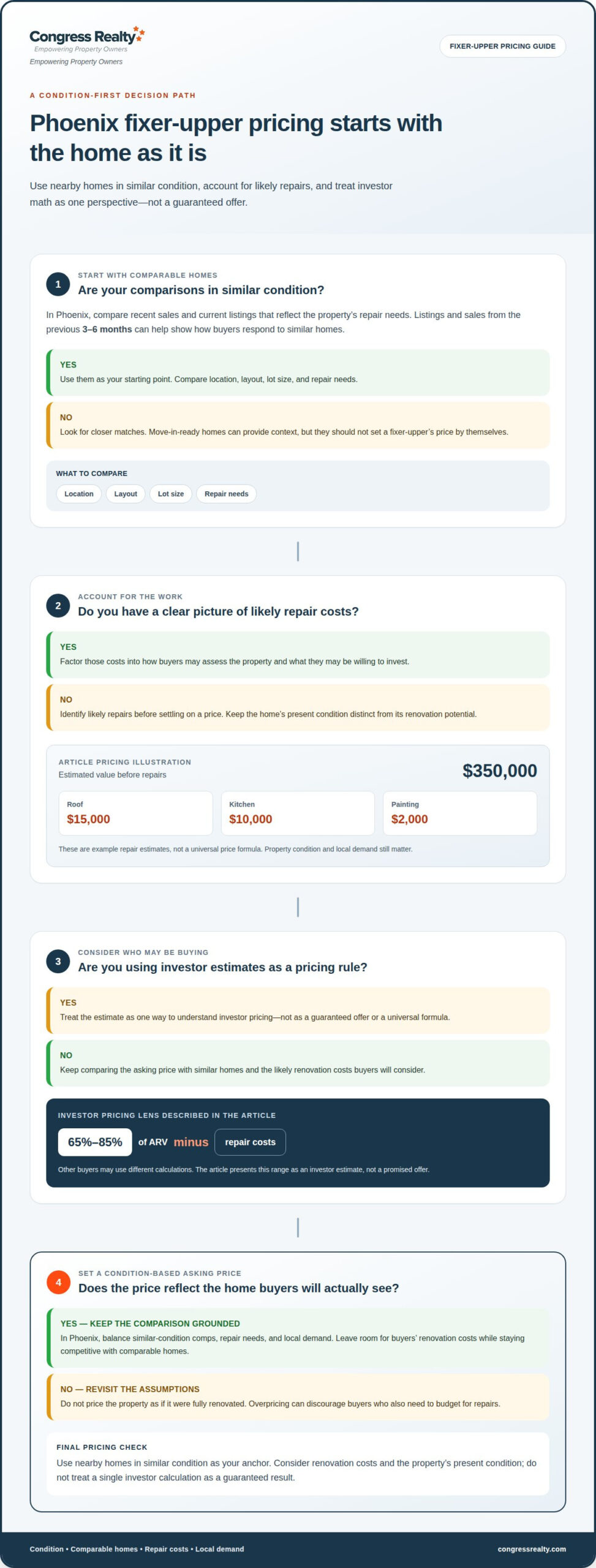
A reliable price starts with nearby homes in similar condition, not renovated properties with a different buyer appeal. In Phoenix, a professional compares recent sale prices and current listings, looking at location, layout, lot size, and repair needs. Listings and sales from the previous 3-6 months can help show how buyers respond to homes like yours. Move-in-ready homes provide context, but they should not set a fixer-upper’s price by themselves.
Next, the pricing analysis accounts for the home’s likely after-repair value, or ARV, and the renovation budget. For example, one pricing illustration starts with a $350,000 estimated value before repairs, then considers a $15,000 roof, a $10,000 kitchen, and $2,000 for painting. Those figures show how repair estimates affect the amount a buyer may be willing to invest. They are examples, not a universal price formula: the property’s condition and local demand still matter.
Investors may estimate an offer at 65% to 85% of ARV, minus repair costs, while other buyers use different calculations. A professional treats that range as one way to understand investor pricing, not as a guaranteed offer. The asking price also needs to leave room for buyers’ renovation costs while remaining competitive with comparable homes. Overpricing can discourage buyers who already need to budget for repairs.
Review cosmetic work separately. Buyers planning a full renovation may remove new paint, flooring, or decorative finishes to suit their plans. Consider whether an update addresses a visible concern or adds a cost buyers may not value. A clean, uncluttered home helps buyers see the layout without paying for finishes they may replace.
Preparing the property as a clean slate means making its condition easy to understand. Remove abandoned items, distinguish completed repairs from future projects, and organize available renovation records. For Phoenix owners, planning a home sale includes setting a price that reflects both the property’s present condition and its potential.
What closing costs and taxes should an FSBO seller expect? Seller closing charges depend on the contract and settlement details, and tax obligations depend on your situation. Estimate these costs against likely proceeds: the sale price is not the amount you keep.
How a professional markets a fixer-upper through online platforms and local real estate agents
A professional markets a fixer-upper with clear photos, a direct description, and distribution that reaches renovation-minded buyers. In Phoenix, online listings and social media can showcase the home’s layout, location, and project potential. The description should identify visible repair needs honestly, then point out useful features such as a large lot or original hardwood floors. Buyers need enough detail to decide whether the property fits their plans before scheduling a showing.
Marketing through the Multiple Listing Service can broaden exposure to agents working with buyers. A professional prepares listing details that explain the property’s condition, strengths, and likely renovation appeal. They can also coordinate with local real estate agents who know the area and may have clients seeking a renovation project. For example, a home with a flexible floor plan could interest buyers who want to reconfigure rooms rather than preserve the current layout.
What are the pros and cons of selling a fixer-upper FSBO versus using a real estate agent? Selling without a traditional listing agent gives you more control over marketing and negotiations, but you must manage inquiries and sale details. Agent support can help with marketing and the transaction, so weigh the service against its compensation arrangement.
Agent guidance can help shape a listing strategy without taking the decisions out of your hands. An agent familiar with fixer-uppers can help explain repair needs, identify likely buyers, and coordinate property access. Marketing a dated home differs from presenting one that needs major structural or system repairs. Ask how the agent would present a feature such as a detached workshop and reach buyers seeking a renovation project.
Decide whether to offer compensation to a buyer’s agent based on how that choice affects your marketing plan and expected proceeds. It is the seller’s decision, not a universal requirement or fixed rate. Consider the tradeoff between retaining more proceeds and appealing to buyers working with agents. For a fixer-upper FSBO sale, pair accurate online information with responsive communication and a clear way for interested buyers to learn more.
How a professional showcases a property’s distinctive features and potential
Present the home so buyers can picture its potential without disguising its condition. In Phoenix, you might highlight a spacious layout, original hardwood floors, a large lot, or distinctive architectural details. Keep rooms open and show how buyers could use them. Removing excess furniture, for example, can reveal a flexible living area more effectively than decorative upgrades.
Connect each feature to a practical possibility. A deep backyard may suit outdoor living, while an adaptable floor plan could support a redesign. Accurate photos and a clear description help attract buyers interested in renovation. Distinguish existing strengths, such as a solid foundation or newer roof, from unfinished work so buyers can assess the project realistically.
Which state and local laws affect FSBO sales and property disclosures? Requirements depend on where the property is located. Account for applicable disclosure rules and local permit requirements for repairs. Describe known issues honestly, including structural concerns, and share available records about past renovations.
How can a professional estimate repair costs and help disclose needed repairs to buyers? A professional can organize known repair needs, review inspection findings, and gather estimates for specific work, such as plumbing repairs or roof replacement. The listing can then describe those issues clearly, separating documented facts from planned improvements.
What are the risks and legal liabilities of selling a fixer-upper as-is? An as-is sale does not make known problems disappear, and hiding a structural defect can create disputes or legal exposure. A professional helps present the condition accurately, while buyers can use disclosures and inspection information to assess the property before making an offer.
Holding costs also affect a buyer’s decision. Utilities, insurance, taxes, and other ongoing expenses can continue while the home remains unsold. A buyer planning a lengthy renovation may weigh both the repair work and the time needed to complete it. Clear information about the condition, distinctive features, and renovation potential gives buyers a practical basis for evaluating the property.
How a professional cleans a fixer-upper and improves its curb appeal before sale
Start with a focused walkthrough, separating cleanup from repairs. Inside, remove trash, abandoned furniture, and loose clutter that obscures room size or access. Vacuum floors and clear visible surfaces to make the home easier to view without disguising its condition. The goal is a presentable space, not a full renovation.
Next comes the exterior approach buyers see before entering. A professional can arrange basic yard cleanup, remove debris, trim overgrown landscaping, and clear the path to the front door. In Phoenix, an untidy entry can distract from a useful feature such as a wide porch or mature shade tree. A swept walkway and visible entrance help the listing present those features clearly.
Small, targeted improvements can sharpen curb appeal without turning into a major project. Peeling paint near the entry, a broken gate latch, or weeds along the walkway may be manageable issues. Touching up the front door or tidying planting beds can make the property look cared for. Choose work based on what buyers notice and the home’s condition.
Cleaning should never conceal a defect. Keep a stained ceiling, damaged siding, or cracked step visible, and describe the issue accurately in the listing. This helps buyers distinguish cosmetic wear from repairs that need closer attention. Clear presentation supports informed decisions and avoids implying that you completed work that you did not complete.
Weigh each improvement against the likely buyer’s plans. Someone buying a fixer-upper may want to choose finishes and complete larger updates personally, so fresh paint throughout or new landscaping may not justify the cost. A clean slate can work better. Clearing a crowded living room, for example, reveals its layout without additional furniture or decorative staging.
Before marketing, view the property from the sidewalk and the entry. Check that the yard looks orderly, the route inside is clear, and the listing can highlight the home’s real strengths. In Phoenix, a tidy exterior and clean interior help buyers focus on the property’s potential while keeping visible and accurately representing any work the property needs.
Can You Sell a Fixer-Upper FSBO?
Yes. You can market a fixer-upper without hiring a traditional listing agent, but you’ll need to manage pricing, inquiries, showings, offers, and transaction details. Selling a fixer-upper FSBO can work when you can explain the property’s condition clearly and respond to buyer questions. The key decision is whether greater control is worth the time and coordination involved.
Start by matching the home’s condition to the likely buyer. A property needing major electrical, plumbing, septic, or mold repairs may appeal to cash buyers or renovation-focused investors who plan to renovate and resell or rent it. A home requiring less extensive work may also interest buyers using a renovation loan that combines purchase and repair costs in one mortgage.
Consider financing before setting expectations for offers. Major repairs may make it difficult for a home to qualify for traditional financing, narrowing the buyer pool. Cash buyers do not rely on a mortgage, while other buyers may need financing that accounts for repairs. Evaluate an offer based on its financing terms, contingencies, and proposed timeline, not just its price.
What inspections, appraisals, and contingencies are common when selling a fixer-upper? Buyers may request a home inspection, and financed purchases may involve an appraisal. An offer may include inspection, appraisal, or financing contingencies, which affect how either party can proceed if the buyer does not meet a condition.
Review each offer carefully. Compare the proposed price with the buyer’s financing, inspection terms, requested repairs, and closing conditions. A lower cash offer, for example, may involve fewer financing steps, while a higher financed offer may depend on the home meeting lender requirements. Neither is automatically stronger: the terms and property condition matter.
Be realistic about the work of managing the transaction. You’ll coordinate buyer access, organize communication, and track deadlines and documents through closing. Sagging floors or faulty wiring may affect buyer interest and financing. A clear listing and consistent communication help serious buyers assess the project. FSBO can work if you can manage the process and price the home for its actual condition.
Congress Realty
Congress Realty can support your fixer-upper sale if you want to manage the decisions while gaining professional listing exposure. A home that needs work still needs clear marketing, accurate details, and a practical way for interested buyers to view it. Congress Realty’s flat-fee MLS listing helps you present the home as it stands and show its renovation potential.
Multiple Listing Services help place a property in the professional real estate database agents use to find homes for buyers. For a fixer-upper, listing details should describe the condition plainly and distinguish existing features from needed repairs. A spacious layout, original details, or a useful lot can help buyers understand what they could preserve or change. You stay in control of the asking price and offer decisions.
Marketing materials can give buyers a clearer first look. A Virtual Tour lets them review the layout and consider whether the project fits their plans before arranging a visit. Yard Signs can draw the attention of people passing through the neighborhood. These tools support online marketing and local visibility without suggesting the home has undergone repairs that it has not.
Access matters when buyers want to inspect a property with renovation plans in mind. An eLockbox or Key Lockbox can support access for showings. Clear arrangements make it easier for interested buyers and their agents to view rooms, note features, and consider needed repairs. You keep control of sale decisions while using practical listing and access tools.
For example, a Phoenix fixer-upper with an adaptable floor plan could attract buyers seeking a renovation project. Pair accurate condition information with a Virtual Tour, and use a Yard Sign to make the property visible nearby. Buyers can assess whether the layout and potential suit their goals, while you evaluate offers based on price, financing, and terms.
Congress Realty is a fit when you want professional listing exposure and marketing support without giving up sale decisions. You decide how to present the home’s condition and which offer to accept. A flat-fee MLS listing provides the same exposure as listings for which sellers pay a full commission. Clear information helps buyers understand the project and make informed decisions.
For support with presenting your fixer-upper to buyers, contact Congress Realty.
Frequently Asked Questions
How does a professional price a fixer-upper for sale by owner?
A professional compares the home with nearby properties, then adjusts for condition, layout, and location. The analysis separates features buyers can use now from repairs they may need to fund. For example, two similar homes may support different asking prices if one has a functioning roof and the other needs replacement. Recent buyer responses to comparable listings can also help assess whether the asking price attracts interest.
What repairs should a professional recommend before selling a fixer-upper FSBO?
Prioritize repairs that affect safety, essential systems, or a buyer’s ability to assess the home. Faulty wiring, plumbing problems, broken windows, and active leaks may need attention before listing. Review cosmetic updates separately, especially if renovation-minded buyers may replace the finishes. Recommendations should reflect the property’s condition and likely buyer, not an assumption that every room needs remodeling.
What steps does a professional take to sell a house FSBO in the United States?
Support with a sale can cover pricing, property details, marketing, buyer access, offer review, and closing coordination. You provide accurate information about the home and decide which offer to accept. An offer with a financing contingency, for example, may require different coordination than a cash offer. Documents and disclosure requirements depend on the property’s location, so account for the applicable state and local rules.
What FSBO paperwork and disclosures should a professional prepare when selling a fixer-upper?
Paperwork commonly includes the purchase agreement, property disclosures, and documents recording agreed terms and closing details. Useful fixer-upper records may include repair invoices, permits, inspection reports, and warranties for completed work. Disclose known problems accurately rather than implying repairs were made when they were not. Forms and disclosure requirements vary by location, so use the applicable local process.
How does a professional market a fixer-upper FSBO to attract cash or renovation-loan buyers?
Describe the home’s condition plainly and highlight features that support a renovation plan, such as a flexible layout or usable lot. Buyers can then consider whether cash or a renovation loan fits the project. A Multiple Listing Service listing provides the same exposure as listings for which sellers pay a full commission. The MLS is exclusive to members, and only members can make listing changes. Accurate details help buyers assess the property before viewing.
Which state and local laws affect FSBO sales and property disclosures?
Requirements depend on the property’s location and include applicable disclosure rules and local permit requirements for repairs. Disclose known issues honestly, including structural concerns, and share available records about past renovations.