
Congress Realty, a flat fee MLS brokerage serving Austin, helps homeowners market a sale through Multiple Listing Services. An HOA resale certificate is a document that explains the association’s fees, assessments, amounts owed, rules, and other details buyers need to understand before closing. In Texas, Chapter 207 of the Texas Property Code covers resale certificates for certain subdivision properties, and the association must provide the requested information after receiving and verifying a proper written request.
It’s reasonable to want clear answers about what the document covers, who requests it, and who pays. Learn what an HOA resale certificate is, why it matters to buyers and sellers, how to request one, and how fees and payment work. For covered Texas subdivision properties, the charge for assembling, copying, and delivering the required information and certificate cannot exceed $375. An updated certificate has a separate $75 fee cap. The sales contract typically determines whether the buyer or seller pays, so understanding the certificate and its timing can help keep an Austin home sale on track.
Key Takeaways
- Understand what the certificate and resale package reveal about association finances, rules, and property matters that could affect a sale.
- Plan the request around the association’s processing timeline and the purchase contract’s delivery deadline.
- Learn how Texas fee limits work, when an updated certificate may be useful, and how the contract can determine who pays.
- Use the certificate to spot outstanding balances, disclosed violations, or other issues that may shape a buyer’s decision.
- Know who can request the documents and what information to provide to help the process move forward.
HOA Resale Certificate: What Is It & What’s It For?
In Texas, a resale certificate supplies key association information during a home sale. For covered subdivision properties, Chapter 207 of the Texas Property Code sets request and delivery requirements.
Request and Processing Deadlines
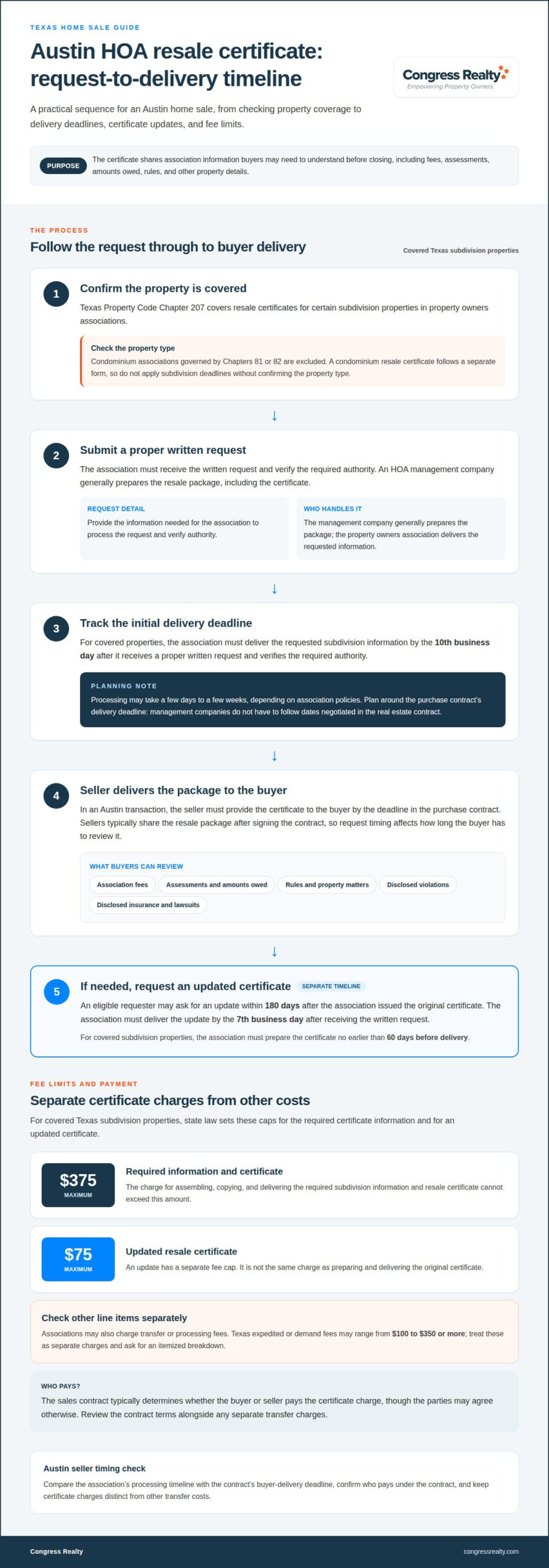
For covered Texas properties, the association must deliver requested subdivision information by the 10th business day after receiving a proper written request and verifying required authority. An HOA management company generally prepares the resale package, including the certificate. This deadline matters because sellers need time to provide the package within the purchase contract’s deadline. Processing may take a few days to a few weeks, depending on association policies.
Certificate Validity Period
There is no single fixed validity period stated for every Texas resale certificate. For covered subdivision properties, the association must prepare the certificate no earlier than 60 days before delivery. An eligible requester can ask for an updated certificate within 180 days after the association issued the original certificate. The association must deliver the update by the seventh business day after receiving the written request.
Who prepares and provides an HOA resale certificate? The HOA management company generally prepares it, and the property owners association delivers the requested information. In Texas, the seller must provide the certificate to the buyer by the deadline in the purchase contract. Sellers typically share the resale package after signing the contract, so request timing affects how much time the buyer has to review it.
Texas Chapter 207 applies to covered subdivision properties in property owners associations. It excludes condominium associations governed by Chapters 81 or 82. A condominium resale certificate follows a separate form, so identify the property type before applying subdivision deadlines. For a covered home, the association’s standing and account records help buyers understand assessments, balances, and other details relevant to the transaction.
Payment arrangements for resale-certificate requests may vary, so check the applicable process before placing an order. If an eligible requester seeks an update within 180 days of the original issue date, the association’s deadline becomes the seventh business day. These separate timelines make the request date, delivery date, and any update request important transaction details.
For sellers, the purchase contract sets the buyer’s delivery deadline, while the association follows its own request-processing timeline. Management companies do not sign the real estate contract and do not have to follow its negotiated dates. Allow for processing time when planning the transaction. If delivery becomes an issue, review the transaction file and contract deadline to determine the next step.
Resale certificate fees and payment
In Texas, state law limits the charge for assembling, copying, and delivering required subdivision information and a resale certificate to $375. An updated resale certificate has a separate fee cap of $75. These limits help distinguish a certificate charge from other costs connected with transferring a home in a community.
Associations may also charge transfer or processing fees. These charges can cover administrative work involved in changing the owner’s records, while a certificate fee covers preparing and delivering the requested information. The governing documents and transaction paperwork can help identify applicable costs. Don’t assume each line item covers the same service or falls under the same limit.
Texas law also says the resale-certificate charge may not exceed a reasonable amount. The sales contract typically determines whether the buyer or seller pays, though the parties may agree otherwise. The contract is the practical starting point for assigning responsibility before closing. Review its payment terms alongside separate transfer charges and community restrictions that could affect the sale.
Payment arrangements can vary during the certificate-request process. However, it may not process payment until the certificate is available for delivery. If a seller receives an early payment request, clarify when payment is due and whether the certificate is ready for delivery.
Other states set different rules. In California, a management company may charge the seller a reasonable resale-package fee based on the actual cost of obtaining and delivering it. Washington, D.C., permits a reasonable resale fee. Maryland and Virginia allow homeowners associations to charge resale fees. Don’t automatically apply a Texas limit to a property in another state.
Texas expedited or demand fees can range from $100 to $350 or more. Treat these as a separate charge to understand, rather than assuming they replace the standard certificate fee or change who pays under the contract. Ask for an itemized breakdown in the transaction and compare each charge with its stated purpose before closing.
Clear fee categories make it easier to budget and assign costs without confusing certificate preparation with other transfer expenses. For practical support with the sale itself, explore home-selling options as you organize the transaction.
Why certificates matter to buyers, sellers, and agents
An HOA resale certificate turns association records into practical information for a real estate transaction. Buyers can use it to review assessments, unpaid balances, known violations, insurance, and lawsuits the association has disclosed. These details affect the financial picture beyond the purchase price. For example, an unpaid assessment could change the amount due at closing or raise questions about responsibility after ownership changes.
Buyers should review the certificate alongside the resale package and purchase contract. If the certificate discloses a lawsuit, obtaining and reviewing a copy can clarify its subject and potential relevance to future ownership costs. Buyers can also ask focused questions about listed balances, pending assessment changes, or how often dues are collected. Specific questions help turn association records into useful due diligence.
For sellers, the certificate surfaces account issues and restrictions before closing. Existing violations may lead to fines or assessments. An unresolved restriction violation can also prevent a title company from issuing the T-19 endorsement to the lender, which may keep the lender from funding the loan. Addressing a violation before closing and obtaining an HOA letter confirming that the HOA resolved it can help document the resolution.
Agents can use the certificate to identify transaction risks early. If the management company says it cannot deliver the certificate by the contract deadline, review the transaction file and consider whether the parties need an amendment. Agents can also help buyers track their review period, direct questions to the appropriate transaction participants, and flag dues the association has disclosed or restrictions that need attention.
A buyer’s review rights come from the purchase contract and applicable rules, not the certificate alone. In many cases, a buyer may terminate if the certificate’s information is unacceptable, subject to a specified review period. That makes prompt delivery and careful review important. If a buyer finds an unexpected balance or violation, compare the disclosure with the contract’s deadlines and remedies.
For the HOA, accurate account and property records clarify the seller’s standing and the amounts associated with the home. For buyers, those records support informed decisions. For sellers, they can reveal issues to address before closing. The certificate cannot remove an existing obligation, but it gives the parties a documented basis for resolving financial questions and keeping the sale moving.
Definition and purpose of an HOA resale certificate
An HOA resale certificate is a record that the association prepares with key financial and property information for a home sale. For homeowners asking what an HOA resale certificate is, think of it as a snapshot of the property’s association account and related disclosures. Buyers use it during a purchase to understand dues, assessments, restrictions, and other details before closing.
The certificate is not always the entire resale disclosure package. It provides association information about the specific property; the broader package may also include governing documents such as bylaws, covenants, and community rules. “Estoppel” or “closing statement” may refer to a resale certificate, though terminology varies by association and location.
For covered Texas subdivision properties, Texas Property Code Section 207.003(b) lists information the certificate must include. This can cover current assessments and amounts owners owe, the association’s budget and balance sheet, insurance, certain lawsuits, violations the association knows about, and transfer fees. These details help buyers distinguish regular dues from special assessments or a balance the seller owes.
Association records also help explain how a community operates. A resale package may contain bylaws, restrictions, and other rules that affect homeowners after purchase. For example, reviewing restrictions the association discloses helps buyers understand which association requirements apply to the property. The certificate’s account details can also show whether the seller owes an assessment during the transaction.
A management company generally prepares and handles the resale package, including the certificate. Association records provide the basis for information about dues, insurance, violations, and financial standing. Buyers can review the certificate alongside its supporting documents rather than treating one page as a complete summary of every community rule.
In practical terms, the certificate answers transaction questions: what the property owes, which assessments apply, and whether the association has disclosed relevant issues. The package adds context through documents such as bylaws and covenants. Together, they help buyers assess ongoing costs and obligations, while giving sellers and other transaction participants a shared record for addressing association matters before closing.
How to request a resale certificate
Start by identifying the association that maintains the property’s records. The seller, buyer, an authorized agent, or a title representative can coordinate the request. Follow the association’s designated process and provide the property address, sale details, and requester’s role. Clear information helps the association match the request to the correct account and avoid confusion between similarly named homes.
Request the complete resale package, not just the certificate page. Supporting documents provide context for the certificate’s figures and disclosures. Keep a copy of the submitted request, the association’s acknowledgment, and any order reference together in the transaction file. This record helps everyone follow up on the same request if the package arrives incomplete or needs clarification.
Before submitting payment, review the order summary and identify each charge. Ask the association to distinguish certificate preparation from any separate transfer or processing item. Payment requirements and processing practices may vary, so check the association’s instructions before paying. Keep the receipt with the order record so the transaction file shows what the payment covered.
Once the package arrives, buyers should compare its property-specific statements with the purchase contract and closing figures. For example, if the certificate lists an amount due, confirm that the transaction documents account for it consistently. If the documents differ, send a focused question to the appropriate transaction participant and keep the written response with the file. This creates a clear record before the parties finalize closing figures.
Note any disclosure that needs a separate document or explanation. If the package refers to a lawsuit, request and review a copy. If it identifies a property issue, keep related correspondence with the transaction records. This helps buyers move from a brief disclosure to the underlying details without relying on assumptions.
Sellers can simplify coordination by sharing the package promptly with the buyer and other transaction participants. Keep the request, payment record, delivered documents, and follow-up responses in one organized file. That way, everyone can refer to the same version and spot unresolved questions before closing.
As you coordinate the certificate with your sale, explore options for selling your home.
Congress Realty
Congress Realty supports Austin homeowners who want to manage their sale with professional listing tools. An HOA resale certificate remains an association document, so the seller still requests it from the association or its management company. Congress Realty’s role fits alongside that task: helping sellers market the home while they track association paperwork and contract deadlines.
Keep the two workstreams distinct. The association prepares the resale certificate and package; the seller coordinates the request with the sale timeline. Congress Realty offers Multiple Listing Services, which place a property in the real estate marketplace with the same exposure as properties for which sellers pay a full commission. Sellers can focus on accurate listing details and marketing while keeping the association’s delivery deadline visible in the transaction calendar.
A practical sequence helps keep the sale organized. First, review the purchase contract’s certificate deadline. Then submit the association’s written request and retain its receipt date. While the association processes the package, prepare the home’s listing information and plan how buyers will access property details. This keeps association processing and marketing on track without losing sight of either task.
For property presentation and access, Congress Realty also offers Yard Signs, Virtual Tour, and eLockbox options. These tools support different parts of marketing and showing access. They do not replace the association’s certificate or answer questions about assessments, violations, and governing documents. Keep those matters with the resale package, and use the listing tools to present the property.
Sellers who prefer a more independent approach can stay active in decisions while using professional MLS infrastructure. Keep association records, contract dates, and listing materials organized in the same transaction plan. If the certificate reveals an account issue or restriction, address it through the appropriate transaction process. Marketing can continue in parallel, but the certificate still matters to the buyer’s review.
For an Austin sale, the next step is deciding how you want to market the home and manage the process. Congress Realty’s listing tools can support that plan without turning the HOA document into a listing service. Keep control of your timeline, track the association’s response, and prepare your property information for buyers.
If you’re preparing to sell in Austin, contact Congress Realty to discuss your listing options.
Move Forward With a Clear Selling Plan
Understanding what an HOA resale certificate is can help you approach your sale with a more deliberate plan. Decide which transaction tasks need attention first, then keep your next steps organized as the sale moves forward. In Austin, a clear plan can help you stay focused on the decisions that matter to you.
Use what you’ve learned to set priorities and choose how you want to manage the process. Take the next step at your own pace, keeping your goals at the center of each decision.
Explore your selling options with Congress Realty and choose a path that fits your plans. Move forward with confidence and keep the process in your hands.
Frequently Asked Questions
What’s Included in an HOA Resale Package?
A resale package brings the property’s association disclosures together with supporting records. The certificate focuses on the transaction, while attachments can provide context for statements or charges. For example, if the package references a separate schedule, review it alongside the certificate rather than treating the certificate as the entire file. This distinction helps buyers identify which document answers each question.
Can an Association Charge an HOA Resale Fee?
Yes, an association can charge for preparing and delivering resale information, subject to applicable state limits. Before approving an invoice, distinguish the certificate charge from other line items. An assessment owed on the property is different from an administrative fee for processing a transfer. Then compare the contract’s cost allocation with the closing statement so the parties use consistent figures.
How long does the association have to provide the certificate?
The deadline depends on the state, property type, and whether the association has a complete request. For a covered Texas subdivision, track when the association receives the written request and verifies the requester’s authority. Keep its receipt confirmation with the transaction records. If the expected delivery date conflicts with the sale schedule, flag the issue early with the transaction participants.
Is it required in Texas?
An association may require a resale certificate for a sale involving a home in an HOA community, depending on the applicable rules. First determine whether the property falls under subdivision or condominium rules, because Texas treats those categories separately. That classification helps the parties follow the right document and process instead of assuming every association has the same requirements.
What if the certificate is late or missing?
Ask the association or management company for a written status update and save its response with the transaction file. Then tell the buyer, seller, and title representative about the delay so they can assess its effect on scheduling. Review the purchase contract’s certificate language and related deadlines before changing plans. Keep a clear record of requests, replies, and delivery dates.
What information is included?
The certificate gives a property-focused view of the association’s records, while the broader package supplies context. Its purpose is to help transaction participants understand the association’s position on the home at the time of sale. Read it as an official snapshot, not a guarantee that future dues or community policies will remain unchanged.
What information should I pay close attention to?
Pay attention to entries that could change the buyer’s budget or affect the planned closing. Compare the dates and descriptions on the certificate with related association records. If a line uses unfamiliar wording or points to another document, request the supporting material and a written explanation. A specific question about one entry usually gets a clearer response than a broad request to explain the entire package.
What information is included in an HOA resale certificate?
The certificate focuses on the association’s records for the specific property; it is not a full inspection or condition report. Use it to understand what the association reports for the transaction, then consult the accompanying documents to interpret community-wide obligations. Keep the two roles distinct: the certificate addresses the property account, while governing documents explain the association’s broader framework.