Congress Realty provides flat-fee MLS listings for rural properties in Phoenix and the surrounding area. For owners selling a rural property without a realtor, a sound asking price starts with relevant sales and the specific features of the land.
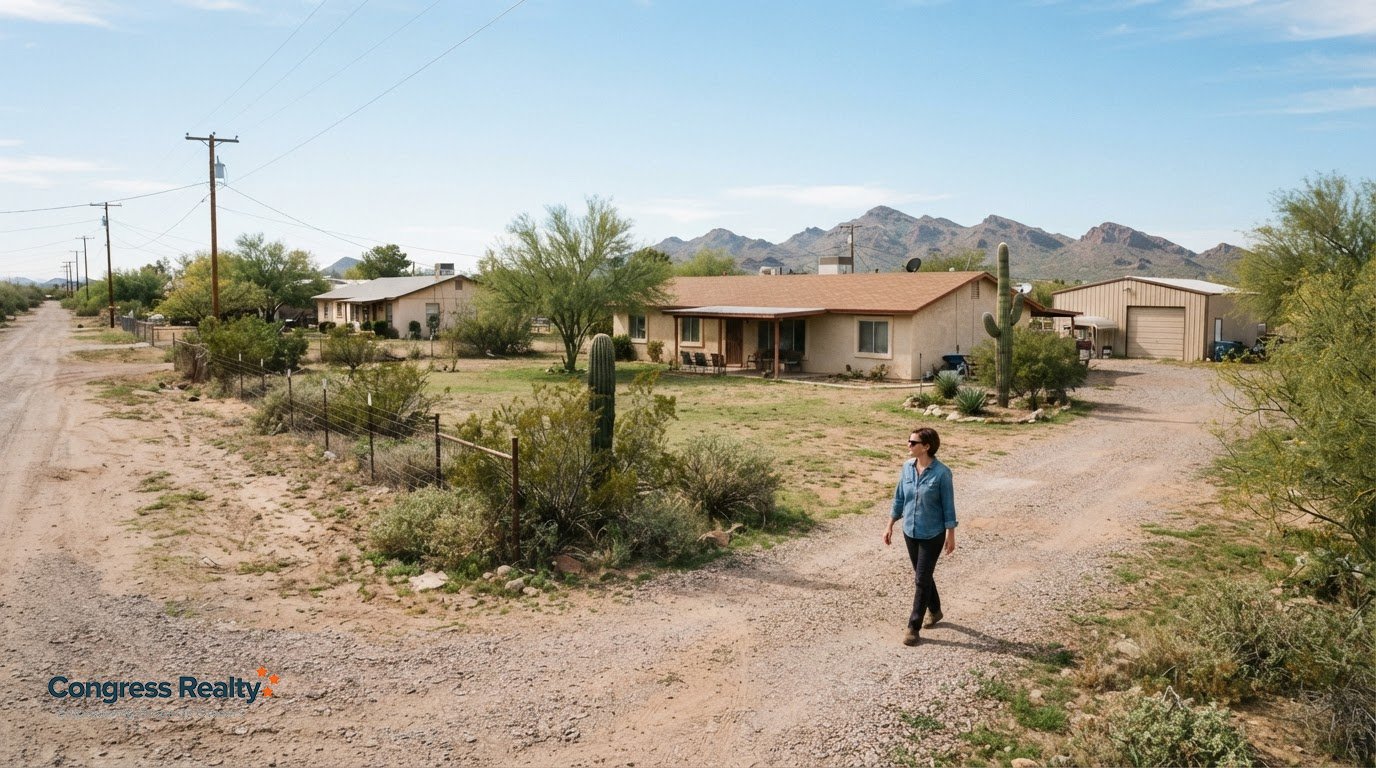
A Phoenix-area rural property may differ from nearby houses in acreage, access, or improvements. Those differences matter when comparing sales around Phoenix, where a close location alone doesn’t make two properties comparable.
This guide shows Phoenix sellers how state rules, comparable sales, costs, timelines, and common risks inform a sale. Use those factors to shape a practical pricing plan for your Phoenix-area property.
Key Takeaways
- Review state disclosure and closing requirements before setting your sale plan, including the federal lead-based paint disclosure rule for homes built before 1978.
- Build your asking price around comparable rural sales, accounting for differences in land, access, utilities, and property features.
- Assess whether your listing details, photos, and virtual tour show buyers what makes the property useful and distinct.
- Estimate your likely proceeds by weighing sale costs and timelines alongside any commission savings.
- Consider Congress Realty’s MLS listing options and marketing tools if you want professional listing support while staying in control of the sale.
FSBO Legality and State-Specific Requirements
Property owners can sell without an agent in all 50 states, but state rules still shape the transaction. A professional can assess zoning and land use through county records, review deeds and title documents for mineral rights, and examine agricultural tax records to identify property-specific issues.
-
How a Professional Checks State FSBO and Broker Licensing Requirements
Start by identifying the state where the property sits, then review its real estate licensing rules. Those rules affect which activities require a licensed brokerage and how transaction support may work. Business-sale representation may involve different considerations from a real estate sale, so check the applicable requirements and seek legal guidance. Keep a land sale separate from a business sale, even when a farm or ranch includes operations or equipment.
-
How a Professional Reviews Seller Disclosure Requirements
Have the professional identify which seller disclosures the property’s state requires and organize the facts that apply. Federal law requires sellers to disclose lead-based paint for U.S. homes that builders constructed before 1978, according to the U.S. Environmental Protection Agency. State disclosures may cover known property conditions, so distinguish the house from acreage, wells, outbuildings, or access roads. For example, a known roof issue and a shared driveway concern may need separate, clear descriptions.
-
How a Professional Confirms State-Specific Closing Requirements
Map the closing process to the property’s state before setting an asking price or accepting an offer. Some states require an attorney to take part in a real estate transaction; in others, state law makes attorney involvement optional. Confirm which closing documents, signatures, and transaction roles apply locally. This helps prevent assumptions based on a nearby neighborhood or another state from shaping the sale. Keep the state’s closing process distinct from the buyer’s financing timeline.
- Provide property records for a focused rural review. County zoning maps can show which land uses the county permits, while deed and title records can reveal mineral reservations that parties recorded. Agricultural tax records help clarify the property’s current tax status. A professional can compare those records with the parcel’s actual use and flag inconsistencies for the sale file. Clear documentation helps prospective buyers understand what the asking price covers and which rights or uses transfer.
When Should You Consider Hiring an Agent Instead?
Choose professional support when the work of preparing, presenting, and managing the listing outweighs the control you want to retain. These steps can help you identify where support matters most in a rural sale.
- Assess how much time you can give the sale. A rural listing may need accurate details about acreage, access, water sources, outbuildings, and boundaries. If you cannot assemble those facts, coordinate showings, and respond to buyer questions, consider professional listing and transaction support. Be clear about which tasks you want handled and which decisions you want to retain.
- Plan a complete presentation. Arrange rooms so buyers can understand their use, and photograph both the home and relevant land features. For example, show the road approach, usable acreage, barns, and utility connections when they help explain the property. A virtual tour can help buyers assess the interior layout, while video can show how separate features relate across the parcel.
- Evaluate the listing description before it goes public. It should distinguish the actual property from assumptions, describe its location and features clearly, and avoid unsupported claims about zoning, water, or land use. If writing that description feels difficult, professional help can organize the details into a readable listing. Use photos and a virtual tour to support the description, not to substitute for accurate facts.
- Decide how buyers will find the listing. A listing service can distribute property details through the MLS, while a flat-fee service can provide MLS access without hiring a full-service agent. Compare the work included, especially listing entry, updates, and support with the contract process. If you want an agent to handle broader sale tasks, consider that route; if you can manage those tasks, MLS exposure may be the more relevant need.
NAR’s 2024 Profile of Home Staging reports that 81% of buyer agents said staging made it easier for buyers to visualize the property as their home.
How Do You Price a Rural Property Using Comparable Sales?
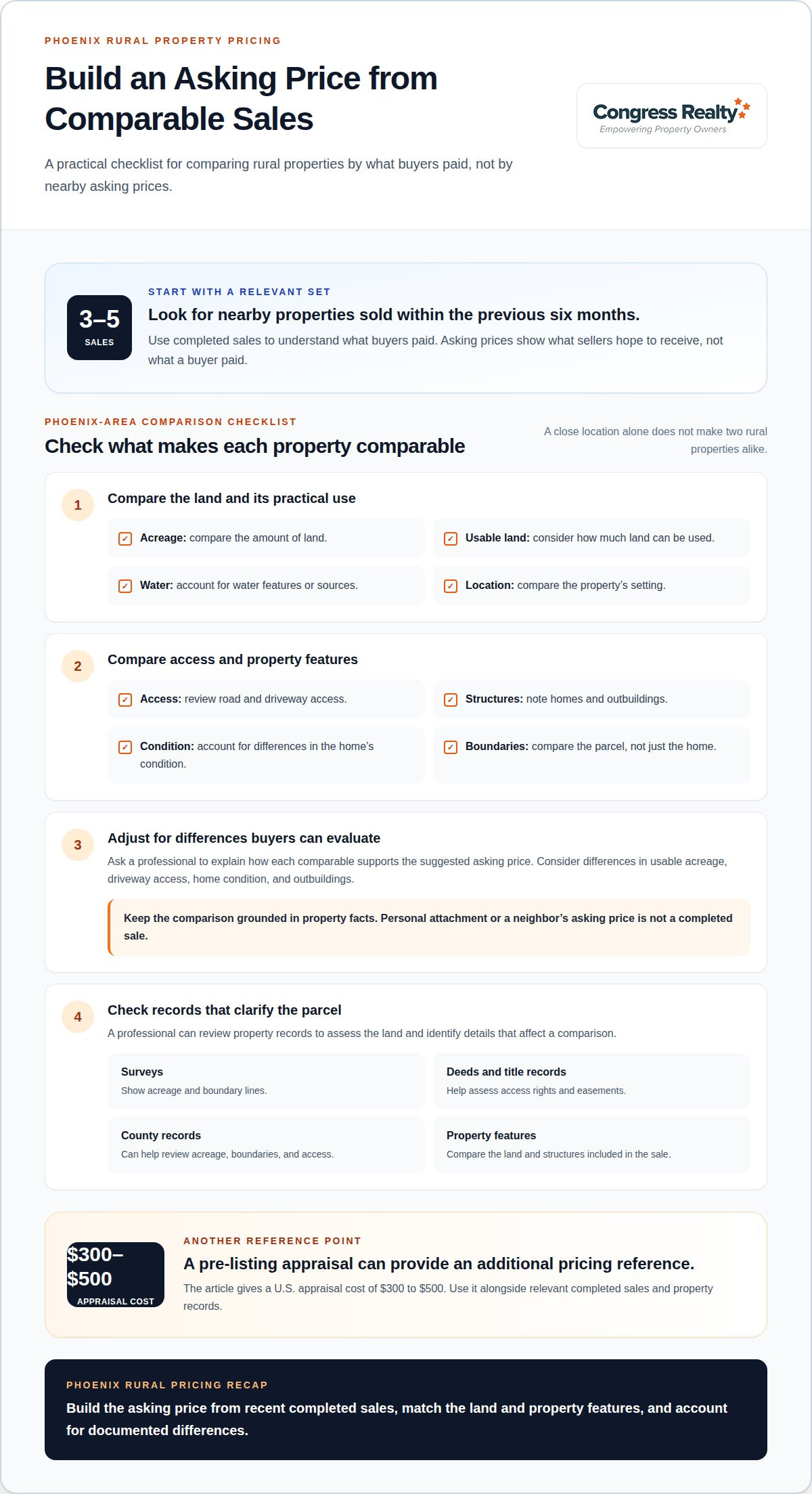
Compare recent nearby sales, then adjust for differences that affect value. A professional can review surveys, deeds, title records, and county records to assess acreage, boundaries, access rights, and easements.
-
How a Professional Researches Comparable Home Sales
Ask a professional to identify 3 to 5 nearby properties that owners sold within the previous six months. Selling a rural property without a realtor makes relevant comparisons especially important: match acreage, usable land, access, water, structures, and location. A house on a small residential lot may not compare well with a home that includes grazing land. Use completed sales, not asking prices, to understand what buyers paid.
-
How a Professional Sets a Price Using Comparable Sales
Have the professional explain how each comparable supports the recommended asking price. Adjust for differences buyers can evaluate, such as home condition, usable acreage, driveway access, or outbuildings. When selling a rural property without a realtor, this analysis can help you avoid relying on personal attachment or a neighbor’s asking price. A pre-listing appraisal offers another reference; U.S. appraisals cost $300 to $500.
- Gather records that clarify the parcel being sold. A survey can show acreage and boundary lines, while deeds and title records can identify recorded easements or access rights. County records can help assess mapped details. If records conflict, resolve the discrepancy before stating precise acreage or describing access. Buyers need to understand what land and rights the transaction includes.
- Review each comparable’s features before adjusting the price. A sale with a maintained access road, for example, may not support the same value as a property with difficult entry. Separate usable acreage from land with limited practical use. Explain each adjustment by referring to a property feature or record, so buyers can follow the pricing rationale and assess the comparison.
- Include a title company or attorney in the pricing process when appropriate. Some states require attorney involvement in real estate transactions, while others make it optional. Early review of title records can identify access or ownership issues that affect the sale. Keep pricing assumptions aligned with the property rights and documents that will transfer at closing.
- Compare properties in the actual rural market, not just the nearest neighborhood. Nearby homes may differ sharply in acreage, structures, access, and land use. Highlight those distinctions when explaining the asking price. A comparative market analysis can organize comparable sales and property details into a clear rationale, helping buyers understand how the price reflects the parcel’s specific features.
FSBO Timelines and Common Risks
Plan around listing, offer, inspection, financing, and closing milestones. For an owner-managed sale, clear deadlines help you negotiate without losing track of the next step.
-
How a Professional Plans for FSBO Timelines
Map each milestone from listing through closing before you accept an offer. In a normal market, most FSBO sales take 45 to 90 days from listing to closing. A financed sale typically closes 30 to 45 days after contract acceptance. Keep those periods distinct: buyer financing and appraisal contingencies commonly run 21 to 30 days after acceptance.
-
How a Professional Helps Avoid Common FSBO Risks and Mistakes
Have a professional organize offer terms, deadlines, and follow-up so a missed date doesn’t derail the home sale. Buyers typically have 7 to 14 days for inspections after offer acceptance. Track the inspection response and any agreed repairs in writing. Avoid relying on verbal promises, especially when a buyer asks to change contract terms or extend a deadline.
- Set a plan for responding to offers before showings begin. Compare the proposed price with financing terms, contingencies, and the buyer’s requested closing date. An appraisal or financing contingency can affect the schedule. If an appraisal comes in below the contract price, review the contract terms and negotiate a clear written resolution instead of assuming the buyer will cover the difference.
- Build realistic time for the final stages. A final walkthrough typically takes place 24 to 48 hours before closing. Confirm that the property’s agreed condition matches the contract and that you have completed any negotiated repairs. Rural properties may include land, outbuildings, or equipment in the deal, so make the contract clear about what stays and what the buyer receives.
- Prepare for a different pace if the buyer pays cash. Cash buyers can typically close a FSBO sale in 14 to 21 days, but the parties still need to complete agreed inspections and closing steps. Don’t treat a shorter timeline as permission to skip contract review. Set dates for signatures, title work, and transfer details, then track each deadline through closing.
- Keep the schedule flexible without leaving deadlines vague. If a buyer requests more time, document the new deadline and any related terms in a written contract amendment. This gives both parties a shared record and a clear path to closing.
Agent Commissions and Seller Costs
Compare potential commission savings with the expenses that remain under each sale method. For a rural property, estimate net proceeds using the likely sale price and each cost category, rather than treating avoided commission as the full savings.
- Separate listing-side savings from other costs. Real estate agent commissions in the United States commonly range from 5% to 6% of a home’s sale price. Eliminating the listing-agent commission can save sellers 2.5% to 3% of the sale price. Selling a rural property without a realtor can reduce that cost, but it doesn’t remove closing expenses or other payments the seller and buyer agree on. Calculate each category separately before estimating proceeds.
- Decide whether to offer buyer-agent compensation. FSBO sellers often still pay a buyer’s-agent commission of 2.5% to 3% of the sale price. The 2024 NAR settlement removed the requirement for sellers to offer buyer-agent compensation through the MLS. Sellers can negotiate whether to offer it and what terms to accept. Treat any proposed payment as a separate decision, not an automatic listing expense.
- Account for remaining transaction expenses. Seller closing costs typically run 1% to 3% of the sale price, separate from commissions. An independent real estate attorney in the United States charges $500 to $1,500 for a standard residential closing. Include applicable legal and closing expenses in the estimate. Rural paperwork may also involve parcel records or access details, so account for the work needed to complete this specific transaction.
- Compare estimated net proceeds. List the expected sale price, listing-side savings, any buyer-agent compensation, and seller closing costs. Subtract the costs from the estimated price to compare sale options on equal terms. Selling a rural property without a realtor may change the commission calculation, but the offer price and other costs still affect what you keep. Use realistic assumptions for each option.
- Check the listing details that support the price. Buyers may consider square footage, acreage, buildings, and property condition when evaluating an offer. Keep listing information consistent with the sale paperwork. For example, clarify whether a detached structure or specified equipment transfers with the property. Accurate details help you evaluate offers based on the same understanding of what the buyer will receive.
Congress Realty
Congress Realty can support a rural sale with Multiple Listing Services and practical marketing tools, while you stay in control of pricing and sale decisions. This can fit when you want MLS exposure but prefer to manage key choices yourself. Rural properties need clear, accurate details so buyers can understand what the listing represents.
Prepare the property information that will shape the listing: acreage, access, structures, utilities, and features you will include in the sale. Keep descriptions consistent with the records and contract terms. Clear details help buyers assess the home and land without confusion about boundaries, uses, or included items.
Multiple Listing Services provide a way to place your listing in the MLS. A Virtual Tour can help buyers understand the home’s layout, while Yard Signs can identify the property locally. An eLockbox or Key Lockbox supports property access for showings. These tools serve different needs, so choose the ones that suit your marketing and access plans.
Think through your priorities before choosing listing support. If you want to reach buyers through the MLS while retaining control over the asking price and negotiations, MLS listing support addresses that need. If buyers need more context about a remote property, a virtual tour can add a visual view of the interior. Clear property information remains essential alongside each tool.
For a rural listing, accuracy matters as much as presentation. Use the correct acreage and carefully describe access, outbuildings, and other relevant features. Keep the public listing aligned with the details you share with interested buyers. Your decisions guide the sale; listing tools help present the property to the market.
Choose support based on the work you want to handle and the exposure you need. Congress Realty offers listing and marketing options that help sellers present a property without handing over every decision. Consider this approach when you want professional listing infrastructure and a direct role in the sale process.
Review selling options with Congress Realty to decide what fits your rural property sale.
Frequently Asked Questions
Does Selling Without an Agent Work the Same in Every State?
Yes. Owners can sell a rural property without a realtor, but practical steps vary with its location. Before marketing a parcel, identify which local records describe permitted use, recorded rights, and access. Organize these details to answer buyer questions. A buyer considering a working ranch, for example, may need different property information from someone purchasing a rural home for residential use.
How Does the 2024 NAR Settlement Affect FSBO Sellers?
The 2024 NAR settlement means sellers no longer have to offer buyer-agent compensation through the MLS. That gives sellers room to consider each offer on its full terms rather than assume one compensation arrangement. Compare the proposed price, requested concessions, financing terms, and closing conditions together. If an offer includes payment toward a buyer’s representation, make sure the contract clearly states who pays and how much.
How Much Does It Cost to Sell a House With and Without an Agent?
The total depends on the services used, the accepted offer, and the property’s needs. Build a net-proceeds worksheet that includes compensation, closing expenses, agreed repairs, and property preparation costs. A needed well repair or clearing work may affect proceeds even when you manage the listing yourself. Compare each sale option using the same expected price and expense categories.
What Are the Biggest Mistakes FSBO Sellers Make?
One costly oversight is leaving the buyer unsure about what transfers with the sale. Specify whether farm equipment, stored materials, or movable structures remain, and make the contract match that agreement. Take buyer questions seriously when they signal a concern about the property. Respond with specific information and document negotiated changes rather than relying on a casual conversation.
What Is Flat-Fee MLS and How Does It Work for FSBO Sellers?
A flat-fee MLS service lists a property on the Multiple Listing Service for a set fee instead of charging a percentage-based listing commission. Congress Realty’s basic listing lasts up to 6 months, with extensions available up to 2 years. That gives sellers a defined listing period to plan around. Review the listing term and any extension option alongside your expected marketing schedule.
What Tools and Services Do FSBO Sellers Need?
Start with the essentials that help buyers understand the property and help you manage the sale: complete listing details, clear property images, organized records, and a reliable way to handle inquiries. Rural properties may also benefit from a virtual tour when distance prevents buyers from visiting in person. Choose each tool to address a real buyer need, rather than adding features that do not clarify the property or process.
Why Are More Homeowners Selling Without a Real Estate Agent?
Owners may choose a direct sale because they already know a likely buyer, want to stay involved in negotiations, or prefer to decide which professional support they use. A sale between people who know each other can follow a different path from a public listing, but both need clear written terms. Consider how much time you can devote to buyer communication and transaction decisions before choosing your approach.
How Can a Professional Help Me Sell Rural Land or Property by Owner in the United States?
A comparative market analysis can help estimate value, and transaction management can keep sale steps organized. For a rural parcel, that support can connect comparable sales to features buyers may weigh, such as usable acreage or improvements. Congress Realty provides both comparative market analysis and transaction management support. You retain decisions about the asking price and offer terms while using professional help for valuation and process coordination.