A clear budget conversation helps you and a buyer’s agent focus on homes that fit your financial limits. Congress Realty is a flat fee MLS brokerage serving Phoenix homeowners. Knowing how to communicate with buyers’ agents in Phoenix starts with sharing your budget clearly, choosing a practical contact method, and agreeing on how often you’ll receive updates.
Wondering whether to start with a call, text, or email? Choose a method that works for both of you, then discuss your budget and timeline directly. For a Phoenix home sale, be clear about the amount you’re comfortable spending and any priorities that could affect your choices. You’ll also want to agree on when to expect replies and what counts as an urgent update.
This guide walks through those decisions step by step, from choosing how to reach an agent to setting expectations for follow-up. If you’re selling in Phoenix, Congress Realty’s Multiple Listing Services can help put your home in front of buyers’ agents while you stay in control of the process.
Key Takeaways
- Choose a contact method that suits both you and the agent, then agree on when to use calls, texts, or email.
- Explain your comfortable budget and financial priorities clearly so conversations stay focused on homes that fit.
- Discuss mortgage preapproval early and clarify what information the agent needs to guide your search.
- Set an update rhythm together. A buyer’s agent should update clients once or twice per week, with more frequent updates when the process moves quickly.
- Before signing a buyer-agent agreement, understand its scope and terms, including how either party can end the arrangement.
How to communicate with buyers’ agents about your budget
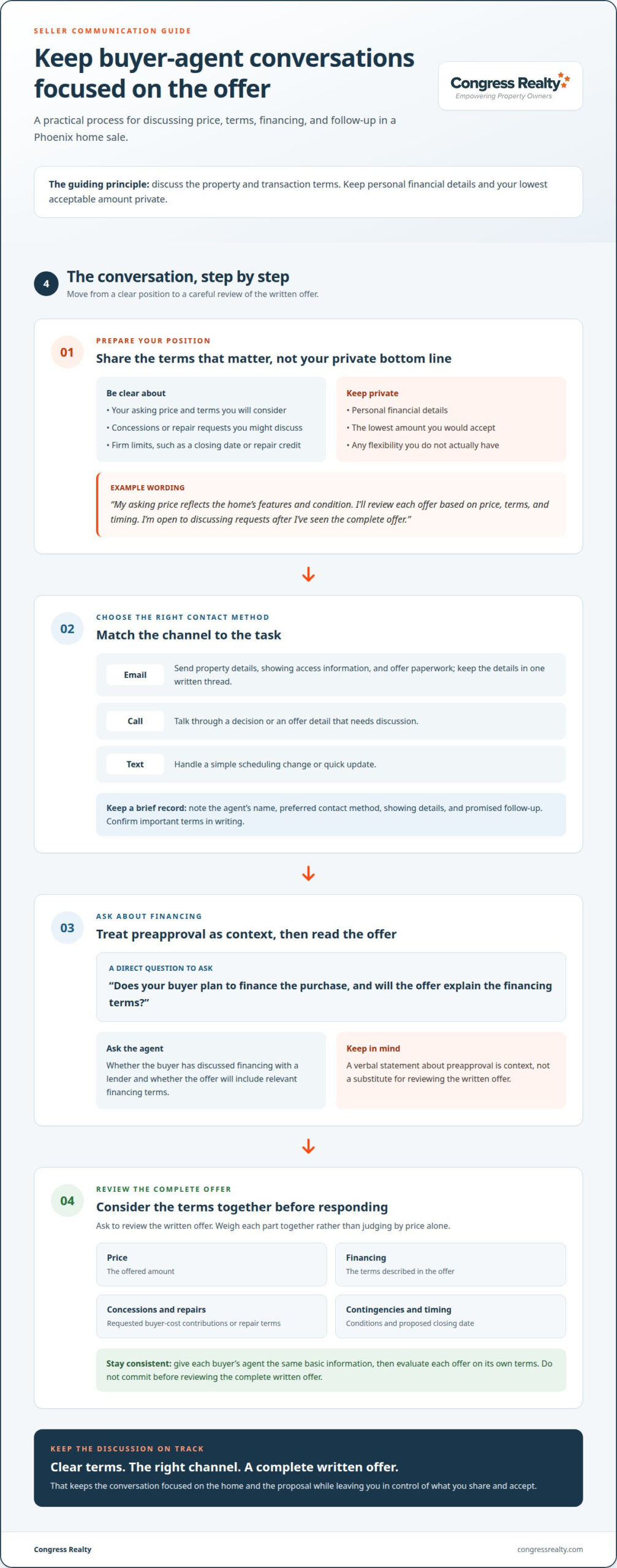
As a seller, explain your budget in terms of the property and the transaction, not your entire financial situation. Tell buyers’ agents your asking price, whether you’ll consider reasonable offers, and which costs or terms matter to you. Keep your personal financial details private unless they directly affect a decision you need to make.
Be specific about the terms you’re open to discussing. A buyer’s agent may ask whether you’d consider a different price, contribute toward buyer costs, or respond to a repair request. These are separate decisions. Identify your firm limits and preferences before the conversation, and avoid revealing the lowest amount you would accept.
Prepare a short, consistent explanation before agents contact you. For example: “My asking price reflects the home’s features and condition. I’ll review each offer based on price, terms, and timing. I’m open to discussing requests after I’ve seen the complete offer.” Adapt the wording to your actual position. Don’t suggest flexibility you don’t have or commit before reviewing the written offer.
- Share: your asking price and the terms you’ll consider.
- Clarify: which concessions or repairs you might discuss.
- Keep private: personal financial details and your bottom line.
If an agent asks whether you’ll reduce the price, explain how you’ll evaluate an offer rather than guessing. You might say you’ll review the price, requested contributions, and timing together. If you have a firm limit on a repair credit or closing date, state it plainly. This helps the agent relay your position accurately without making your private finances part of the negotiation.
Consistency matters. Give each buyer’s agent the same basic information, then evaluate each offer on its own terms. Clear budget communication keeps the discussion focused on the home and the written proposal, while leaving you in control of what you disclose and what you accept.
1. Choosing how to contact a real estate agent
Choose a clear first contact method and use it consistently for routine questions. Email works well for showing access, property details, or offer paperwork because it keeps information in one written thread. Call when a decision needs discussion. Keep your first message focused on the property, the buyer’s interest, and the next step.
When comparing buyer’s agents, ask the same practical questions about their experience with your type of property, how they communicate with sellers, and how they handle offers. Compare the clarity of their answers and whether their process fits your needs. A specific example, such as how they would arrange a showing or deliver an offer, is more useful than a general promise.
A practical approach to how to communicate with buyers’ agents is to match the channel to the task. Email documents or confirm a showing window, then call if an offer detail needs discussion. If an agent texts a quick scheduling change, reply by text when the answer is simple. Confirm important terms in writing so both sides can refer to the same details.
How do buyer’s agents receive payment after the 2024 real estate commission changes? Don’t assume one standard amount or payment arrangement. Ask the agent to explain the proposed compensation in writing, including who would pay, who determines the amount, and whether the offer requests a seller contribution. Review those terms alongside the rest of the offer before responding.
Keep a brief record for each interested buyer. Note the agent’s name, preferred contact method, showing details, and promised follow-up. If an agent leaves a voicemail, respond through the requested channel or send a short message confirming you received it. This helps prevent crossed messages as the conversation develops.
For a smoother sale process, explore options for selling your home and decide which communication steps you want to manage directly.
2. Disclosing budget and mortgage preapproval
Keep your financial position separate from the buyer’s financing. You can state your asking price and the offer terms you would consider without sharing your debts, personal budget, or minimum acceptable amount. Ask to review the complete offer, including price, financing, requested contributions, and proposed closing date.
Mortgage preapproval concerns the buyer, not your own budget. Ask the buyer’s agent whether the buyer has discussed financing with a lender and whether the offer will include relevant financing terms. You don’t need to draw conclusions from a verbal statement. Evaluate the written offer as a whole, including its contingencies and requested seller contributions.
Ask directly: “Does your buyer plan to finance the purchase, and will the offer explain the financing terms?” This keeps the conversation focused on the transaction rather than the buyer’s private finances. Treat a statement about preapproval as context, not a substitute for reviewing the offer.
Share your limits selectively. If you won’t consider paying the buyer’s closing costs, say so before negotiations advance. If you might consider a contribution, explain that you’ll assess it alongside the price and other terms. Avoid naming a private walk-away figure. The agent can relay your position without knowing your full financial picture.
- State: your asking price and any firm transaction limits.
- Ask: whether the offer will describe financing and related terms.
- Review: price, contingencies, concessions, and timing together.
For example, an offer near your asking price may also request a seller contribution or depend on financing. Compare its terms with another offer’s price and timeline. Ask the buyer’s agent to put proposed terms in writing, then review the complete package before accepting, rejecting, or responding with different terms.
Keep financial discussions factual and consistent. Share only what helps explain your position, and don’t promise a contribution before reviewing the written offer. You can discuss the transaction without disclosing unnecessary personal details.
3. Agreeing on communication methods and update frequency
Set the communication routine with the buyer’s agent at the start. Agree on a primary channel, suitable times for contact, and how often the agent will share updates. A buyer’s agent should establish these preferences with each client, rather than assume every seller wants the same approach.
Choose a schedule that gives you useful information without creating needless interruptions. A buyer’s agent should update clients once or twice per week, with more frequent updates potentially appropriate in a fast-paced market or transaction. For example, agree on a regular weekly summary, then add updates when an offer arrives or a showing prompts buyer feedback.
Define what a routine update should cover. Ask for completed showings, buyer responses, offer activity, and any action needed from you. If there’s no new activity, a brief check-in can confirm that. Agree on this expectation early so you’re not left guessing whether the process has moved forward.
- Primary channel: choose email, text, or calls for standard updates.
- Routine cadence: set a weekly summary or another agreed rhythm.
- Urgent matters: decide how the agent should reach you about an offer.
Separate urgent messages from routine updates. Ask the agent to call about a time-sensitive offer and use email for a detailed showing recap. Share when you’re unavailable, such as during a work meeting, and agree on another way to reach you. This sets a clear plan without assuming instant replies.
Keep the arrangement practical. If you prefer a concise email every week, say so; if you want a call after each showing, explain that preference. Review the schedule when activity changes, such as after several showings or when an offer enters the discussion. A quick adjustment keeps updates relevant and helps you respond to the next decision with the right context.
Confirm the contact channel, update schedule, and urgent-message plan in writing. This gives you and the agent a shared reference point throughout the sale.
4. Buyer-agent accessibility and response times
A buyer’s agent should be accessible by phone and return buyers’ calls quickly. As a seller, agree on the best way to reach the agent about a showing, offer, or requested change. For example, ask the agent to call about a new offer and use email for routine details. Set expectations for when you can respond, too.
Arizona real estate licensing requirements determine which activities an agent can perform in Phoenix. If you’re selling in Phoenix, ask which Arizona license the agent holds and clarify who represents the buyer.
Before discussing a showing or offer, ask clear questions about the buyer’s proposal. What timing does the buyer suggest? Which contingencies does the buyer request? Is the buyer requesting repairs or seller contributions? These details help you understand the offer without making assumptions about the buyer’s readiness.
Use a simple follow-up process. If the agent calls while you’re unavailable, return the call or send a brief text acknowledging the message. If the agent emails an offer, confirm receipt and say when you expect to review it. Don’t promise to accept or counter before reading every term. Acknowledging the message keeps the conversation moving without forcing an immediate decision.
Set response expectations according to the message. A scheduling question may need a quick answer to keep a showing on track, while a detailed offer discussion takes time to review. Tell the agent when you’ll be unavailable, such as during a work meeting, and suggest another time to connect. This helps prevent every unanswered call from triggering an emergency response.
Keep the agent’s name, phone number, and latest request in one place. If an offer has a deadline, note it and confirm the best contact method for questions. This simple routine helps you stay responsive while keeping control of your decisions.
5. How do buyer-agent agreements work, and what terms should you review?
A buyer-agent agreement sets out the working relationship between a buyer and an agent. As a seller, you may hear about its terms when an agent explains representation or discusses compensation in an offer. Focus on what the written offer asks you to accept, rather than making assumptions about a separate agreement.
Review the agreement’s scope, duration, and ending terms with the buyer’s agent if they affect your transaction. Ask which services the agent will provide, which buyers or properties the agreement covers, and what happens if the relationship ends. These details can clarify the agent’s role without asking for the buyer’s private information.
Pay close attention to any compensation request in the offer. Ask whether the buyer requests a seller contribution toward the buyer’s agent compensation, how the offer describes the amount, and where the offer documents show it. The buyer and agent set their arrangement; you decide whether to make any contribution. Review it alongside the price, contingencies, and closing terms.
- Scope: identify the services and transaction covered.
- Duration: note when the agreement starts and ends.
- Ending terms: understand how the buyer or agent may end it.
- Compensation: distinguish the buyer-agent arrangement from a seller contribution requested in an offer.
An agent may tell you that the buyer’s agreement includes compensation terms. That statement alone doesn’t make you responsible for them. If the written offer asks you to contribute, assess the request as part of the complete proposal. Ask the agent to identify the relevant written terms, then respond with a counteroffer or another clear written response.
Keep the distinction clear: the buyer-agent agreement concerns the buyer and agent, while your decision concerns your listing and any terms in the buyer’s offer. Don’t rely on a verbal summary when a written document specifies the request. Identify each requested contribution and consider how it affects the complete offer before deciding.
Congress Realty
Congress Realty helps sellers prepare a home for market and communicate clearly with buyers’ agents. Its Multiple Listing Services offering gives sellers a way to market their property through the MLS, while the seller stays involved in conversations about showings, offers, and next steps. This can suit homeowners who want professional listing support while keeping control of how they handle communication.
A clear listing presentation can help buyers’ agents understand the property. A Virtual Tour can present the home to prospective buyers, while Yard Signs can direct local interest toward the listing. An eLockbox can support access for showings. These tools support marketing and access, but they don’t replace your decisions about contact preferences, offer terms, or responses.
Before your listing goes live, decide how you want buyer inquiries handled and what information agents should receive. Keep your asking price, showing instructions, and preferred contact method consistent. When an agent brings an offer or asks about a property detail, review the request and respond with a clear next step. This keeps you in control without making every interaction harder than it needs to be.
If you’re preparing to sell and want MLS exposure with practical listing support, Congress Realty offers flat-fee MLS listings and a Full Service Option. The MLS provides the same exposure as listings for which sellers pay a full commission, and only MLS members can make listing changes. Congress Realty handles changes on your behalf. Choose the level of support that fits how much of the selling process you want to manage yourself.
Use the same straightforward approach with each buyer’s agent: share accurate property details, keep communication organized, and decide based on the written offer. Consistency reduces confusion as interest develops and gives you a clear record of the conversation.
If you’re getting ready to sell, contact Congress Realty about selling your home.
Put your communication plan into action
Clear conversations can shape a smoother sale, but the next step is turning your preferences into a workable plan for your home. Decide what you want to manage yourself, where you want listing support, and how you’ll keep important decisions organized. That gives you a practical starting point before the first buyer inquiry arrives.
An effective approach to how to communicate with buyers’ agents reflects your priorities, not someone else’s routine. Keep your boundaries clear, review complete offers, and decide based on the terms in front of you. You can stay informed and involved while choosing the level of support that suits you.
If you’re preparing to sell and want a straightforward path from planning to listing, contact Congress Realty about your home sale. Take the next step at your own pace, with a plan that keeps you in command.
Frequently Asked Questions
How do you contact and communicate with a buyer’s agent effectively?
Start with your name, property address, and reason for reaching out. A practical way to manage communication with buyers’ agents is to send a short message that makes the next step clear, such as confirming a showing request or asking where to send an offer. Keep one written thread for each buyer’s agent. This creates a useful record if details change or you need to revisit what you agreed.
What information should you share with a buyer’s agent about your budget and home search?
If you’re selling, share the home’s asking price and relevant transaction terms, not your private finances. For example, explain whether you’ll consider an offer with a requested repair credit, then review the written proposal before deciding.
How often should a buyer’s agent provide updates, and through which channels?
Ask the agent to make each update easy to act on by identifying what changed, whether you need to decide, and who takes the next step. A showing recap, for example, can separate buyer feedback from a request that needs your response. This helps you spot decisions that need attention without mistaking general status information for a task or commitment.
What should you do if your buyer’s agent is unresponsive or communication breaks down?
Send a clear written follow-up that names the unanswered question and the decision it affects. For example, ask the agent to confirm whether the agent still plans to hold the showing or whether they received your offer-related message. Keep a record of your attempts and review your agreement for communication expectations or steps for ending the relationship. If you’re the seller and have an unresolved transaction question, direct it to the buyer’s agent’s broker.