
Congress Realty provides flat-fee MLS listings in Arizona, including Phoenix, with the same exposure as listings paid with a full commission. Buyers can make offers on homes sold directly by their owners, and the fsbo laws you need to know shape how offers, contracts, and disclosures work.
Phoenix sellers and buyers need to understand the written terms and each party’s responsibilities. This guide explains how contingencies fit into offers, why disclosure duties depend on state requirements, and what to consider before closing.
For a Phoenix home sale, use these practical points to make informed decisions and stay in control of the process. Buyers can make offers directly to homeowners, while sellers can prepare by understanding the documents and responsibilities involved.
Key Takeaways
- Buyers can make offers on FSBO homes, and both sides should put agreed terms in a written contract.
- Inspection, appraisal, and financing contingencies set out how the parties handle important risks before closing.
- Disclosure requirements depend on the property and state; older homes may involve specific lead-based paint disclosures.
- Keep negotiated changes documented and understand who must complete each part of the transaction.
- Multiple Listing Services can help FSBO sellers present a property to a wider pool of potential buyers.
Who prepares the contract in a FSBO sale?
A seller and buyer can negotiate the purchase agreement themselves, but they don’t have to prepare every document alone. They can use a state-specific form and seek legal help to draft or review terms. The agreement should identify the property, purchase price, deadlines, included items, contingencies, and each party’s obligations. A missing term, such as who handles a repair, can create confusion later.
Real estate paperwork and signing requirements depend on the state. Arizona law doesn’t require a home seller to hire a real estate agent. That doesn’t remove the need to complete required forms or obtain signatures for formal documents. If a property has more than one owner, confirm who holds title and who must sign before accepting an offer.
A purchase agreement usually doesn’t need notarization. A deed transfer, by contrast, almost always requires notarization to legally change ownership, and some states may also require witnesses. Keep these documents distinct: the purchase agreement records the deal, while the deed transfers ownership. The title and closing process determines which signed documents must be prepared and delivered.
Escrow coordinates documents and funds under the parties’ written instructions. The purchase agreement should state key dates and conditions clearly, including how the buyer delivers earnest money and what happens if a deadline passes. For example, if closing depends on financing, record the relevant deadline and the steps required if financing falls through.
Yes, a seller can agree to pay a buyer’s agent commission. The amount and terms are negotiable, so put any agreement in the contract or a separate written compensation agreement, and follow applicable state rules and brokerage agreements.
FSBO sellers must follow fair housing laws when advertising and showing a home. Use neutral, property-focused language, and apply the same showing process and terms to every prospective buyer. Avoid discriminatory descriptions or decisions based on a buyer’s personal characteristics.
Title work helps identify ownership issues before closing. Unpaid liens, boundary disputes, or ownership discrepancies can delay or cancel a sale, so sellers should arrange a title search before transferring the property. If the search reveals a lien, specify how it will be resolved in the closing paperwork rather than relying on a verbal promise.
Before signing, compare the final contract with every negotiated change. Put amendments, repair credits, and closing-date changes in writing, then ensure all required parties sign them. Keep signed copies of the agreement, disclosures, title documents, and closing records together. Representations in a real estate contract can have legal implications after the sale, so precise wording matters.
Negotiating inspections, appraisals, and financing contingencies
Contingencies give buyers and sellers written rules for handling inspection findings, loan approval, appraisal results, and title concerns. The purchase agreement should identify each contingency, its deadline, and what action either party may take. Clear terms help prevent a missed deadline from turning into a dispute over whether the buyer can proceed or withdraw.
A sale without a seller’s agent still involves the same basic negotiation points: inspections, title review, financing, appraisal, and closing. The agreement sets the inspection period and describes how the parties will handle findings. A title contingency addresses ownership transfer and property history, while closing documents carry the agreed transaction toward completion.
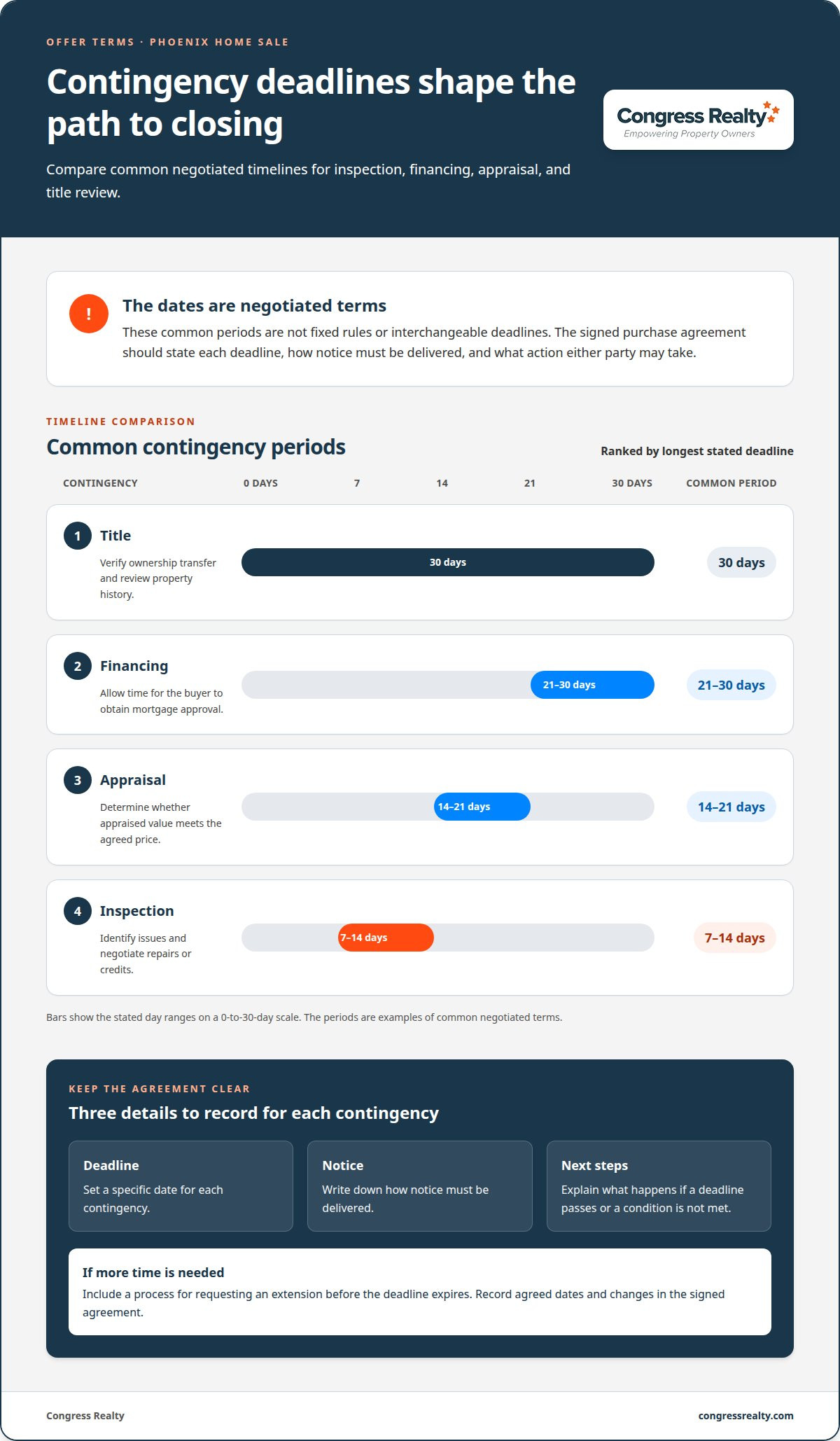
Set a specific deadline for each contingency and write down how notice must be delivered. Common contingency periods include:
- Inspection: 7-14 days for the buyer to identify issues and negotiate repairs or credits.
- Financing: 21-30 days for the buyer to obtain mortgage approval.
- Appraisal: 14-21 days to determine whether the property’s appraised value meets the agreed price.
- Title: 30 days to verify ownership transfer and review the property’s history.
These periods are negotiated terms, not interchangeable deadlines. For example, a buyer may need more time for financing than for an inspection. The parties can set dates that fit the transaction and record them in the signed agreement. Include a process for requesting an extension before a deadline expires.
A financing contingency protects the buyer if the lender doesn’t approve the mortgage under the contract’s terms. Specify the loan type and the approval deadline. If the buyer can’t secure financing, the written contingency explains the next steps. The buyer should keep the seller informed about lender progress and send notices within the agreed period.
An appraisal contingency addresses a gap between the agreed price and the appraised value. If the appraisal comes in below the price, the buyer and seller can discuss a price change or another written solution. The contract should explain what happens if they don’t agree. Without clear terms, neither side should assume the other will cover the difference.
Inspection negotiations also need precision. A report may identify several issues, but the parties can negotiate which repairs, credits, or other changes they accept. Put the final agreement in writing, including any revised deadline. A buyer who waives or limits an inspection contingency changes the protections in the offer, so the choice should match the buyer’s priorities.
Sellers planning a transaction can review home-selling options as they consider how to present a property while managing offer terms. Keep the signed agreement and later amendments together, so each party can follow the same contingency dates through closing.
Property disclosures and state-specific compliance
For a Phoenix home sale, disclosure paperwork depends on the property’s location, age, and known condition. Keep state and federal requirements distinct when preparing documents.
Seller Disclosure Obligations
A seller disclosure records known property conditions for a buyer to review. Ohio Revised Code Section 5302.30 requires Ohio sellers to provide a form covering known material matters about the property’s physical condition. For a Phoenix sale, organize information about the home’s condition and known repairs, then complete the forms that apply to the property’s location.
Disclose known defects, environmental hazards, and previous repairs. For example, note a past roof leak and describe the repair rather than treating the issue as if it never occurred. Keep invoices, inspection reports, and repair records together. These documents help you answer a Phoenix buyer’s questions about the property’s condition or past work.
Federal Laws for FSBO Sales
Federal disclosure rules can apply alongside state forms, including lead-based paint requirements for older homes. Ohio sellers of homes built before 1978 must comply with federal Title X disclosures regarding lead-based paint and hazards, according to the U.S. Environmental Protection Agency. That specific Ohio rule illustrates why a home’s location and construction date matter when preparing sale documents.
For a Phoenix property, identify its construction date and consider whether federal requirements apply. Keep federal disclosures separate from state forms, and include applicable documents with the sale paperwork. Don’t assume a form prepared for another state covers every disclosure relevant to a Phoenix home.
Risks of Missing Disclosures or Violating Sale Laws
Missing or inaccurate disclosures can lead to disputes after closing. In Wisconsin, an inaccurate Real Estate Condition Report can give a buyer the right to rescind an offer or pursue legal claims after closing. That Wisconsin example shows why sellers should complete forms carefully, even though Phoenix sellers must focus on requirements that apply to their own property.
For example, if a Phoenix seller discovers that a disclosure omitted a repaired leak, update the form and provide the correction to the buyer. Keep dated copies of the original disclosure, correction, and delivery record. Contract representations can have legal implications after a sale, so don’t leave a known error unresolved in the paperwork.
Before completing Phoenix sale documents, compare the property’s known condition, repair records, and age with each form’s questions. Answer based on your knowledge, distinguish repaired conditions from unresolved issues, and retain copies of delivered documents. State-specific forms differ, so a document used for another state’s sale should not automatically stand in for paperwork applicable to a Phoenix property.
Can a buyer make an offer on a FSBO property?
Yes. A buyer can make an offer directly to a Phoenix homeowner selling without an agent. The seller can accept, reject, or negotiate the proposed terms. Put the offer in a written purchase agreement that identifies the property and records what both sides accept. Because the home is in Phoenix, use paperwork intended for transactions in Arizona rather than a form written for another state.
Some states provide real estate contract templates through official websites, and those forms are generally designed for local requirements. A template still needs to fit the property’s location and the transaction. For a Phoenix offer, review the current form and its instructions before filling in names, property details, dates, and agreed terms. A form from another state may use different terminology or provisions.
Wisconsin offers a useful example of how state forms can differ: its standard residential contract is the WB-11 Residential Offer to Purchase. That Wisconsin form illustrates why Phoenix buyers and sellers should not assume one state’s standard paperwork applies elsewhere. Focus on an Arizona-appropriate agreement for a Phoenix property, and read every section before signing.
Contract errors often come from blanks, mismatched details, or conflicting attachments. For example, an offer might show one closing date in the main agreement and another in an addendum. An incorrect property description can also create uncertainty about what the parties intend to sell. Compare the property address and all dates across the Phoenix offer and attachments before accepting.
Make the proposed deal clear beyond its purchase price. If a Phoenix buyer expects an appliance to remain and both parties agree, name it in the written offer. Record requested repairs, credits, and other negotiated terms in the agreement or a signed amendment. If discussions change a term, update the paperwork rather than relying on a verbal understanding.
Before accepting an offer, compare the buyer and seller names with the intended parties to the transaction. Check that each attachment belongs to the same Phoenix sale and that no page reflects an outdated offer. If a buyer submits a revised version, compare it with the earlier document. A changed deadline or condition can alter the agreement even if the price stays the same.
Read each representation carefully before signing. Contract statements can have legal implications after a sale, so don’t sign wording that conflicts with the facts or negotiated terms. Resolve unclear language before acceptance, and keep signed copies of the offer, amendments, and attachments together. That record helps both parties track the final agreement for the Phoenix transaction.
A state-specific template is a starting point, not a substitute for careful review. Match the agreement to the Phoenix property’s location, verify that details remain consistent across documents, and record each accepted change in writing. These steps help buyers and sellers understand the offer before they commit.
Seller and buyer responsibilities
In a sale without a seller’s agent, the written agreement assigns tasks to the buyer and seller. Both parties should track deadlines, deliver required documents, and record every negotiated change. A verbal promise to leave a refrigerator, for example, may cause disagreement if the signed agreement says nothing about it. Treat the signed terms as the shared transaction plan.
Sellers should confirm ownership details and arrange a title search before transferring the property. The search can reveal unpaid liens or other encumbrances that may delay or prevent a sale. Sellers should also gather ownership records and respond to title questions. Buyers should review the title information and raise discrepancies before closing, rather than treating the deed as a routine final form.
Both sides need to document changes in writing. If the buyer and seller agree to move the closing date, update the contract and have the required parties sign. Apply the same approach to repair agreements, credits, or included items. Keep each signed version with the original agreement so neither party relies on an outdated term.
Wisconsin has additional considerations for ownership and closing. Marital property laws may require both spouses to sign a home sale, even when only one spouse appears on the title. Wisconsin also imposes a real estate transfer fee of $3 per $1,000 of value on most property sales. The seller typically pays it unless the parties negotiate otherwise.
Buyers and sellers should make the transfer-fee arrangement clear in their written terms. They should also account for closing costs and obligations stated in the agreement. Sellers should confirm that required signatures and property records align before closing. A mismatch between the title and signed paperwork can delay the transaction for both parties.
Taxes also belong on the seller’s planning list. A home sale can involve capital gains reporting and potential exemptions. An investment property may raise the possibility of a tax-deferred 1031 exchange. Buyers should understand that tax treatment concerns the seller’s circumstances, while their own purchase responsibilities remain defined by the contract.
Before closing, each party should compare the final documents against the signed agreement. The seller can confirm that ownership, negotiated changes, and fee arrangements appear correctly. The buyer can confirm that the deed and other closing papers reflect the agreed transfer. For a Wisconsin investment property, keep records that support any 1031 exchange planning.
Organize the responsibilities early: the seller handles title and transfer details, while both parties honor the written terms and signatures. Buyers and sellers who are preparing a transaction can plan their home sale around clear documentation and defined responsibilities.
Congress Realty: Multiple Listing Services
Congress Realty offers Multiple Listing Services for sellers who want to place their property information in an MLS. This can complement a FSBO sale by supporting property exposure while the seller stays responsible for negotiations, disclosures, and contract decisions.
Congress Realty’s Yard Signs and Virtual Tour options can help present a home to prospective buyers, while an eLockbox supports property access. These tools address marketing and access needs, not legal duties. Sellers still manage transaction terms and required paperwork.
If you’re preparing to sell and want MLS support alongside your independent approach, visit congressrealty.com to explore Congress Realty’s flat-fee listing options.
Take the Next Step With Confidence
Your next move is to turn what you’ve learned into a clear plan for your sale. Before committing to an offer or setting a listing strategy, decide how involved you want to be, which tasks you’ll manage directly, and where professional support would make the process easier. That choice can help you stay focused on your priorities and make intentional decisions.
The FSBO laws you need to know matter most when they guide practical choices: how you prepare, communicate, and document the sale. Keep your goals visible as you move forward, and choose support that fits the way you want to sell. With Congress Realty’s flat-fee MLS listing options, you can retain control of the sale while getting MLS support.
Explore your home-selling options with Congress Realty and take the next step with confidence.
Frequently Asked Questions
Do FSBO documents need to be notarized or witnessed?
Usually, a purchase agreement doesn’t need notarization, while the deed almost always needs notarization to transfer ownership. Some states also require witnesses for deed signing. Keep the documents distinct: notarizing a deed doesn’t mean the purchase agreement also needs notarization. Before signing closing papers, identify which document transfers title and follow the execution requirements that apply in the property’s state.
What Is a FSBO?
A home sale without a seller’s agent means the owner handles the sale directly. The owner manages tasks such as communicating with prospective buyers, reviewing offers, and coordinating sale details. Selling directly doesn’t exempt the owner from contract or disclosure requirements. For example, an owner can sell directly while still using a written purchase agreement.
What seller disclosures are required when selling a home FSBO?
Disclosure forms and duties vary by state, but sellers may need to report known property defects, environmental hazards, and previous repairs. Before completing a form, compare each question with what you know about the home and its repair history. For example, distinguish a past roof leak and its repair from an unresolved leak. Keep relevant records with your completed disclosure documents.
Do FSBO sellers need to disclose lead-based paint, asbestos, or other hazards?
Lead-based paint disclosure requirements apply to some older homes. Ohio sellers of homes built before 1978 must comply with federal Title X disclosures regarding lead-based paint and hazards, according to the U.S. Environmental Protection Agency. Disclosure duties for asbestos and other environmental hazards can depend on state requirements and known property conditions. Treat inspection findings and repair records as important information when completing applicable state forms.
What state-specific FSBO laws and disclosure requirements apply to home sellers?
The property’s state determines which forms and transaction requirements apply. Ohio Revised Code Section 5302.30 requires sellers to provide a disclosure form about known material matters affecting the property’s physical condition. Wisconsin generally requires a Real Estate Condition Report. These examples show why sellers should use forms suited to the property’s location. The fsbo laws you need to know depend on the state and the property’s circumstances.
What are the legal requirements for FSBO purchase agreements and required contract forms?
Use a written agreement that fits the property’s state and accurately records the parties’ accepted terms. Some states provide official contract templates through state websites, and those forms usually meet local legal requirements. Wisconsin uses the WB-11 Residential Offer to Purchase as its standard contract. Before signing, compare names, property details, dates, and attachments so the documents describe one consistent transaction.
What are the rules for handling earnest money and escrow in an FSBO sale?
The purchase agreement should state the earnest-money amount, deposit deadline, who will hold the funds, and the conditions for release. Wisconsin FSBO transactions require earnest money for an enforceable contract. Escrow arrangements should match the written agreement, so both parties understand how funds stay protected during the transaction. For example, state clearly what happens to the deposit if a stated contingency is not met.
When should an FSBO seller hire a real estate attorney, and what does it typically cost?
An attorney can help when contract language is unclear, title records show a lien or ownership discrepancy, or the parties negotiate unusual terms. Legal help can also support document review before signing or assist with a disclosure dispute. Attorney costs depend on the work involved, such as reviewing one agreement or addressing broader transaction questions. The scope of work and billing arrangement shape the total.