
Congress Realty provides flat-fee MLS listing services in Phoenix. A seller rent-back lets the seller remain in the home after closing for an agreed period. Phoenix buyers and sellers should weigh the pros and cons of a seller rent-back before agreeing to post-closing occupancy.
Extra time can help a seller coordinate a move, while a buyer may gain flexibility during negotiations. But the arrangement affects possession, costs, and responsibilities. Buyers and sellers in Phoenix should clarify the move-out terms and how the agreement handles utilities, maintenance, insurance, and damage.
This guide explains how rent-backs work and what buyers and sellers should consider before signing. It covers payment and household responsibilities, financing concerns, property damage, and delayed move-out. Use these details to decide whether a rent-back fits your sale timeline and priorities in Phoenix.
Key Takeaways
- Put rent, utilities, maintenance, insurance, deposits, and the move-out date in the written agreement so both parties know their responsibilities.
- Weigh the seller’s need for extra time against your own move-in plans and any lender occupancy requirements.
- Set clear terms for property damage and what happens if the seller stays past the agreed deadline.
- Understand that after closing, the buyer becomes a landlord and the seller a tenant, which can bring state landlord-tenant rules into play.
- Consider how a short, clearly defined occupancy period can help the sale while limiting the buyer’s exposure to delays and added responsibilities.
Who pays for utilities and maintenance during a rent-back?
The written rent-back agreement should assign each cost to the buyer or seller. It should cover rent, utilities, property taxes, repairs, maintenance, insurance, deposits, and the move-out date. Don’t assume the seller pays every household bill simply because they remain in the home. After closing, both parties should follow the payment and responsibility terms in writing.
For utilities, name each service and state who pays each bill during occupancy. For example, specify whether the seller pays electricity and water directly or reimburses the buyer. Explain how to handle bills that arrive after move-out, too. Apply the same clarity to property taxes: state whether the buyer bears the cost or the seller reimburses an agreed share. Specific terms can prevent disputes over unpaid expenses.
Maintenance terms should distinguish routine care from damage caused by the seller or guests. State who handles ordinary tasks, such as yard care, and who pays if an appliance breaks. Describe how the parties will record the home’s condition at closing and move-out. A dated inspection record and photographs can help identify damage from the occupancy period.
Give insurance direct attention. A seller’s homeowners insurance might no longer cover them during a rent-back, and the seller may need renters insurance. The agreement should state each party’s insurance requirements and who handles damage-related costs. Don’t assume the seller’s existing homeowners policy protects their belongings or the buyer’s property.
- Set the rent amount and payment schedule.
- Assign utility bills and property-tax responsibility.
- Define maintenance duties, damage responsibility, and insurance requirements.
- Record the deposit, occupancy period, move-out date, and terms for staying beyond it.
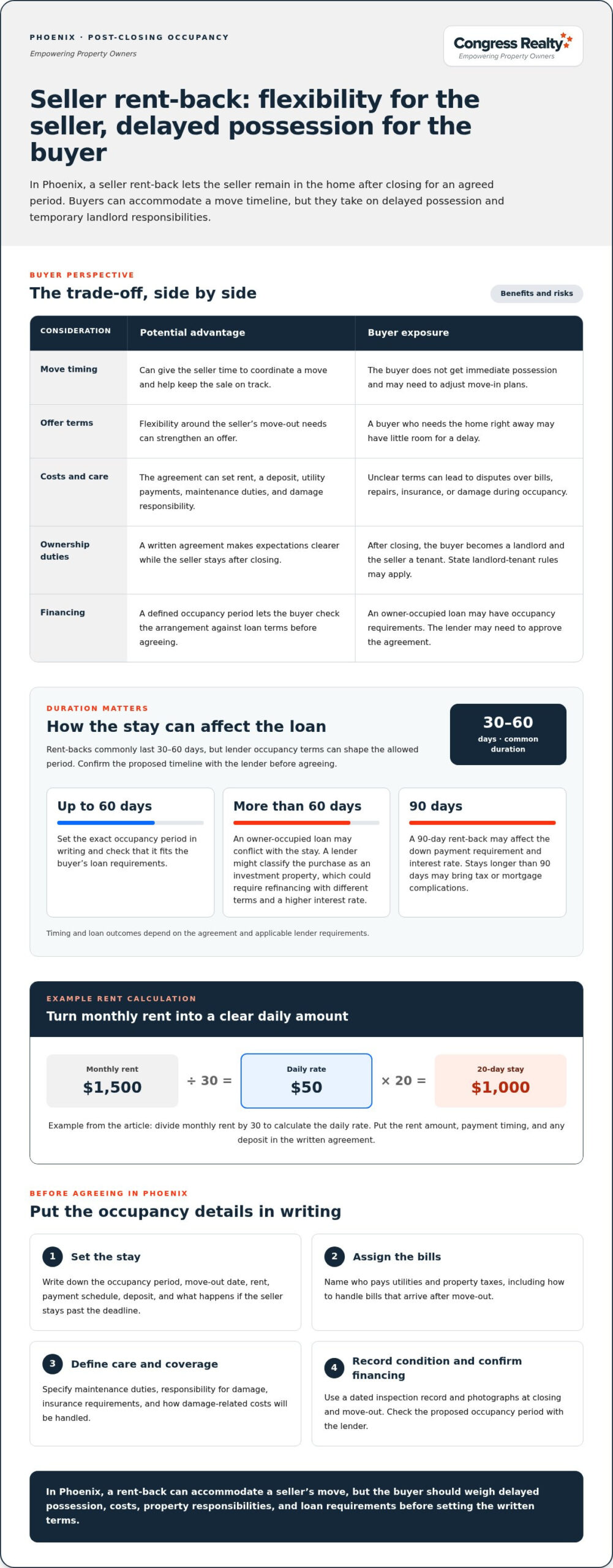
Rent can use a daily rate. For example, dividing monthly rent of $1,500 by 30 gives $50 per day. At that rate, a 20-day stay costs $1,000. The agreement should state when the seller must pay and whether the buyer will collect a deposit. It should also explain what happens if the seller misses the move-out deadline, rather than leaving both parties to negotiate under pressure.
In the United States, rent-backs commonly last 30-60 days, and sellers usually cannot remain more than 60 days after closing, though rules can vary by state. The agreed limit may also depend on the buyer’s loan occupancy terms. A Seller in Possession agreement may suit a stay of less than 30 days. Set the exact occupancy period before closing, then ensure it fits the loan requirements and written agreement.
Benefits and risks for buyers
A seller rent-back can let the seller move on a practical timeline while the buyer secures the home. The trade-off is delayed possession and temporary landlord responsibilities.
Buyer Advantages
A rent-back gives buyers a way to accommodate the seller’s move-out needs while keeping the sale on track. That flexibility can strengthen an offer when the seller needs time to coordinate a move. For example, a buyer might offer free occupancy for the first 30 days, then charge a daily fee. Clear terms help both parties understand the arrangement.
Buyer Risks
Buyers may face property damage, a missed move-out date, and added responsibility for an occupied home. State landlord-tenant laws may apply because the buyer becomes a landlord and the seller becomes a tenant. The pros and cons of a seller rent-back partly depend on whether the buyer can accept delayed possession and manage those responsibilities.
Financing can also shape the decision. A buyer using owner-occupied financing may face a conflict with lender occupancy requirements if the seller stays more than 60 days after closing. The lender might need to approve the agreement to ensure it fits the loan terms. Address the proposed occupancy period before agreeing, not after closing.
Longer stays may affect the loan terms. If the seller remains more than 60 days after closing, a lender might classify the purchase as an investment property and require refinancing with different terms and a higher interest rate. A 90-day rent-back may affect the down payment requirement and interest rate. Stays longer than 90 days may also bring tax or mortgage complications.
Compare the seller’s requested timeline with your housing plans. A buyer who needs immediate possession may have little room for delay, while someone with flexible move-in plans may have more options. The pros and cons of a seller rent-back become clearer when you compare occupancy dates, loan terms, and expected costs with your actual needs.
- Discuss the proposed occupancy period with your lender.
- Set the seller’s move-out date and payment terms in writing.
- Consider landlord responsibilities and your own move-in timeline.
For sellers preparing a sale, an MLS listing for a home sale can support marketing while the parties negotiate possession separately. A rent-back may suit buyers who can accept delayed occupancy and define its limits in writing.
How does a rent-back agreement work?
A seller rent-back is a written arrangement that lets the seller stay after the buyer closes on the home. The seller requests it before closing, and both parties agree on the occupancy period and terms. For example, a seller waiting for a new home to be ready might ask to remain for two months. The buyer owns the property during that stay, while the seller occupies it under the agreement.
Unlike a delayed closing, a rent-back transfers ownership on the original closing date, then allows the seller to remain temporarily. A post-closing lease also lets the seller stay after the sale, but it can suit a longer occupancy arrangement. Rent-backs commonly last 30-60 days; a Seller in Possession agreement may suit stays under 30 days.
The parties discuss the request while negotiating the sale, then put the terms in writing before closing. The agreement identifies the seller’s move-out date, rent, deposit, and responsibilities. It also sets the occupancy period and explains what happens if the seller misses the deadline. The buyer’s lender may need to approve the arrangement, especially if the buyer plans to use owner-occupied financing.
Rent can use a daily rate based on monthly market rent. Divide the monthly amount by 30 to estimate a daily figure. For example, a home renting for $3,000 per month has an illustrative daily rate of about $100. At that rate, a 10-day stay costs roughly $1,000. The parties can use this method to relate payment to the exact occupancy period.
- The seller requests post-closing occupancy before closing.
- The buyer and seller agree on the stay length and payment terms.
- The written agreement sets the move-out date and responsibilities.
- The buyer accounts for lender requirements before finalizing the arrangement.
Think through the timeline, not just the closing date. If the seller’s next home won’t be ready until after the sale, a rent-back can bridge that gap. If the buyer needs immediate possession, the arrangement may conflict with moving plans. A fixed end date helps both sides plan, while a daily rate makes a partial month easier to calculate.
Keep the distinction clear: closing completes the sale, but it does not automatically end the seller’s occupancy if the parties have agreed otherwise. The written rent-back defines the temporary arrangement. Compare that defined stay with a delayed closing, which postpones completion of the sale, or a post-closing lease, which can cover a longer stay. The right structure depends on when the buyer needs possession and how long the seller needs to remain.
Risks of property damage and delayed move-out
A rent-back leaves the buyer responsible for a home occupied by its former owner. Clear records and specific deadlines help both parties manage the risks of damage and delayed move-out.
Overstay Penalties and Eviction
A holdover occurs when the seller remains after the agreed move-out date. The agreement should explain the daily charge and the process for recovering possession. One agent recommends a $500 daily holdover fee, but that is an example, not a universal rate. State landlord-tenant rules may affect the next steps, so the buyer should not assume an overdue seller can be removed immediately.
Put the deadline, payment consequences, and communication process in writing before closing. For example, specify how the buyer will notify the seller if the deadline passes, and how the parties will handle keys and belongings. The agreement can include a daily holdover fee, but the fee alone won’t ensure a prompt move-out. The buyer should plan for the possibility that resolving an overstay takes time.
Damage creates a separate financial risk. A security deposit can help cover damage or unpaid rent; some agreements use $1,000 to $5,000, while another suggested minimum is one month’s rent. Record the home’s condition at closing with dated photographs and a written inventory. At move-out, compare the same rooms and fixtures. That evidence gives both parties a clearer basis for discussing damage beyond ordinary use.
Reducing Rent-Back Risks
Reduce risk by documenting the home’s condition, responsibilities, and deadlines before the seller stays. A move-in record, move-out inspection, and defined deposit give the buyer practical reference points. The seller also benefits from knowing which conditions could affect the deposit, avoiding unexpected disagreements after moving out.
- Photograph floors, walls, appliances, and existing damage at closing.
- List who handles repairs and how the parties report new damage.
- Set the deposit amount and the process for documenting deductions.
- Write the move-out deadline and holdover terms into the agreement.
These steps help the seller protect their interests, too. A seller who needs extra time gains a clear occupancy window and knows the expected costs. But missing the deadline can lead to added charges and a dispute over possession. For example, a seller waiting for a new home should align the move-out date with its expected readiness, then agree on what happens if the timing changes.
Buyers should weigh that flexibility against delayed access, possible repair costs, and the effort of enforcing the agreement. Sellers should weigh extra moving time against deposit exposure and holdover consequences. A written inspection record, specific payment terms, and a firm end date make the arrangement easier for both sides to manage.
What a seller rent-back agreement is
A seller rent-back agreement allows a former homeowner to remain in the property after the buyer completes the purchase. Ownership transfers at closing, but the seller receives temporary permission to occupy the home under agreed terms. For example, a seller whose next home is not ready can request a 21-day stay. The buyer owns the property during that period, so the agreement must define how the seller may use it.
A rent-back separates two events that often happen together: the sale and the seller’s move-out. A delayed closing postpones the transfer of ownership; a rent-back keeps the closing date and sets a later possession date. That distinction matters if the buyer plans renovations, needs to move in, or must meet loan occupancy terms. Make the closing date and the seller’s final occupancy date unmistakable in the agreement.
A rent-back is not simply a handshake that lets the seller keep the keys. It creates a defined occupancy arrangement after the sale, with the buyer as owner and the seller staying temporarily. Because state landlord-tenant laws may apply, both parties should take the written terms seriously. The document should set a clear deadline for the seller’s stay and explain the consequences of remaining beyond it.
Rent-back agreements commonly last 30-60 days in the United States, though rules and loan requirements can vary. The seller can request the arrangement before closing, giving both sides time to consider timing and financing. A short stay may fit a different agreement than a longer lease-back. The essential question is not just how long the seller wants to remain, but whether the buyer can accept that possession date.
- Closing date: when ownership transfers to the buyer.
- Occupancy end date: when the seller must leave.
- Payment terms: what the seller owes for the agreed stay.
- Possession terms: how the parties handle keys and access.
- End-of-stay terms: what happens if the seller remains past the deadline.
These dates have practical consequences. If the buyer closes on a home but cannot move in until the seller leaves, they need a separate plan for housing and belongings. If the seller expects to move into a new property, a documented occupancy window can connect the timelines. Naming each date prevents “closing day” from being mistaken for the seller’s move-out day.
A rent-back can work when both parties value a completed sale and a short transition period. It may not suit a buyer who needs immediate possession. Before accepting, compare the requested stay with the buyer’s plans, loan terms, and the written occupancy conditions. To prepare your own sale timeline, explore home sale listing options.
Congress Realty: Multiple Listing Services
Congress Realty offers Multiple Listing Services for sellers preparing to market a home. A rent-back affects possession after closing, while an MLS listing helps present the property to prospective buyers during the sale. Keep the two matters distinct: use a written occupancy agreement to define the seller’s stay, and choose listing tools that fit your marketing plan.
Congress Realty also offers yard signs, virtual tours, and eLockbox options to support property marketing and access. These tools can help organize the sale while you and the buyer discuss possession terms separately. If you’re planning a home sale in Phoenix, visit Congress Realty to explore its listing options.
Make Your Next Sale Decision With Confidence
Before making or responding to an offer, decide what possession timeline works for you. Consider how a temporary stay could affect your move, finances, and use of the property. Set your priorities first, then treat occupancy as a deliberate part of the negotiation, not a minor closing detail.
Before discussions begin, write down your preferred possession date, your latest workable date, and the trade-offs you would consider. This gives you a practical framework for evaluating options and keeping negotiations focused on your needs. Understanding the pros and cons of a seller rent-back helps you decide with clear priorities.
If you’re preparing to sell, choose a next step that keeps you in control of your home-sale decisions. Contact Congress Realty about your home to discuss your sale. Move forward with a plan that fits your goals.
Frequently Asked Questions
What happens if the seller doesn’t move out on time?
If the seller misses the agreed move-out date, the buyer may need to enforce the written agreement and follow applicable state procedures. A daily holdover charge can create a financial consequence, but it does not automatically return possession to the buyer. Keep records of notices, payments, and communications. For example, document when the seller was expected to leave and when possession actually changes.
What are the risks and cons of a seller rent-back?
The main downsides include delayed possession, possible property damage, unpaid rent, and added responsibility for the buyer. The arrangement can also conflict with owner-occupied loan terms, and landlord-tenant rules may apply after closing. The seller risks deposit deductions or added charges for staying past the deadline. Weigh these trade-offs against the moving flexibility before agreeing to occupancy terms.
How much rent should a seller pay during a rent-back?
Set rent by agreeing on a daily or monthly amount for the specific occupancy period. A daily rate can be estimated by dividing comparable monthly market rent by 30, then multiplying by the seller’s planned days in the home. The parties should also decide whether occupancy starts with paid rent or a free period. Put the amount, due dates, and payment method in writing.
How should a seller rent-back agreement be written, and what terms should it include?
Use specific calendar dates and clear responsibilities in the agreement, not phrases like “until the new home is ready.” Include rent, occupancy dates, deposit, utilities, maintenance, insurance, and responsibility for damage. Attach a condition checklist and dated photographs if both parties want a record of the home’s condition. State how they will document the final walk-through and reconcile outstanding bills.
What happens if the seller does not move out by the agreed date?
The buyer should follow the agreement’s holdover terms and the applicable process for recovering possession. A daily fee may increase the cost of a delay, but it does not allow the buyer to assume they can remove the seller immediately. Keep communications factual and written, note any payment received, and preserve the signed agreement. Next steps depend on the occupancy terms and state landlord-tenant procedures.
How do seller rent-backs affect mortgage financing, insurance, and closing?
A rent-back keeps the sale’s closing date intact but delays the buyer’s move-in. The buyer’s lender may need to approve the occupancy terms, especially if the loan requires owner occupancy. A seller’s homeowners policy might not cover the seller during the stay, and renters insurance may be required. Coordinate occupancy dates with loan conditions and insurance coverage before signing.
What are the tax and legal rules for seller rent-backs in the United States?
There is no single rule that resolves every rent-back’s tax and legal treatment. State landlord-tenant laws may apply, and a stay longer than 90 days may trigger tax or mortgage complications. Relevant details include the occupancy length, whether the seller pays rent, how the agreement treats the deposit, and the closing date. Keep payment and deposit records alongside the signed occupancy terms.
What seller rent-back rules and forms apply in my state or local area?
Requirements depend on the property’s state and local jurisdiction, the occupancy period, and the buyer’s financing terms. A short seller-in-possession arrangement may use different paperwork from a longer lease-back. The agreement should identify the property, dates, payment, responsibilities, and possession terms in language suited to applicable rules. Don’t assume a form used in another state meets local requirements.