
Congress Realty provides Multiple Listing Services for Phoenix home sellers, giving listings the same exposure as listings paid with a full commission. The closing date, however, depends on the purchase agreement and the buyer’s ability to complete the transaction.
If you’re deciding how to negotiate a closing date, start with the timing you need and the buyer’s reason for requesting a change. Compare the proposed date with your moving plans, then coordinate with the buyer’s lender, title company, and real estate team.
This guide explains how to request a workable date, document an agreement, and account for the costs of a delay. Phoenix homeowners can use these steps to keep the sale schedule clear and make informed decisions. A practical plan helps you manage your next move.
Key Takeaways
- Review the contract’s closing terms before requesting a change, especially any time-is-of-the-essence clause.
- Explain the reason for your preferred date and share relevant updates from your lender or transaction team.
- Compare the costs of a delay, including ongoing housing expenses and possible changes to your rate lock.
- Coordinate timing with the lender, title company, and real estate team so the proposed date works across the transaction.
1. Does the seller have to agree to the request?
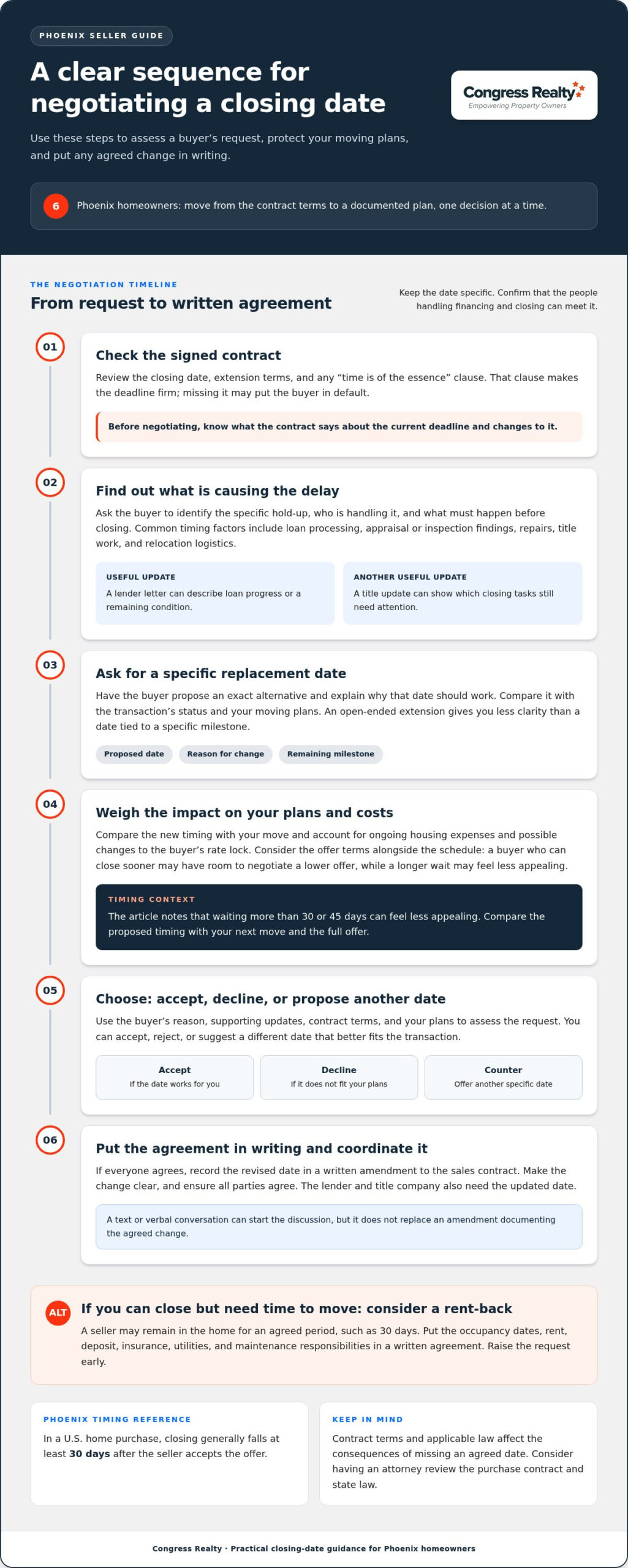
Usually, no. A seller generally doesn’t have to extend closing unless the purchase contract or state law requires it. Review the contract’s closing date, extension terms, and any “time is of the essence” clause. That clause makes the deadline firm, and missing it may put the buyer in default.
A realistic timeline depends on loan processing, appraisal and inspection reports, title work, relocation logistics, and repair scheduling. In a U.S. home purchase, closing generally falls at least 30 days after the seller accepts the offer. Inspections and appraisals may take a few weeks to arrange and complete, affecting when the parties can finish remaining steps.
Each participant has a different role in the schedule. The buyer explains the reason for a requested change and can provide lender letters or title updates. The seller weighs that information against the contract and moving plans. Agents coordinate communication, while the lender and title company assess whether funding and closing tasks can meet the proposed date.
To negotiate a closing date, ask the buyer to propose a specific alternative and explain the cause of the delay. Compare that date with your plans and the transaction’s status. A lender update or inspection timeline can help you assess the request, rather than agreeing to an open-ended extension.
If both sides agree, document the new date in a written amendment to the sales contract. All parties must agree to the change. Ask the agents to coordinate the amendment, and have an attorney review the purchase contract and applicable state law before you decide. The title company and lender also need the updated date.
If you can close quickly but need time to move, negotiate a rent-back instead of delaying the sale. A seller may remain in the home for an agreed period, such as 30 days. Put occupancy dates, rent, deposit, insurance, utilities, and maintenance responsibilities in a written agreement. Raise this request early, ideally with your offer response.
What happens if a buyer or seller misses the agreed closing date? The consequences depend on the contract and applicable law. A seller may be able to cancel, keep earnest money, or require the buyer to proceed. Some states require notice, a cure period, or mediation first. A notice to perform may give a buyer 48-72 hours to meet obligations or risk cancellation.
Mortgage approval, appraisal, inspection, and title work can all affect timing. An appraisal below the offer may send the parties back to negotiations; inspection findings may require repair discussions or contractor scheduling. Ask the buyer’s agent to identify the specific hold-up, then have the agents, lender, and title company align on a workable date before signing an amendment.
Common reasons buyers request a closing date extension
Buyers may request a date change when a transaction task falls behind schedule. Lender processing, relocation logistics, inspection repairs, and title work can all affect readiness. Ask which step remains incomplete, who is handling it, and what needs to happen before closing. A clear reason helps you weigh the request against your moving plans.
A lender may need more time to review the buyer’s finances or prepare funding. Ask the buyer to share a lender update identifying the remaining step and estimated timing. For example, knowing that a loan condition is still pending gives you more context than a general request for extra time. The lender’s funding timeline also affects which replacement date could work.
An appraisal below the buyer’s offer can send the parties back to negotiations. Inspection findings may lead to repair discussions, and contractor availability can affect when work finishes. Ask whether the buyer needs time for an appraisal response, agreed repairs, or another inspection-related task. Each reason points to a different milestone for choosing a new date.
Relocation can create another timing challenge. A buyer moving from another home may need to coordinate travel, household goods, or a sale that has not closed yet. Title work can also take longer if documents or transaction details need attention. Ask the buyer to distinguish moving logistics from financing or title delays, so you can assess the request based on its actual cause.
Request supporting documents before deciding. A lender letter can describe loan progress, while a title update can show which closing tasks remain. Compare each update with the buyer’s proposed date, then ask what could still change the schedule. This keeps the discussion specific and gives both sides a practical basis for accepting, adjusting, or declining the request.
Closing speed can strengthen a buyer’s offer when you want a faster sale. If you’re eager to sell, a buyer who can close sooner may have room to negotiate a lower offer. On the other hand, asking you to wait more than 30 or 45 days can feel less appealing. Compare timing with the offer’s terms and your next move before deciding.
Keep the conversation focused: identify the delay, review the buyer’s documentation, and discuss a date that works with your plans. If you’re preparing your home sale and want a clearer view of the selling process, explore Congress Realty’s home-selling options. Use that preparation to set priorities before a buyer’s request forces a rushed decision.
3. Contract amendments and written agreements
Yes. After signing a purchase agreement, the parties can change the closing date if everyone agrees. Record the revised date in a written amendment to the sales contract. A text or verbal conversation can start the discussion, but it doesn’t replace an amendment clearly documenting the agreed change.
To request an earlier or later closing, the buyer should identify the current date, propose a specific replacement, and explain the reason. For example, a buyer waiting on lender processing can request a date that gives the lender time to complete its remaining work. The seller can accept, reject, or propose another date.
Make the amendment precise. State the new closing date and identify the purchase agreement it changes. Include any related changes the parties have agreed to, such as a revised deadline for another contract obligation. Avoid wording that leaves the date open-ended or makes the change depend on an unclear event.
Before signing, compare the amendment with the original contract. Confirm that it changes only the terms both sides intend to revise. If the agreement sets separate closing and occupancy dates, keep them distinct: the buyer may take possession after the sale is recorded at the county recorder’s office. A date change should not unintentionally alter housing arrangements.
All parties to the real estate transaction must agree to a closing-date change. Have each required party sign the same written amendment, then distribute the completed copy to the buyer, seller, agents, lender, and title company. Those teams need the revised date to coordinate funding and closing documents. Keep the signed amendment with the original contract.
A seller considering a longer closing period can weigh whether to require more earnest money in the contract. That negotiated term can provide a safeguard while the transaction remains open. Discuss the amount and conditions as part of the amendment rather than assuming the original earnest-money terms change automatically with the date.
Review timing with the lender before finalizing the amendment. Revised closing documents can trigger a waiting period under the TILA-RESPA Integrated Disclosure (TRID) rule, which may affect the planned date. Ask the lender and title company to assess the schedule, and have an attorney review the contract and applicable state law if the change raises legal questions.
Once signed, use the amendment as the working schedule. Update moving plans, document deadlines, and agreed occupancy arrangements to match it. A clear written record helps the buyer and seller work from the same date and gives the lender and title company one timeline to follow.
4. Financial and moving costs of delays
A delayed closing can leave you paying home expenses longer than expected. Add each extra mortgage payment, property tax, insurance bill, and utility charge to your estimate. Compare the total with the buyer’s proposed date before accepting, negotiating, or refusing the extension. Your calendar matters too: a later sale may shift moving plans, storage needs, or your next housing payment.
Create a simple delay worksheet. List the expected closing date, proposed replacement date, and each expense that continues in between. Include mortgage payments, taxes, insurance, utilities, storage, and any overlap with another home. Use your actual bills and payment schedule, not a general estimate. This gives you a clearer basis for discussing an extension or adjusting your asking price.
A longer timeline can also affect the buyer’s financing. If a mortgage rate lock expires before closing and interest rates have increased, the buyer may face added costs. Ask the buyer to discuss the timing with the lender. The lender can explain how the lock and revised schedule affect the loan, while the title company coordinates updated closing details.
Prepaid interest can vary with the closing date. In one example, a $300,000 mortgage at a 6% interest rate requires $1,085.04 in prepaid interest for 22 days when closing occurs on January 10. Closing on January 25 requires $295.92 for six days. These figures show how the calendar can change prepaid interest, not what every buyer will pay.
Payment timing can also affect a buyer’s cash flow. In the example, a buyer who closes on January 5 pays prepaid interest through January 31, then makes the February house payment on March 1. FHA-backed home loans require 30 days of interest regardless of the closing day. Ask the lender to explain the loan’s actual prepaid-interest calculation before agreeing to a date.
Closing changes can affect required mortgage disclosures, too. According to the Consumer Financial Protection Bureau, mortgage disclosures must be delivered or mailed no later than the seventh business day before consummation. Revised closing documents may also trigger a waiting period under the TILA-RESPA Integrated Disclosure (TRID) rule. Ask the lender whether changed documents affect the proposed schedule.
Moving costs can add to the financial impact. For example, a seller who scheduled movers for the original closing may need to reschedule, arrange temporary storage, or keep utilities active longer. Add those actual charges to your worksheet. If the buyer requests a long delay, consider whether additional mortgage payments should factor into your asking price.
Use the completed worksheet to compare your practical choices: accept the revised date, propose a shorter extension, or decline under the contract terms. Include any contractual penalties or other costs that apply to your transaction. A specific cost breakdown keeps the discussion focused on the financial impact of the delay, not just the date.
5. Communicating with the lender, title company and real estate agent
A closing date works only if the people handling the transaction can meet it. The buyer’s lender must be able to fund the loan by the selected date. The title company coordinates closing documents and the transfer process. Agents connect the parties and help identify schedule conflicts before they disrupt moving plans.
Start with a written message that names the proposed date and explains the reason for changing it. Ask the buyer’s agent to identify the remaining loan steps and the lender’s funding timeline. Then ask the title company which documents or tasks still need attention. Specific questions turn general updates into a practical schedule.
Give each participant a clear communication role. The buyer or buyer’s agent can relay lender updates; your agent can communicate your response and moving constraints. The title company can flag closing tasks that depend on incoming documents. Keep everyone informed if the date affects movers, utilities, or another housing arrangement.
Knowing how to negotiate a closing date starts with asking the lender to assess the proposed timing directly. The buyer’s preferred move date may not leave the lender enough time to fund the loan. If the lender can’t fund by that date, ask which later date fits the outstanding loan steps. Choose a target everyone can plan around.
Ask the title company to assess its schedule before settling on a date. Find out whether it has the information needed to prepare closing documents and coordinate the transfer. Then have the agents compare that timeline with the buyer’s financing progress and your plans. A shared schedule gives everyone the same target.
Consider the buyer’s intended move-in date, not just the signing appointment. A buyer hoping to move in over the weekend may need to close by Wednesday, leaving time for deed recording and key transfer. Ask the title company and agents to account for recording and possession. Closing and occupancy can fall on different dates.
A sound plan for how to negotiate a closing date also includes a reliable written record. Once the parties agree, ask the agents to distribute the signed amendment and revised schedule. Keep the latest version with your transaction records. If the lender reports a new condition or the title company flags an unresolved task, update everyone promptly.
Clear communication turns a date request into a coordinated plan. As you prepare your own sale, use home-selling resources to organize the transaction details you’ll need to share.
Congress Realty: Multiple Listing Services
Congress Realty offers Multiple Listing Services for sellers preparing to market a home. An MLS listing provides the same exposure as listings paid with a full commission. A Virtual Tour and Yard Sign can support your home’s presentation as you consider offers.
MLS marketing doesn’t set your closing date or replace a written contract amendment. Compare each buyer’s proposed timeline with the offer terms, then document any agreed date change with the parties. This keeps your marketing plan separate from the transaction schedule.
If you’re preparing to sell, Congress Realty’s MLS offering can support your listing plans. Contact Congress Realty to discuss selling your home, or visit congressrealty.com.
Set your timing priorities before the next offer
Your preferred closing date can shape how you evaluate an offer, not just when you move. Before negotiations begin, decide which parts of your schedule matter most and where you can adjust. Consider your next housing plans, work commitments, and the practical demands of moving. A clear priority list helps you respond thoughtfully rather than make a rushed decision under pressure.
Use that plan to guide how to negotiate a closing date with a buyer. Keep your preferred timing in mind during offer discussions, and weigh the full proposal against your plans. If a buyer requests a change, you’ll have a clearer sense of what you can accommodate and what needs further discussion.
When you’re ready to plan your home sale, explore your selling options with Congress Realty. Take the next step with a timeline that reflects your priorities and keeps you in control.
Frequently Asked Questions
When is your closing date?
Your closing date is the date stated in the signed purchase agreement. Check the executed copy, not an earlier offer draft or tentative calendar entry. If the parties later agree to a change, use the signed amendment as the current date. For example, if your lender’s calendar shows a different day, compare it with the contract and ask the transaction team to reconcile the schedule.
Does the seller have to agree to the request?
A seller generally doesn’t have to accept a buyer’s requested date change unless the contract or applicable state law requires it. Check for a time-is-of-the-essence clause and any written extension terms. Those provisions can affect the consequences of missing the deadline. If the seller receives a request, reviewing the contract’s exact wording helps distinguish a request from an existing obligation.
How can you avoid changing closing dates?
Build the proposed schedule around the buyer’s readiness, not convenience alone. Before signing, ask the buyer to discuss lender milestones, inspection scheduling, appraisal timing, title documents, and moving plans. Allow for unresolved tasks, and make sure each participant knows who must provide the next document. A shared calendar with responsibilities can reveal conflicts before they affect closing.
How do buyers negotiate a home closing date?
Buyers can make a date request clearer by explaining the timing they need and offering a specific alternative. For example, a buyer coordinating a move from another home can describe that schedule and ask whether an earlier or later date works for the seller. Buyers should also account for lender funding and title preparation. A clear request gives the seller a concrete proposal to consider instead of an open-ended delay.
How long does closing usually take after an offer is accepted?
In a U.S. home purchase, closing is generally set at least 30 days after the buyer’s offer is accepted. The actual schedule depends on the transaction’s financing and remaining tasks. For example, a buyer using a mortgage needs enough time for lender processing, while appraisal, inspection, title, and document preparation can also affect readiness. The contract’s date sets the target for that specific sale.
What contract terms or addenda are needed to change a closing date?
Use a written amendment to change the closing date, and obtain agreement from every party to the transaction. Identify the purchase agreement, state the replacement date, and clarify any related deadline the parties intend to change. Keep occupancy terms separate if the buyer and seller have different move-out and possession dates. Attach or circulate the signed amendment with the contract so everyone works from the same version.
Can a rent-back or post-closing occupancy agreement help negotiate a closing date?
Yes. A rent-back can let the sale close while the seller remains in the home for an agreed period, such as 30 days. Use a separate written agreement that defines occupancy dates, rent, deposit, insurance, utilities, and maintenance responsibilities. For example, a seller waiting for a new home to become available could request an early discussion of post-closing occupancy instead of delaying the buyer’s closing.
Are closing timelines or contract deadlines different by state?
Yes. Contract forms and state rules can affect deadlines, required notices, and what a seller must do after a missed date. Some states may require notice, a cure period, or mediation before cancellation. A deadline response in Arizona may differ from one in Alaska, California, Idaho, Louisiana, Montana, Nevada, New Mexico, Oregon, Texas, Utah, or Washington. Review the signed contract’s procedures alongside applicable state requirements before taking action.