
What if a buyer without an agent makes the transaction simpler, but leaves important questions about representation and responsibilities? In Phoenix, navigating a transaction with an unrepresented buyer means keeping the seller’s interests clear while handling the offer, communication, deadlines, disclosures, and contingencies carefully. Congress Realty provides flat-fee MLS listings for homeowners in Phoenix, with the same exposure as listings for which sellers pay a full commission.
It’s reasonable to expect a listing agent to guide the process, but that doesn’t make the agent the buyer’s advocate. The listing agent represents the seller, and an unrepresented buyer may need separate advice on offer terms, contractual choices, and negotiation.
This article explains how an unrepresented buyer can submit an offer, what the listing agent can and can’t do, and how fees and agreements relate to the transaction. You’ll also learn where professional support fits, so you can understand the process, protect your interests, and stay in control of the decisions.
Key Takeaways
- Keep representation clear: the listing agent works for the seller and doesn’t advocate for an unrepresented buyer.
- Review the listing agreement to understand how the brokerage’s compensation terms apply when a buyer has no agent.
- An unrepresented buyer can submit a written offer, and the listing agent can present it to the seller and communicate the response.
- Clear written disclosures and careful tracking of contract deadlines, contingencies, and material property facts help keep the transaction organized.
- Know where the boundaries lie: buyers who want advice on offer terms or contractual decisions need their own representation or legal counsel.
How does a listing agent handle a commission-free buyer?
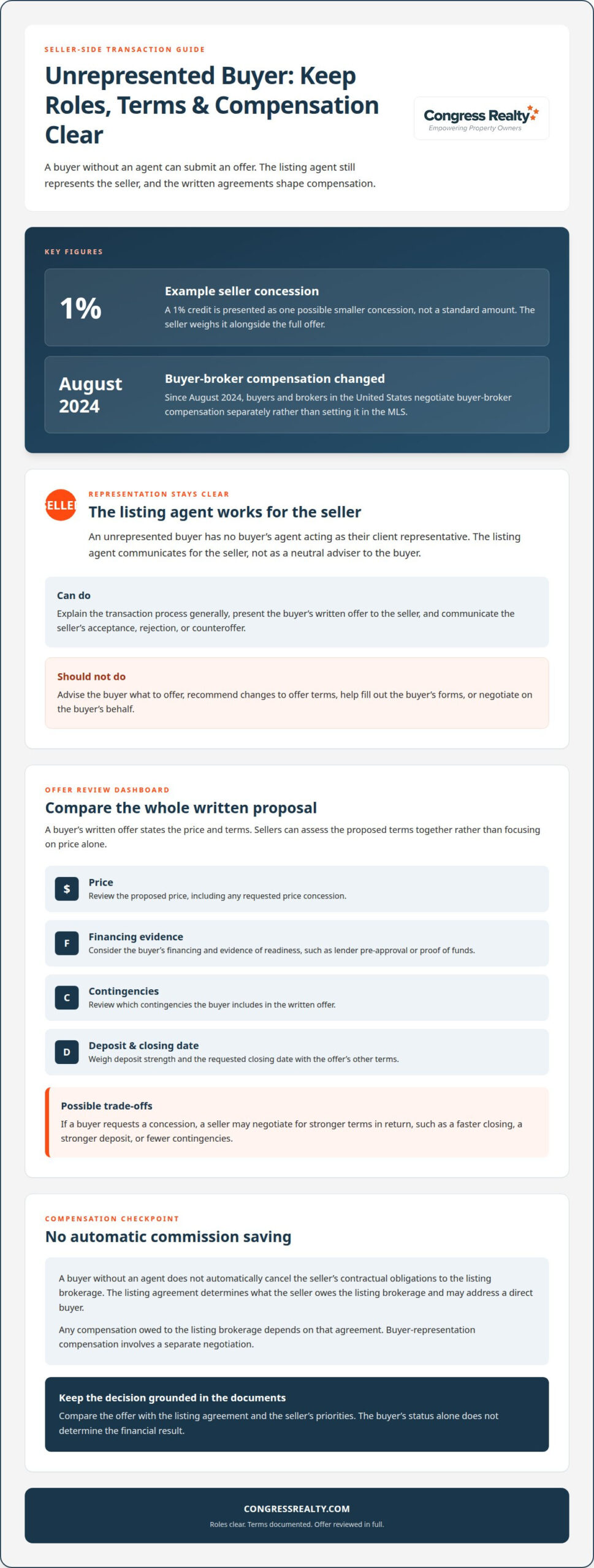
An unrepresented buyer has no buyer’s agent acting for them in the purchase. In Texas, the listing agent represents the seller, so the buyer’s choice doesn’t make that agent a neutral adviser or automatically remove the seller’s contractual commission obligations.
Identifying an Unrepresented Buyer
A buyer is unrepresented when no agent represents them as a client in the transaction. This matters because the listing agent communicates for the seller, while the buyer makes decisions without that agent’s advocacy.
To clarify the relationship, the listing agent can ask whether the buyer has toured homes with an agent or signed a buyer agreement. The seller can ask the agent to document the buyer’s written answers. Before proceeding, the agent can also ask whether the buyer has lender pre-approval or proof of funds. These questions help establish the buyer’s status and readiness without advising them on what to offer.
Listing-Agent Duties and Seller Loyalty
The listing agent represents the seller, not the unrepresented buyer. In Texas, the agent can explain the transaction process generally but can’t recommend what the buyer should do. This distinction matters if the buyer asks whether to change an offer term or how to negotiate.
Texas brokers must disclose known material facts that aren’t apparent or readily ascertainable. That duty doesn’t automatically require investigation of matters the broker hasn’t agreed to investigate. The agent should explain that they act in the seller’s interest and follow up in writing, creating a record of the representation discussion.
For sellers navigating a transaction with an unrepresented buyer, the listing agreement remains central to understanding compensation. It determines what the seller owes the listing brokerage and may address a direct buyer. A buyer without an agent doesn’t automatically cancel those contract terms, so the seller should distinguish an unrepresented buyer from a commission-free sale.
Since August 2024, buyers and brokers in the United States have negotiated buyer-broker compensation separately rather than setting it in the MLS. That change doesn’t rewrite the seller’s listing agreement. Any compensation owed to the listing brokerage depends on that agreement, while buyer-representation compensation involves a separate negotiation.
Suppose a direct buyer requests a lower price because they didn’t hire an agent. The seller can assess that request alongside the offer terms, financing evidence, and the listing agreement. There’s no automatic commission saving based solely on the buyer’s status. The agreements and negotiated offer determine the financial result.
The key to navigating a transaction with an unrepresented buyer is keeping roles and compensation terms distinct. The listing agent communicates for the seller, explains the process without advising the buyer, and records important conversations. The seller then evaluates the offer against the written agreement and their own priorities.
How Does an Unrepresented Buyer Write Up an Offer?
Yes, an unrepresented buyer can hire a real estate attorney for contract advice. The cost depends on the work and billing arrangement. The buyer can seek legal help with contract language while making their own decisions about the offer.
Offer Forms and Legal Advice
An unrepresented buyer needs a written offer that states the proposed price and terms. The buyer can prepare the offer independently or work with an attorney who can explain contract language and its implications. This distinction matters because the listing agent represents the seller, not the buyer. The agent can explain how the seller will receive an offer, but shouldn’t advise the buyer what terms to propose.
For example, a buyer unsure about a financing contingency can ask an attorney what that term means before submitting an offer. Legal advice can help the buyer understand the document, while the buyer decides what terms match their priorities. The attorney’s cost depends on the specific work and billing arrangement.
Completing and Presenting the Offer
The buyer should provide a completed written offer with the terms they want the seller to consider. Listing agents shouldn’t help unrepresented buyers fill out forms or choose offer terms. That boundary keeps the seller’s agent from taking a role that could look like buyer representation.
In Texas, a listing agent can present an unrepresented buyer’s written offer to the seller and communicate the seller’s response. The agent can relay an acceptance, rejection, or counteroffer, then give the buyer the seller’s response. The buyer decides how to reply; the listing agent doesn’t recommend a response or negotiate for the buyer.
Price Concessions and Offer Terms
A seller can assess a requested price concession alongside the rest of the offer. A 1% credit is one example of a smaller seller concession in the 2026 market, not a standard amount. The seller can weigh the proposed price against financing, deposit strength, contingencies, and the requested closing date.
If the buyer requests a concession, the seller may negotiate for stronger terms in return, such as a faster closing, a stronger deposit, or fewer contingencies. Those trade-offs help the seller compare the offer’s full terms rather than focusing only on price. The seller makes the decision based on their priorities and the written proposal.
For sellers, useful offer review means organizing the price, financing, contingencies, deposit, and closing date in one comparison. A listing agent can present those details clearly and communicate the seller’s decision, while leaving buyer-side advice to the buyer’s own agent or attorney. This keeps each person’s role distinct as the offer moves toward a possible agreement.
For sellers preparing their property and listing details before offers arrive, seller listing support can help establish the listing side of the process.
Purchase agreements, disclosures, deadlines, and contingencies
A purchase agreement records the price and conditions the buyer and seller accept. Its deadlines and contingencies shape what each party must do next, while agency disclosures clarify the listing agent’s role.
Agreement Terms and Transaction Timelines
The purchase contract sets out the agreed price, deadlines, and contingencies. A financing contingency, for example, addresses the buyer’s financing, while a closing date sets the parties’ target for completing the sale. Each term can affect the seller’s plans, so the seller should review the written agreement before deciding whether to accept or negotiate its terms.
The parties track the dates and conditions in the signed contract as the transaction proceeds. A missed deadline or unmet contingency can affect the next step, depending on the contract terms. The listing agent can communicate the seller’s response and help the seller follow the transaction’s progress. The buyer should seek independent advice before making contractual decisions.
Limits on Advice and Confidentiality
The listing agent can explain the transaction process but shouldn’t advise an unrepresented buyer on what to do. For example, the agent can explain that the seller sent a counteroffer, but shouldn’t recommend that the buyer accept it or change a contingency. This distinction helps each party understand whose interests guide the agent’s advice.
If one agent represents both parties, the agent can’t advocate exclusively for either side on price, negotiation strategy, or confidential information. Buyers and sellers should consider that limit before sharing information they expect the agent to use solely for their benefit. An attorney can advise a party about contract language and private negotiating concerns.
The listing agent should explain in writing that they act for the seller and follow verbal discussions with correspondence that recaps the disclosure. This gives the buyer a written record of the relationship during offer discussions and later contract conversations. Clear documentation also helps the seller keep communication consistent as the parties work through the agreement.
In Texas, brokers must disclose known material facts that aren’t apparent or readily ascertainable. That duty doesn’t automatically require brokers to investigate matters they haven’t agreed to investigate. For example, an agent who knows a material property fact must disclose it, while the disclosure duty alone doesn’t require the agent to inspect for unknown conditions.
Both parties must give informed written consent before an agent represents them both. That consent matters because the agent cannot exclusively advance either party’s interests in negotiations. The parties should understand the agent’s limits before they share confidential details or ask for advice about price and strategy.
Whether an agency or showing agreement is required
Requirements depend on the state and the buyer’s relationship with the agent. In Texas, an agent uses a specific form for an unrepresented customer’s showing, while a buyer who chooses representation faces different agreement requirements.
Agency and Showing Agreements
An agency agreement establishes that an agent represents a buyer, while a showing form documents a showing arrangement. The distinction matters because a buyer may want to view a property without hiring the listing agent to represent them. The paperwork should reflect the relationship the parties actually choose, rather than treating a showing as automatic buyer representation.
In Texas, the Unrepresented Customer Showing Form carries the identifier TXR 1508. It addresses a showing involving an unrepresented customer. Separately, Texas has required agents to obtain a written buyer agreement before touring a home with a buyer since August 17, 2024. That requirement concerns an agent working with a buyer, not a buyer who chooses to remain unrepresented.
For a Texas seller, identifying the buyer’s status helps clarify which form applies and whom each agent represents. A buyer who has an agent should discuss the agreement with that agent before touring. A buyer who has no agent should not mistake a showing form for an agreement that provides buyer representation or advice.
Unrepresented Buyers and Dual Agency
An unrepresented buyer has no agent acting as their representative; dual agency involves one agent representing both the buyer and seller. This difference matters because an unrepresented buyer doesn’t automatically make the listing agent a dual agent. The parties’ actual agency relationships determine the agent’s role and duties.
If one agent represents both parties, the agent can’t advocate exclusively for either side on price, negotiating strategy, or confidential information. That conflict affects the kind of guidance each party can expect. Parties should understand the agent’s role before relying on advice about their individual interests.
Designated agency differs from both arrangements. A brokerage may assign different affiliated agents to represent the buyer and seller, where state rules allow that structure. The buyer then has an agent, so the buyer isn’t unrepresented. The assigned agents’ separate roles distinguish designated agency from one agent representing both parties.
Nevada allows dual agency, but its legality varies by state. State rules shape whether an agent can represent both parties and what the parties must do. A seller handling a transaction in Texas, Nevada, or another served state should focus on that state’s requirements and the written documents that describe the relationship.
Keep the distinction clear: a showing form concerns access, an agency agreement establishes representation, and dual agency involves an agent representing both sides. The paperwork and agency relationship should match the parties’ actual choices throughout the transaction.
Services buyers may need from a real estate licensee
An unrepresented buyer may still need advice, advocacy, or help understanding contract choices. Those services differ from the listing agent’s role: the listing agent represents the seller, while the buyer decides whether to seek separate support.
Consider a buyer who asks whether to remove a financing contingency to make an offer more attractive. The listing agent can explain how the seller will receive the written offer, but shouldn’t advise the buyer to remove that protection. A buyer’s agent or real estate attorney can provide advice focused on the buyer’s interests.
A title company or escrow officer generally serves as a neutral third party in title and closing tasks. That role doesn’t include advising the buyer about offer price, contingencies, repair negotiations, termination, or other contractual decisions in the buyer’s best interest. For example, a title officer may handle closing documents but cannot choose a negotiation position for the buyer.
That distinction helps sellers understand which conversations belong with the listing agent and which require buyer-side advice. The listing agent can communicate the seller’s response, explain the process generally, and disclose known material property facts. The agent shouldn’t recommend the buyer’s offer amount or negotiate as the buyer’s advocate.
A buyer who wants professional guidance can seek legal counsel or obtain a buyer’s agent. An attorney can explain contract language and the possible effects of a decision, such as changing a contingency. A buyer’s agent can advise on offer strategy and represent the buyer’s interests. The buyer chooses which support fits the questions and decisions at hand.
For sellers, the listing agreement sets the brokerage relationship and compensation terms; it doesn’t make the listing agent responsible for the buyer’s advice. A clear conversation can prevent role confusion: the agent can state that they represent the seller, then direct buyer questions about personal contract choices to independent counsel or representation.
Professional support also has limits. A neutral title company can coordinate title and closing matters, but it doesn’t replace a real estate agent’s buyer advocacy or an attorney’s legal advice. If a buyer asks whether a repair clause protects them, the listing agent can’t answer from the buyer’s position. The buyer needs advice from someone representing their interests.
Choose support based on the decision involved: buyer representation for advocacy, legal counsel for contract advice, and title or escrow services for closing coordination. That separation lets the seller’s agent maintain the seller’s position while the buyer gets guidance suited to their needs.
If you’re preparing to sell and want professional support for your listing, explore seller listing services.
Congress Realty
Congress Realty supports homeowners in Arizona, Alaska, California, Idaho, Louisiana, Montana, Nevada, New Mexico, Oregon, Texas, Utah, and Washington with flat-fee MLS listings that give the same exposure as listings for which sellers pay a full commission. The MLS is exclusive to its members, and only members can make changes, so Congress Realty handles listing edits on the seller’s behalf. Its listing services support the seller’s property marketing, but they don’t replace legal advice for an unrepresented buyer or change who the listing agent represents.
Consider this support when preparing a property for sale or organizing its listing materials before buyer inquiries arrive. Clear roles still matter: the seller makes decisions about offers, and buyers who want personal advice need their own representation or legal counsel.
Contact Congress Realty about your Phoenix listing to discuss support for your sale.
Set Your Priorities Before the Next Offer
A seller in Phoenix can make the next conversation more productive by deciding what matters before an offer arrives. Consider which terms deserve close attention, what questions need a clear answer, and when a decision calls for independent legal advice. That preparation gives you a steadier way to assess your options without asking the listing agent to take a position on the buyer’s behalf.
For anyone navigating a transaction with an unrepresented buyer, clarity about roles can guide each decision. Keep your goals in view, review the written terms carefully, and use professional support that fits the question at hand. You can stay informed and make the choices that shape your sale.
To discuss support for your Phoenix sale, contact Congress Realty about selling your home. Take the next step with a clear plan and confidence in your decisions.
Frequently Asked Questions
What if a buyer chooses not to have a buyer’s agent?
The buyer can proceed without an agent, but must make their own choices about offer terms and advice. The seller’s listing agent continues to represent the seller. For example, the agent can relay the seller’s response to an offer, while the buyer decides whether to accept or revise their proposal. The buyer can seek separate professional advice if they want guidance focused on their interests.
What If the Buyer Wants More Assistance?
A buyer who wants advice focused on their interests can hire a buyer’s agent or consult an attorney. A buyer’s agent can provide representation during negotiations, while an attorney can advise on legal questions and contract language. A title company can coordinate title and closing work, but doesn’t advise buyers about offer price, repair negotiations, or other contractual decisions in the buyer’s best interest.
What are a seller’s agent’s duties when working with an unrepresented buyer?
The seller’s agent represents the seller and communicates with the unrepresented buyer without acting as the buyer’s advocate. In Texas, brokers must disclose known material facts that aren’t apparent or readily ascertainable. That duty doesn’t automatically require brokers to investigate matters they haven’t agreed to investigate. For example, an agent must disclose a known material property fact, but the disclosure duty alone doesn’t require an inspection.
Can a real estate agent represent both the seller and an unrepresented buyer in the United States?
Dual agency rules vary by state, so the answer depends on the transaction’s location and agency relationships. Dual agency means one agent represents both the buyer and seller, which differs from a buyer proceeding without an agent. The parties must give informed written consent before the agent represents both. The agent then can’t advocate exclusively for either party on price, negotiation strategy, or confidential information.
What disclosures must an agent provide to an unrepresented buyer?
Disclosure requirements depend on the state and transaction. In Texas, brokers must disclose known material facts that aren’t apparent or readily ascertainable. Nevada requires everyone involved in a real estate transaction to sign the Duties Owed form from the Nevada Division of Real Estate. These examples show why the buyer’s location matters: the applicable forms and disclosure duties can differ across states.
What steps does a listing agent help an unrepresented buyer follow to make an offer and complete a home purchase?
The buyer submits a written offer, and the listing agent presents it to the seller and communicates the seller’s response. The buyer decides whether to accept a counteroffer or submit revised terms. After the parties reach agreement, they follow the contract’s requirements and deadlines toward closing. The listing agent communicates for the seller, while the buyer can seek separate advice about their decisions.
Who prepares the purchase contract when the buyer has no agent?
The answer depends on the state and the transaction. A listing agent can present the buyer’s written offer, but shouldn’t advocate for the buyer or advise them on offer terms. The buyer can prepare their proposed terms and seek an attorney’s help with contract language. The seller and buyer then review the written proposal and negotiate any changes before they reach an agreement.
How are buyer-agent commissions handled when the buyer is unrepresented?
Since August 2024, buyer-broker compensation in the United States has been negotiated separately rather than set in the MLS. If the buyer has no agent, there’s no buyer’s agent compensation to negotiate for that representation. The seller’s listing agreement still determines compensation owed to the listing brokerage. A direct sale doesn’t automatically change those written terms, so the agreement controls the seller’s obligation.