
Congress Realty provides Multiple Listing Services for homeowners selling properties nationwide. For modern home sellers, understanding what stays with the home can help set clear expectations during a sale. The distinction depends on the item and the terms the parties agree to.
This guide helps property owners assess customized features, compare common household examples, and record inclusions or exclusions in the sales contract. Use these points to prepare your real estate listing and communicate clearly with buyers when discussing fixtures vs personal property in real estate.
Key Takeaways
- Assess how an item attaches to the home, how it serves the property, and whether it appears customized for that space.
- Compare room-by-room examples to spot items that may seem similar but can be treated differently in a sale.
- Write down which items stay and which go, then include those decisions in the sales contract to set clear expectations.
- Address uncertain or disputed items during negotiations, before they become a moving-day surprise.
How to tell if it’s Real Property (Fixture) or Personal Property?
A fixture becomes part of the real estate through its connection to the home and generally stays when the owner sells. A seller usually takes movable personal belongings unless the purchase agreement includes them. Attachment, purpose, and contract wording help buyers and sellers decide what transfers.
Items That Stay or Leave
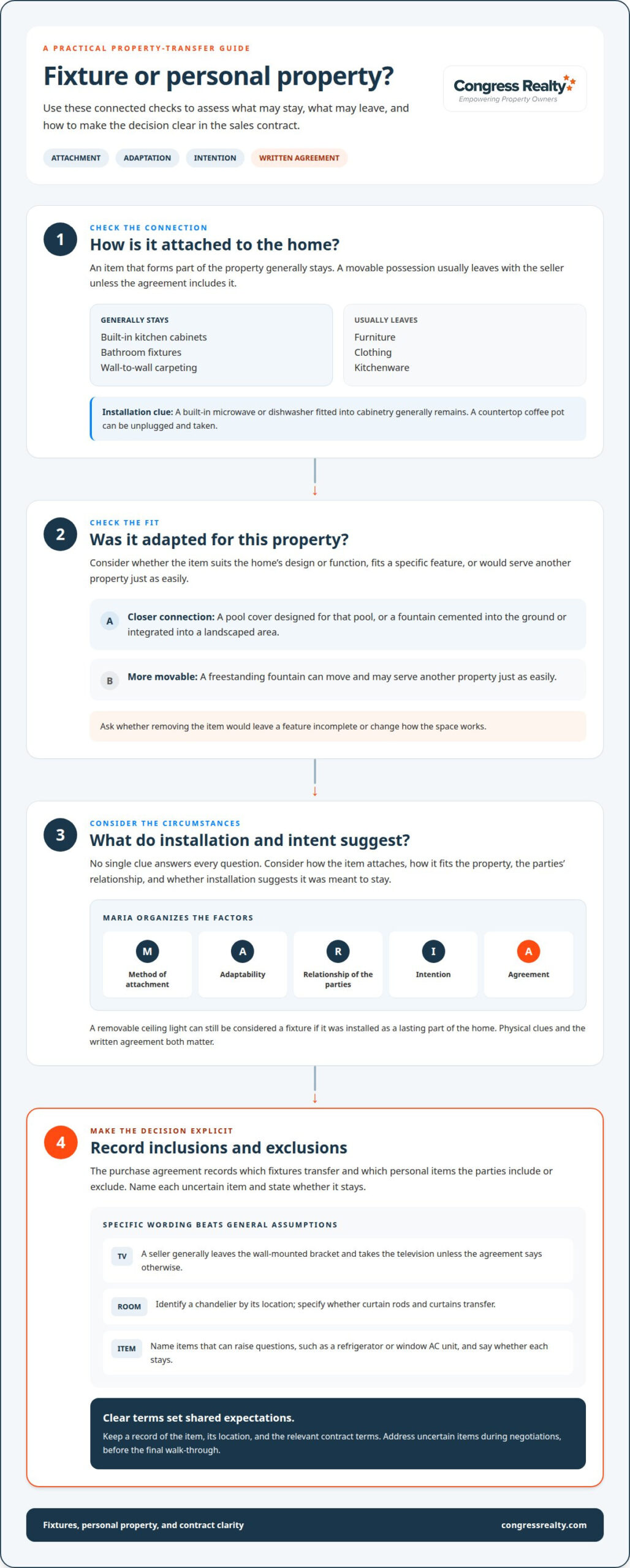
Start by considering how an item connects to the home and what purpose it serves. Built-in kitchen cabinets, bathroom fixtures, and wall-to-wall carpeting generally stay because they form part of the property. Furniture, clothing, and kitchenware usually leave with the seller. These distinctions matter because buyers and sellers may have different expectations about the same room.
Installation can also help determine whether an item stays. A built-in microwave or dishwasher fitted into cabinetry generally remains with the home. A seller can unplug a countertop coffee pot and take it. Refrigerators, washers, and window AC units can raise questions, so name each one in the agreement.
Ambiguous Mounted Items
Mounted items can be ambiguous because one component may stay while another leaves. A seller generally leaves a wall-mounted TV bracket but takes the television unless the agreement says otherwise. Light fixtures can prompt similar questions, even when removable wires connect them to the home.
Name each disputed item before the transaction moves forward. For example, specify whether the dining-room chandelier stays and whether the seller will remove the television. Clear terms give both parties the same expectations and help prevent disagreements during the final walk-through.
Movable Items and Sale Exclusions
Movable personal property generally stays with the seller unless the purchase agreement includes it. A seller can take a freestanding chair, countertop appliance, or potted plant. A bush growing in the ground is more closely connected to the property. Buyers should list any movable item they expect to receive.
For a rental, the lease and ownership help determine who keeps an item. A business tenant may own trade fixtures, such as a store display case. If the tenant removes one and damages the property, the tenant must repair the damage or compensate the owner. For a home lease, state in writing which items stay.
Contract Inclusions and Exclusions
The purchase agreement records which fixtures transfer and which personal items the parties include or exclude. List specific items, such as a refrigerator, window AC unit, or mounted TV, and say whether each stays. Precise wording matters because buyers and sellers may interpret general expectations differently.
If the seller removes an item the agreement says stays, the buyer should document its absence and address the issue under the contract. If an included fixture goes missing after closing, the signed agreement helps the parties resolve the dispute. Keep a record of the item, its location, and the relevant contract terms.
Separate an attached item from its removable parts. For example, state whether the curtain rods and curtains transfer, and identify a light fixture by its location rather than writing only “lighting.”
Adaptation: was it customized for this house?
An item’s fit with a particular home can help show whether it functions as a fixture. Consider its purpose, installation, and relationship to the property before deciding what belongs in the sale.
Adaptation to the Property
Adaptation means an item suits the property’s design or function rather than serving as a standalone possession. A pool cover, for example, is made for the pool, so it may be considered part of that setup. A fountain cemented into the ground or built as an outdoor area’s focal point also connects closely to the property.
That connection matters because removing an item may leave a feature incomplete or change how the space works. Consider whether the item was selected for this home, fits a specific feature, or would serve another property just as easily. A freestanding fountain can move; one integrated into a landscaped entertainment area is more closely tied to that site.
The Fixture Tests
Fixture tests consider annexation, adaptation, and intention: how an item attaches, how it fits the property, and whether its installation suggests it was meant to stay. No single clue answers every question. A removable ceiling light can still be considered a fixture if it was installed as a lasting part of the home.
The MARIA test offers another way to organize the factors: method of attachment, adaptability, relationship of the parties, intention, and agreement. Consider the whole situation, not just whether a tool can remove the item. A sales contract can settle the parties’ expectations even when the physical clues point in different directions.
For example, compare a pool cover stored nearby with one designed for that pool. The first may look like movable equipment; the second directly serves a permanent feature. Then consider whether the item was customized for the property and whether removing it would make the feature less useful.
Intention can be difficult to infer from appearance alone. A seller may have installed a light for long-term use, while a buyer may view it as a removable upgrade. Installation details, the item’s fit, and the parties’ written agreement help clarify the difference and reduce later disputes.
Before listing, note adapted features such as built-in outdoor fountains or pool equipment. During negotiations, identify any item either party wants to remove or retain, and put the decision in the sales contract. Clear terms help align the property’s customized features with the buyer’s expectations.
As you prepare the property and clarify its features, plan your home sale with those details in mind.
Differences between real property and personal property
A fixture is an item of personal property that becomes part of the real property through its connection to the home. Personal property remains movable and separate. In fixtures vs personal property in real estate, this distinction helps buyers understand what transfers and sellers identify what they can take.
Real property includes the land and features treated as part of it. Permanently attached items, such as built-in cabinetry, usually transfer with the home. Personal property includes movable belongings, such as clothing, artwork, kitchenware, and freestanding electronics. The key difference is not simply whether an item can be lifted or unplugged. Its attachment, purpose, and the parties’ agreement also matter.
Fixtures serve the property as installed. A built-in kitchen feature fits into the room’s design, while a portable countertop appliance remains a separate possession. A chandelier attached overhead may transfer, while a table lamp can move with the seller. Buyers should not assume every visible object will remain after closing.
- Attachment: A permanently attached item has a stronger connection to the real property than a loose possession.
- Function: An item designed for a home feature may fit that property more closely than a general-purpose object.
- Mobility: A freestanding object can usually move without changing the home’s use.
- Agreement: The sales contract can state whether a particular item stays or leaves.
Personal property differs because the seller can usually move it without altering the home’s structure or function. Examples include sofas, kitchenware, clothing, artwork, and portable electronics. Indoor plants in movable pots are also separate belongings. A buyer who wants a specific piece of art or an appliance should have the agreement identify it rather than rely on its presence during a showing.
Fixtures are associated with the property rather than remaining solely the seller’s possession. A ceiling light can qualify even if wires allow its removal. A wall-mounted television raises two separate questions: the mount may stay, while the television may leave. This is why buyers and sellers should identify each component, not describe the whole setup broadly.
Use the contract to settle expectations for unusual or valuable items. If a seller plans to remove a chandelier, name it as excluded; if a buyer expects kitchen appliances, list them as included. Specific wording gives both parties a shared record of what transfers. That clarity matters at handover, when empty rooms may look different from the home buyers first viewed.
Documenting inclusions and exclusions in the sales contract
Record what stays, what leaves, and how the parties will handle uncertain items. Specific terms give buyers and sellers a shared reference before closing.
Fixture Definitions in State and Local Laws
Fixture definitions and their application can vary by jurisdiction, so both local rules and the purchase agreement matter. Attachment, adaptation, intention, and the parties’ agreement can help clarify an item’s status. These factors are important when buyers expect an installed feature to remain but sellers view it as personal property.
Use the written agreement to resolve uncertainty instead of relying only on a general fixture description. For example, identify a mounted television, its wall bracket, and any related wiring separately. This records what the parties intend to transfer, even when the item’s physical connection leaves room for disagreement.
Address a disputed chandelier, appliance, or other attached item during negotiations, then record the decision in the contract. Resolve the question before closing rather than leaving the parties to interpret a broad phrase later. Clear terms give both sides a concrete reference as they prepare the home and complete the transaction.
Avoiding Fixture Disputes
Buyers and sellers can reduce fixture disputes by discussing specific items and recording their agreement in the real estate contract. Walk through the home together, identify uncertain features, and mark each as included or excluded. A written list is more reliable than assumptions about what “comes with the house.”
Describe items precisely. Instead of writing “bedroom lighting,” name the ceiling fixture and any separate lamps. For kitchen appliances, list each one the buyer expects to receive. If the seller plans to remove a mounted shelf, say so directly and describe any agreed condition after removal.
Review the list against the property before closing. Compare the contract with the home’s current fixtures, and raise any missing item before the parties complete the transaction. Keep a copy of the signed terms as a clear record if memories differ later.
For added clarity, the parties can have a qualified real estate attorney review the sales contract for accuracy and legal concerns. A review can help clarify wording about a built-in cabinet or excluded appliance before the parties sign.
Keep the final language concrete: name the item, state whether it stays, and note any agreed removal. For example, “dining-room chandelier included” is clearer than “fixtures included.” Buyers and sellers can use the same written terms as they prepare for closing.
In Florida real estate transactions, fixture status must be resolved before closing. Confirm each disputed item’s treatment in the signed agreement so both parties have a clear record.
Room-by-room fixture and personal-property examples
Walk through each room and compare installed features with belongings that can move independently. In the kitchen, built-in cabinets differ from countertop kitchenware; in the yard, a planted bush differs from a potted plant. Buyers and sellers can use these examples to flag items that need specific contract wording.
Kitchen and Dining Area
Built-in kitchen cabinets, a range hood, and a dishwasher installed into cabinetry generally stay with the home. A countertop coffee pot, loose kitchenware, and freestanding furniture generally leave with the seller unless the agreement says otherwise. A built-in microwave also differs from a portable appliance, even if both serve the same purpose.
Check the dining area separately. A chandelier attached to the ceiling is generally treated as a fixture, while a table lamp can move. If the sale includes a particular appliance or light, name it in the documents instead of expecting buyers to infer its status from the room.
Living Room and Bedrooms
In a living room, a ceiling fan or attached light fixture generally stays, while a freestanding lamp, sofa, and artwork remain movable belongings. A wall-mounted TV setup needs item-by-item wording: the bracket and television may be treated differently. Identify each part buyers expect to receive.
Bedrooms offer another clear comparison. Wall-to-wall carpeting generally stays, while a removable area rug can leave with the seller. Curtain rods are generally treated as fixtures, but the hanging curtains are typically personal property. List any curtains or rugs included in the sale to prevent confusion at handover.
Bathrooms and Utility Areas
Sinks, toilets, and installed bathroom fixtures form part of the home’s working spaces. Bath mats, freestanding storage baskets, and personal-care items remain movable possessions. In a laundry area, a washer or dryer may be movable; specify whether either appliance transfers instead of assuming its presence means it is included.
For utility equipment, distinguish an installed system from a removable accessory. A built-in appliance wired into cabinetry differs from a portable unit. Buyers and sellers should record the exact equipment included, especially when an item is connected to the home’s function.
Yard, Patio, and Garage
A bush planted in the ground generally stays, while potted plants can move. A fountain cemented into the yard is more closely connected to the property than a freestanding fountain. Patio furniture, movable planters, and garden tools usually remain personal belongings unless the contract includes them.
In the garage, distinguish attached features from loose tools and storage bins. Walk through the space before signing, then note any shelves, equipment, or outdoor items that should stay or go. A room-by-room list gives buyers and sellers concrete terms to review before closing.
As you prepare to sell, use these room examples to identify what your listing will include and plan your home sale with clear expectations.
Congress Realty: Multiple Listing Services
Congress Realty offers Multiple Listing Services for Phoenix homeowners preparing to market a property after documenting what stays and what goes. Its MLS listings receive the same exposure as listings paid with a full commission. The National Association of REALTORS® reports that homes listed on the MLS average a 7% higher net sales price, not a guaranteed result.
A Virtual Tour can show buyers the home’s features, while Yard Signs and an eLockbox support marketing and access arrangements. Keep the listing details consistent with the items included in the sale.
Contact Congress Realty to discuss listing your Phoenix home.
Prepare Your Home for a Confident Sale
Before marketing your property, turn decisions about included items into a practical preparation plan. Set aside anything you intend to take, keep items included in the sale in place for photos, and make sure the home’s presentation matches what buyers can expect to receive. This helps create a consistent picture from the listing through handover.
A clear understanding of fixtures vs personal property in real estate also gives you a stronger starting point for conversations with buyers. You can describe the home accurately, avoid confusion, and focus attention on the features that matter to your sale. Keep your plans organized and take the next step at a pace that works for you.
Explore support for your home sale with Congress Realty, and move forward with confidence and control.
Frequently Asked Questions
Annexation: how is it attached?
Annexation describes how an item connects to the home, from permanent installation to simple attachment. Consider whether removal would leave holes, damage, or an unfinished feature. Attachment is one clue, not the only one: a ceiling light connected by removable wires can still count as a fixture when its installation suggests it was meant to stay. Record the item and its attachment method when its status could affect the sale.
Intention: what did the installer mean to do?
Intention asks whether the installer meant an item to become a lasting part of the property. Installation choices can help show that purpose: a custom piece fitted into a specific alcove suggests a stronger connection than a portable object placed nearby. The installer’s purpose may not be obvious from appearance alone, so consider the item’s design, installation, and any written sale terms.
What legal tests determine whether an item is a fixture?
Fixture analysis can weigh the method of attachment, the item’s adaptation to the property, the parties’ relationship, the installer’s intention, and their agreement. The MARIA test groups these factors as method of attachment, adaptability, relationship of the parties, intention, and agreement. Together, these factors help organize the facts around an item, such as a customized feature, rather than focusing only on whether it can be removed.
Are light fixtures, ceiling fans, and mounted TVs included in a home sale?
Light fixtures and ceiling fans generally transfer as fixtures, while a mounted television can involve separate items. A wall bracket may stay, but the television itself generally remains the seller’s personal property unless the agreement includes it. Before signing, name each component and state how it will be treated. This matters if the seller plans to remove the screen but leave the mount, or replace a light before closing.
How do purchase agreements specify which fixtures and personal property are included?
Purchase agreements specify inclusions and exclusions by identifying items and stating whether each transfers. Buyers and sellers can attach an itemized list, such as one naming a particular appliance, light, or piece of equipment. Use clear descriptions instead of broad phrases that could refer to several objects. The parties’ written agreement can resolve uncertainty, so make changes during negotiations and keep the final terms with the signed contract.