Congress Realty is a flat-fee MLS brokerage serving Phoenix. A slow FSBO listing calls for a practical reset, not guesswork. If you’re weighing what to do if your FSBO isn’t selling, start by reviewing the asking price, then assess the home’s presentation and how buyers can find it.
It’s frustrating to prepare for a sale and hear little from buyers. A quiet listing can signal that the price, presentation, or exposure needs attention. Review the evidence and make targeted changes while staying in control of the sale.
This guide explains how to reassess your price, prepare your home for showings, and reach more buyers. It also covers when an MLS listing through Congress Realty can add professional exposure while you retain control of the sale.
Key Takeaways
- Use recent comparable sales to spot when your asking price may be holding back buyer interest.
- Review the home’s presentation and consider a pre-listing inspection to address concerns before buyers raise them.
- Understand how buyer-agent compensation and MLS exposure can help more buyers find your listing.
- Prepare to evaluate offer terms, inspection requests, and appraisal concerns with professional support.
- Choose the level of real estate assistance that fits your sale, while keeping control of your decisions.
Offering buyer-agent compensation to widen the buyer pool
A Phoenix FSBO seller can discuss buyer-agent compensation with a real estate professional before responding to buyer interest. Compensation remains negotiable, and the buyer, seller, or another permitted source can pay it. A professional can explain the proposed arrangement, help communicate it to a buyer’s agent, and keep the discussion separate from the home’s asking price. The seller decides whether to offer compensation and which terms to consider.
Clear communication helps buyers and their agents assess an offer. A real estate professional can coordinate questions with the buyer’s agent and organize details as negotiations progress. If the agreement raises legal questions, a real estate attorney can advise on its terms and applicable state requirements. The professional can help keep the transaction moving, while the attorney provides legal advice. This support can be useful when the buyer’s agent represents the buyer and assists with negotiations or closing logistics.
Start screening an offer by reviewing the buyer’s financing information and proposed timeline. You can request a lender prequalification or preapproval letter before investing time in negotiations. Preapproval is not final loan approval, so it does not guarantee financing will close. Consider the buyer’s stated financing, contingencies, and preferred closing date alongside the offer. This gives you a clearer basis for comparing offers than price alone.
For showings, a professional can coordinate access, confirm appointment details, and track buyer questions. FSBO sellers should respond to showing requests and buyer questions on the same day. After a viewing, the professional can gather feedback and relay interest or concerns to the seller. If an agent asks about compensation, the seller can weigh the proposed terms alongside the buyer’s offer, financing, and contingencies before deciding whether to negotiate.
State rules differ, and sellers generally must disclose facts that materially affect a property’s value or desirability. State case law helps determine which facts count as material. A real estate professional can organize disclosure information and flag questions for an attorney, who can advise on state-specific legal requirements. The U.S. Environmental Protection Agency says sellers must provide a lead-based paint disclosure for homes constructed before 1978. These steps help sellers align buyer discussions, disclosures, and closing documents without treating a lender letter as a final loan commitment.
Preparing the home and considering a pre-listing inspection
A real estate professional can assess how your home presents before buyers schedule showings. For Phoenix properties, that review can cover visible wear, clutter, lighting, curb appeal, and how listing photos show each room. The professional can suggest practical changes, such as clearing crowded counters, storing personal items, and refreshing the entry. These steps help buyers focus on the home’s space and condition rather than distractions.
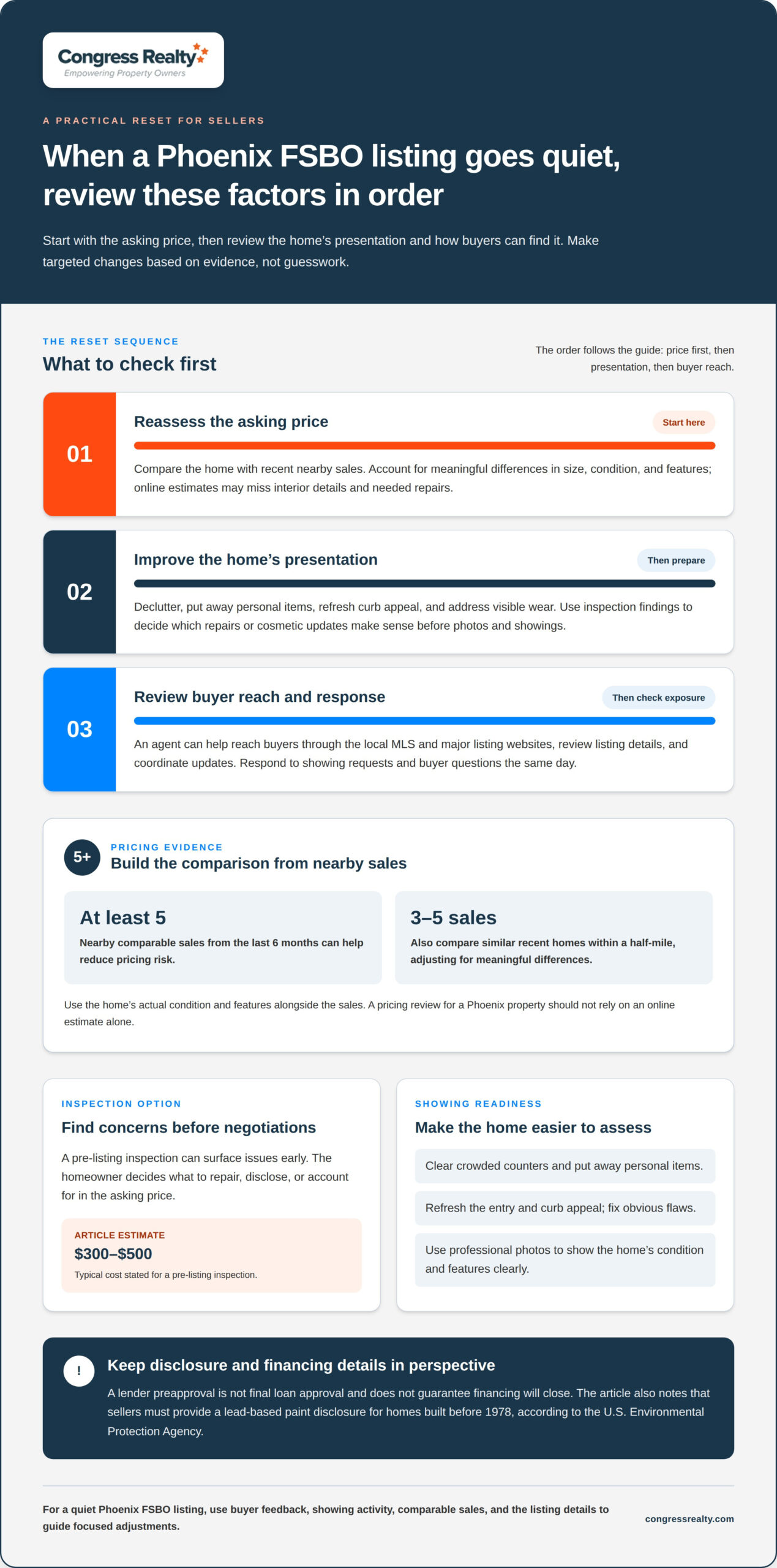
A pre-listing inspection can identify concerns before they become negotiation points. A real estate professional can help arrange the inspection, coordinate access, and explain how the findings may affect pricing or a buyer’s confidence. Such inspections typically cost $300 to $500. The homeowner can then decide which repairs to complete, which conditions to disclose, and which issues to account for in the asking price.
Online valuation estimates are a starting point, not a full assessment. Algorithms may consider home size and neighborhood comparables, but they cannot account for interior features or needed repairs. Review the property’s condition alongside recent nearby sales. For a useful pricing analysis, compare at least five nearby sales from the last six months, adjusting for meaningful differences in size, condition, and features.
How can an FSBO seller reduce the risks of an expired listing or a home sitting too long? A long time on the market can prompt buyers to question the price or condition, while an expired listing can interrupt exposure. A real estate professional can review buyer feedback, showing activity, comparable sales, and the listing timeline to recommend a clear next step. That may mean improving presentation, addressing a repair, or adjusting the asking price.
Before listing photos, a professional can help prioritize improvements that make the home easier to present. Cosmetic updates may include freshening paint, improving curb appeal, or repairing an obvious flaw. The goal is not to renovate everything. Instead, use the inspection findings and comparable sales to decide which changes support the asking price and which costs may not make sense. A focused plan also helps the seller prepare paperwork and respond to buyer concerns while negotiating.
Buyers may question whether a FSBO asking price reflects market value, so recent comparable sales can help them judge whether it is reasonable. For a pricing analysis, compare 3-5 similar recent sales within a half-mile, and pull at least 5 nearby comparable sales from the last 6 months to reduce pricing risk. These comparisons can reinforce a reasoned asking price while giving buyers a basis for evaluating it.
Presentation matters alongside pricing. Declutter, put away personal items, refresh curb appeal, and make suitable cosmetic updates before listing. Professional photography can show the home clearly, helping potential buyers see its condition and features. For sellers aiming to make a lasting impression, taking cues from the tailored marketing and bespoke presentation methods of boutique agencies like Nikki Homes can illustrate how careful styling and high-end visual storytelling capture buyer interest.
Real estate agent services and professional contacts
A real estate agent can help an FSBO seller reach buyers through the local MLS and major listing websites. That support can matter when a home receives limited inquiries despite a competitive price. The agent can also review the listing’s details, flag missing information, and coordinate updates that keep the property’s presentation consistent across platforms. For example, accurate room descriptions help buyers compare the home with similar properties.
Showings take scheduling, access coordination, and timely follow-up. An agent can manage appointment requests, share property details with interested buyers, and pass questions back to the seller. After each showing, the agent can organize buyer feedback so the seller can spot recurring concerns, such as a repair issue or a room that appears smaller than expected. The seller still decides whether to change the price or address feedback.
Offer discussions can quickly involve counteroffers, financing terms, contingencies, and a proposed closing date. Agents can advise sellers through counteroffers and multiple-offer situations, then help keep the transaction paperwork organized. A real estate attorney serves a different role: an attorney can handle some sale paperwork and legal issues, but does not provide market advice or negotiate repairs. Sellers can use each professional for the work that fits their role.
A professional can also connect the seller with useful local contacts. Depending on the property’s needs, an agent may know contractors, painters, mortgage officers, inspectors, and exterminators. For instance, if a buyer’s inspection identifies a maintenance concern, the seller may need a qualified contractor’s estimate before evaluating a repair request. The agent can help coordinate communication, while the seller chooses whether to proceed with the work.
Choose support based on the tasks slowing your sale. If buyers cannot find the property, MLS and online listing exposure may matter most. If showings happen but offers stall, negotiation and follow-up may need attention. If legal paperwork creates uncertainty, a real estate attorney can address that part of the transaction. A financed sale commonly takes 30 to 45 days from an accepted offer to closing, so organized communication and clear responsibilities help prevent avoidable delays. Selling your home yourself does not mean handling every professional task yourself; for homeowners who ultimately decide to partner with full-service professionals, dedicated teams such as The Agency Coffs Coast exemplify how experienced real estate specialists coordinate marketing, buyer screening, and transaction management under one roof.
Reassessing an asking price using recent comparable sales
If you’re weighing what to do if your FSBO isn’t selling, start with recent closed sales rather than an automatic price cut. Compare at least five nearby sales from the last six months, focusing on the closest matches. Buyers’ purchases of homes within the past three to six months may offer useful context when local conditions shift. This gives a Phoenix seller a grounded starting point for reviewing the asking price.
A useful comparison accounts for more than location. The agent considers size, layout, condition, upgrades, and features that buyers value. A renovated property may not compare fairly with a home that needs repairs, even on the same street. The agent can explain those differences and how they affect the pricing analysis. That helps the seller understand the reasoning behind a suggested range rather than relying on a single headline sale.
Online estimates can frame the discussion, but algorithms cannot account for interior features or needed repairs. Combine estimates with recent sales and a direct review of the property. Also consider competing listings and buyer feedback. If showings bring repeated questions about condition or value, those details can help clarify whether to revise the price or respond in another way.
If you’re still considering what to do if your FSBO isn’t selling, weigh the evidence before changing the price. Compare the asking price with buyers’ alternatives and consider how a revision might affect negotiations. You can also weigh a potential price adjustment against the cost and effort of fixing a visible flaw. A formal appraisal may help when the home is unique or comparable data is sparse.
There is no automatic reduction that fits every property. The seller can choose to revise the price, make a targeted repair, or hold steady after reviewing the analysis. An agent can help update listing details and explain the change to interested buyers. Keep potential purchase terms in view, too: an accepted offer may include financing, inspection, or appraisal contingencies. A reasoned decision connects the asking price to the home’s condition and the evidence buyers can see.
How do FSBO sellers negotiate offers and handle inspection or appraisal issues?
FSBO sellers can compare the full offer, negotiate terms, and seek professional guidance when inspection or appraisal issues arise. Assess the proposed price alongside financing terms, contingencies, seller concessions, earnest money, and the closing date. These details shape your obligations and timing. For example, a higher-priced offer may also include conditions that affect whether you accept it.
Review each offer’s earnest money and financing terms before responding. Earnest money commonly equals 1-3% of the purchase price, but the offer sets the proposed amount and terms. A professional can explain how the offer’s contingencies affect the seller’s options. The seller can accept, reject, or counter the offer, including proposed closing dates, concessions, or other conditions. Keep changes clear in the written agreement.
An inspection can lead buyers to request repairs or a credit at closing. A real estate professional can help the seller understand the request, compare it with the inspection findings, and consider a response. The seller might agree to specific repairs, offer a credit, propose different terms, or decline. If the parties cannot reach an acceptable agreement, the buyer may adjust the offer or walk away, depending on the contract.
Appraisal concerns require a different response. When a buyer uses a mortgage, the lender typically orders the appraisal. If the appraised value comes in below the purchase price, the buyer may need to renegotiate, increase the down payment, or decide whether to proceed. The contract and loan terms shape those options. A professional can help coordinate discussion between the buyer, seller, and agents, then clarify proposed changes.
Before agreeing to a counteroffer, connect every requested change to the written contract. A professional can help organize deadlines, inspection responses, appraisal discussions, and revised terms so everyone works from the same details. For example, if the buyer requests a closing credit after inspection, document its amount and terms in the agreement. The seller should weigh the home’s condition, the buyer’s financing, and the practical effect of each proposal before deciding. Clear negotiation keeps decisions focused on reaching workable terms.
Congress Realty
Congress Realty helps Phoenix sellers add professional listing infrastructure while keeping control of pricing, negotiations, and decisions. If a private sale draws little attention, an MLS listing can help buyers discover the property through professional listing channels. An MLS listing can make a property available through those channels, but it does not guarantee the same reach as listings for which sellers pay a full commission; actual exposure depends on which buyers use those channels. You remain in control of reviewing offers and deciding what to do next, with a flat-fee listing option that does not require handing over every sale decision.
A listing works best when its details and presentation give buyers a clear first impression. Congress Realty offers Multiple Listing Services, Yard Signs, and Virtual Tours. These options help buyers encounter a home through professional listing channels, a sign at the property, or an online tour. An MLS listing can make a property available through professional listing channels, but actual exposure depends on which buyers use those channels. Choose the options that fit your home and marketing needs, while staying involved in decisions about price, property details, and offer terms.
Access matters once buyers want to see the property. Congress Realty also offers eLockbox and Key Lockbox options to support property access, while you remain involved in deciding how showings proceed. For a Phoenix homeowner, combining an MLS listing with a tour or lockbox option can create a more complete presentation than an owner-only listing. An MLS listing can make a property available through professional listing channels, but it does not guarantee the same reach as listings for which sellers pay a full commission. Each option supports a different step, from discovery to viewing.
Consider professional listing support if your FSBO has limited exposure, or if you want listing infrastructure while remaining in charge. It may not address every obstacle: a price that misses comparable sales or unresolved property concerns still need attention. Use the earlier pricing and preparation steps to identify those issues. Then decide whether MLS exposure, a sign, a virtual tour, or a lockbox can support your next move.
Congress Realty gives sellers options they can match to their needs, without requiring them to surrender control of the transaction. You choose the listing decisions and evaluate buyer responses; professional tools support how the home reaches and presents to buyers. If you’re ready to explore listing support for your Phoenix home, contact Congress Realty.
Frequently Asked Questions
Why is my FSBO home not selling?
Check where interest drops off: few inquiries may point to limited reach, while showings without offers may signal buyer concerns or unattractive terms. Review the listing’s accuracy, showing availability, and feedback from people who viewed the home. These clues help distinguish a visibility issue from friction during the sale. A real estate professional can assess the pattern and help you decide which part of the process needs attention first.
How can a real estate professional help me price a FSBO home competitively using recent comparable sales?
A real estate professional can interpret a pricing analysis in light of your goals, not just identify a number. For example, the agent can explain how your preferred closing timeline, likely buyer terms, and expected proceeds affect your decision. Ask how the recommended asking price positions the home against buyer alternatives and what trade-offs different pricing strategies create. You retain the final decision and can weigh the advice against your priorities.
How can a real estate professional improve my FSBO listing photos, description, and online exposure?
A professional can review the listing as a buyer would, checking whether key details appear consistently wherever the property appears. They can flag unclear room labels, missing property features, or outdated availability information that could confuse prospects. They can also organize the description so practical details appear alongside the home’s strongest attributes. Consistency helps buyers understand what the property offers before deciding whether to arrange a visit.
What repairs or staging can a real estate professional recommend to help a slow-selling home attract buyers?
A professional can help separate necessary maintenance from optional cosmetic work. They can consider inspection findings, buyer comments, and the home’s overall presentation, then help you prioritize projects according to your budget and sale plans. For example, you might address a documented maintenance concern before investing in decorative changes. You choose which recommendations to accept, and clear records of work the seller completed can help answer buyer questions later.
How can a real estate professional help FSBO sellers get more showings and qualify prospective buyers safely?
A professional can create a consistent showing process that protects your schedule and keeps access organized. They can confirm appointment details, record who attended, and collect follow-up questions for you. Before sharing sensitive information or changing access arrangements, keep communication within the established transaction process. For financial readiness, review the buyer’s lender documentation alongside the offer, while remembering that a lender letter does not equal final loan approval.
Should I lower the price, and by how much, if my FSBO home has no offers? How can a real estate professional advise me?
Consider a price change only after reviewing the listing’s response and your sale priorities. A professional can help model how a proposed asking price affects expected proceeds after agreed transaction costs and seller concessions. They can also discuss whether a change addresses buyer hesitation or simply reduces your flexibility. Instead of making repeated small changes without a plan, choose a clear strategy and evaluate buyer response after updating the listing.