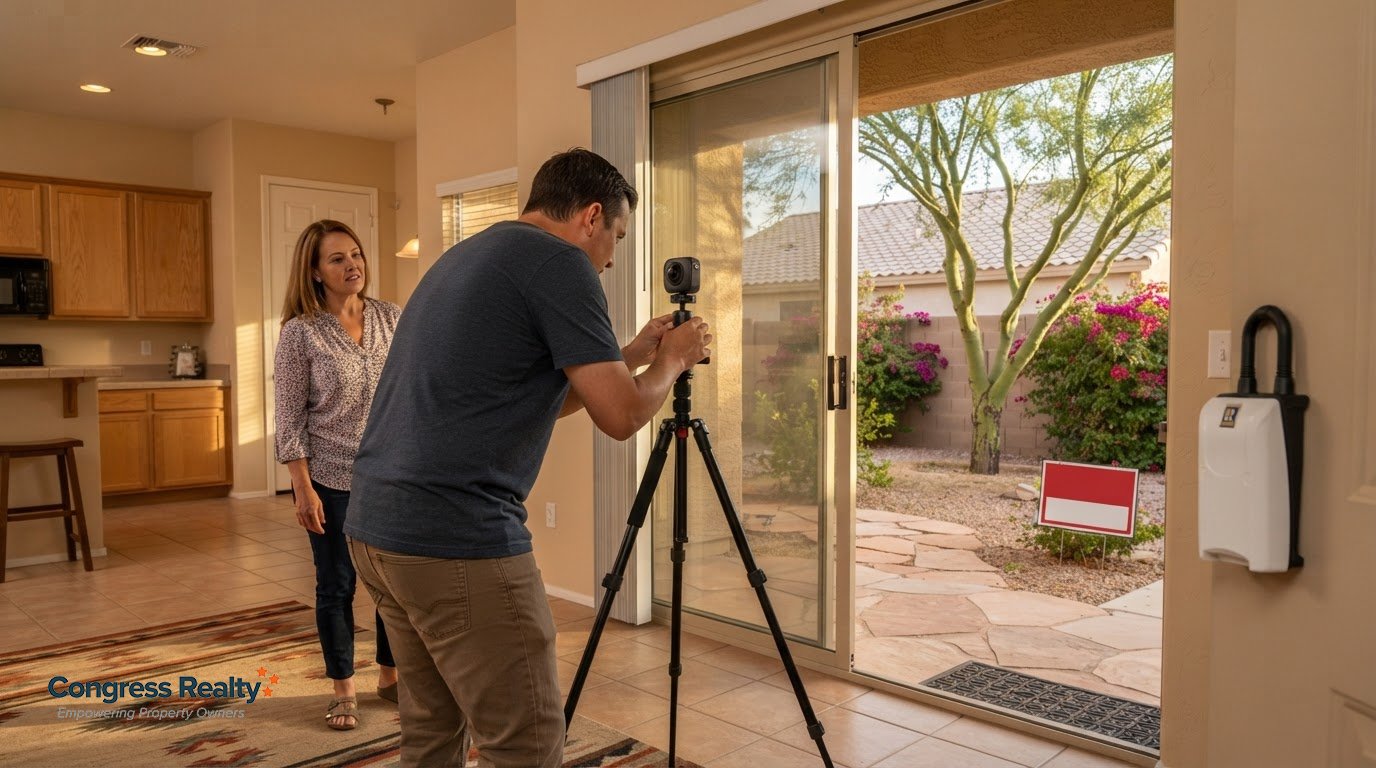
Congress Realty is a flat fee MLS brokerage serving Phoenix homeowners with Multiple Listing Services and home-marketing tools such as Virtual Tours. What makes buyers trust a listing before they walk through the door? A clear, consistent story can show what makes a home distinctive and support its claims with useful details.
Buyers need more than polished wording. They want to picture the home, understand its features, and see credible information. Thoughtful marketing the story of your home connects those details across listing copy, photography, and video. According to the National Association of REALTORS®, homes that sellers list on the MLS average a 7% higher net sales price.
This article explains how to choose story assets, direct marketing spend toward useful content, and use visuals to clarify a home’s character. You’ll also see how MLS exposure and a virtual tour can present a Phoenix home clearly, while keeping its story tied to what the property offers.
Key Takeaways
- Keep a home’s details and message consistent across listing copy, ads, and social posts so buyers get a clear, familiar picture.
- Focus marketing spending on channels that reach likely buyers, then adjust based on the response.
- Use photography and video to show a home’s character and help buyers picture its spaces and features.
- Build a clear narrative around the situation, problem, solution, and result to make the home’s story specific and credible.
- MLS exposure, an eLockbox, yard signs, and a virtual tour can support a home’s presentation and buyer access.
How professionals use story assets on websites, ads, and social media
Build one clear home narrative from verified property details. A shaded patio, original built-ins, and a renovated kitchen, for example, can show how different spaces function. The listing description states the essential facts; additional marketing content can add context or spotlight individual features. Consistent wording helps buyers recognize the same home across platforms.
Story-driven marketing connects property facts to how spaces could be used, while conventional listing copy may focus mainly on features. Pair documented kitchen updates with a photo that shows the layout, for example, without promising what a buyer’s experience will be.
Website, advertising, and social media content should describe the home accurately. A provider should use supportable details, avoid misleading wording, and distinguish verified property information from an owner’s personal recollection. For example, “the owner’s favorite reading nook” is clearly personal; a claim about a renovation date needs reliable support.
How can a marketing provider share a home’s history without making unsupported claims? The provider can use records and owner documents to check specific details, and clearly attribute memories to the owner. If records and owner documents don’t support a home’s age or former use, the provider can focus on visible architectural features instead.
Storytelling carries risks when it exaggerates, hides relevant details, or implies benefits the property cannot deliver. A dramatic caption might attract attention but weaken trust if the listing’s photos contradict it or the listing’s facts contradict it. Professionals keep the story grounded in observable features and accurate disclosures.
How can a marketing provider use local history and neighborhood details in a home listing? Use relevant, verifiable context, such as a named park or public neighborhood feature, and describe its relationship to the home plainly. A Phoenix listing, for example, can mention a nearby park only when that detail is accurate and relevant.
Useful, specific posts build engagement more effectively than unsupported hype. Share a porch photo, explain its shade or layout, and answer questions with verified details. An email update can carry the same story with a new photo or feature instead of repeating a sales pitch.
To build community around a listing, a professional can invite comments about a visible feature and answer respectfully. Before reposting a visitor’s social media content, the provider should get permission. Across the website, ads, and email, each asset should reinforce the home’s real qualities and help buyers understand what makes it distinct.
How a marketing provider spends marketing money strategically
Start with likely buyers and the channels that reach them. A downtown condo may call for different placement from a rural home. Match the audience, property, and campaign before spending. A home near a commuter rail station, for example, may benefit from copy that mentions the connection when the detail is accurate and relevant.
Separate essential listing assets from optional promotion. Accurate property information and clear presentation support every campaign. Paid advertising can extend reach, but it cannot fix an unclear description or poor-quality content. Identify what the home needs first, then direct spending toward gaps that affect how buyers understand it.
Choose channels based on buyer behavior, not habit. If the intended audience uses social media, adapt listing content for those channels. If the home’s appeal depends on its layout, prioritize visual presentation. Avoid spreading the budget across platforms simply to appear everywhere.
A disciplined campaign starts with a focused plan, then expands only when results support it. The provider can monitor website traffic, social media engagement, inquiries, and conversion patterns. For example, if a post draws attention but prompts no useful buyer questions, the provider can refine its message or audience. That response-based approach keeps spending tied to performance.
Timing also matters. A provider can coordinate campaign launches with the listing’s readiness, so advertising does not send buyers to incomplete information. If the provider still needs to clarify a floor-plan detail or key property fact, the provider can resolve that first. This sequence reduces wasted attention and gives each paid placement a consistent destination.
Build the plan around the home’s strongest verified selling points. A house with a flexible office may suit content aimed at buyers seeking workspace; a property with a low-maintenance yard may call for a different message. Weigh each feature’s relevance to buyers, then choose which content merits wider distribution.
Keep budget decisions adjustable. Compare which campaign elements attract qualified interest, then shift resources toward stronger performers. Seasonal demand, competing listings, and audience response can change the best approach. The goal isn’t to spend more by default, but to use available funds where they have a clear purpose.
Before expanding a campaign, the provider reviews its outcomes with the homeowner. Website visits, saved listings, direct questions, and showing interest can reveal what resonates. These signals don’t all mean the same thing, so the provider interprets them together. That review helps the next marketing decision stay practical, measured, and connected to the home’s actual story.

How professionals use video and photography to tell a home’s story
A professional photo sequence gives buyers a clear path through the property. Start with an exterior view, then show the entry, main living space, kitchen, and bedrooms. For a Phoenix home, the sequence might also include a shaded patio and its connection to the living room. This order helps viewers understand how the spaces relate.
Photography should show real proportions and useful details, not create a misleading impression. A professional can frame a compact dining area beside the kitchen, for example, so buyers understand its layout. Consistent color and lighting across the set keep the home’s presentation coherent. Images should support the listing’s facts, not suggest features the property lacks.
Video adds movement and makes transitions easier to follow. A steady walkthrough can show how the entry opens into the living area, then lead toward the kitchen and outdoor space. This helps viewers picture the route between rooms. Video can also capture details still photos miss, such as how a sliding door connects two areas.
Start a visual story with a quick, relevant hook. A short clip could open on a garden gate, then reveal a private courtyard and its connection to the home. This progression gives viewers context without claiming how they will feel living there.
Professionals plan each shot around a verified feature and its practical meaning. A wide view can explain an open floor plan; a closer image can show original cabinetry. If the owner shares a renovation detail, the provider can attribute it appropriately. The visuals and captions should distinguish documented facts from personal memories.
Editing should preserve the home’s appearance. Adjust exposure so a dim hallway reads clearly, but don’t digitally remove permanent features or change the view outside a window. Accurate color, for example, helps buyers judge whether a room has warm wood floors or pale tile. Honest presentation supports informed interest.
Use a consistent plan across the listing, social media, and email. A photo of a breakfast nook can introduce the home’s layout; a brief video can show its connection to the kitchen. Reusing a visual style helps buyers recognize the property while each format adds useful context.
Before publishing, the provider checks that every image and clip matches the property description. A caption about a covered patio should show the actual covered area, not a nearby shared space. This final review keeps the visual story accurate, cohesive, and focused on what buyers can see. Clear visuals help people assess whether the home merits a closer look.
How Does Storytelling Build Trust With Homeowners?
Storytelling builds trust by connecting features with clear, supportable context. Buyers can understand why a feature matters without inflated promises. A separate entrance, for example, becomes more useful when the listing explains its layout and shows where it leads. Specific details help readers assess the home for themselves.
Marketing the story of your home works best when the narrative follows a simple sequence: situation, problem, solution, and result. A home office may address a need for quiet workspace. Explain where it is, show its door, and note the nearby rooms. This gives buyers practical context without claiming the space will transform their lives.
Consistency helps readers trust the presentation. If the listing describes a bright dining area, the photos should show that room accurately. If a social post highlights original woodwork, don’t imply that every finish remains original. Matching details across channels helps prevent confusion.
Clear attribution separates personal memories from property facts. An owner might recall family dinners on a screened porch. Present that as the owner’s recollection, not proof of the home’s age or history. This distinction keeps an appealing detail from becoming an unsupported claim.
Storytelling should answer buyer questions, not conceal drawbacks. If a room has an unusual shape, use a floor plan and plain description to explain its arrangement. Buyers can then judge whether the space fits their needs. A candid account is more credible than wording that avoids the feature.
Local context adds meaning when it stays relevant and accurate. A listing might name a nearby trail and describe its location in relation to the property. Avoid promising a lifestyle or implying access rights. Buyers need useful context, not assumptions about how they will use the neighborhood.
A strong story respects different buyer priorities. One buyer may value a quiet reading corner; another may focus on storage or room flow. Describe the same window seat through its built-in shelves, natural light, and position beside the living area. Concrete details let readers form their own interpretation.
Marketing the story of your home means using verified details, visible evidence, and honest context. Organize the narrative around the situation, problem, solution, and result, and make every claim match the listing and visuals. This helps buyers understand the property and gives homeowners a credible way to present what makes it distinctive.
Congress Realty
Congress Realty can support the practical presentation of your home’s story while you stay in control of its details. Its Multiple Listing Services help place a property listing in the MLS, where buyers and real estate professionals can access listing information. Use accurate descriptions and consistent details so the story matches what the listing presents.
Connect the home’s verified features with the listing information buyers see. If a home has a separate dining room, describe it plainly and use the same description across your marketing. The MLS listing provides a central place for property details, while the home’s story adds context. Check the listing service’s access and editing arrangements before relying on them. Congress Realty will make changes on your behalf.
Visual access can add context beyond written details. Congress Realty offers Virtual Tours to help buyers explore a home online and understand how its spaces connect. A tour might show the path from the living room to the kitchen, making the layout easier to follow than a feature list alone.
Access arrangements also matter to a home’s presentation. An eLockbox can support property access for showings, while a Yard Sign can help people passing nearby notice the home. These tools serve different purposes, but both can connect interested buyers with the property.
A buyer might first notice a Yard Sign, then review the MLS listing for property details and explore the Virtual Tour. Clear, consistent information across those touchpoints helps buyers understand what the home offers. Distinguish personal history from property facts, and make sure the story supports, rather than replaces, accurate listing details.
Congress Realty’s offerings support different parts of the marketing process. MLS listings provide a place for property information and the same exposure as listings for which sellers pay a full commission. A Virtual Tour adds an online way to view the home, an eLockbox supports showing access, and a Yard Sign offers an in-person point of discovery. Choose the combination that suits how you want to present the property.
When preparing the home’s story, focus on details buyers can verify and features relevant to your selling plans. Use the listing and available marketing tools to communicate those details clearly. This approach provides a practical structure without relying on unsupported claims or promises about a buyer’s experience.
If you’re ready to discuss your home sale, contact Congress Realty.
Frequently Asked Questions
What does “marketing the story of your home” mean in real estate?
Organize a property’s verified details into a useful presentation for buyers. Align the listing description, feature labels, and supporting documents so the terminology stays consistent. If the listing calls a space a den, for example, related captions should use the same name. The story adds context, while property facts remain the basis for each claim.
What photos and videos do professionals use to communicate a home’s story?
Professionals can combine exterior views, room photos, close-ups of distinctive finishes, and a video walkthrough. The selection depends on which features need explanation. A close-up can clarify the condition or design of a fireplace surround, while a walkthrough can show the route between floors. Captions and narration should identify what viewers see, without adding claims that the visuals cannot support.
How much does professional real estate marketing cost in the United States?
Professional real estate marketing costs vary with the work involved, including photography, video production, copywriting, and paid advertising. A campaign using existing materials differs from one that needs new visual assets and broader promotion. Ask for an itemized scope separating creative work from advertising spend. This makes it easier to compare what each plan includes and choose services that fit your selling priorities.