Congress Realty is a flat-fee MLS brokerage serving Phoenix, helping homeowners list their properties through the Multiple Listing Service. What should Phoenix homeowners weigh before selling a townhouse by owner? You’ll need to consider pricing, marketing, showings, negotiations, paperwork, and legal requirements alongside potential commission savings.
Potential savings matter, but a townhouse sale also involves buyer decisions and community requirements. HOA fees and rules affect what buyers need to know, while the purchase agreement and local practices can shape closing costs for Phoenix sellers.
This guide covers the key decisions, from HOA documents and escrow to MLS access and commission terms. You’ll learn how professional listing support can fit into a seller-led plan, helping you decide which tasks to handle and where you want support before listing in Phoenix.
Key Takeaways
- Plan for closing costs based on the purchase agreement and local practices, and understand how taxes may affect your proceeds.
- Gather HOA rules and fee details early so buyers can review them within the agreement’s deadline.
- Know how the escrow holder holds earnest money and how negotiated concessions can affect your final proceeds.
- A flat-fee MLS listing can provide MLS exposure, but selling without a listing agent doesn’t automatically remove every commission cost.
- In Phoenix, compare the listing support you need with the commission structure before choosing how to market your townhouse.
1. Who pays closing costs when selling a house by owner?
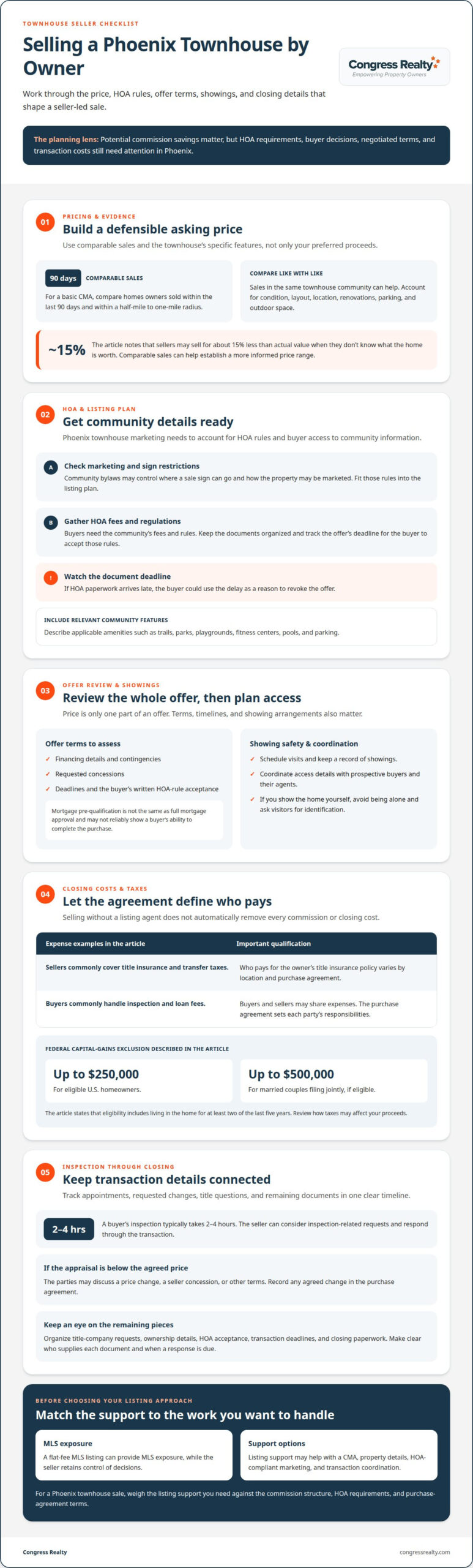
Closing costs depend on the purchase agreement and local practices, not just on whether a realtor represents the seller. In a U.S. FSBO sale, buyers and sellers may share expenses. Sellers commonly cover title insurance and transfer taxes, while buyers handle inspection and loan fees. The agreement sets each party’s responsibilities, so review those terms before accepting an offer.
A professional estimates a townhouse’s market value using a comparative market analysis, or CMA. For a basic analysis, sellers can compare homes that owners sold within the last 90 days and a half-mile to one-mile radius. In Phoenix, a professional can also assess how closely each sale matches the townhouse’s condition, layout, and location within its community. One essential point in what to know about selling a townhouse by owner is how those comparable sales support the asking price.
Sales within the same townhouse community can provide useful comparisons because homes may share amenities and upkeep standards. Account for differences such as renovations, parking, and outdoor space. For example, a renovated unit and a similar unit needing repairs shouldn’t automatically have the same price. An inspection can reveal condition issues that may affect how buyers compare the properties.
The asking price should reflect the available evidence, not just the seller’s preferred proceeds. Sellers may sell for about 15 percent less than actual value when they don’t know what the home is worth. A professional uses comparable sales to establish a defensible range, then considers current competition and property features. This can help the owner avoid pricing too low or discouraging buyers with an unsupported figure.
Townhouse marketing also needs to follow HOA rules. Community bylaws may control where owners can put a sale sign and how they can market the property. Factor those restrictions into the listing plan, and describe relevant amenities such as trails, parks, playgrounds, fitness centers, pools, and parking. If you’re considering what to know about selling a townhouse by owner, align the marketing plan with HOA rules from the outset.
Closing costs can include tax considerations. According to the Internal Revenue Service, eligible U.S. homeowners may exclude up to $250,000 in capital gains from federal income tax, or $500,000 for married couples filing jointly, if they lived in the home for at least two of the last five years. Who pays for the owner’s title insurance policy varies by location and purchase agreement.
Professional listing support can help with a comparative market analysis, property details, and HOA-compliant marketing while you retain control of decisions. An MLS listing can help broaden a property’s visibility, while permitted signs can support local visibility. Start by setting a price range based on community sales, then align the listing plan with association rules and the purchase agreement’s closing-cost terms.
2. Providing HOA documents and buyer rule acceptance
A professional can coordinate inspection scheduling, appraisal communication, title work, and closing documents with the buyer, seller, and other transaction parties in Phoenix. They can also track HOA document delivery and the deadline for the buyer’s written acceptance of community rules.
HOA paperwork can affect whether a townhouse purchase proceeds. Buyers need the community’s fees and regulations, and the purchase offer typically sets a deadline for accepting those rules. For Phoenix sellers, a professional can organize the documents, track that date, and keep the buyer’s response connected to the transaction timeline. If paperwork arrives late, the buyer could use the delay as a reason to revoke the offer.
Offer review means looking beyond the proposed price. In Phoenix, a professional can help assess financing details, contingencies, requested concessions, and deadlines together. A mortgage pre-qualification isn’t the same as full mortgage approval, so it may not reliably show a buyer’s ability to complete the purchase. Clear review helps the seller understand the offer’s terms before deciding how to respond.
Showing coordination also calls for practical security steps. A professional can arrange access with prospective buyers and their agents, share showing details, and help keep a record of scheduled visits. If you show the home yourself, avoid being alone and ask visitors for identification. In Phoenix, clear scheduling helps you manage access and keep the home ready for buyer visits.
After an offer, a buyer’s inspection typically takes 2-4 hours. A professional coordinates the appointment and passes inspection-related communications to the seller, who can then consider the buyer’s requests and respond through the transaction. If an appraisal comes in below the agreed purchase price, the professional can help frame the issue for negotiation. The parties may discuss a price change, a seller concession, or other terms; the agreement records any change.
Title work and closing require attention to documents, ownership details, and agreed terms. A professional can help organize the title company’s requests, transaction deadlines, and closing paperwork. You can see which items remain outstanding and how a requested change may affect the timeline. Coordination helps keep inspection findings, title questions, and HOA acceptance from getting lost in separate conversations.
Choose support that makes responsibilities and deadlines visible. A useful transaction timeline identifies who supplies each HOA document, when the buyer must accept the rules, and which inspection or title items need a response. For a townhouse sale, professional home-selling support can help keep those moving parts organized while the seller retains control of decisions.
3. When selling a house by owner is escrow money taken?
In a U.S. FSBO sale, the buyer’s earnest money usually goes into escrow after the parties accept an offer. It is typically 1-3% of the purchase price, and the escrow holder applies it to the purchase price at closing. A transaction professional tracks the deposit, confirms its receipt with the escrow holder, and follows the contract’s deadlines. The seller should understand what the agreement says about applying or releasing the funds before accepting an offer.
State, county, and city rules can affect townhouse sale requirements and transfer taxes. Local regulations shape required paperwork, while transfer-tax practices and who pays can depend on the location and purchase agreement. A professional can organize transaction documents and clarify how the agreed terms allocate these costs. Review each responsibility in the closing figures rather than assuming every area follows the same process.
Closing costs can involve several parties. In a U.S. FSBO sale, buyers and sellers may share costs; sellers commonly cover title insurance and transfer taxes, while buyers handle inspection and loan fees. The purchase agreement sets each party’s responsibilities. A professional can help track title-company requests and keep fees, credits, and other agreed terms in view as closing approaches. That makes it easier to understand how each item affects your proceeds.
Negotiations also determine whether you offer concessions. For example, a townhouse seller might offer to cover the buyer’s homeowners association fees for a year. That concession changes your net proceeds, so consider its effect alongside the offer price and other terms. You remain in control: professional support can explain trade-offs, but you decide whether to accept, reject, or counter an offer.
Seller control is one of the main pros and cons of selling without a traditional listing agent. You choose the acceptable price, concessions, and contract terms, while also managing showings and buyer communication. A professional can organize offers and negotiation details so you can compare purchase price, financing, contingencies, and closing terms. For example, review a buyer’s mortgage and requested concessions together, not as separate decisions.
Safety and privacy also need a plan. If you show the home yourself, avoid showing it alone and ask visitors for identification. A professional can coordinate showing requests, share scheduling details, and help manage communication without unnecessarily publicizing private information. In Phoenix, for example, you can choose suitable showing times and keep personal details out of listing remarks. You still approve access and control what information to disclose.
4. Can a professional help FSBO sellers list on the MLS?
Yes. Congress Realty can help a townhouse seller get a listing on the Multiple Listing Service through a flat-fee MLS arrangement. The MLS is exclusive to members, and the listing receives the same exposure as listings paid with a full commission. Only MLS members can make changes, so Congress Realty handles listing edits for you. You retain control of the asking price, offer decisions, and sale terms while the listing reaches potential buyers and agents.
FSBO, agent-assisted, and cash sales differ in support and terms. With FSBO, you take responsibility for pricing, buyer communication, negotiations, and transaction details. An agent-assisted sale adds representation and transaction guidance, while a cash offer describes the buyer’s proposed payment method rather than mortgage financing. Compare the actual offer price, contingencies, requested concessions, and closing terms. A cash offer isn’t automatically the strongest if its other terms don’t meet your priorities.
Commission savings can be meaningful, but calculate the full picture. A U.S. FSBO seller may save roughly 3% of the sale price in listing commission. A seller may still choose to pay a buyer’s agent fee when that agent brings the buyer; the cited typical range is 2.5-3% of the sale price. The parties can negotiate commission amounts and terms, so the listing agreement and purchase offer should make any agreed payment clear.
This distinction matters when comparing percentage-based commissions with a flat-fee MLS arrangement. The flat-fee approach separates MLS listing support from a listing commission based on the sale price. It doesn’t automatically remove other costs or tasks. You still manage showings, buyer questions, offer review, and decisions about concessions. A clear plan helps you weigh potential savings against the time and transaction responsibilities involved.
Consider full-service representation if you want support with negotiations, buyer communication, or transaction coordination. It can also help when managing multiple offers or deadlines feels difficult. If you want to lead decisions and handle buyer interactions, you may prefer professional MLS access without full listing representation. The right option depends on the support you need, not simply on the word “FSBO.”
Compare each route using the same criteria: expected proceeds, agreed commission, offer conditions, your responsibilities, and support through closing. For example, a higher offer with substantial concessions may produce a different result than a lower offer with fewer requested changes. Review the MLS arrangement and any buyer-agent payment separately. This gives you a practical basis for weighing commission savings against service and workload.
5. Avoiding real estate commission fees
To reduce listing commission, separate the cost of MLS access from full-service representation. A flat-fee MLS arrangement places a home on the Multiple Listing Service without charging a listing commission based on the sale price. You still handle key work, including pricing decisions, showings, offer review, and sale paperwork. This approach can suit an owner who wants professional listing access but plans to lead the transaction.
Compare the savings with the responsibilities that remain. Real estate agents typically charge a commission of 5-7% of a home’s sale price. A seller who removes a listing commission should still account for any buyer-agent compensation they agree to pay, along with negotiated concessions and other closing costs. The purchase agreement should state any agreed payments clearly, so the seller can assess expected proceeds rather than focus on one commission line.
An MLS listing can help make a townhouse visible to agents working with potential buyers, with the same exposure as listings paid with a full commission. Listing access is only one part of marketing. Strong listing details should explain the property’s condition, layout, and community features. Mention parking or shared amenities, for example, when they help buyers understand the townhouse. Accurate details can reduce avoidable questions and keep your marketing consistent.
Before choosing a service, map out who handles each task. You set the asking price and decide how to respond to offers, while listing support can provide MLS placement. You still need to plan for showing access, questions, negotiations, and transaction paperwork. A simple responsibility list can show whether potential commission savings justify the time and coordination you’ll take on.
Be clear about the difference between a listing commission and other costs. A buyer’s agent may bring an offer, but you decide whether to offer buyer-agent compensation and negotiate the terms. Review concessions separately, too. For example, a buyer’s request for a closing credit affects your proceeds even if you avoid a listing commission. Compare the final terms, not just the headline sale price.
Professional MLS listing support may be less suitable if you want one representative to manage negotiations, buyer communication, and transaction details. In that case, weigh the value of that support against the commission structure before choosing. If you prefer direct control, you can use MLS access while retaining decisions about pricing and offers. Identify the tasks you want handled, then match the service and paperwork to those needs.
For a townhouse sale, explore professional home-selling support to see how MLS listing access can fit a seller-led plan.
Congress Realty
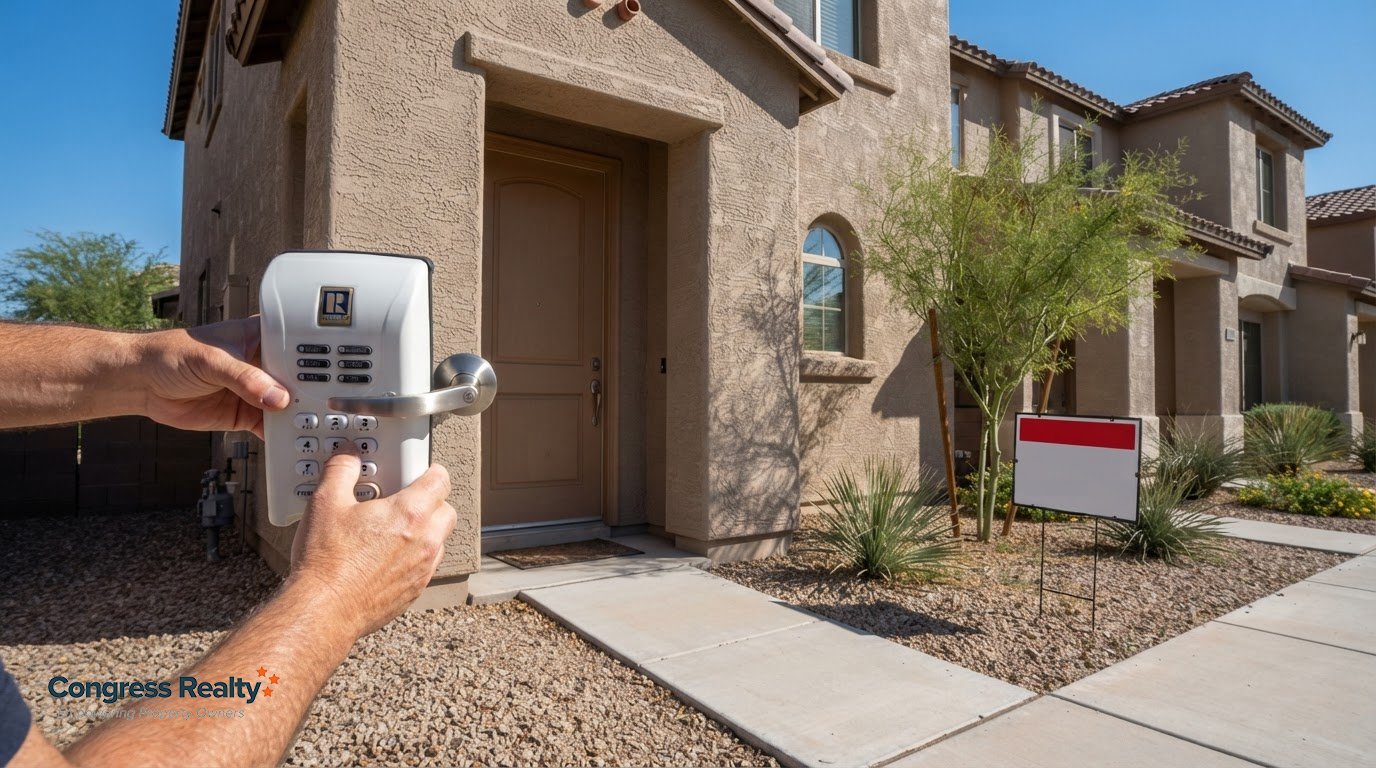
Congress Realty helps townhouse sellers access professional listing support while retaining control of key sale decisions. Its MLS listings receive the same exposure as listings for which sellers pay a full commission. Options such as an eLockbox, yard sign, or virtual tour can support access and marketing. For sellers in Arizona, Alaska, California, Idaho, Louisiana, Montana, Nevada, New Mexico, Oregon, Texas, Utah, and Washington, these tools can support listing visibility while you manage pricing, offers, and negotiations.
Consider this approach when you want MLS exposure but prefer to guide the sale yourself. Congress Realty can support the listing side; you decide how to handle offers and which terms work for you. To discuss your townhouse sale and listing needs, contact Congress Realty.
Take the Next Step With Confidence
A key part of what to know about selling a townhouse by owner is deciding which tasks you want to direct and where professional support can make the process easier. Set your priorities before choosing a listing approach: consider how much control you want over buyer communication, property access, and marketing decisions. A clear plan can keep those choices aligned from listing preparation through closing.
Congress Realty offers MLS listings, an eLockbox, and yard signs to support townhouse marketing and access. Choose support that fits your plan while keeping decisions about offers and sale terms in your hands. You don’t have to hand over every decision to use professional listing tools.
Ready to map out your next step? Contact Congress Realty to discuss your sale. A thoughtful plan puts you in command of the process.
Frequently Asked Questions
What is required to sell a house by owner in Phoenix?
You need a sale plan, accurate property information, buyer access, and the paperwork required for your transaction. For a townhouse in Phoenix, that can include HOA materials and clear details about community features. You also need a process for handling offers and coordinating closing. A professional can support specific parts, such as listing preparation or transaction steps, while you retain decisions about price and terms.
What is “for sale by owner” and how does it work?
“For sale by owner,” or FSBO, means the homeowner sells without hiring a traditional listing agent to represent the sale. The owner manages decisions such as the asking price, buyer communication, and offer responses. Professional support can still fit into the process, including MLS listing access or help organizing transaction details. For example, an owner might use listing support while handling buyer conversations directly.
Who pays closing costs when selling a house by owner in Phoenix?
The purchase agreement determines which party pays each closing cost, and local practices can differ. Sellers commonly account for costs such as title insurance and transfer taxes, while buyers may pay inspection and loan fees. Review the closing statement against the signed agreement. This comparison can help catch an unexpected cost allocation before you sign final documents or transfer ownership.
Can Phoenix FSBO sellers list on the MLS?
Yes. Congress Realty can place a home on the Multiple Listing Service through a flat-fee MLS brokerage. Only members can access the MLS, and listings receive the same exposure as listings for which sellers pay a full commission. Only MLS members can make listing changes, so Congress Realty handles edits for you. This provides MLS access without requiring you to hire a traditional listing agent.
Do I still have to pay a buyer’s agent commission when selling FSBO?
No fixed buyer-agent commission automatically applies to every FSBO sale. You can decide whether to offer buyer-agent compensation, and the parties can negotiate the terms. Put any agreed amount or arrangement in the relevant written documents. For example, compare an offer that requests compensation with one that does not, then assess each offer’s price, financing, contingencies, and other terms together.
What are the most common FSBO mistakes?
Common pitfalls include setting an unsupported asking price, limiting buyer exposure, overlooking townhouse association requirements, and missing offer deadlines. Incomplete property details can also create confusion about features or included items. Before listing, assign responsibility for each task. Decide who tracks inquiries, schedules access, organizes documents, and communicates responses to interested buyers.
What paperwork does a professional need to help sell a townhouse by owner?
A listing professional typically needs the property address, ownership details, accurate home features, and information about included or excluded items. Townhouse sales also benefit from relevant HOA documents, fee information, and community rules. Property disclosures and transaction forms depend on the sale and location. Organized, consistent details help prepare the listing and reduce back-and-forth when buyers ask about the home.
When selling a house by owner, does escrow hold the money?
Earnest money usually enters escrow after the seller and buyer accept an offer; the seller does not pay it as a fee. The escrow holder keeps the deposit according to the purchase agreement. At closing, the funds typically apply to the buyer’s purchase price. The agreement also sets conditions for handling the deposit if the transaction ends before closing, so read those terms carefully.