Congress Realty, a flat-fee MLS brokerage serving Phoenix, helps homeowners list a home on the Multiple Listing Service. In a Phoenix home sale, closing day brings the parties together to sign documents, transfer funds, and complete the handoff. A final FSBO checklist before closing day helps Phoenix sellers review the transaction details and prepare for the final steps. The mortgage lender must provide the buyer with the Closing Disclosure at least three days before closing, according to the Consumer Financial Protection Bureau.
In Arizona, sellers can use this checklist to organize the closing disclosure, final walk-through, belongings, and insurance details. Work through each item alongside the purchase agreement, then resolve questions before signing. This helps keep the sale organized from paperwork to property handoff.
Key Takeaways
- Know what happens at closing, from reviewing and signing documents to completing payment and handing over the keys.
- Compare the Closing Disclosure with the agreed loan terms and costs; the lender must provide it at least three days before closing, according to the Consumer Financial Protection Bureau.
- Use the final walk-through to check the home’s condition and confirm agreed repairs are complete.
- Review the contract to clarify which items stay, remove personal belongings, and leave the home broom clean.
- Arrange homeowners insurance before closing, since the buyer’s lender requires proof of coverage.
What happens at a house closing?
Closing completes a real estate sale through signed documents, payment, and transfer of ownership. The buyer, seller, and closing professional review the transaction and resolve final paperwork issues. Some states require an attorney to handle the closing. The participants and signing process depend on state and transaction requirements.
- Bring identification and transaction documents. Buyers typically bring government-issued photo identification, such as a driver’s license, state ID, military ID, or passport. Keep the signed purchase contract and lender-requested documents together so you can find them quickly.
- Review the Closing Disclosure before signing. In the United States, the mortgage lender must provide the buyer with this disclosure at least three days before closing, according to the Consumer Financial Protection Bureau. Compare its loan terms and closing costs with the buyer’s latest information.
- Confirm the mortgage payoff and title details. The closing paperwork accounts for the amount needed to pay off the seller’s mortgage from the sale proceeds. Review the settlement figures and title documents for the property, payoff, and agreed transaction terms. A title has no liens or levies from creditors that could put property rights into question.
- Bring the required funds using the agreed method. Buyers typically bring a certified or cashier’s check for the required amount, or arrange a wire transfer to the title company or escrow agent. Confirm the amount and recipient details in the closing instructions, and keep payment records with the contract and identification.
- Read each document before signing. Buyers typically review the seller’s contract and any additional documents the bank requests. If a figure or term differs from the agreed paperwork, ask the closing professional to explain it before you sign.
Allow at least two hours for the closing appointment. Buyers need time to review documents and sign without rushing. After everyone signs and the buyer pays the required funds, the closing professional gives the buyer the keys. Keep copies of signed paperwork and payment records with the transaction file for future reference.
Document serious problems as soon as they surface. If a buyer discovers water damage or a system failure, record the issue and promptly notify the relevant transaction participants. Include clear details, such as the room, visible damage, and affected system, rather than a vague note like “problem in house.” Then discuss a written resolution before signing final paperwork. Depending on the issue and agreement, the parties may negotiate a repair, seller credit, or escrow hold for a larger repair.
After a home sale closes, the title company or attorney typically files IRS Form 1099-S to report the sale to the IRS, according to the Internal Revenue Service. Keep the closing documents with the sale records so you can review the reported transaction later.
What occurs during the final walk-through before closing?
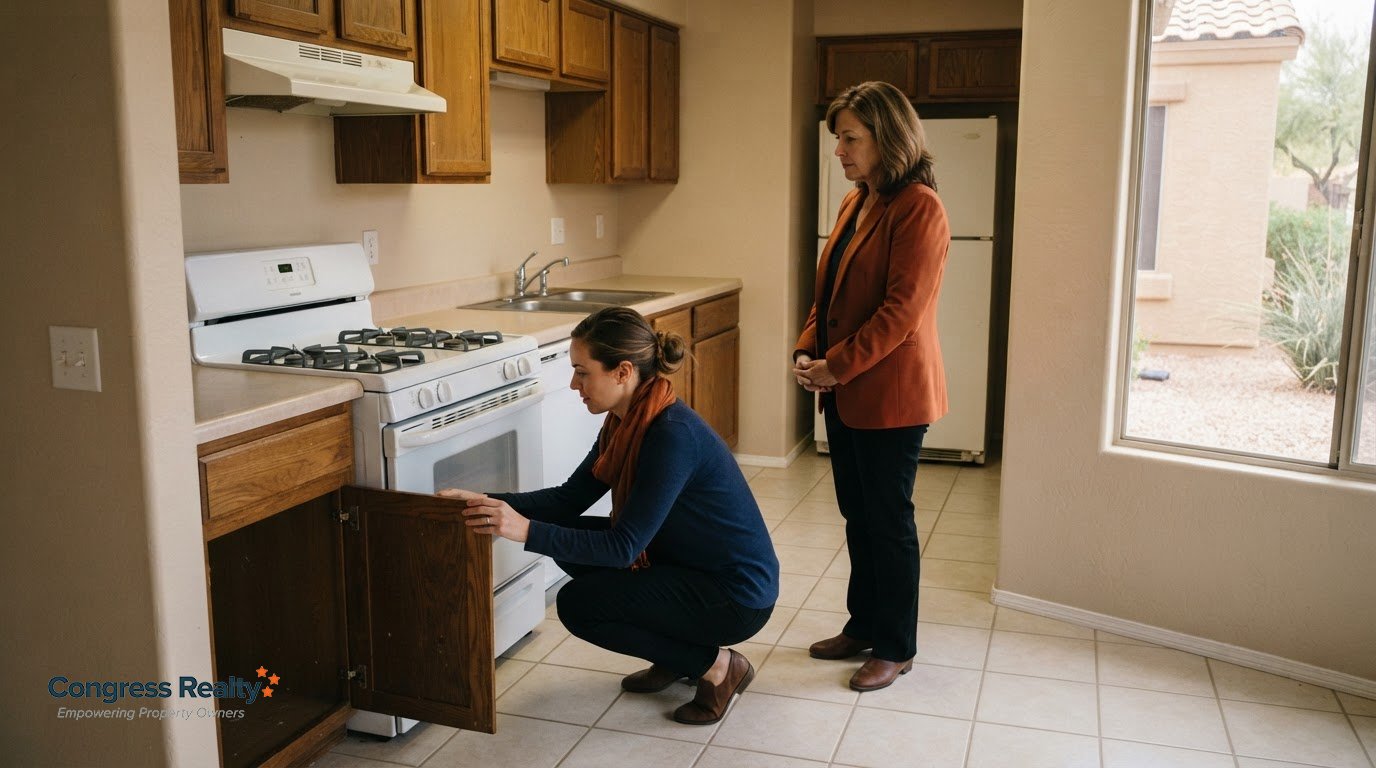
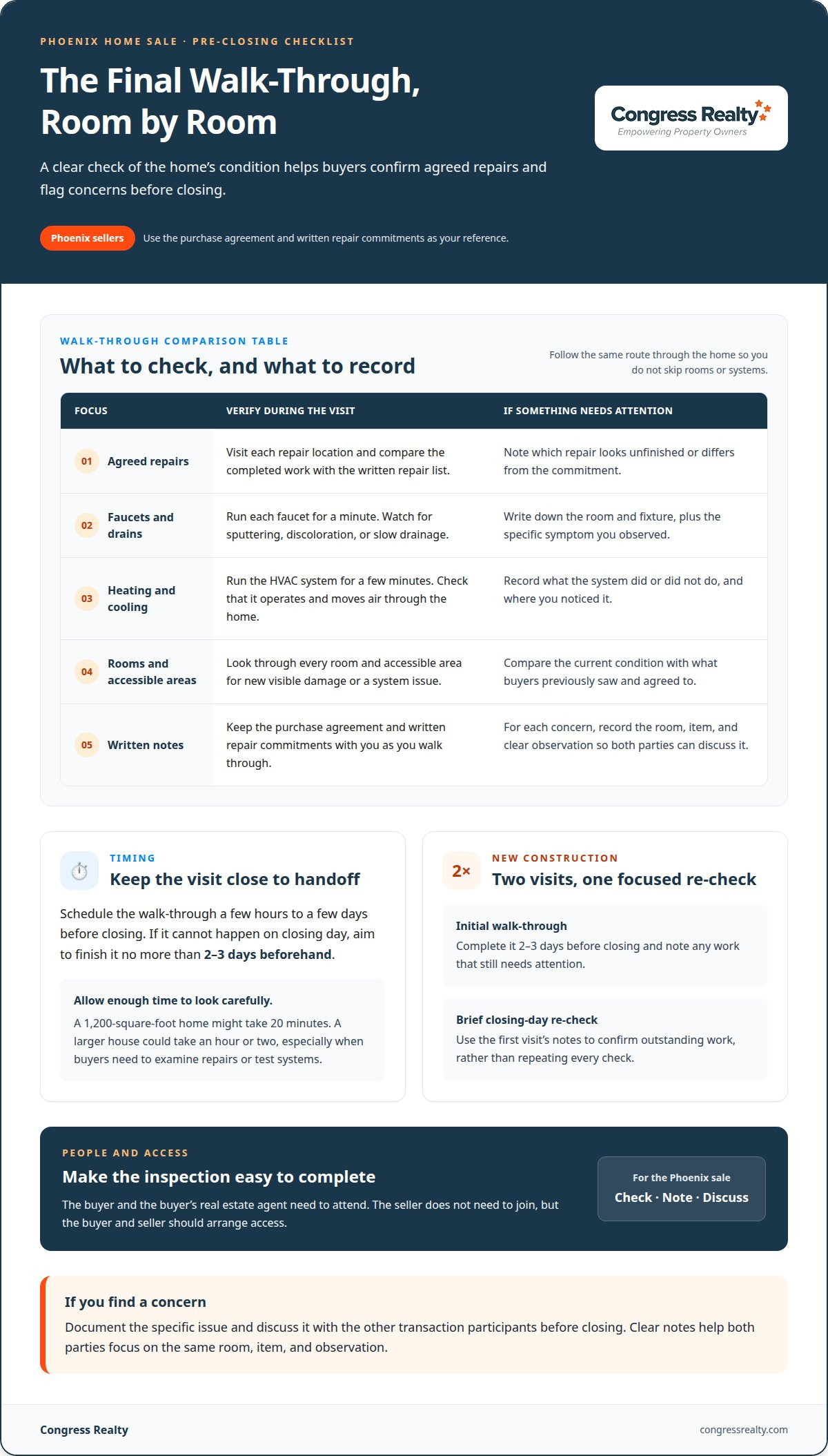
The final walk-through lets buyers check the home’s condition before closing and confirm the seller completed agreed repairs. Schedule it a few hours to a few days before closing. If buyers can’t conduct it on closing day, aim to finish it no more than 2-3 days beforehand. That timing lets buyers review the property close to handoff instead of relying only on an earlier visit.
Bring the purchase agreement and written repair commitments. Walk through the home room by room, compare its current condition with the buyers’ agreement, and record anything that needs attention. The buyer and the buyer’s real estate agent need to attend. The seller doesn’t need to join, but the buyer and seller should arrange access.
Follow a consistent route so you don’t skip rooms or systems. Check each item and note its location if anything looks unfinished or differs from the agreement.
- Compare agreed repairs with the written list. Visit each repair location and verify that the seller completed the promised work.
- Test faucets and drains. Run each faucet for a minute and watch for sputtering, discoloration, or slow drainage.
- Check the heating and cooling system. Let the HVAC system run for a few minutes, then check whether it operates and moves air through the home.
- Look through every room and accessible area. Check for new visible damage or a system issue that differs from the condition buyers previously saw.
- Record concerns clearly. Write down the room, item, and observation so both parties can discuss the specific issue before closing.
Set the appointment length based on the home, not a rigid timer. A final walk-through in a 1,200-square-foot home might take 20 minutes. A larger house could take an hour or two, especially when buyers need to examine several repair items or test systems. Allow enough time to revisit anything that needs closer attention. Rushing through rooms can leave important details unnoticed.
For a new-construction home, buyers may complete an initial walk-through 2-3 days before closing, then conduct a brief re-check on closing day. During that second visit, buyers can confirm the seller or builder completed work identified earlier. Keep notes from the first visit so the re-check focuses on outstanding items instead of repeating every check.
If you’re managing a home sale yourself, organize your transaction steps alongside the property handoff. The home-selling process provides a useful starting point for keeping the sale organized from listing through closing.
Reviewing the closing disclosure
What are the seller’s closing costs and fees in a FSBO sale? There is no fixed total: review the settlement statement for the mortgage payoff, agreed buyer concessions, prorated property expenses, and closing charges. FSBO describes how you sell, not a universal fee schedule.
The buyer’s Closing Disclosure explains mortgage terms, projected monthly payments, and closing costs, according to the Consumer Financial Protection Bureau. Review it alongside the purchase contract and latest loan information. Check that the purchase price, credits, and agreed changes match the documents both parties accepted. If a line differs, ask the closing professional to explain it before signing.
- Match the purchase price. Compare the amount on the disclosure with the signed contract and any later written amendment.
- Review credits and concessions. Confirm that any seller credit matches the written agreement and appears on the correct side of the transaction.
- Check the mortgage figures. Buyers should compare loan terms and projected payments with the lender’s latest information.
- Read each charge by name. Ask what a charge covers if its description is unfamiliar or its amount differs from earlier paperwork.
- Review seller proceeds separately. Compare the mortgage payoff and other listed deductions with the seller’s records and contract.
Buyers in the United States should expect closing costs of two to five percent of the home’s value. That figure describes buyer costs, not a standard FSBO seller fee. The seller’s figures depend on the mortgage payoff, contract terms, agreed credits, and charges shown in the transaction paperwork. Use the actual settlement figures rather than applying the buyer’s range to your proceeds.
Inspect the exterior during the property review, too. Walk the yard, driveway, and visible exterior areas, and compare their condition with what the buyers saw and what the contract requires. Note specific examples, such as debris near the entry, a damaged gate, or unfinished landscaping. Record the location and item clearly so both parties can discuss the same issue.
Bring the signed purchase contract, written amendments, repair agreements, and a current list of questions to the closing review. For example, if the contract requires removing a particular item, confirm that requirement before treating it as a new charge or concession. Organized documents help distinguish agreed terms from a last-minute request.
An attorney can review contract terms when a clause, credit, or proposed change raises a legal question. Ask the attorney to explain how the written language affects the transaction before accepting a change. Keep revised terms in writing and compare them with the closing figures. Reviewing the contract, disclosure, and exterior condition carefully helps both parties resolve differences before signing.
Checking included items and seller belongings
FSBO closing requirements vary by state, county, and local rules, including closing procedures and required documents. Some states require an attorney to handle a real estate closing. Follow the transaction’s local instructions and compare the paperwork with your signed agreement.
For belongings, use the purchase contract as the deciding record. Check each included item, such as an appliance or curtain, against the written terms. Remove personal property the buyers did not agree to take, including garage boxes, leftover paint, and cleaning supplies. If ownership of a fixture or item is unclear, resolve it with the buyer in writing before closing.
- Confirm items that stay. Match the contract’s list against the home, then note whether each named appliance, fixture, or accessory remains.
- Remove belongings that do not transfer. Clear closets, cabinets, the garage, and outdoor areas of personal property and trash.
- Leave the home broom clean. Vacuum floors, wipe kitchen and bathroom countertops, and sweep hard floors so the property is free of excessive debris.
- Gather handoff items. Set aside keys and garage remotes that belong with the property, and organize any instructions the buyer needs to operate included equipment.
How should FSBO sellers transfer keys, garage remotes, and utilities at closing? Arrange the key and remote handoff for after closing, then give the buyer every access item included in the agreement. Contact utility companies to schedule service changes around the agreed possession date, and record final meter readings when available.
Complete move-out tasks before the handoff. For example, remove remaining boxes and clean the kitchen after the movers leave. Keep the home in the condition required by the contract, and promptly tell the buyer if a move-out delay affects access or an agreed item.
If the final walk-through reveals a minor repair issue, the parties may discuss a seller credit to cover the repair after closing. Put any credit in the closing paperwork rather than relying on a verbal promise. For a larger issue, the buyer’s agent might request that some seller proceeds remain in escrow until repairs meet the buyer’s satisfaction. Put any proposed credit, escrow hold, repair scope, and release terms in a written agreement before signing.
Keep the seller’s paperwork together: the signed purchase contract, amendments, repair agreements, mortgage payoff information, and closing documents. Review the closing professional’s instructions for forms requiring the seller’s signature, and bring identification to the appointment. Compare each document with the final agreement. If a credit or included item appears differently, ask for a correction before signing.
Before leaving, walk through the entry, garage, and kitchen once more. Confirm that agreed items remain, personal belongings are gone, and keys and remotes are ready for transfer. A short written handoff note can identify which keys open the front door, side entrance, or mailbox, reducing confusion after ownership changes.
Homeowners insurance before closing
The buyer’s lender requires proof of homeowners insurance before closing. For the seller, this is a practical checkpoint in the buying process: the buyer needs to arrange coverage, and the lender needs acceptable proof before the transaction can proceed. Confirm the planned closing date and possession terms so both parties understand when ownership changes.
Buyers can start by giving the insurer the property address, expected closing date, and mortgage details. Ask which proof document the lender accepts and how the insurer will send it. Share that proof with the lender early enough to address questions before the appointment. A message saying “insurance is arranged” does not replace the lender’s requested document.
- Match the policy to the property. Compare the address on the insurance paperwork with the purchase documents, including unit or street details.
- Check the effective date. Make sure the planned start date aligns with the expected closing and possession arrangements.
- Confirm the named buyer. Review the policy paperwork for the buyer’s correct name and any lender details the insurer needs.
- Get lender receipt confirmed. Send the requested proof and verify that the lender received it and has what it needs for closing.
- Revisit the dates if closing shifts. Notify the insurer and lender if the scheduled closing changes, then align the coverage start date and proof with the updated plan.
An inspection can help buyers understand the home’s condition, while insurance paperwork addresses the lender’s coverage requirement. Keep these tasks distinct. If an insurer asks about a feature or condition noted during inspection, provide accurate details and follow up about the policy documents. Don’t assume an inspection report counts as proof of insurance.
Buyers should also review how the mortgage handles insurance payments. Depending on the mortgage terms, an escrow account may collect funds for homeowners insurance and property taxes alongside the monthly mortgage payment. Compare the lender’s explanation with the loan paperwork, and distinguish insurance charges from mortgage principal, interest, and other closing costs.
The seller has a related timing task. Review the contract’s possession terms and coordinate the current policy’s end date with the insurer. Don’t treat the scheduled closing date as the only detail that matters if the buyer’s possession begins later or closing moves. For example, a changed handoff date should prompt both parties to revisit insurance timing and utility arrangements.
Keep the insurance proof, lender correspondence, inspection notes, and closing date updates in one transaction file. If you’re organizing an FSBO sale, use the home-selling resources to support the broader steps from listing through closing.
Congress Realty: Multiple Listing Services
Congress Realty offers Multiple Listing Services for homeowners who want to handle the sale themselves while using an MLS listing. This can be a practical next step when you’re preparing a property for market and want to manage buyer inquiries and closing tasks independently.
An MLS listing supports the marketing stage, while the final walk-through, contract terms, and closing arrangements remain separate parts of the transaction. Consider which tools fit your plans: an eLockbox can support property access, while a yard sign or virtual tour can help present the home to prospective buyers.
Choose the support that matches how you plan to sell, and keep control of the decisions throughout the process. If you’re ready to explore an MLS listing for your home, contact Congress Realty or visit congressrealty.com.
Move Forward With a Clear Selling Plan
Closing day is one milestone in a larger decision: how you want to manage your home sale from the first listing step through the final handoff. Use the final FSBO checklist before closing day as a planning tool, not just a last-minute reminder. Keep agreements, timelines, and transaction records organized so you can make each next move with purpose.
If you’re preparing to sell, decide which parts you want to handle independently and where listing support would help. A clear plan lets you stay involved without losing sight of the details that move the transaction forward. You remain in control, with practical support available for the steps you choose.
Explore your home-selling options with Congress Realty and choose a next step that fits your approach. You can move forward with a plan that keeps your goals and decisions in your hands.
Frequently Asked Questions
What Paperwork Do You Need for a Sale by Owner?
A FSBO sale typically requires a purchase agreement, required property disclosures, and closing documents. Keep signed amendments, repair agreements, and records of buyer credits with the contract. The property’s location affects which forms and procedures apply. For a home built before 1978, federal rules require the seller to provide lead-based paint disclosure and the EPA pamphlet before the buyers become bound to the contract. Organize completed copies in one transaction file.
What happens if a problem arises?
Pause before signing or transferring possession if a new issue could affect the agreed terms. Record what happened, preserve relevant documents or photos, and promptly notify the buyer and closing professional. For example, if a promised appliance stops working, compare the contract’s item list with its actual condition. Put any agreed repair, credit, or change in writing, then ensure the closing paperwork reflects the resolution.
What should a final FSBO checklist include before closing day?
Use a final FSBO checklist before closing day to track responsibilities, not just documents. Mark each item complete only when you have the matching record: signed contract changes, resolved repair commitments, buyer insurance proof, agreed belongings, utility transfer plans, and access items ready for handoff. Keep a separate “open questions” list for anything that still needs a written answer. This record helps prevent a verbal agreement from slipping through.
What documents does a FSBO seller need to bring to closing?
Bring government-issued photo identification, the signed purchase agreement, amendments, and any written repair or credit agreements. Keep mortgage payoff information and closing instructions accessible, along with records requested by the closing professional. The exact forms depend on the transaction and local process, so use the appointment instructions as your document checklist. If another person will sign for you, arrange the required authorization before closing rather than arriving with incomplete paperwork.
How do FSBO sellers verify the buyer’s mortgage approval and funds before closing?
Ask the buyer for an update on the lender’s approval and any remaining loan conditions, then coordinate timing through the closing professional. Don’t rely on a verbal “approved” alone: confirm that the closing team expects the buyer’s funds and knows the payment method. Keep communications in writing. If financing or funds remain outstanding, address the closing date and any contract changes before scheduling the handoff.
How should a FSBO seller review the closing disclosure and settlement statement?
Review the seller’s settlement statement against the signed contract, amendments, and payoff information. Check the sale price, credits, mortgage payoff, and each deduction. The buyer’s Closing Disclosure explains mortgage terms, projected monthly payments, and closing costs, according to the Consumer Financial Protection Bureau. Since the buyer’s disclosure does not replace a review of the seller’s figures, raise any mismatch with the closing professional before signing.
What repairs, receipts, and inspection issues must be resolved before closing?
Use the written contract and repair agreements to identify the work the seller promised to complete. Gather receipts, contractor notes, or applicable warranties for completed work, and match each record to the relevant repair. If an inspection issue remains unresolved, document its status and discuss a written solution with the buyer before closing. Don’t describe a repair as complete if the work is unfinished or the agreed scope has changed.
How do FSBO sellers handle the final walkthrough and property handoff?
Use the final walk-through to compare the home with the contract and written repair commitments. After closing, transfer the keys, garage remotes, and other agreed access items according to the handoff plan. Coordinate utility service changes with the possession date, and record final meter readings when available. Leave a note identifying controls or access points, such as which key opens a side door, so the buyer can take over smoothly.