Congress Realty, a flat-fee MLS brokerage serving Phoenix, helps homeowners list a home on the Multiple Listing Service while keeping control of the sale. An MLS listing provides the same exposure as listings paid with a full commission. For Phoenix sellers managing the process themselves, the tools every FSBO seller needs include comparable-sale research, clear photos, a strong listing description, an organized showing plan, and complete paperwork.
Selling a home by owner in Phoenix means handling preparation, buyer communication, and transaction coordination yourself. A practical plan helps you set an asking price, present the property clearly, and keep each step moving while staying focused on your priorities.
This guide walks Phoenix homeowners through pricing, preparing, advertising, showing, and managing sale documents. You’ll learn how to organize the work and decide where listing support fits your approach.
Key Takeaways
- Compare recently sold homes with similar features to build a grounded asking price.
- Prepare your home for photos and showings by cleaning, addressing visible repairs, and highlighting its strongest features.
- Write a clear listing description and use a mix of online and offline channels to reach potential buyers.
- Set a simple process for scheduling showings, responding to inquiries, and reviewing offers.
- Organize disclosures, contracts, and closing documents early so you can move through the transaction with fewer last-minute surprises.
Advertising FSBO listings online and through other channels
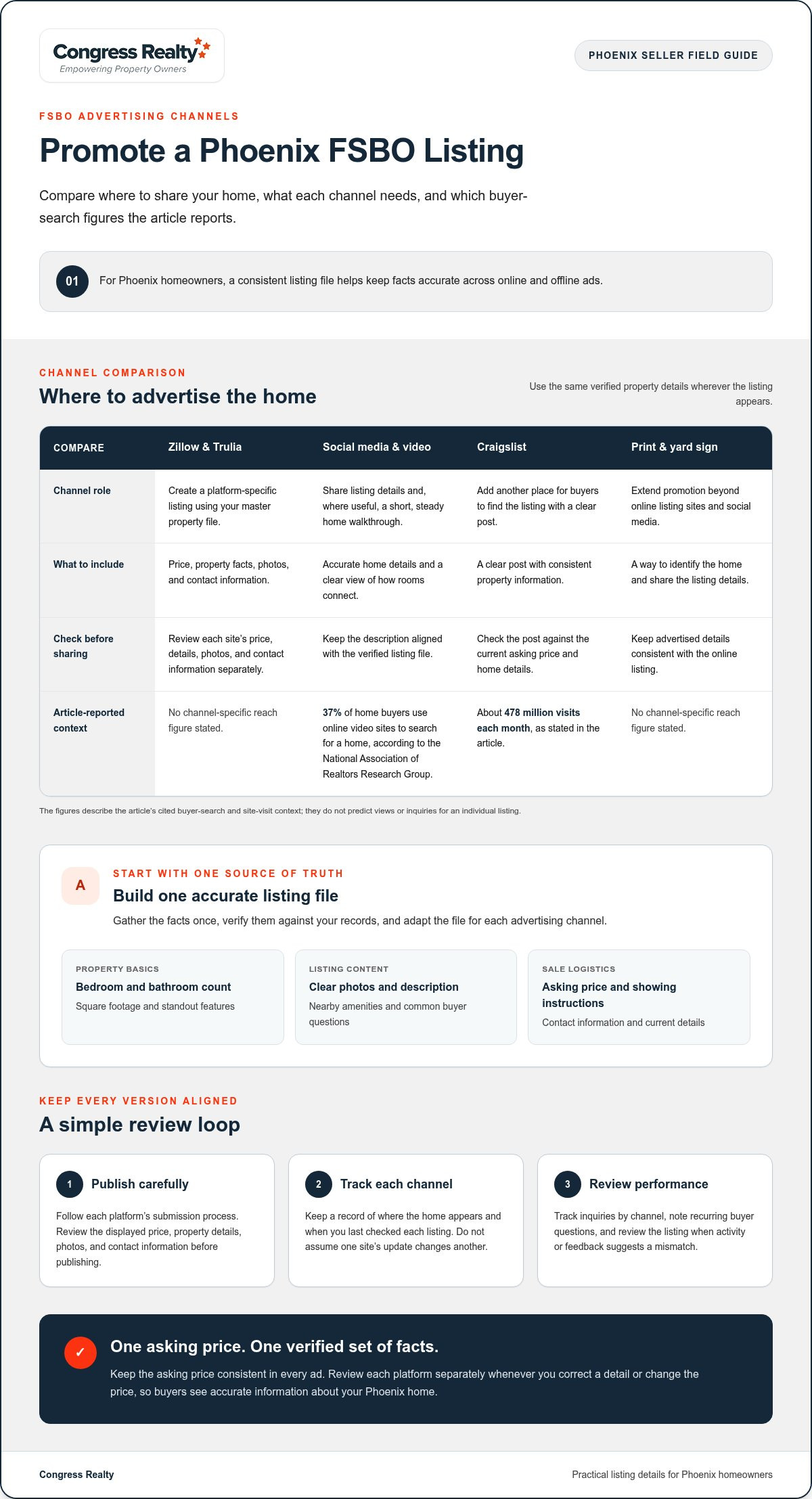
- Build one accurate listing file. Gather the bedroom and bathroom count, square footage, standout features, and nearby amenities. Add the asking price, showing instructions, and clear answers to common buyer questions. Keep these details in a master file that you can adapt for Zillow, Trulia, social media, and print ads. Check each fact against your records before publishing. Consistent information across channels helps buyers compare the home and avoids confusion.
- Write a specific property description. Lead with the home’s most useful selling points, then describe its layout and condition plainly. Explain how rooms connect, where the kitchen opens, or how the yard can be used. Include the bedroom and bathroom count, square footage, standout features, and nearby amenities. Avoid unsupported claims such as “perfect for everyone.” A precise description helps buyers decide whether to schedule a visit.
- Prepare listings for Zillow and Trulia. Use your listing file to create versions for each platform, then follow its submission process. Before publishing, review the displayed price, property details, photos, and contact information. Don’t assume an update to one site changes another listing. Review both entries whenever you correct a detail or change the asking price. Keep a record of where you listed the home and when you last checked each entry.
- Choose channels that show the home clearly. Share the listing through online sites and social media, and consider print ads and a yard sign. The National Association of Realtors Research Group found that 37% of home buyers use online video sites to search for a home. A short, steady walkthrough can show how rooms connect. Craigslist receives about 478 million visits each month, so a clear post there can add another place for buyers to find the listing.
- Keep the asking price consistent and review performance. Set a competitive price using recently sold homes with similar features, then use the same figure in every ad. A professional appraisal can provide another reference, while comparable sales show what nearby buyers have paid. Track inquiries by channel, note recurring buyer questions, and review the listing when activity or feedback suggests a mismatch. The tools every FSBO seller needs include a simple system for keeping ads accurate and useful.
Coordinating showings and negotiating directly with buyers
Compare offers by their terms and estimated proceeds, not just the headline price. Keep a record of buyer communications, and have a real estate attorney review the purchase agreement before you send it to reduce transaction risks.
-
Qualify Buyers and Arrange Showings
Ask interested buyers whether they have financing preapproval or proof of funds, and confirm who will attend before scheduling a showing. Offer specific appointment windows, keep a written schedule, and share the property address only as needed to coordinate access. During visits, give buyers time to inspect the home without making unsupported claims about its condition or features.
After each visit, record questions, requested documents, and any follow-up date. A simple showing log helps you respond consistently when several buyers express interest. While independent sellers often manage this qualification process manually, private matching desks in other regions offer an alternative model; for instance, DealDeed connects motivated sellers with serious, vetted buyers for Dubai real estate.
-
Manage Buyer Communications
Choose one reliable way to receive listing inquiries, such as email, and check it regularly. Record each buyer’s name, question, showing request, and your response so conversations don’t get lost among calls and messages. Answer factual questions directly, and refer buyers to written property details when they ask about features or terms.
For example, if a buyer asks whether an appliance stays, provide your answer in writing and keep it consistent in later discussions. Avoid informal promises that could conflict with the eventual purchase agreement.
- Review offers on the same terms. Compare the offered price, financing approach, requested concessions, contingencies, proposed closing date, and any buyer-agent commission requested. A higher offer may leave you with less if it includes larger concessions or other costs. Estimate proceeds by subtracting your mortgage payoff, agreed transaction costs, concessions, and any commission you accept from the sale price. Record each estimate beside the offer to compare the full picture.
- Bring in legal review before committing. Ask a real estate attorney to review the purchase agreement before sending it to a buyer. Fees depend on the work involved and local factors, so discuss the scope and fee arrangement directly with the attorney. Pay particular attention to deadlines, contingencies, included property, and remedies if either party doesn’t meet the contract terms. Keep the signed version and later changes together.
- Negotiate from a written plan. Set your preferred price and terms before responding, then make a counteroffer that clearly identifies each change. Treat buyer-agent commission as a negotiable offer term, not an automatic amount. Confirm every accepted change in the written agreement, and avoid relying on a text exchange or verbal understanding as the final record. A structured process helps you stay focused on your net proceeds and the home sale timeline. If you’re preparing to sell your home independently, keep your listing details and buyer communications organized from the first inquiry.
Setting an asking price using comparable home sales
For a sale by owner, use recent comparable sales, property details, and buyer demand to set a defensible asking price. Consider an appraiser when comparable homes provide a weak guide. Use an attorney or title company for contract and closing paperwork, and arrange an inspection to understand the home’s condition before finalizing your pricing strategy.
-
Research Comparable Home Sales
Find recently sold homes that match your property’s location, size, layout, and condition. Compare closed sales rather than relying only on active listings: asking prices show seller expectations, not completed transactions. Check how each home differs. A renovated kitchen, extra bathroom, or larger lot can affect how relevant the comparison is. Keep a short record of each sale and why you included it.
Use the closest matches to establish a useful price range. Set aside sales that differ sharply in condition or features unless you can account for the difference.
-
Use Home Valuation Tools
Enter your address into online valuation tools for an initial reference, then compare their estimates with actual nearby sales. Treat automated results as starting points, not a final price. A tool may miss an updated interior, unusual layout, or feature that local buyers value. Record the estimate and the details each tool uses, then investigate gaps before relying on the figure.
For a professional reference, a home appraisal may cost between $300 and $600. Consider one when your home lacks close comparables or has features that make pricing difficult.
-
Analyze Comparables and Set the Price
Use the strongest comparable sales to choose an asking price that reflects your home’s condition and features. Don’t simply select the highest sale. Check whether that property had upgrades or advantages yours lacks. If three similar sales cluster around a consistent range, use their differences to decide where your home fits. Note the reason for your final figure so you can explain it clearly to buyers.
Review the price against active competition before publishing. A price well above similar homes needs clear, buyer-relevant differences to support it.
- Account for condition before settling on a figure. Walk through the home and note repairs, dated finishes, and improvements that affect its presentation. An inspection can help identify condition issues buyers may raise later. Separate visible maintenance concerns from cosmetic preferences, and don’t price as if planned repairs are already complete. Compare recent sales using documented improvements and the home’s current condition.
- Prepare professional support for the transaction. Contact a title company or real estate attorney for help with closing steps, contract terms, or paperwork. Their roles differ, so identify the specific task you need handled. Keep comparable-sale notes, appraisal and inspection information, and property records together. An organized file gives you a clear basis for discussing price and transaction details.
Preparing disclosures, contracts, and closing documents
Build a complete document file before accepting an offer. The purchase agreement, disclosures, deed information, and closing details should reflect the terms you and the buyer accept.
-
Prepare Disclosures and Contracts
Gather the property deed, seller disclosure statement, purchase agreement, and relevant inspection reports. These documents record ownership, known property information, agreed terms, and inspection findings. Keep current copies together, then compare the agreement’s terms with any written counteroffer you accepted.
Review names, property details, included items, deadlines, and signatures for consistency. Earnest money typically goes into escrow and is applied to the purchase price at closing. Record the amount and handling instructions in the transaction paperwork, and keep a copy of each signed document.
-
Arrange Legal Review and Title Insurance
Arrange an attorney’s review of the purchase agreement before sending it to the buyer. In 21 U.S. states and the District of Columbia, sellers must use a real estate attorney for all transactions, including FSBO sales. Legal requirements vary by location, so identify the applicable process for your property and transaction.
Discuss title insurance responsibility in the purchase agreement. A seller may pay for the owner’s policy in some transactions, while the buyer may pay in others. Location and contract terms determine who pays. A title company or real estate attorney can also help with closing steps and legal requirements, including documents that need attention before signing.
-
Coordinate the Closing
Create a shared closing checklist with the buyer and any title company or attorney involved. Track each required document, who is responsible, and its status. Keep the signed purchase agreement, disclosures, deed information, inspection reports, and escrow records in one organized file.
Review the closing statement against the agreement before signing. Confirm the sale price, earnest money credit, agreed concessions, and allocation of closing costs. Some states or local governments charge taxes or fees when property ownership transfers. Title insurance responsibility and closing-cost arrangements vary by location and agreement, so make sure the final paperwork reflects the terms you accepted.
Save completed closing documents with the final transaction records. A clear file helps you track accepted terms through closing and find paperwork quickly afterward.
Cleaning, staging, repairing, and photographing the property
Prepare the home for listing photos and in-person visits. A clean, well-documented property helps buyers understand its condition and features before making decisions.
- Declutter and clean one room at a time. Clear countertops, tidy shelves, and remove personal items that distract from each room’s purpose. In the kitchen, put away small appliances and wipe visible surfaces. In bedrooms, make the beds and clear pathways. Clean windows and mirrors to let in natural light. Use a short checklist for each space, then repeat the routine before scheduled showings.
- Handle visible repairs before taking photos. Walk through the property and note issues buyers may notice, such as a dripping faucet, loose handle, or burned-out light. Fix simple items before photographing, and keep records of completed repairs. Don’t hide a known issue with staging or camera angles. If a repair affects the home’s condition, describe it accurately in the disclosure and answer buyer questions consistently.
- Stage to clarify how each room works. Arrange furniture to show clear paths and define useful spaces. For example, keep a dining table visible as a dining area rather than using it for storage. Add a few simple touches, such as fresh towels in the bathroom, but avoid filling rooms with decorations. A recent Zillow survey found that 70 percent of buyers said 3D tours would help them get a better feel for a home’s space than static photos.
- Photograph each space in a logical sequence. Open blinds, turn on lights, and clear clutter from the frame before taking photos. Start with the front exterior, then show the main living areas, kitchen, bedrooms, bathrooms, and outdoor spaces. Capture wide views that explain how rooms connect, along with close-ups of standout features. Review each image for glare, tilted lines, or personal items that should not appear.
- Create a simple walkthrough for online buyers. Move slowly, keep the camera steady, and follow a route from the entry through the main rooms to show the layout. Include features named in the listing, such as a renovated kitchen or patio, and avoid claims the video cannot support. A virtual tour can help buyers explore the home before arranging a showing.
- Keep presentation details consistent. Check that the property looks the same in the photos, video, listing description, and showing. If you move furniture or complete a repair after shooting, update the relevant images. Use home-selling support for your listing when you want help presenting the property online while keeping control of the sale.
Congress Realty: Multiple Listing Services
Congress Realty provides Multiple Listing Services for homeowners who want to manage their sale and list on the MLS. An MLS listing provides the same exposure as listings paid with a full commission. The MLS is exclusive to members, so only members can make listing changes. Congress Realty makes those changes on the seller’s behalf.
This option suits sellers who want MLS exposure while remaining involved in buyer conversations and sale decisions. An eLockbox or yard sign can support property access and local visibility as part of your selling plan.
Take the next step on your own terms
Decide which parts of your home sale you’ll manage and where added support would make the process easier. The tools every FSBO seller needs should fit your priorities and help you stay organized, not dictate how you sell.
Before moving forward, write down your next action and the information you still need to prepare. A clear plan turns decisions into steady progress while keeping you in control.
Explore your options and contact Congress Realty about selling FSBO. Choose the approach that feels right for your home and move ahead with confidence.
Frequently Asked Questions
What is “for sale by owner” and how does it work?
For sale by owner, or FSBO, means the homeowner manages the sale without hiring a listing agent. You decide how to market the property, respond to interested buyers, schedule visits, review offers, and coordinate the transaction. For example, you might handle buyer questions yourself and use an attorney to review the purchase agreement. Your responsibilities depend on which tasks you take on and which professionals you engage.
Can I sell my house without a realtor?
Yes. You can manage the sale yourself, including communicating with buyers and negotiating terms. You can still hire professionals for specific tasks, such as legal review or closing coordination, without having an agent manage the entire sale. Before listing, map out the tasks you’ll handle and the support you’ll use. This helps you spot gaps in marketing, paperwork, or follow-up before buyers start contacting you. If you find yourself searching how to sell my home Forest Hills MI, reviewing a regional market guide can help you evaluate whether listing independently or hiring a full-service agency best aligns with your goals.
What tools does a for-sale-by-owner (FSBO) seller need to sell a home?
The tools every FSBO seller needs depend on which parts of the sale they’ll handle personally. Start with a comparable-sales worksheet, a property-detail file, a photo checklist, a calendar for visits, and a tracker for buyer questions and offers. Keep signed documents separate from drafts. If you use an MLS, it provides the same exposure as listings paid with a full commission. The MLS is exclusive to members, and only members can make listing changes.
How much does it cost to sell a house FSBO in the United States?
There’s no single total because expenses depend on the home, the services you choose, and your agreement with the buyer. Build a budget for preparation and repairs, marketing, legal or title support, closing costs, and any buyer-agent commission you agree to pay. Separate optional spending from transaction expenses, then update your estimate as terms change. This gives you a clearer picture of expected proceeds than focusing on one headline expense.
What pricing tools and home valuation sites are best for FSBO sellers?
Use online valuation estimates as a starting point, then test them against closed sales of similar nearby homes. Compare location, condition, layout, and improvements, and note which differences could explain a higher or lower sale price. Automated estimates may not capture a recent renovation or unusual property features. An appraiser can provide a professional opinion when nearby sales offer few useful comparisons or the home differs substantially from them.
What documents and legal forms are required for a FSBO home sale?
Common transaction records include a purchase agreement, seller disclosures, deed information, inspection reports, and closing documents. Requirements depend on the property’s location and transaction details, so organize records early and keep signed copies separate from drafts. For example, save each accepted counteroffer with the agreement it changes. An attorney can review contract language and help identify paperwork or deadlines that need attention for your sale.
How do FSBO sellers create listing photos, descriptions, and virtual tours?
Prepare each room before photographing: clear distracting items, open blinds, and turn on lights. Take images that show the home’s layout, condition, and notable features, then write a description that matches what buyers will see. Use a simple walkthrough to show how rooms connect, keeping the route steady and easy to follow. Review the photos, description, and tour together to ensure they present consistent details.
What tools help FSBO sellers manage showings, inquiries, and buyer follow-up?
A shared calendar, inquiry log, and message template can keep buyer interactions organized. Record each person’s name, question, requested visit, and next action in one tracker. After a showing, note any follow-up request and send the same factual property information included in the listing. Keep offer discussions in writing, and add agreed changes to the purchase documents rather than relying on scattered messages.