
Congress Realty is a flat-fee MLS brokerage serving Phoenix, Arizona, and helping homeowners prepare to list their properties on the Multiple Listing Service. Learning how to depersonalize your home for sale doesn’t mean erasing everything that makes it feel like yours. The goal is to help buyers notice the space, layout, and features first while keeping enough warmth to make each room inviting.
Start with a few practical changes. Store family photos, personal collections, and highly specific décor. Keep comfortable furnishings, simple accents, and details that show how each room functions. You can make a lived-in home easier to photograph and show without spending heavily or removing every sign of character.
This guide covers what to edit, what to keep, and how to prepare rooms for listing photos and showings. The aim is to help buyers picture themselves at home while you stay in control of the process.
Key Takeaways
- Learn how to depersonalize your home for sale without making it feel cold or generic.
- Use a simple keep, pack, or edit test to decide what to do with photos, collections, memorabilia, and distinctive décor.
- Focus your first pass on visible personal items and clear surfaces, not every possession in your home.
- Follow a practical walkthrough to prepare key rooms for listing photos and showings in Phoenix.
- Treat depersonalizing as one manageable part of preparing your home, then make pricing and listing decisions with confidence.
What Does It Mean to Depersonalize a Home for Sale?
Definition: Congress Realty is a flat-fee MLS brokerage serving Phoenix, Arizona, and helping homeowners prepare to list their properties on the Multiple Listing Service.
Depersonalizing a home means editing personal details that draw attention away from the property while keeping welcoming touches that make the rooms feel lived in. Buyers can focus on the rooms, light, storage, and layout instead of trying to look past a highly personal display.
The goal isn’t a blank, lifeless space. A neutral presentation can still include a comfortable sofa, a few cushions, a plant, or simple artwork. Let the home’s features lead, and use décor to support the room rather than dominate it. This approach aligns with Home staging, which prepares a property’s presentation to appeal to potential buyers.
How depersonalizing differs from decluttering
Depersonalizing means editing personal signals, such as family photographs, collections, memorabilia, and décor that reflects a very specific taste. Decluttering means reducing belongings that crowd surfaces, interrupt circulation, or block sightlines. The tasks can overlap, but they solve different problems.
A crowded bookcase may need decluttering because it looks full and busy. A shelf of awards or travel souvenirs may also need depersonalizing because it draws attention to the current owner’s story. You don’t need to empty the bookcase. Remove enough items to give the shelves breathing room, then pack away pieces that pull focus from the space.
Why buyers benefit from a less personal presentation
When a room contains fewer competing details, visitors can more easily notice its size, natural light, and layout. A clear walkway shows how people can move through the space. An uncluttered window area lets daylight stand out. A dining table with a simple centerpiece reads as a dining space, rather than a display of family photos, mail, and collectibles.
Depersonalizing can help buyers picture how their own furniture and routines might fit. It can’t guarantee a faster sale or a higher offer, but it gives visitors fewer visual distractions as they assess the home. Depersonalizing shifts attention from the seller’s story to the home’s possibilities.
Start with edits that make a visible difference. As you prepare to list, Congress Realty’s home-selling and MLS listing support connects presentation with the next step of bringing your property to market.
Which Personal Items Should You Edit Before Listing?
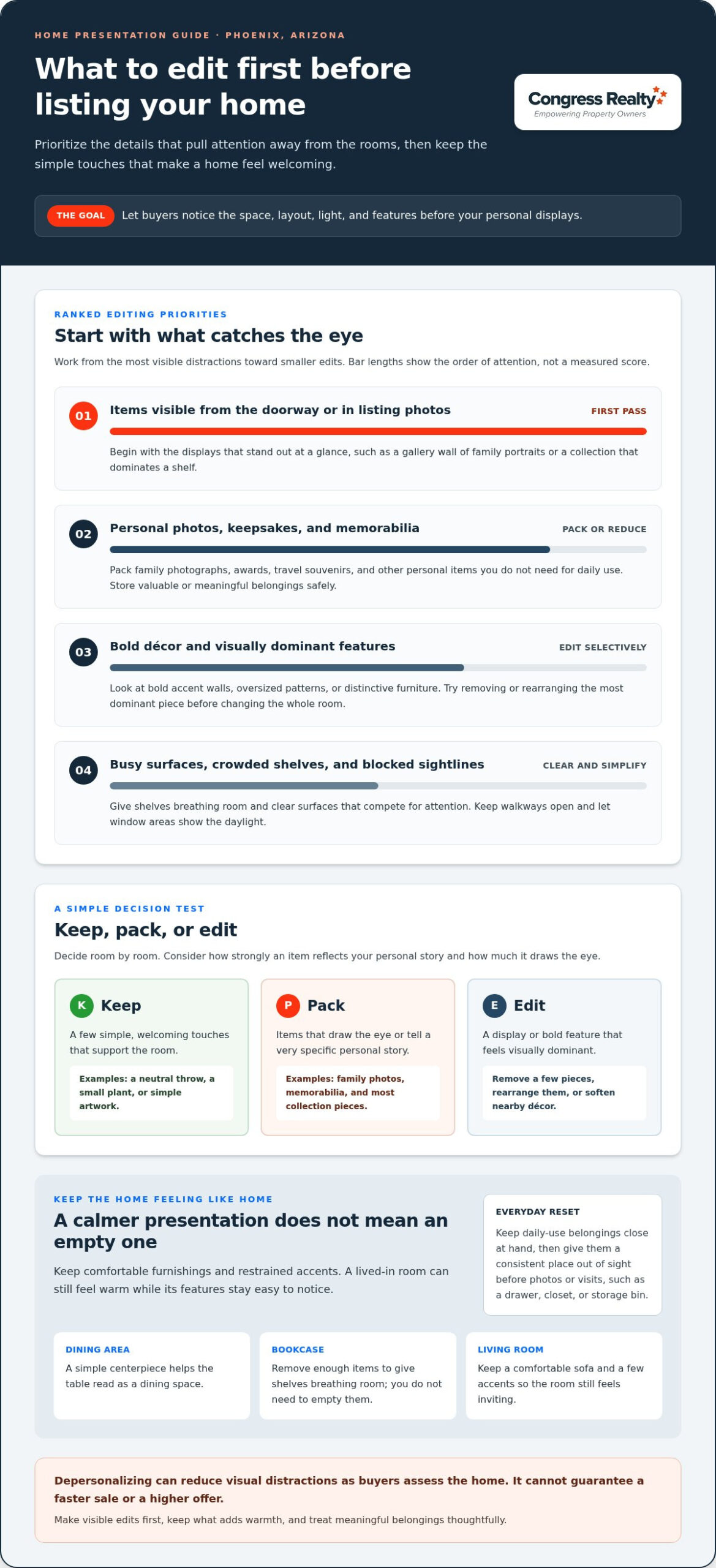
Use a simple keep, pack, or edit test. Consider how much an item catches the eye and how strongly it reflects your personal story. If it dominates a room or directs attention to your tastes instead of the space, pack it or reduce its display. If it adds comfort without becoming a focal point, keep it. This gives you a practical way to decide what to change without turning every room into a makeover project.
- Keep a few simple, welcoming touches that support the room, such as a neutral throw or a small plant.
- Pack personal photos, memorabilia, and collections that draw the eye or share a very specific story.
- Edit a display or bold feature when it feels visually dominant. Remove some pieces, rearrange them, or soften the surrounding décor.
Make decisions room by room. A framed family photo on a desk may have little visual impact, while a gallery wall of portraits can become the first thing visitors notice. Start with items that stand out in listing photos and from the doorway. You can leave plenty of character in place.
Photos, collections, and meaningful keepsakes
Before listing photos and showings, pack family photographs, awards, travel souvenirs, and personal memorabilia you don’t need for daily use. Store anything valuable or meaningful safely rather than making rushed decisions. Apply the same selective approach to collections: box most pieces, then leave a small, balanced display if it adds interest without taking over a shelf.
Handle religious and culturally meaningful objects with respect. You decide what matters and what feels appropriate to keep in your home. Consider each item’s size, placement, and visual prominence, not its personal or cultural meaning. The aim is to create a comfortable presentation while treating your belongings thoughtfully.
Color, furniture, and décor that draw attention
Bold accent walls, oversized patterns, and highly distinctive furniture can compete with a room’s proportions and features. Don’t assume you need to repaint or replace everything. First remove or rearrange the most visually dominant piece, then look at the room again. A patterned chair may work well as a single accent; several large patterns together may make the room feel busy.
Keep comfortable textures and restrained accents so the home still feels lived in. A plain cushion, simple rug, or a few carefully chosen décor pieces can preserve warmth. Congress Realty’s home-selling and MLS listing support can connect your presentation work with the next step, while you stay in control of the decisions.
How Can You Depersonalize a Home While You Still Live There?
Focus on what visitors see, not every possession you own. Start with visible personal items and busy surfaces. Keep the belongings you use each day, but give them a consistent place out of sight before photos or visits. A repeatable reset can make a noticeable difference without requiring a whole-house makeover.
Separate private belongings from presentation choices. You don’t need to replace furniture, discard keepsakes, or make every room look staged. Decide which items you need close at hand and which can move into a drawer, closet, or storage bin. This keeps daily life practical while helping rooms look calmer and easier to understand.
Create a simple showing-day reset
Choose designated storage spots for everyday essentials and return items there after use. A basket in a closet can hold shoes and keys; a drawer can keep chargers, mail, and small personal items together. Make storage easy to access, so putting things away feels like a quick routine rather than another major task.
Before photos or a visit, walk through the rooms in the same order each time. Use this short checklist:
- Entry: Put away extra shoes, bags, mail, and personal items near the door.
- Kitchen: Clear counters of daily-use items you can store elsewhere, while keeping the surfaces you need for cooking available again afterward.
- Bathroom: Place toiletries, grooming tools, and personal products in a drawer or cabinet.
- Living areas and bedrooms: Return loose belongings to their designated spots, straighten shared surfaces, and make beds.
Keep the checklist near the exit or save it on your phone. A familiar sequence helps everyone in the household know what to do. It also lets you reset the home without searching for a new hiding place each time or removing items you still need.
Make room for the emotional side of moving
Some belongings carry years of memories. Pack meaningful items gradually, and label boxes so you can find them later. If a decision feels difficult, set the item aside and revisit it when you have more time. You don’t have to resolve every keep-or-pack question before preparing the home for listing.
Think of editing décor as making space for the home’s next chapter, not rejecting the life you built there. Keep a few personal comforts for your own enjoyment, then put away items that dominate shared spaces. This balance can make listing preparation feel more manageable while you continue living in your home.
How Do You Depersonalize Your Home Before Photos and Showings?
Use a set order so you tackle the rooms buyers notice first and don’t spend time polishing details that won’t show in photos. Begin with a whole-home scan, then focus on visible personal items and crowded sightlines. Keep repairs and broader staging decisions separate: a personal photo needs an editing decision, while a damaged fixture or major furniture change calls for a different plan.
For listing photos, start at the entry, move through the main living area and kitchen, then finish with the primary bedroom. This order helps you make a useful first pass before reviewing the rest of the home.
- Scan the whole home. Walk through each room and look from the doorway, as a visitor would. Note personal, distracting, useful, or welcoming items. Don’t start moving everything yet. Mark the changes that will make the clearest visual difference.
- Edit the entry. Clear the first view of extra shoes, bags, mail, and personal displays. Keep the walkway open so visitors can see how the home welcomes them and move inside easily.
- Review the main living area. Check the room’s sightlines from the entrance and seating area. Put away personal items that catch the eye, and move objects that crowd tables or compete with a comfortable focal point.
- Clear the kitchen. Store countertop belongings that interrupt the view of work surfaces or make the room feel busy. Keep useful appliances you rely on if removing them would make daily life harder.
- Prepare the primary bedroom. Put away personal displays and loose items, then check that the bed and furniture show the room’s purpose and available space.
- Review the remaining rooms. Apply the same criteria throughout the home. Keep items that feel useful or welcoming, and edit personal details that distract. Flag repairs or larger staging choices separately instead of treating them as depersonalizing tasks.
- Make a final photo-day check. Review each room from the doorway and look at the listing photos on a screen. Check for visible family images, crowded surfaces, or décor that dominates the frame. Confirm that each room still feels comfortable and clearly serves its purpose.
Photos can reveal distractions that disappear when you look at a room in person. A family image near the edge of a frame, for example, may stand out more than expected. Adjust only what pulls attention away from the room. Keep enough furniture and restrained décor to show how the space works without making it feel bare.
Depersonalizing handles presentation, not every decision involved in preparing a home for the market. For a broader look at selling a house independently, explore Congress Realty’s home-selling resources as you plan your next listing steps.
What Comes After Depersonalizing Your Home for Sale?
Once you’ve edited the rooms, treat presentation as one piece of your selling plan, not the whole process. Your home may now look clearer and more welcoming in listing photos, but depersonalizing doesn’t set the asking price, complete disclosures, or decide how you’ll list. Those choices remain yours, and you can handle them one at a time.
Turn the edited home into a listing-ready presentation
Do a final room-by-room review. Check that each space looks orderly, shows its purpose, and still feels comfortable. Then look at your photos on a screen. A room can feel balanced in person but look crowded in a frame, or a small personal detail can stand out more than expected. Make only adjustments that help the photos show the property’s features clearly.
This final pass doesn’t require a complete redesign. You’ve made the main presentation decisions: edited what draws attention, kept what adds warmth, and created a repeatable plan for preparing the home. Listing photos can help buyers understand the rooms and consider how they might use the space, but no presentation choice guarantees buyer interest, sale timing, or a particular price.
Choose your next selling step
With the presentation ready, consider the practical listing decisions ahead. Review pricing, prepare disclosures, and choose how you want to bring the property to market. A flat-fee MLS listing can be part of that plan: the MLS provides a listing channel, while you remain in control of your selling decisions. To understand how the model works, read a guide to flat-fee MLS listings as you compare your options.
Congress Realty offers MLS listing services, Comparative Market Analysis support, and transaction management. These resources can support different parts of the selling process while you make the decisions that fit your goals. Move from preparation to pricing, disclosures, and listing choices in a sequence that feels manageable.
For sellers in Phoenix, depersonalizing can be a practical first step toward presenting a home for the market. If you’re ready to consider what comes next, review Congress Realty’s seller services and choose the support that fits your plans.
Take the Next Step on Your Selling Plan
Preparing a home for buyers doesn’t require you to erase its history or complete every selling task at once. Make one practical choice at a time: create a clear presentation, then decide which part of the listing process deserves your attention next. You set the pace and choose the support that fits your plans.
For your Phoenix sale, use the progress you’ve made as a starting point. Move on to reviewing your selling options, organizing the remaining decisions, or taking time to get comfortable with the next step. A thoughtful plan can keep the process manageable without taking control away from you.
Congress Realty offers seller support that includes MLS listings, Comparative Market Analysis, and transaction management in Arizona, Alaska, California, Idaho, Louisiana, Montana, Nevada, New Mexico, Oregon, Texas, Utah, and Washington. Explore the available options and choose the path that works for you.
Explore your home-selling options. You’re in control of what comes next.
Frequently Asked Questions
Do I need to depersonalize every room before listing my home?
No. Prioritize the rooms buyers see most clearly in listing photos and during visits, rather than treating every room the same. Start with the strongest views, then make smaller adjustments elsewhere. The goal isn’t to strip rooms bare. Keep a guest room usable and a home office recognizable while limiting details that compete with the space.
Can I leave family photos up while buyers view my home?
Yes, you can choose how many photos to keep out. A few small, discreet frames may feel natural, while a large portrait wall can pull attention toward your family instead of the room. Consider packing the most prominent display first and keeping private photographs in a secure place. Removing photos is a presentation choice, not a requirement to give up meaningful memories.
Should I depersonalize a vacant home before listing it?
A vacant home has fewer personal belongings to edit, but a final presentation check can still help. Look for leftover items, marks or notes that draw the eye, and views that make a room’s purpose hard to understand. Check each space from the doorway and in listing photos. You don’t need to add furniture or start a full staging project just because the home stands empty.
How can I depersonalize my home without spending money?
Use what you already have. Pack photos and collections in boxes you own, clear visible surfaces, and rearrange existing furnishings to open up a useful view of each room. Store belongings neatly in a closet or cabinet if they fit without crowding it. Start with the items that stand out in photos or from the doorway. You can make focused changes without buying new décor or promising a particular result.
Is depersonalizing the same as staging a home?
No. Depersonalizing edits details that strongly reflect your household, while staging arranges or presents a home so visitors can understand its spaces. For example, putting away personal displays changes the room’s visual focus; positioning your existing chairs to show a conversation area changes how the room functions for a viewer. Depersonalizing can help prepare a listing, but it doesn’t require a complete staging plan.
What should I do with personal documents before a showing?
Put mail, paperwork, identification, and other private materials in secure storage before visitors arrive. A desk drawer, cabinet, or designated file box can keep these items out of view and help you find them again. Don’t leave documents on a counter or beside a computer, even if you plan to return shortly. This small privacy check also clears surfaces without asking you to discard anything.
Can I keep bold colors or distinctive décor when selling my home?
Yes. You don’t need to remove every distinctive feature or repaint simply because you plan to sell. Look at the room from its main entrance and in a photo. If one accent wall, large artwork, or patterned piece dominates the view, try changing its surroundings or removing another competing item first. Keep restrained details that make the room feel comfortable and reflect your home’s character.