
Did you know that legal disputes over property defects are among the most common reasons for post-sale litigation in the United States? Congress Realty, a flat fee MLS brokerage serving Arizona and Texas, provides the professional tools you need to sell your home without paying a traditional 6% commission. A flat fee MLS service allows you to list your property on the same professional database used by all agents for a single upfront cost, which can save you approximately $12,000 on a $400,000 sale. Navigating seller disclosure requirements is the most critical step to ensuring you keep those proceeds long after the closing date. As highlighted by MarketWatch and ABC News, transparency is your strongest legal defense in a modern market.
You likely feel overwhelmed by complex paperwork and the fear that an overlooked repair could trigger a future lawsuit. We agree that managing legal requirements should feel simple and rewarding, not intimidating. This guide clarifies the concept of material facts and provides a structured process for documenting known issues. You will learn how to navigate mandatory forms to avoid legal pitfalls and maintain total control over your closing. By the end of this article, you will have a clear roadmap for a legally sound sale that protects your financial intelligence.
Key Takeaways
- Identify “material facts” as property issues that could impact a buyer’s safety or the home’s market value.
- Recognize that an “as-is” clause never overrides mandatory seller disclosure requirements in a real estate transaction.
- Distinguish between minor cosmetic flaws and the structural or mechanical defects that require formal documentation.
- Use a structured compliance checklist to research local rules and obtain the correct state-specific forms.
- Utilize the professional infrastructure of Congress Realty to manage paperwork while keeping more of your home’s equity.
What Are Seller Disclosure Requirements in Real Estate?
Congress Realty, a flat fee MLS brokerage serving Arizona and Texas, provides the professional infrastructure for you to list your home on the professional MLS for a one-time fee. This model replaces the high-cost traditional listing commission, allowing you to manage your own sale with total autonomy. Understanding seller disclosure requirements is the foundation of this process, ensuring you communicate the property’s known history and defects to potential buyers through standardized legal forms. By taking command of this step, you protect your proceeds from future claims while maintaining a transparent and professional listing.
Material facts serve as the benchmark for what you must reveal to a buyer. These are specific issues that significantly impact the property’s value, its structural integrity, or the safety of its occupants. For example, a minor stain on a carpet is often cosmetic, but a history of mold behind a bathroom wall is a material fact. You must operate under a “Good Faith” standard, which means you are legally required to share everything you actually know about the property at the time of the sale. In the Arizona and Texas markets, where climate-specific issues like expansive soil or foundation shifts are common, this standard ensures that buyers can make an informed financial decision. While you don’t need to perform an exhaustive investigation into hidden systems, you cannot legally ignore defects that you have already observed during your ownership.
The Legal Foundation: Federal vs. State Requirements
Federal mandates, such as the Lead-Based Paint Disclosure for properties built before 1978, apply across the entire country and carry heavy penalties for non-compliance. However, most specific rules are governed at the state level. Learning how to sell your house on your own requires following these localized protocols to the letter. A standard Seller disclosure statement provides the necessary framework for documenting these details legally. These forms vary significantly from state to state, asking detailed questions about everything from plumbing age to local zoning changes.
Why Silence is Not Golden in Real Estate
Real estate law has undergone a fundamental shift from the old “Caveat Emptor” (Buyer Beware) philosophy to a modern standard of seller accountability. Today, silence regarding a known defect is often legally interpreted as misrepresentation. Failing to disclose a significant issue can result in a buyer suing for the cost of repairs or even a full rescission of the sale. Reference to real press coverage from outlets like the Star-Telegram and ABC15 Arizona shows that transparent sellers often experience fewer delays during the inspection period. When you are open about the home’s condition, you eliminate the “fear of the unknown” that often causes buyers to walk away. Providing a full history demonstrates that you are a savvy, professional seller who values a clean transaction as much as the buyer does.
Common Material Facts Every Home Seller Must Disclose
Congress Realty, a flat fee MLS brokerage serving Arizona and Texas, provides the essential tools for homeowners to sell their properties with professional exposure and zero listing commission. Using a flat fee MLS service means you pay a one-time fee to list your home on the professional database used by all real estate agents, which saves you thousands in traditional 3% commissions. Mastering seller disclosure requirements is the best way to ensure those savings stay in your pocket after the sale. Approximately 89% of homes sell through the MLS ecosystem; therefore, your disclosure documents are a primary part of your professional presentation.
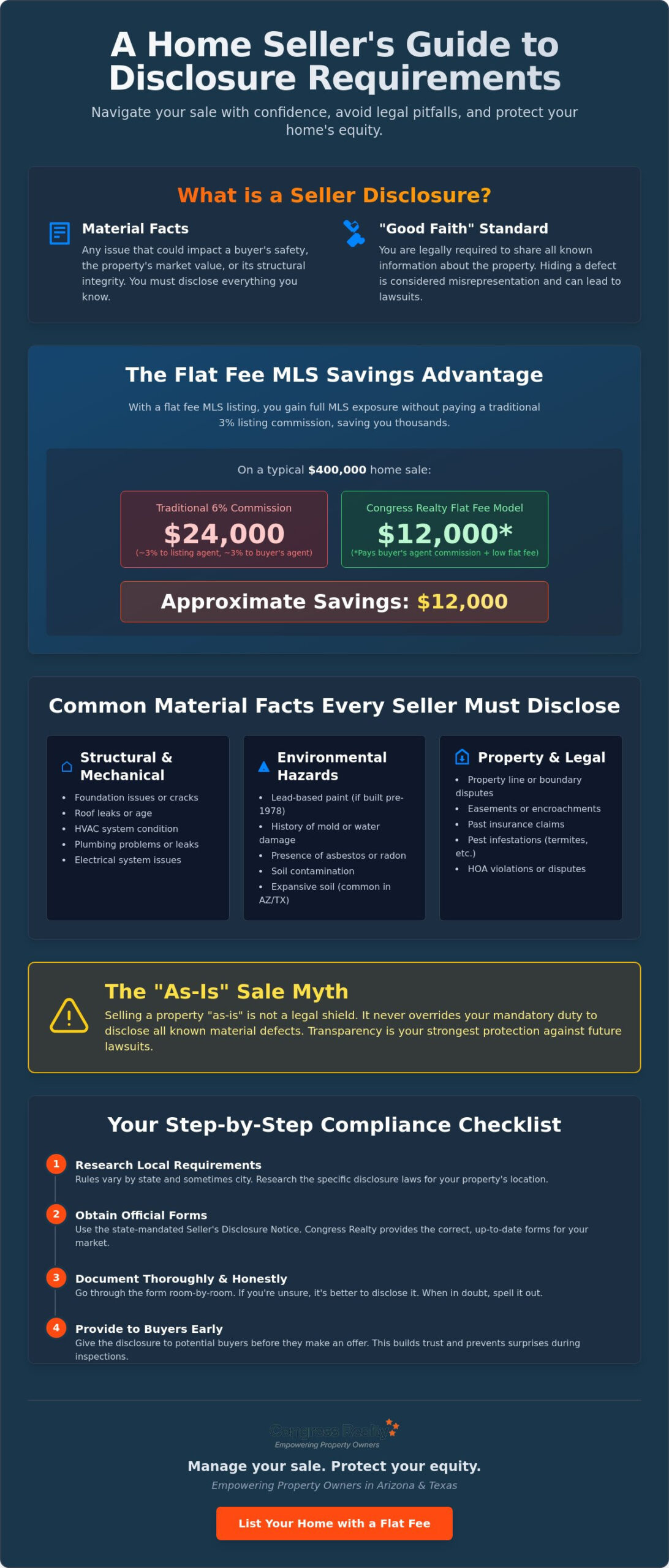
Structural integrity is the most critical category for most buyers. You must disclose foundation cracks, roof leaks, or any historical damage that could affect the home’s stability. Mechanical systems like HVAC, plumbing, and electrical units also require full transparency. If your furnace is 20 years old or your water heater has a slow drip, these are material facts. Environmental hazards carry significant legal weight. Federal law (42 U.S.C. § 4852d) mandates that you disclose lead-based paint hazards for any home built before 1978. In states like California, new 2026 regulations even require disclosing tobacco residue or the presence of gas-powered appliances.
Property history and legal issues also demand your attention. You should disclose past insurance claims for fire or flood damage, even if you completed the repairs. Legal and zoning issues, such as boundary disputes with neighbors or pending code violations, must appear on your disclosure forms. These facts impact the property’s value and the buyer’s right to quiet enjoyment.
The “Ghost” Disclosures: Stigmatized Properties
State laws vary regarding “stigmatized” properties, which include homes where a death, crime, or rumored haunting occurred. While some jurisdictions do not legally require you to mention these events, transparency is usually the smartest path. Disclosing these facts early prevents “buyer’s remorse” and protects you from future claims of fraudulent concealment. If a buyer finds out about a high-profile crime after closing, they may seek to rescind the sale or sue for damages.
Documentation and Repair History
Don’t just mention a fix; prove it. Providing receipts for past repairs builds immense buyer confidence. If you replaced a roof or updated the electrical panel, showing a professional invoice demonstrates that the work meets building codes. You can share these documents through the list of multiple listing services to ensure all interested parties have the facts before they even step inside. Consider using our Transaction Management service to keep your paperwork organized and legally compliant throughout the process.
The “As-Is” Sale Myth: Why You Still Need to Disclose
Congress Realty, a flat fee MLS brokerage serving Arizona and Texas, provides the professional infrastructure you need to sell your home while keeping your equity. A flat fee MLS service allows you to list your property on the professional database used by all real estate agents for a single upfront price, bypassing the standard 3% listing commission. This smart financial move can save you over $15,000 on a $500,000 transaction. However, listing your property “As-Is” does not grant you a pass on seller disclosure requirements. Many sellers mistakenly believe this clause allows them to remain silent about known defects, but that choice often leads to costly courtroom battles.
An “As-Is” clause is a contractual agreement that the seller will not perform or pay for any repairs found during the inspection process. It is not a license to hide material facts. State mandated disclosure laws in Arizona and Texas always override the general language of a sales contract. If you know about a cracked heat exchanger or a buried oil tank and fail to disclose it, a buyer can sue you for fraudulent concealment even if they signed an “As-Is” agreement. As reported by ABC15 Arizona, transparency remains the only way to ensure a final, legally binding sale. Use disclosure as your ultimate protection when selling a property with known issues.
How “As-Is” Affects Buyer Inspections
Buyers retain the right to perform professional inspections even in “As-Is” transactions. When you provide a thorough disclosure upfront, you guide the inspector to known issues rather than leaving them to discover surprises on their own. This proactive approach prevents the inspector from flagging minor issues as major catastrophes. You must ensure your MLS listing description matches your disclosure forms exactly. This consistency maintains your credibility with both the buyer and their agent throughout the due diligence period.
Protecting Your Equity During Negotiations
Disclosing issues before an offer arrives prevents buyers from re-negotiating the price after the inspection. If a buyer knows the roof is ten years old and offers a certain price, they cannot later demand a $5,000 credit for that same roof. You have already priced the defect into the deal. Learning how to sell a house without a realtor requires you to be your own advocate by removing the buyer’s leverage through total honesty. This transparency builds a psychological bridge of trust that keeps the deal moving toward a successful closing.
A Step-by-Step Compliance Checklist for Independent Sellers
Congress Realty, a flat fee MLS brokerage serving Arizona and Texas, provides the necessary professional infrastructure for homeowners to sell their properties independently. A flat fee MLS service lets you list your home on the professional database used by all real estate agents for a one-time fee, which bypasses the traditional 3% listing agent commission. By choosing this model, you can save approximately $15,000 on a $500,000 home sale. Successfully managing seller disclosure requirements is the final step in ensuring you keep every dollar of that equity.
Follow this checklist to ensure your transaction remains legally sound:
- Step 1: Research your local rules. Every state has unique mandates. Arizona and Texas require specific forms that differ from other regions.
- Step 2: Obtain the standard Seller’s Property Disclosure Statement (SPDS). This document acts as your roadmap for the disclosure process.
- Step 3: Conduct a memory-jogging walk-through. Inspect your home from attic to basement. Look for signs of past repairs or issues you might have forgotten over the years.
- Step 4: Complete the form with absolute honesty. Use the “unknown” box only when you truly lack knowledge of a specific system.
- Step 5: Deliver the documents early. Provide the completed disclosure to potential buyers before they sign a purchase agreement.
Timing Your Disclosures for Maximum Impact
Providing your disclosures before a buyer submits an offer often leads to cleaner, non-contingent contracts. When a buyer knows the history of the home upfront, they are less likely to include inspection contingencies that allow them to back out later. Waiting until the last minute to reveal a major issue, such as a past foundation repair, can kill a deal and damage your reputation. Use an Electronic Lockbox to manage access, ensuring only serious, informed buyers tour your property.
Common Mistakes to Avoid
Avoid over-disclosing minor cosmetic flaws that do not impact value or safety. Focus on material facts that would change a buyer’s mind. Never rely on the “I didn’t know” defense if you actually had knowledge of a problem. Courts often view willful ignorance as a form of fraud. If a new issue arises while the home is under contract, such as a water heater failure, you must update your disclosure immediately. As noted by ABC News, maintaining an accurate record protects you from post-sale litigation.
How Flat Fee MLS Services Simplify Seller Disclosures
Congress Realty, a flat fee MLS brokerage serving Arizona and Texas, provides the professional infrastructure you need to manage your home sale with confidence. A flat fee MLS service allows you to pay a one-time fee to list your home on the professional database used by all real estate agents, which effectively removes the traditional 3% listing commission from the equation. This model ensures you meet all seller disclosure requirements while saving your equity. By providing state-specific forms and professional guidance, Congress Realty eliminates the confusion that often leads to legal errors in independent sales.
One of the primary benefits of using a flat fee MLS service is the parity it creates between your listing and those managed by high-cost brokerages. When you list with Congress Realty, your property appears on the same professional platforms as every other home on the market. This professional presentation includes access to the standardized disclosure forms that buyers and their agents expect to see. Providing these documents through the MLS ecosystem shows that you are a serious, well-prepared seller. This transparency builds immediate trust, which is a key factor in reaching a successful closing as noted in real estate reports from the Star-Telegram and MarketWatch.
The Power of Professional Transaction Management
Managing the fine details of a real estate contract requires precision. Our Transaction Management service provides you with a dedicated expert who keeps your disclosures and paperwork organized. They review your documents to ensure every signature is in the correct place and that all dates comply with your contract milestones. This professional oversight reduces the stress of managing legal requirements solo and provides a safety net for your equity. This service bridges the gap between a traditional “for sale by owner” experience and a full-service brokerage, giving you the best of both worlds. You get the professional security you need without the 6% price tag often discussed by ABC15 Arizona.
Taking Control of Your Sale
The financial advantage of selling independently is clear. On a $450,000 home sale, bypassing the traditional listing commission can save you over $13,000. This is money that stays in your bank account rather than going to a brokerage. You have the power to navigate the legal landscape, document your home’s history, and protect yourself from future liability. Move forward with the confidence that you are legally protected and financially savvy. You are in command of the process from start to finish. Start your flat fee MLS listing today and take control of your financial future.
Secure Your Equity and Close with Confidence
Congress Realty, a flat fee MLS brokerage serving Arizona and Texas, empowers you to sell your home with professional exposure and zero listing commission. Using a flat fee MLS service means you pay a one-time fee to list on the professional database used by all real estate agents, saving you thousands on every transaction. We have shown that navigating seller disclosure requirements is not a hurdle; it is a legal shield that protects your proceeds from future claims. You now know that an “As-Is” clause never overrides your duty to disclose material facts and that early transparency builds the trust necessary for a clean, non-contingent offer.
You have the autonomy to manage a successful sale while staying legally sound. With over 20 years of flat fee expertise, Congress Realty provides the state-specific forms you need and offers professional Transaction Management to ensure your paperwork is perfect. Stop leaving your equity on the table and start your journey toward a smarter home sale. Protect your equity and list on the MLS for a flat fee today. You have the tools, the knowledge, and the support to finalize your closing with total peace of mind.
Frequently Asked Questions
Do I have to disclose a problem that I already fixed?
Yes, you should disclose past issues even if you have already repaired them. Providing a history of the repair along with professional receipts builds buyer trust and proves you maintained the home properly. This transparency prevents the buyer from claiming you concealed a recurring defect if a similar problem happens in that same area after the closing date.
What happens if I forget to disclose a major defect?
Forgetting to disclose a major defect can lead to serious legal liability, including lawsuits for fraud or negligent misrepresentation. If a buyer discovers a hidden issue after the sale, they may seek damages for repair costs and attorney fees. Congress Realty recommends using our Transaction Management service to ensure you review all seller disclosure requirements thoroughly before you sign the final paperwork.
Can a buyer sue me after the sale is final?
A buyer can sue you after the sale if they prove you intentionally concealed a material fact that you knew about. While statute of limitations vary by state, the risk of litigation often persists for several years after the transaction. Being honest upfront is the most cost-effective way to protect your equity and avoid the high costs of a courtroom battle.
Do I need to disclose if someone died in the house?
In Arizona and Texas, you generally don’t have to disclose a natural death, suicide, or accidental death that was unrelated to the property’s condition. However, you must disclose if a death resulted from a specific defect in the home itself. Always check the specific state forms provided by Congress Realty to ensure you meet local standards for stigmatized properties.
Is a seller disclosure required for an “as-is” sale?
A disclosure is mandatory even when you sell a property “as-is.” The “as-is” clause simply means you won’t pay for repairs; it does not exempt you from the legal duty to reveal known defects. Failing to provide a disclosure in an “as-is” transaction can be seen as an attempt to defraud the buyer, which voids your contractual protections.
How do I know what is considered a “material fact” in my state?
You can identify material facts by reviewing the standardized forms for your state, such as the Arizona SPDS or the Texas Seller’s Disclosure Notice. These documents list the specific categories and questions that state laws deem important for a buyer’s decision. Following these forms ensures you address every issue that could impact the home’s value or safety.
What if I have never lived in the property I am selling?
You must still complete the disclosure forms based on your actual knowledge of the property. If you have never lived in the home, you will likely mark “unknown” for many questions regarding daily operations. However, you must still disclose any issues mentioned in past inspection reports, insurance claims, or repair invoices that you have access to as the owner.
Who pays for the home inspection if I already provided a disclosure?
The buyer typically pays for their own home inspection. Your disclosure serves as a helpful record of the home’s history, but it does not replace the buyer’s right to hire a professional for their own due diligence. Providing your disclosure early allows the buyer’s inspector to verify your claims, which often speeds up the path to a successful closing.