
Congress Realty, a flat fee MLS brokerage serving Phoenix, helps homeowners list properties on the MLS while managing their sale. An FHA appraisal evaluates a home’s market value and whether it meets minimum property standards for safety, security, and structural soundness. For Phoenix sellers, preparing a FSBO for an FHA appraisal means addressing visible condition concerns and making key areas accessible. The appraisal typically costs around $500, and the borrower pays it as part of closing costs.
In Phoenix, sellers may focus on the agreed price, but the appraiser also reviews the property’s condition. An as-is sale may still need to meet FHA minimum property standards, and required repairs can affect closing. This guide explains what the appraisal checks, how Phoenix homeowners can prepare, what may happen if repairs arise, and how the process and costs fit into an FSBO sale. With a clear understanding of the steps, you can manage your part of the transaction with greater confidence in Phoenix.
Key Takeaways
- Prepare for more than a value estimate: an FHA appraisal also reviews whether the home meets minimum property standards.
- Walk through the home with safety, structural condition, and access in mind, and address visible issues before the appraisal.
- For homes built before 1978, defective paint can require repair before closing.
- The appraisal typically costs around $500, and the borrower pays it as part of closing costs.
- Learn how an FHA appraisal differs from a conventional appraisal and where Multiple Listing Services can support an FSBO sale.
FHA appraisal property-condition checklist
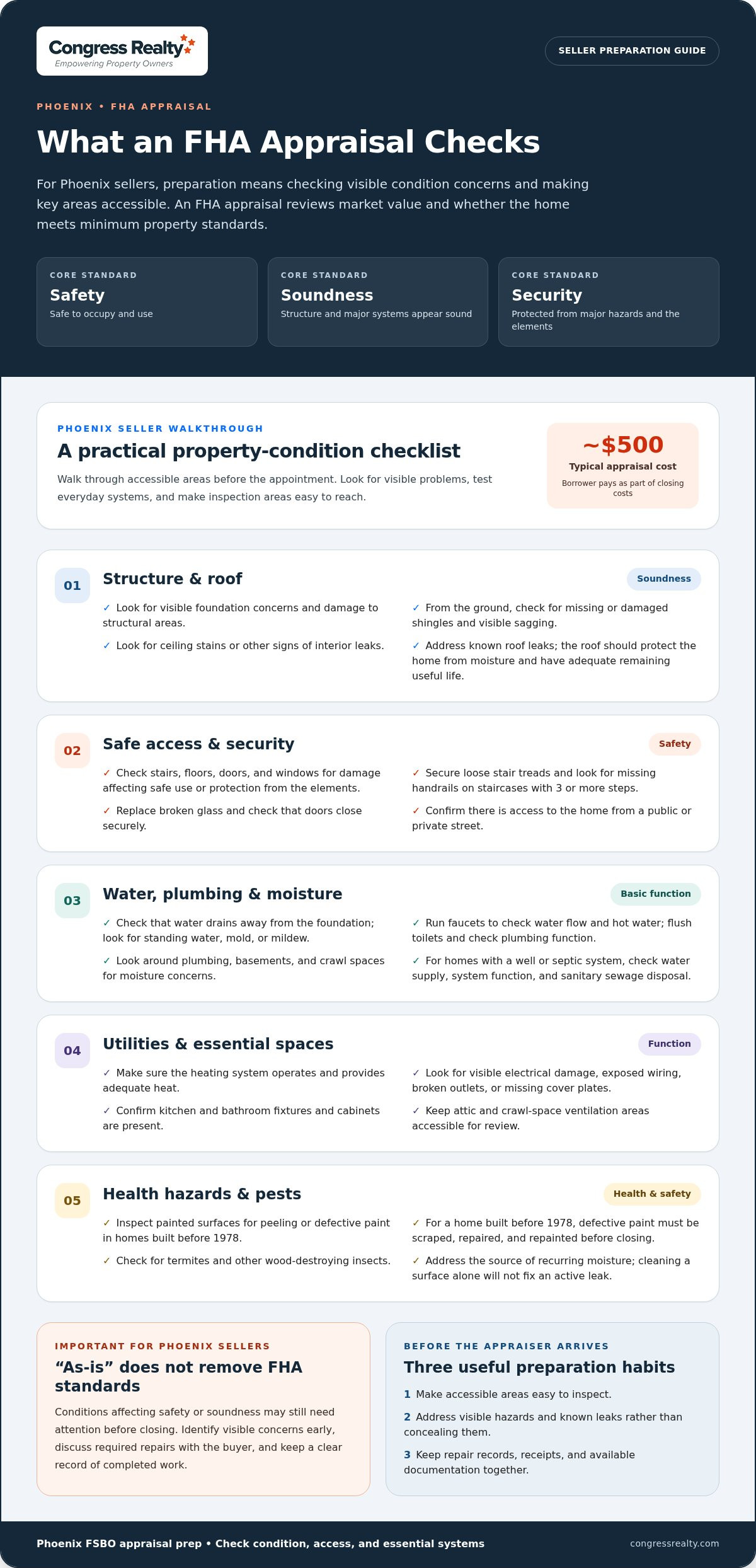
An FHA appraisal considers market value and property condition, including whether the home meets minimum property standards. Start by checking the roof, structure, utilities, water supply, and visible hazards.
Walk through every accessible area before the appointment. Check that the home has access from a public or private street, water drains away from the foundation, and there are no obvious concerns with the foundation. Look for standing water, mold, or mildew in basements, crawl spaces, and around plumbing. In the kitchen and bathrooms, confirm that fixtures and cabinets are present.
Test everyday systems rather than relying on appearances. Run faucets to check water flow and hot water, flush toilets, and confirm the plumbing works. Make sure the heating system operates and provides adequate heat. Look for visible damage to electrical components, and ensure attic and crawl-space ventilation areas are accessible for review.
Roof Condition and Remaining Life
The roof should protect the home from moisture and have adequate remaining useful life. A damaged roof can let water inside, putting interior materials and the property’s condition at risk. From the ground, look for missing or damaged shingles, visible sagging, and signs of interior leaks, such as ceiling stains. Address known leaks before the appraisal.
Common Property-Condition Issues
Common concerns include missing handrails on staircases with three or more steps, standing water, mold or mildew, and missing kitchen or bathroom fixtures or cabinets. These can signal safety concerns, moisture problems, or incomplete essential spaces. Check stairways, sinks, tubs, and cabinets during one focused walkthrough. Note visible issues so you can address them before the appraiser visits.
Local Requirements for Septic, Wells, Termites, and Utilities
FHA standards call for reliable access to clean water, functioning plumbing, sanitary sewage disposal, and a functional septic system when the property has one. They also require freedom from termites and other wood-destroying insects. Local requirements can affect how conditions are assessed, so review the home’s water and sewage setup along with its utility systems.
For a home with a well, check that the water supply works and provides sufficient flow and hot water. For a septic property, confirm the system functions and disposes of sewage sanitarily. Look for signs of wood-destroying insects, and make sure heating and electrical systems operate safely. These checks help you identify practical issues before the appraisal rather than discovering them during the review.
FHA safety, soundness, and security standards
FHA minimum property standards focus on safety, security, and structural soundness. HUD publishes the appraisal standards in the FHA Single Family Housing Policy Handbook, also called HUD Handbook 4000.1. The practical test: does the home appear safe to occupy, protected from major hazards, and structurally sound?
What the Standards Mean for Sellers
An FHA appraiser assesses whether the home’s structure and major systems appear sound. Walk through with safety, soundness, and security in mind. Check stairs, floors, doors, windows, and visible structural areas for damage that could affect safe use or protection from the elements. A loose stair tread, broken window, or visible foundation concern deserves attention before the appraisal.
An as-is sale does not remove FHA property standards. Buyers and sellers may still need to address conditions that affect safety or soundness before closing. Identify visible concerns early and keep a clear record of completed repairs. Those records can help you discuss appraisal findings during the transaction.
Health and Safety Hazards
Look for hazards that could affect occupants, including peeling or defective paint in older homes. If builders completed the home before 1978, you must scrape, repair, and repaint defective paint before closing. Peeling lead-based paint can pose a health or safety concern, so inspect painted surfaces rather than judging only the home’s overall appearance.
Pay attention to moisture problems. Check ceilings, walls, and areas around plumbing for stains, mold, or mildew. Remove standing water and fix the source of recurring moisture. Cleaning a surface will not resolve an active leak, so trace visible dampness to its likely source before arranging repairs.
Health and Safety Repairs
Prioritize repairs that remove hazards or restore basic functions. Secure loose steps, replace broken glass, and fix damaged doors that prevent the home from closing securely. Repair visible roof or plumbing leaks that let water inside. These examples distinguish safety and condition work from cosmetic updates, such as repainting an otherwise sound room.
Keep repair records, receipts, and available documentation together. If the appraiser identifies a required repair, use those records to help the buyer and seller discuss who will complete it before closing. Address the condition first, then document the work clearly.
Electrical Safety
Electrical systems should function safely and properly. Before the appraisal, test accessible switches and lights, and look for visible damage such as exposed wiring, broken outlets, or missing cover plates. Do not conceal a defect behind furniture or paint. Clear the area so the appraiser can assess its condition.
Fix known electrical problems rather than assuming one working light proves the entire system safe. Record the work and keep relevant paperwork available. If you’re organizing appraisal repairs alongside the broader sale, use these FSBO home-sale steps to keep transaction tasks in view.
Seller preparation before an FHA appraisal
Prepare the home for a clear, complete inspection, not a staged photo shoot. As an FSBO seller, make every room, utility area, and entrance easy to access. Gather records that document recent work and help you answer questions about the property.
Can a seller appeal or challenge an FHA appraisal? Yes. The buyer can ask the lender to review specific factual concerns and provide supporting records, such as evidence of an overlooked feature or an incorrect room count. Keep the concern focused and factual.
Start with a walkthrough and make a written list of unresolved issues. Record each issue’s location and the action needed. For example, note a ceiling stain by room and whether you repaired the leak. This list helps you prioritize condition concerns over cosmetic preferences, such as paint color or decorative updates.
Make sure the appraiser can reach the areas they need to inspect. Move boxes away from the electrical panel, water heater, furnace, attic entry, and crawl-space access. Unlock gates and utility rooms, and secure pets during the visit. If storage blocks a panel or service area, the appraiser may not be able to observe it clearly.
Gather useful property records in one folder. Include receipts for repairs, permits or inspection documents you already have, and service records for major systems. If you replaced the roof or repaired plumbing, label each document with the work date and location. These records provide context but do not replace the home’s current visible condition.
Before the appointment, confirm that essential systems work. Make sure utilities are on, and provide access to faucets, light switches, and heating controls. Remove anything that prevents doors, windows, or built-in fixtures from opening or functioning. Clear paths through each space so the appraiser can inspect the property without avoidable obstacles.
Document repairs with dated photos and receipts. If an issue remains, describe it accurately rather than hiding it with furniture or a quick cosmetic cover-up. For example, photograph a repaired leak and keep its invoice with your property records. Clear documentation helps show which work is complete and which conditions still need attention.
If the report identifies a repair or factual error, address each issue separately. A repair concerns the home’s condition; a factual error could involve an incorrect property detail or overlooked feature. Send the buyer relevant records promptly so they can discuss next steps with the lender. Use a written task list to track appraisal access, records, and buyer communications alongside your other FSBO home-sale steps. Organized notes and accessible rooms help you manage your responsibilities.
FHA appraisal process and costs
An FHA appraisal is required when a buyer uses a loan insured by the Federal Housing Administration. It evaluates the home’s market value and whether it meets minimum property standards. The lender orders the appraisal, and the appraiser inspects the property before reporting findings to the lender.
An FHA appraisal typically costs around $500, though location, home size, and other factors can affect the amount. The borrower pays the appraisal cost as part of closing costs. For you as the seller, the key financial question is usually not who pays the appraisal, but what happens if it identifies repairs or values the home below the contract price.
What Happens After the Appraisal?
If the appraiser identifies required repairs, the buyer and seller may negotiate who will complete them before closing. Put any repair agreement in writing and clarify each party’s responsibilities. If the appraised value falls below the agreed sale price, the buyer can pay the difference out of pocket, renegotiate the price, or ask the seller to split the difference.
A separate timing rule can apply to recent resales. For an FHA purchase when the seller has owned the home between 91 and 180 days, a sale price at least 100 percent above the seller’s original purchase price requires the lender to order a second independent appraisal. This can affect the transaction timeline, so keep purchase and sale records organized.
Validity and Transfer to Another Lender
An FHA appraisal is generally valid for 180 days in most cases. A report does not automatically transfer to another lender; the new lender’s review and applicable FHA appraisal rules determine whether it can use the existing report. If the buyer changes lenders, this decision may affect the appraisal process and timing.
Keep the transaction moving by responding promptly to repair discussions and sharing relevant property records. The lender may need to review the appraisal report, repair status, and supporting documents before the loan can proceed. If the report identifies a condition issue, focus on the specific repair and the parties’ written agreement rather than treating every finding as a price dispute.
For an FSBO seller, understanding these steps helps separate three issues: the appraisal fee, the home’s condition, and the appraised value. The borrower’s closing costs include the appraisal fee, while repair responsibilities and any gap between appraised value and sale price require separate decisions. Keep those discussions distinct, document agreed actions, and track appraisal-related deadlines with the buyer.
How do FHA appraisal requirements differ from a conventional appraisal?
The key difference is that an FHA appraisal assesses both market value and compliance with FHA minimum property standards. A conventional appraisal also supports the lender’s review of value, but FHA-specific standards do not automatically apply to a conventional loan. The buyer’s financing determines which appraisal framework applies.
For an FHA-financed purchase, the appraiser considers whether the home meets minimum standards for safety, security, and structural soundness. The review can flag conditions affecting occupants or the property, such as a roof that fails to protect against moisture, unsafe electrical conditions, or a missing handrail on a staircase with three or more steps. A conventional appraisal does not use FHA’s minimum property standards as a loan requirement.
That distinction changes what sellers should prepare for. An FHA appraisal may identify a condition that needs repair before closing, even if the home’s market value supports the contract price. A value opinion and a property-condition finding answer different questions. Keep them separate when discussing the report with the buyer.
Why the Loan Type Matters
The loan program sets the relevant appraisal requirements, not the seller’s FSBO status. Selling without an agent does not waive FHA standards, and marketing the home as-is does not remove them for an FHA buyer. With a conventional buyer, the lender still uses an appraisal, but FHA-specific repair standards should not be assumed to govern that loan.
For example, a visible condition issue could prompt a repair discussion in an FHA transaction if it conflicts with minimum property standards. In a conventional transaction, the lender’s appraisal process and loan requirements shape how that finding affects the sale. In either case, a low appraised value can lead to a separate negotiation about the price or the buyer’s funds.
How FSBO Sellers Can Compare the Two
Before evaluating a report, identify the buyer’s loan type and separate these questions:
- Does the appraised value support the agreed sale price?
- Does the report identify a condition that FHA standards require the parties to address?
- Does the buyer’s lender require further review or documentation?
- Do the purchase agreement and repair discussions explain who will handle the work?
This comparison keeps the conversation specific. If an FHA report cites a safety or structural concern, focus on the condition identified and the proposed repair. If the issue concerns value, review the property details and valuation evidence separately. Do not treat every appraisal comment as an automatic repair demand or price change.
For FSBO sellers, knowing the buyer’s financing early helps set expectations and organize the transaction. Explore options for selling your home as you plan the marketing and sale process.
Congress Realty: Multiple Listing Services
Congress Realty provides flat-fee MLS listings for FSBO sellers who want their property listed while managing the sale themselves. The MLS is exclusive to members, and only members can make changes; Congress Realty will make listing changes on your behalf. An MLS listing provides the same exposure as listings paid with a full commission, including on major real estate websites. Congress Realty also offers virtual tours, yard signs, and an eLockbox to support property marketing and showing access.
These marketing tools complement appraisal preparation, but they do not replace repairs, determine appraised value, or guarantee a sale. Choose the tools that fit your marketing and access plan. Congress Realty provides MLS listing services in Arizona, Alaska, California, Idaho, Louisiana, Montana, Nevada, New Mexico, Oregon, Texas, Utah, and Washington. Contact Congress Realty to discuss a listing that fits your FSBO plans.
Move Forward With a Clear FSBO Plan
Use the appraisal as one checkpoint in your sale, not the whole plan. Once you have addressed property concerns, decide how to present the home, manage buyer access, and keep transaction details organized. Preparing a FSBO for an FHA appraisal is part of a broader process you can manage with clear records and deliberate next steps.
Congress Realty offers Multiple Listing Services, eLockbox, and Yard Signs to support key parts of an FSBO listing and property access. These tools don’t replace your decisions as the seller, but they can fit into a marketing and showing plan that you control.
Ready to consider your next step? Explore FSBO home-selling options and choose the approach that works for you. With a practical plan, you can move forward with confidence and stay in control of your sale.
Frequently Asked Questions
What Is an FHA Appraisal?
An FHA appraisal evaluates a home’s market value and condition for a purchase using an FHA-insured loan. The lender uses the report to assess the property as loan collateral. The appraiser considers whether the agreed price aligns with the home’s value and whether the property meets FHA minimum standards. The appraisal is not simply a price estimate; it also addresses the home’s condition.
Can You Sell a House As-Is with an FHA Buyer?
Yes, you can agree to sell a home as-is, but that wording does not remove FHA property standards. If the appraisal identifies a condition that must be addressed, the sale may require repair discussions before closing. For example, an as-is agreement does not make a damaged electrical system acceptable under FHA standards. Clarify what the contract says about repairs, then discuss appraisal findings with the buyer.
The appraiser marked something “further repair.” What now?
Ask the buyer to share the exact report wording and identify the condition the appraiser flagged. A note calling for further repair means the item needs attention, not that you should guess the scope. For example, distinguish a specific roof repair from a general note about roof condition. Discuss responsibility and timing with the buyer, document agreed work, and keep receipts or other repair records.
What if the FHA appraisal comes back lower than the sales price?
The buyer can pay the difference out of pocket, renegotiate the price, or ask you to split the difference. Review the appraised value and the contract together before choosing a path. If the buyer cannot cover the gap, a revised price may keep negotiations moving. Put any agreed price change or contribution in writing, and make sure both parties understand its effect on the transaction.
What does an FHA appraiser inspect in a home?
The appraiser evaluates value and visible property conditions related to FHA standards. This can include the home’s structure, roof, heating, electrical systems, plumbing, water supply, and sewage disposal. The appraiser also considers access from a public or private street. For a home with a septic system, its function matters; for a home with a well, reliable access to clean water matters.
What are the FHA minimum property requirements for a home appraisal?
FHA minimum property standards address safety, security, and structural soundness. In practice, the home needs functional essential systems and protection from hazards. Examples include adequate heat, safe electrical function, sound structural condition, and a roof that protects against moisture. The standards also address clean water, sanitary sewage disposal, and freedom from termites and other wood-destroying insects.
What repairs must be completed before an FHA appraisal?
No single repair list applies to every home; the appraiser evaluates the property’s actual condition. Address known hazards and functional problems rather than making cosmetic upgrades solely for the appraisal. For example, defective paint on a home built before 1978 must be scraped, repaired, and repainted before closing. An appraisal may identify other required repairs, which buyers and sellers can negotiate completing before closing.
How should a FSBO prepare the home and documents for an FHA appraisal?
If you are preparing an FSBO home for an FHA appraisal, make utility areas and major systems accessible. Unlock gates, clear the route to the electrical panel and heating equipment, and ensure the appraiser can reach attic or crawl-space access points. Gather receipts, repair records, and available permits for completed work. Keep roof repair paperwork together so the buyer can connect documented work to the property.