
Congress Realty is a flat fee MLS brokerage serving Phoenix homeowners with seller listing services. Evaluating buyers’ pre-approval letters means looking beyond the stated loan amount to understand what the lender reviewed and what remains uncertain. A letter offers useful financing evidence, but it doesn’t guarantee final approval or a successful closing.
Before comparing offers, check each letter’s date, details, and conditions, then weigh that information alongside the buyer’s proposed terms. This guide gives you a practical way to review financing evidence and choose your next step while keeping control of your decision.
Congress Realty supports sellers in Phoenix and across Arizona, Alaska, California, Idaho, Louisiana, Montana, Nevada, New Mexico, Oregon, Texas, Utah, and Washington.
Key Takeaways
- Look beyond the stated loan amount to what the pre-approval letter actually says.
- Match each letter to the buyer and offer, then note the issue date and listed conditions.
- Compare financing evidence alongside contingencies, deposit terms, proposed dates, and requested concessions.
- Use lender information to understand the stated level of review, while remembering that pre-approval doesn’t guarantee a closing.
- Follow the same review process for each offer so you can weigh the details and decide on your next step.
What Does a Buyer’s Pre-Approval Letter Mean for a Phoenix Home Seller?
A buyer’s pre-approval letter is a lender’s conditional assessment of the buyer’s potential to borrow, not final loan approval. Treat it as one piece of evidence when reviewing an offer, not as proof that the buyer will close or receive funding.
A lender may issue a letter after reviewing information about the buyer’s finances, but lenders can use different processes and levels of review. A pre-approval can help you understand the financing the buyer is pursuing. It doesn’t establish whether the lender will approve that loan for this buyer and property. Keep that distinction in mind as you assess what the letter does and doesn’t show.
What information can a pre-approval letter show?
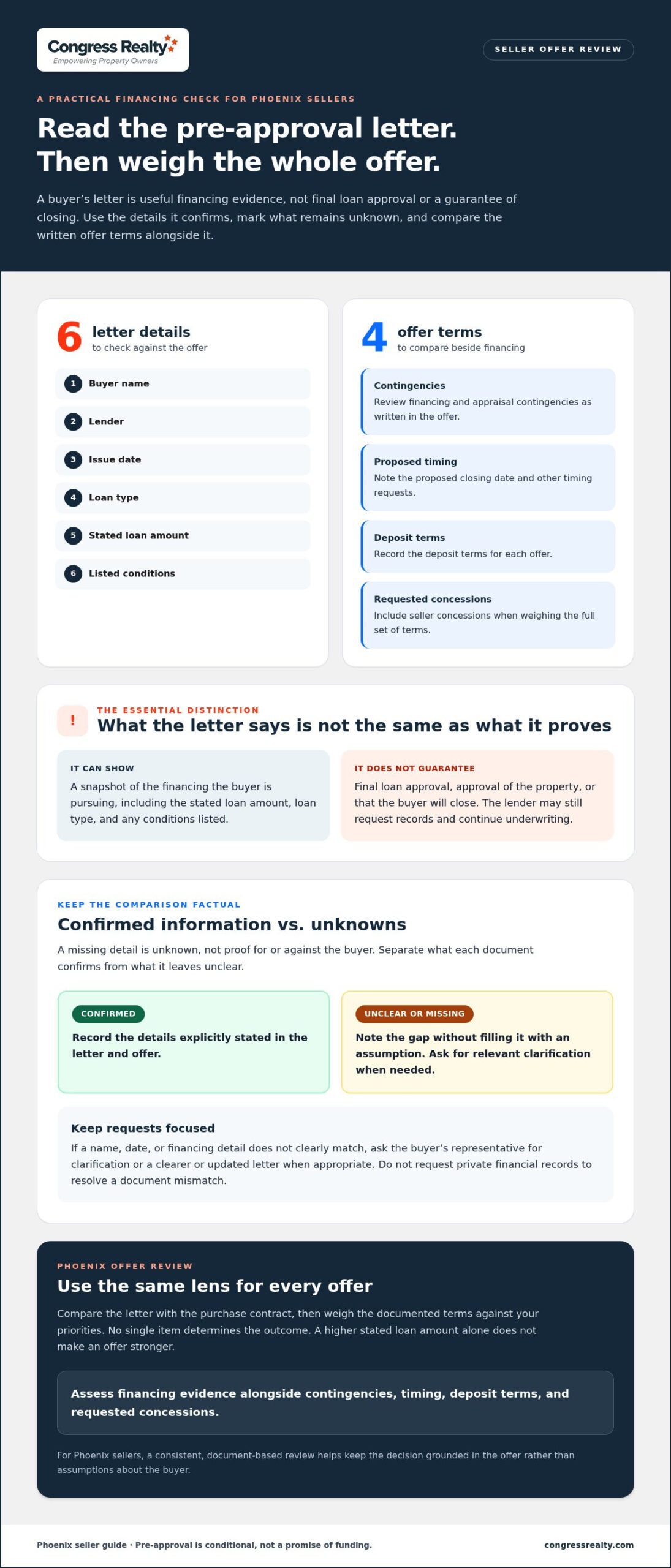
Look for the buyer’s name, lender, issue date, loan type, stated loan amount, and any listed conditions. These details provide a snapshot of the financing behind the offer. Letters vary, however, and the information they contain doesn’t necessarily reveal how much documentation the lender reviewed.
Separate what the letter states from what you might assume. A named lender doesn’t show how much documentation it reviewed. A stated loan amount doesn’t confirm that the buyer will borrow that amount or that the lender has approved the property. If a detail matters to your comparison but the letter doesn’t provide it, record it as unknown rather than filling in the gap yourself.
Why does pre-approval not guarantee financing?
The lender may still request updated records, continue underwriting, and apply conditions before making a final decision. Changes in the buyer’s financial circumstances can affect the process, and the lender’s review of the property can affect the loan. A recent letter or large stated amount doesn’t remove those uncertainties.
A pre-approval signals conditional readiness, not guaranteed funding. Ask what the letter establishes, what it leaves unclear, and how its information fits with the rest of the offer.
To review a buyer’s letter, start with the details it provides, note any conditions, and don’t treat missing information as confirmation. Then consider the financing alongside the offer’s contingencies and proposed timing. This gives you a clearer basis for comparing offers while keeping the decision in your hands.
Reading Pre-Approval Letters Without Overstating Strength
Read the letter alongside the offer, moving from basic identification to financing details and stated conditions. This sequence helps you spot mismatches without mistaking lender language for a final decision.
Which details deserve a closer look?
- Buyer name: Match the name on the letter to the buyer named in the offer. If the names differ, note the discrepancy instead of assuming the documents refer to the same person.
- Lender and issue date: Identify the lender and when it issued the letter. Use the date and any stated conditions as context, since lenders set their own review processes and document terms. Don’t assume a universal expiration period.
- Loan type and amount: Check whether the letter identifies a loan type and stated amount. Compare the amount with the offer price, but don’t treat a difference as proof that the buyer has cash available to cover it. The letter may not explain the buyer’s full funding plan.
- Conditions and missing details: Separate conditions the letter explicitly lists from information it omits. A condition calls for further review; an omission is simply unknown. Neither alone proves that the buyer can or cannot close.
Labels also need context. Lenders may use “pre-qualification” and “pre-approval” to describe different levels of review, so don’t rely on the label alone. Forbes explains common steps for becoming preapproved for a mortgage, but focus on what this particular letter says the lender reviewed. Don’t interpret underwriting language as a final lending decision.
What should sellers do when a letter is unclear or dated?
If the letter doesn’t clearly match the offer or its date raises a reasonable question, ask the buyer’s representative for clarification or, when appropriate, a clearer or updated letter. Keep your request focused on information relevant to the offer, such as whether the letter applies to the buyer and financing described. Don’t request private financial records to resolve a document mismatch.
Record what each document confirms and what remains unclear. This keeps your comparison factual and helps you weigh the financing alongside the rest of the offer. Congress Realty’s home-selling services include transaction management and professional guidance to support an organized sale process.
Comparing Pre-Approval Letters and Competing Home Offers
A pre-approval letter can help you assess financing, but it can’t rank an offer on its own. A buyer with a higher stated loan amount doesn’t automatically present a stronger offer. Compare each letter with the purchase contract, then weigh the written terms against your priorities. Assess the documents, not a buyer’s name, appearance, or personal circumstances.
Assess financing evidence alongside the offer’s terms and timeline. A side-by-side comparison makes it easier to see where offers differ, what the letter supports, and which details remain unclear.
Which offer terms belong beside the letter?
Review the financing and appraisal contingencies as they appear in the offer. Note the proposed closing date and other timing requests, then consider how they fit your plans. Compare deposit terms and requested concessions as well. No single item determines the outcome; the full set of documented terms gives you a more useful basis for comparison.
| Compare | Record for each offer |
|---|---|
| Financing evidence | Letter date, stated loan amount and type, lender, and any listed conditions |
| Contingencies | Financing and appraisal contingencies as written in the offer |
| Deposit terms | The deposit terms stated in the contract |
| Proposed dates | Closing date and other timing requests |
| Requested concessions | Any concessions the buyer asks for in the offer |
Keep the contract and lender letter together as you review each offer. The letter describes financing evidence; the offer sets out the buyer’s proposed terms. Neither document replaces the other. If one offer has a clearer letter but includes timing or concessions that don’t suit you, consider both points rather than letting the letter dominate your decision.
Does a larger pre-approval amount make an offer safer?
No. A higher amount alone doesn’t establish stronger financing, show the buyer’s available funds, or guarantee final approval. Compare the stated amount with the offer price and any funds information included in the offer documents. Don’t assume a difference represents cash the buyer can use, and don’t treat a lender’s maximum estimate as the buyer’s budget.
Mark each point as documented, unclear, or absent. This keeps assumptions out of your comparison and makes trade-offs easier to see. Weigh financing evidence, contract terms, and timing together to identify the offer that best aligns with your priorities.
Next Steps After Reviewing a Buyer’s Pre-Approval Letter
Use the same review sequence for every offer. A pre-approval letter can inform your comparison, but it shouldn’t determine acceptance or rejection on its own.
- Match the letter to the buyer and offer. Confirm that the buyer’s name aligns with the offer. Record the letter’s issue date, stated loan amount, loan type, and any conditions. Note mismatches or missing details without guessing what they mean.
- Compare financing with the full contract. Review the letter alongside the offer’s contingencies, deposit terms, proposed dates, and requested concessions. Consider how those terms fit your priorities and timing. Don’t let a larger loan amount outweigh contract terms that matter to you.
- Request focused clarification. If a detail affects your comparison, direct a clear question to the buyer’s representative or use the established transaction communication channel. Ask for offer-relevant clarification or an updated letter when appropriate. Apply the same criteria across offers, and don’t request unnecessary private financial records.
- Document the comparison and flag review questions. Record what each letter and offer states, what remains unclear, and which terms need attention. If contract language, contingencies, or timing raise questions, seek professional transaction support before drawing conclusions.
Keep clarification factual and consistent
For example, ask whether the letter reflects the buyer and financing described in the offer, or whether a newer letter is available. Keep the request neutral. Don’t suggest that a particular answer guarantees acceptance, and don’t promise to accept or reject an offer based only on lender paperwork. A consistent process helps you compare documents fairly while keeping the decision yours.
When should a seller seek transaction support?
Get help reviewing offer terms when contract language, contingencies, or proposed timing feel unclear. Congress Realty provides transaction management and professional seller support to help keep the sale process organized. The article “How Much Does the Realtor Make? Understanding Commissions in 2026” discusses commissions separately. Keep that topic distinct from your review of a buyer’s financing evidence and contract terms.
Congress Realty’s home-selling services include transaction management to support sellers through the sale. Compare the evidence, ask focused questions, and choose your next step with a clear view of the offer.
Sell Your Phoenix Home With a Clear, Seller-Controlled Offer Review
A pre-approval letter can help you understand a buyer’s financing, but it only becomes useful when you weigh it with the complete offer. Compare the written terms, identify unanswered questions, and consider how each proposal fits your priorities. Base your decision on evidence, not pressure or assumptions.
How does professional seller support fit into offer review?
Professional transaction support can help you organize documents, track important steps, and review offer terms. It doesn’t guarantee a buyer’s loan or replace the lender’s approval process. Congress Realty provides transaction management and seller support as you work through the sale, while keeping your choices in your hands.
MLS exposure helps bring a listing to buyers through the Multiple Listing Service. Congress Realty’s listing model pairs that exposure with seller control, so you can consider offers and make decisions based on your goals. A Comparative Market Analysis can also give you pricing context as you assess the offers you receive. Neither a listing nor a market analysis can predict which buyer will receive final financing.
For more context on listing options, read The Ultimate Guide to Flat Fee MLS Listings: Save Your Equity in 2026. If you’re considering a sale without traditional agent representation, How to Sell Your House on Your Own: The 2026 Equity-First Guide explores that process. These resources can help you understand your selling approach; your offer review still depends on the documents and terms in front of you.
What is the next step for a Phoenix seller?
Keep the process simple and organized:
- Gather each complete offer and its supporting pre-approval letter.
- Compare the written financing details, contingencies, deposit terms, proposed dates, and requested concessions.
- List unanswered questions and route focused requests for clarification through the appropriate transaction channel.
The letter is useful evidence, not a promise of funding. Compare each complete offer, seek support when terms need review, and choose the next step that fits your priorities.
Explore seller listing services
Make Your Next Offer Decision With Confidence
A pre-approval letter can help you understand a buyer’s financing, but it can’t promise a closing. Focus on what the letter documents, then compare it with the full offer, including contingencies, timing, deposit terms, and requested concessions. This is the practical value of evaluating buyers’ pre-approval letters: you can weigh financing evidence without letting one document make the decision for you.
Congress Realty supports sellers with a Comparative Market Analysis, transaction management, and flexible Standard and Full Service listing options. These resources can help you stay organized and informed while keeping control of your sale. A clear comparison and focused follow-up can make the next step feel more manageable.
Explore seller listing services and choose the support that fits your selling goals. Move forward with a thoughtful plan and confidence in your decisions.
Frequently Asked Questions
Does a buyer’s pre-approval letter guarantee that their mortgage will be approved?
No. A pre-approval letter reflects a lender’s conditional assessment, not a final loan commitment or promise to fund the purchase. The lender may still need updated documents, complete underwriting, and review the property. Treat the letter as evidence about the buyer’s financing, then compare it with the full offer. It can inform your decision, but it can’t establish that the sale will close.
How long is a mortgage pre-approval letter valid?
There’s no universal validity period for every pre-approval letter. The lender’s terms and the letter’s issue date matter, and lenders may set different timeframes or conditions. Check the document for an expiration date or other stated terms. If the date is unclear or the letter seems outdated for your offer review, request clarification or an updated letter through the buyer’s representative.
What should a seller look for in a pre-approval letter?
Check whether the letter identifies the buyer and lender, includes an issue date, states a loan type and amount, and lists conditions. Match those details to the buyer and financing described in the offer. Separate what the document confirms from what it leaves unclear. Missing details don’t prove a buyer can’t close, but don’t treat them as confirmed facts.
Can a buyer be denied a mortgage after receiving pre-approval?
Yes. A lender can deny the mortgage after pre-approval if further review changes the lender’s assessment or the buyer doesn’t meet loan conditions. Updated financial information, changes in the buyer’s circumstances, or the lender’s property review can affect the decision. Pre-approval is an early financing signal, not a guarantee. Compare it with the offer terms and remember that final approval depends on the lender’s process.
Is a larger pre-approval amount a sign of a stronger offer?
Not by itself. A higher stated amount doesn’t prove the buyer has more available cash, intends to borrow that amount, or will receive final approval. Compare the letter’s amount with the offer price and any funds information provided in the offer documents. Then assess contingencies, deposit terms, proposed dates, and requested concessions. The strongest fit depends on your priorities and the complete written offer.
Should a seller accept an offer just because it includes a pre-approval letter?
No. A pre-approval letter is one piece of financing evidence, not a reason on its own to accept an offer. Review the complete contract, including contingencies, deposit terms, requested concessions, and proposed timing. Consider what the letter documents and what remains uncertain. If an important detail needs clarification, request focused information through the buyer’s representative before deciding how the offer fits your goals.
What is the difference between mortgage pre-qualification and pre-approval?
Pre-qualification often gives a preliminary estimate based on information the buyer provides, while pre-approval generally reflects a more developed lender review. However, lenders use these terms and processes differently, so the label alone doesn’t establish how thoroughly the lender reviewed the buyer’s finances. Read the letter for stated information and conditions, and treat neither pre-qualification nor pre-approval as final mortgage approval or guaranteed funding.