
What if the offer you accept looks solid, but the buyer’s loan doesn’t make it to closing? Congress Realty is a flat-fee MLS brokerage serving Phoenix. Understanding how to handle a financing contingency can help you protect your timeline without treating loan approval as guaranteed. A financing contingency gives the buyer a path to cancel under the contract if they can’t meet its financing terms, so read the offer’s loan details and deadlines closely.
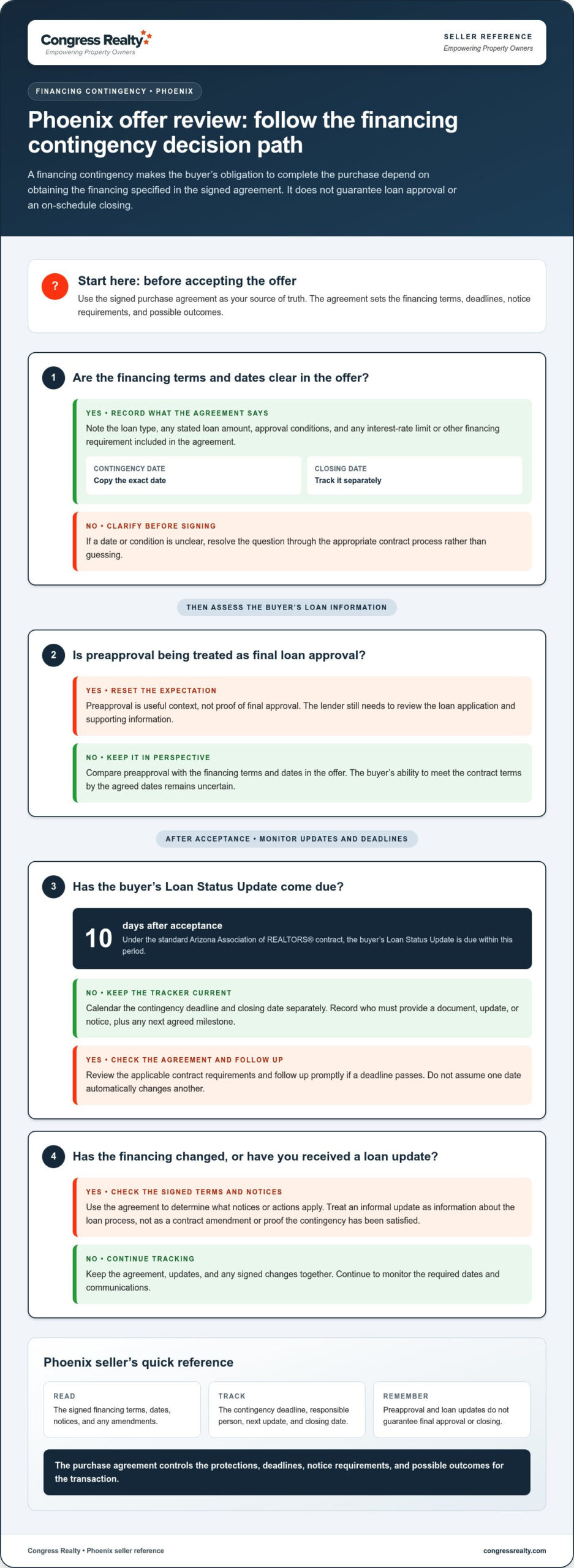
It’s reasonable to worry that a financing delay could disrupt your next move or leave your home tied up. Before accepting an offer, compare the buyer’s preapproval, loan type, contingency dates, and proposed closing date. After acceptance, track required updates and follow up promptly if a deadline passes. Under the standard Arizona Association of REALTORS® contract, the buyer’s Loan Status Update is due within 10 days after acceptance.
This guide explains what the contingency does and doesn’t promise, what to assess in an offer, and what to monitor as the sale progresses. You’ll also learn how to keep communication clear and respond if financing changes, without assuming the loan is guaranteed.
Key Takeaways
- Understand what a financing contingency protects and what it does not guarantee about the buyer’s loan.
- Compare the financing terms and dates in the signed offer instead of relying on generic timeline expectations.
- Use preapproval as one factor in evaluating the offer, not proof of final loan approval.
- Learn how to handle a financing contingency by saving the agreement, calendaring deadlines, tracking updates, and reviewing notices.
- Congress Realty’s flat-fee listing gives your property the same MLS exposure as listings paid with a full commission.
What a Financing Contingency Means for a Phoenix Home Sale
Congress Realty provides flat-fee MLS listings for homeowners in Phoenix. The MLS gives listings the same exposure as listings paid with a full commission. A financing contingency makes the buyer’s obligation to complete the purchase depend on obtaining the financing specified in the purchase agreement. It sets out how the parties handle the transaction if the buyer can’t meet that financing condition. The key point for sellers is simple: loan approval remains a process, not a certainty.
The clause doesn’t guarantee that a lender will approve the buyer’s loan or that the sale will close on schedule. It describes the financing condition the buyer and seller agreed to, along with the dates and procedures that apply. The signed purchase agreement controls those details. Read its actual language before relying on general explanations of contingencies.
A buyer may start with a lender’s preapproval, but the lender still needs to review the loan application and supporting information. The seller’s practical concern is whether the buyer can satisfy the contract’s financing terms by the agreed dates. Keep that uncertainty in mind as you assess the offer and plan your next move.
What does a financing contingency protect?
A financing contingency sets conditions for the buyer’s financing within an agreed period. It may give the buyer a contractual way to respond if the specified financing doesn’t come through, but it doesn’t promise loan approval. The signed agreement determines the protections, deadlines, notice requirements, and possible outcomes. Read its language about cancellation and earnest money rather than assuming the deposit will automatically be returned or forfeited.
For example, an offer might depend on the buyer obtaining a particular loan type by a stated date. If the buyer’s financing situation changes, the agreement determines what notices or actions the parties must take. Don’t treat an informal update as a substitute for the contract’s requirements.
Why sellers should read the financing terms closely
Loan type, approval conditions, and contract dates can affect how the transaction progresses. An offer may name a loan program and set a period for satisfying the financing condition. Those details help you understand what the buyer has agreed to pursue and when the parties need to address the condition. A preapproval can provide useful context, but it isn’t final approval.
Review these terms before accepting, not after a delay creates pressure. Compare the financing language with the proposed closing date and your plans. If a date or condition seems unclear, resolve the question through the appropriate contract process before signing. This gives you a more realistic view of the offer’s timing and uncertainty.
In short, a financing contingency makes the buyer’s obligation to proceed depend on obtaining specified financing under the purchase agreement’s terms. Use that definition as a starting point, then read the signed agreement for the details that apply to your sale. Understanding the clause helps you evaluate the offer on its actual terms and keep your expectations grounded.
How Financing Contingency Terms and Deadlines Shape the Deal
The signed purchase agreement sets the financing contingency’s terms and dates. Don’t substitute a generic timeline, a customary number of days, or an assumption about local transactions for the dates written in the contract. If the parties amend the agreement, use the revised terms to track what comes next.
Keep the financing-contingency deadline separate from the scheduled closing date. The contingency deadline marks a point for a financing-related condition or notice described in the contract. The closing date is the planned date to complete the sale. One date doesn’t automatically replace or extend the other. For example, a hypothetical agreement could set a financing deadline of May 12 and a closing date of May 28. Track both independently, along with any notice requirements.
Which financing details should sellers identify?
Review the financing section and note the loan type, any stated loan amount, and any approval conditions. If the agreement includes an interest-rate limit or another financing requirement, record the exact wording. Don’t assume a term applies just because it appears in a lender estimate or buyer update. The contract establishes the parties’ agreed terms; lender communications provide separate information about the loan process.
This comparison helps you see what an update actually tells you. A buyer might report that the lender expects a particular rate or loan amount. Treat that as an update, not as a contract amendment or proof that the financing contingency has been satisfied. Keep the written agreement and any signed changes as your reference.
How should sellers track the contingency deadline?
Create a simple tracker from the signed agreement. Record the contingency date exactly as written, identify who must act or provide notice, and note the next expected update if the agreement or communication sets one. Add the scheduled closing date as a separate entry. If a deadline is unclear, resolve the wording through the appropriate contract process rather than guessing.
- Date: Record the exact deadline and closing date.
- Responsible person: Note who must provide a document, update, or notice.
- Next update: Log the agreed milestone and when you’ll follow up.
- Contract reference: Keep the relevant clause or signed amendment with the tracker.
Use this checklist: confirm the contract date, the person responsible, the required notice method, and the next follow-up. Mark each item only when you can verify it. Silence doesn’t prove approval, and an informal status message doesn’t change the agreement by itself.
Clear records make the sale easier to manage and help you distinguish a missed update from a contract deadline. If you’re preparing to list while planning your transaction, explore Congress Realty’s home-selling options.
How to Compare an Offer With a Financing Contingency
A financing contingency adds uncertainty, but it doesn’t automatically make an offer unworkable. Evaluate the full written offer: financing terms, deadlines, purchase price, requested concessions, closing date, and any other conditions. A cash offer can remove dependence on a mortgage, but cash alone doesn’t make every offer safer or more suitable. Compare the terms with your priorities as a seller.
Use this comparison to separate what the offer actually says from what you still need to understand and monitor:
| Documented offer terms | Questions to resolve | Points to monitor |
|---|---|---|
| Loan type, stated amount, contingency date, closing date, and other written conditions | Are any terms unclear? Does the proposed schedule fit your plans? | Track agreed updates and required notices, and record any changes the parties make in writing |
| Any stated concessions or other conditions | How do the full terms compare with your priorities? | Whether the transaction continues to meet its written milestones |
How much confidence should sellers place in preapproval?
Preapproval is useful information about a lender’s preliminary review, not final underwriting approval or a guarantee the loan will close. The lender may continue reviewing the buyer’s application and supporting information after contract acceptance. Consider the preapproval alongside the offer’s written terms, but don’t infer the buyer’s financial strength from assumptions, a brief conversation, or a lender letter alone.
Should sellers prefer an offer that waives financing protection?
Not automatically. Removing a financing contingency changes the buyer’s contractual protections, but it doesn’t establish that the buyer has funds available or that every part of the transaction will proceed smoothly. Read the full offer and contract before weighing a waiver. Compare its impact with the other written terms and your timing needs rather than treating one clause as the sole measure of risk.
For example, compare two hypothetical offers by looking beyond the financing clause. One may include a contingency and a schedule that works for you; another may waive that protection but include terms that don’t fit your plans. The stronger choice depends on the complete written package and your priorities, not a blanket rule that one type always wins.
That’s the practical approach to how to handle a financing contingency during offer review: separate verified terms from assumptions. List what the contract states, identify questions that need clear answers, and note what you’ll monitor after acceptance. A preapproval can inform your assessment, but it can’t replace the contract or prove final loan approval. Judge the offer on its full terms, then tie your next steps to what the parties put in writing.
How Sellers Can Manage a Financing Contingency After Acceptance
Once the agreement is signed, use a consistent process to keep the financing condition on your radar. Focus on what the contract requires and what the parties have documented. Don’t interpret a quiet period as proof that the lender has approved the loan, or treat an informal update as a change to the agreement.
- Save the signed agreement. Keep the complete, signed purchase agreement and any later written amendments together. Note the financing clause, required notices, and any documents or updates the contract calls for.
- Calendar every relevant date. Record the financing-contingency deadline separately from the planned closing date. Add reminders early enough to review upcoming milestones, and update your calendar if the parties sign a change.
- Track updates and communications. Log the date of each lender update, requested document, buyer communication, and contract notice. Distinguish written, confirmed information from verbal assurances or estimates.
- Review notices against the agreement. If a notice arrives or a deadline passes, compare what happened with the contract’s stated procedures. Keep a copy of the notice and note any response or next step.
What should sellers track during the loan process?
Maintain one record that connects each update to the contract milestone it concerns. Include the date, who sent the information, whether it came in writing, and what action the agreement calls for next. Keep the buyer’s contingency deadline visible beside the closing date, but don’t treat the two as interchangeable. A lender’s estimate can help explain progress, but it doesn’t replace the signed terms.
Keep communication factual. For example, ask whether a particular agreed update has been provided rather than stating that the loan is approved or late based on an assumption. A clear written record helps everyone discuss the same dates and documents.
What if financing is delayed or denied?
Start with the purchase agreement. Review the notice and response procedures it specifies, including any relevant deadline and delivery requirements. A delay or denial doesn’t automatically cancel the sale or decide what happens to earnest money. The agreement’s language and the parties’ actions matter, so avoid making assumptions about the outcome.
If the parties discuss changing a date or another term, have both parties put the change in writing and sign it as the contract requires. Don’t rely on a verbal promise to extend a deadline. Keep copies of messages and notices, and follow the written process for addressing the issue. If you’re unsure how a clause applies, seek qualified contract guidance before taking action.
If you’re also considering selling a house without an agent, review Congress Realty’s flat-fee listing options as you plan your sale.
Where Congress Realty Fits When a Phoenix Seller Reviews an Offer
Offer review and listing support are separate parts of a home sale. Congress Realty provides flat-fee listings on the MLS, which give sellers the same exposure as listings paid with a full commission. This service can help get a property listed, but it doesn’t approve a buyer’s loan or guarantee a closing, sale price, or transaction outcome. The financing terms still come from the buyer and seller’s signed agreement, so evaluate the offer on its written terms.
The MLS is exclusive to members, and only members can make changes to a listing. Congress Realty makes listing changes on the seller’s behalf. The MLS gives listings the same exposure as listings paid with a full commission, while the flat-fee model lets sellers retain control of decisions about their sale. That exposure doesn’t remove the uncertainty tied to a buyer’s financing contingency. Continue to track contract dates and notices, and keep the listing service’s role distinct from the lender’s approval process.
What support does the Full Service Option provide?
The Full Service Option includes paperwork, contract negotiation, and documentation services. This support can help when questions arise about written terms, changes, or transaction documents during a sale. It complements the seller’s listing service, but it doesn’t guarantee that a lender will approve financing, that the transaction will close, or that the seller will achieve a specific price.
Keep the roles clear. The lender evaluates the buyer’s loan, while the purchase agreement sets the parties’ obligations and timelines. Contract and documentation support can help sellers address the paperwork side of the transaction, but it doesn’t replace checking the agreement or following its notice procedures. If a financing update raises questions about a deadline or proposed change, focus on the written terms and appropriate documentation.
How can sellers take a clear next step?
Choose the listing support that fits how you want to manage the sale. Some sellers want an MLS listing, which provides the same exposure as listings paid with a full commission, while handling more of the process themselves. Others value added help with paperwork and contract negotiation. Congress Realty is licensed in every state where it operates, including Arizona, and offers sellers a flat-fee listing model. Its service areas include Arizona, Alaska, California, Idaho, Louisiana, Montana, Nevada, New Mexico, Oregon, Texas, Utah, and Washington.
As you assess an offer, keep the listing decision separate from the financing decision. The MLS presents your property with the same exposure as listings paid with a full commission; the contract and lender determine the financing path. Neither changes the other. This distinction helps you choose the support you want for the sale while continuing to assess the buyer’s financing condition through the signed agreement.
Review Congress Realty’s seller listing options and choose the level of support that fits your needs.
Plan Your Next Move With Clear Contingency Dates
A financing contingency can affect more than the sale itself. It can shape when you schedule movers, commit to your next home, or arrange temporary housing. If your plans include relocating or purchasing property in popular destination markets such as the Florida Keys, resources like krissyinthekeys.com can help you coordinate regional transaction requirements and contract timelines. Before making plans that depend on a specific closing date, consider what you’ll do if the timeline changes. Build flexibility into decisions you control, and base firm commitments on the written agreement and confirmed updates, not an assumption that the buyer’s loan will clear.
That practical mindset is central to how to handle a financing contingency: stay alert to changes, keep your options open where you can, and make each decision with the latest verified information. You don’t need to predict every outcome to move forward. You need a clear plan and the right level of support for your sale.
Explore Congress Realty seller options and choose a listing approach that fits your next move. Take the process one informed step at a time.
Frequently Asked Questions
Can a seller reject an offer with a financing contingency?
Yes. A seller can decide whether to accept an offer after reviewing its financing terms and all other written conditions. For an Arizona seller, consider how the offer fits your priorities, including the proposed dates and any requested concessions. The contingency alone doesn’t make an offer suitable or unsuitable. Read the full agreement before deciding, and don’t treat acceptance as proof that the buyer will receive final loan approval.
Does mortgage preapproval guarantee final loan approval?
No. Preapproval reflects an early review based on information the lender had at that point. The lender may still assess the application, property, and other requirements before making a final decision. The buyer’s circumstances or the information available to the lender may also change during the process. Treat a preapproval letter as context for evaluating the offer, not as confirmation that financing is complete or closing will happen as planned.
Can a financing contingency cover an appraisal shortfall?
Not automatically. A financing clause and an appraisal provision can address separate issues, so read both parts of the agreement together. For example, an appraisal below the purchase price may raise questions that the financing clause alone doesn’t answer. Check the contract for the specific notice, response, or other procedures tied to the appraisal. Don’t assume one provision creates a remedy under the other.
Can the buyer change loan types after the offer is accepted?
A buyer may propose a different loan type—such as transitioning from conventional financing to private funding sources like ahlhardmoney.com for Florida property investments—but the effect depends on the written agreement and any changes the parties make to it. Compare the proposed financing with the loan terms, conditions, and dates in the signed offer. If the change could affect those terms, ask for the proposal in writing and review its impact before proceeding. Don’t rely on a verbal assurance that the switch leaves the agreement unchanged.
Can a seller accept a backup offer while the first offer has a financing contingency?
That depends on the signed agreement and its applicable terms. A financing contingency by itself doesn’t explain whether or how you may proceed with another offer. Before responding to a backup offer, review the existing contract for relevant restrictions and procedures, and keep the status of the first transaction clear in your communications. Don’t present the home as available or the first agreement as ended based only on uncertainty about the buyer’s loan.
What happens if the buyer’s lender requests more documents near the deadline?
A lender’s document request doesn’t, by itself, change the contract deadline or confirm loan approval. Note what the lender requested and when the buyer shared the update, then compare it with the relevant contract terms. If the parties discuss a revised date or condition, document any agreed change in writing. To understand how to handle a financing contingency, keep lender updates distinct from changes to the purchase agreement.
Ready to list your home? Explore Congress Realty’s flat-fee seller options and choose the support that fits your sale.