
Signing the purchase agreement feels like a victory, but in a 2026 market where median listing prices have softened by 2.7%, the real work of protecting your equity is just beginning. Most sellers assume the hardest part is over once they find a buyer. However, the transition from “Under Contract” to “Closed” is where many deals stumble due to missed deadlines or aggressive repair requests. You’ve likely spent weeks preparing your home, and now you need a concrete strategy for what to do after accepting an offer on a house to keep the transaction on track.
We understand that the period between the handshake and the wire transfer can feel like a minefield of uncertainty. You’re probably worried about the appraisal coming in low or how to navigate new regulations like California’s digital image disclosures. This roadmap promises to put you back in the driver’s seat. We will walk you through a clear timeline of essential deadlines, show you how to manage contingencies without making unnecessary concessions, and help you finalize your sale while bypassing the traditional 3% listing commission. It’s time to close your deal with the intelligence and control you deserve.
Key Takeaways
- Secure your transaction immediately by finalizing the purchase agreement and opening escrow with a neutral third party.
- Navigate the inspection phase with confidence by learning how to negotiate repair credits that keep your equity intact.
- Stay in control of the timeline with a clear checklist of what to do after accepting an offer on a house, from mandatory disclosures to title searches.
- Prepare for a successful final walk-through by meeting the “broom clean” standard and organizing your keys for the new owners.
- Confirm your final net proceeds on the Closing Disclosure so you’ll see the impact of skipping high commission costs.
The Immediate Handshake: Legalizing the Contract and Escrow
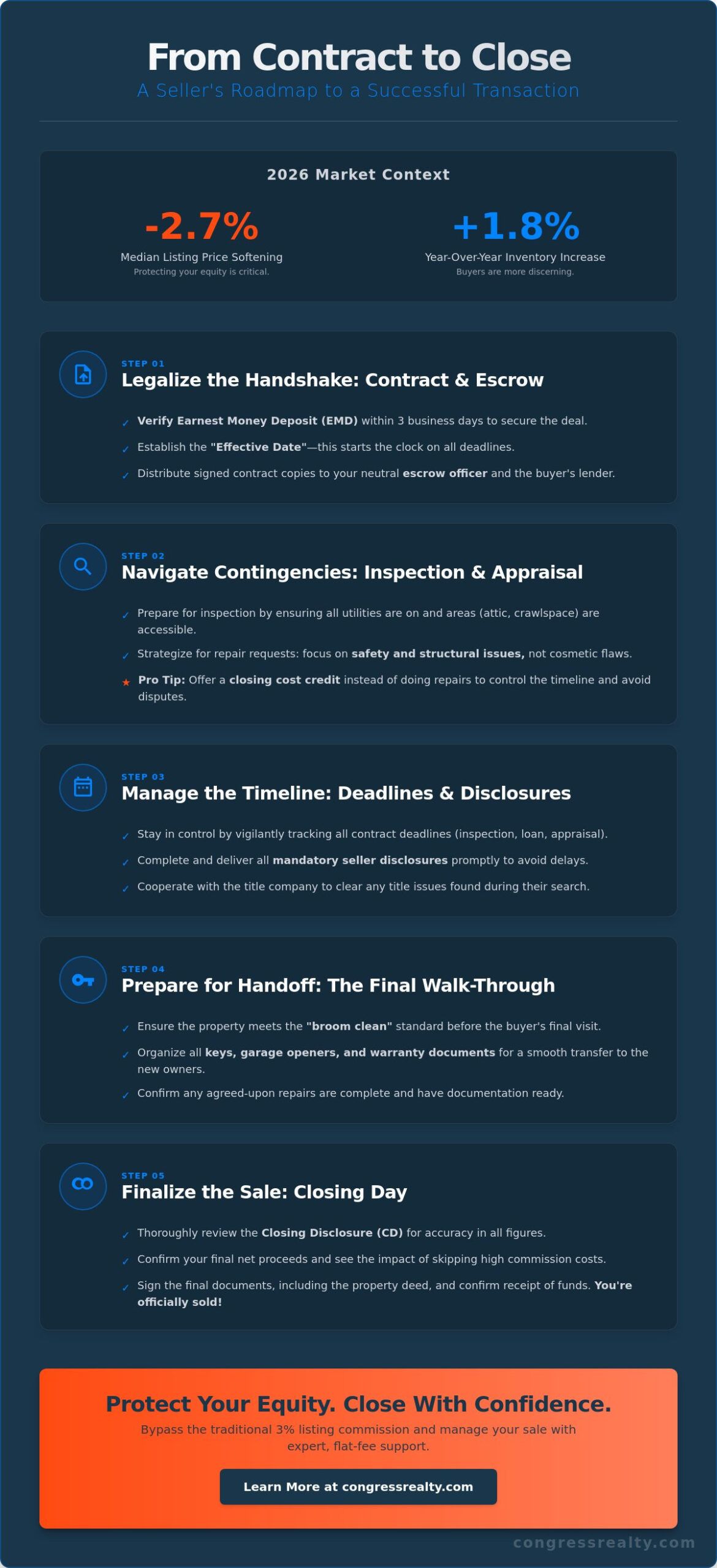
Congratulations, you’ve officially moved from “Active” to “Under Contract.” While the hardest part of marketing is behind you, the technical execution of the sale begins now. Knowing exactly what to do after accepting an offer on a house ensures you don’t lose momentum or risk a contract breach. Your first priority is turning that signed offer into a legalized, active escrow file. This isn’t just about paperwork; it’s about establishing the legal guardrails that protect your equity until the final wire transfer.
Start by verifying the Earnest Money Deposit (EMD). This is the buyer’s “skin in the game,” typically representing a small percentage of the purchase price held in a neutral account. Most contracts require this deposit to be wired to the escrow agent within three business days. Don’t assume it happened. Ask for a copy of the receipt. If the buyer fails to deliver the EMD on time, they’re technically in default. This gives you the leverage to cancel or demand immediate performance before you waste valuable time off the market.
Next, identify your “Effective Date.” This is usually the date the last party signed and communicated acceptance. This date is the anchor for every deadline in your transaction, including inspection periods, appraisal timelines, and loan approval dates. Mark this on your calendar immediately. Missing a single deadline can give a buyer a legal “out” to walk away with their deposit intact. Staying in control of these dates is the hallmark of a savvy, independent seller.
Formalizing the Purchase Agreement
Review the final document one last time for clerical errors. Ensure every initial box is filled and every signature is dated. Even a small oversight can cause delays with the buyer’s mortgage lender later. Once you confirm the document is complete, distribute digital copies to your escrow officer and the buyer’s lender. This kicks off the official the closing process, moving the transaction from a private agreement to a supervised financial event. It’s the moment your house officially transitions into a pending asset.
The Role of the Escrow Officer
Think of the escrow officer as the referee of your transaction. They’re a neutral third party who holds the buyer’s funds and your property deed until all contract conditions are met. You’ll need to provide them with your initial seller information, including your social security number for tax reporting and your current mortgage account details. They’ll use this to request a payoff statement from your bank, ensuring your existing loan is cleared the moment the sale is finalized. This level of professional oversight protects your interests and ensures a transparent transfer of ownership.
Navigating the Contingency Period: Inspections and Appraisals
The contingency period is where the buyer’s due diligence meets your bottom line. It’s the most common stage for deals to hit a snag, so staying proactive is essential. Learning exactly what to do after accepting an offer on a house during this window means protecting your equity from “nickel and diming” repair requests. You’ve secured the contract; now you must defend it through the inspection and appraisal hurdles.
In the 2026 market, buyers are more discerning as inventory has risen by 1.8% year-over-year. They aren’t just looking for a home; they’re looking for a sound investment. Your goal is to move past these contingencies quickly to make the buyer’s earnest money non-refundable. This requires a mix of physical preparation and strategic negotiation.
Managing the Home Inspection
Preparation prevents surprises that could derail your sale. Before the inspector arrives, ensure all utilities are on and every crawlspace, attic, and electrical panel is accessible. If an inspector can’t reach a system, they’ll flag it as “uninspected,” which often triggers a second visit or creates unnecessary buyer anxiety. Don’t let a long list of minor repairs rattle you. Most buyers will present a “Request for Repairs” after the walkthrough.
Your strategy should focus on safety and structural integrity rather than cosmetic flaws. If the buyer asks for a long list of fixes, consider offering a closing cost credit instead of performing the physical work. This keeps you in control of the timeline and prevents disputes over the quality of the repairs. It’s a pragmatic way to keep the deal moving without spending your weekends managing contractors. For those who want professional guidance during these tense moments, our Transaction Management service offers the expert advocacy needed to handle aggressive buyer demands.
The Appraisal Hurdle
With national median listing prices down 2.7% year-over-year, appraisals have become a critical checkpoint for lenders. If the bank values your home lower than the sale price, you face an “appraisal gap.” You don’t have to simply lower your price. You can challenge the appraisal by providing a detailed Comparative Market Analysis (CMA) that includes the most recent sales data from the last 90 days.
Be ready to present the appraiser with a list of capital improvements you’ve made, such as a new HVAC system or roof upgrades. If the gap remains, you can ask the buyer to cover the difference in cash or negotiate a split. Once these hurdles are cleared, ensure you receive a formal “Contingency Removal” in writing. This document is your green light to start packing, as it significantly narrows the buyer’s legal paths to cancel the contract.
The Transaction Management Framework: Deadlines and Disclosures
Once you clear the major hurdles of inspections and appraisals, your focus shifts to the administrative architecture of the deal. Managing the “paper trail” is a vital part of what to do after accepting an offer on a house to ensure a clean exit. This phase is about transparency and organization. You must provide the buyer with a clear history of the property while ensuring their lender is moving toward a “Clear to Close” status. Staying ahead of these deadlines keeps you in control and prevents the transaction from stalling.
The title company will simultaneously conduct a title search to verify your ownership and check for encumbrances. This process uncovers any “clouds” on the title, such as unpaid property taxes, old mechanic’s liens, or boundary disputes. If a lien appears, don’t panic. Most are resolved at the closing table by deducting the amount from your proceeds. Your job is to review the Title Commitment early so you have time to clear any unexpected issues before the scheduled signing date.
Don’t let the buyer’s financing become a black hole. Request regular updates from the buyer’s lender to ensure they’re meeting their loan commitment deadline. In 2026, with average 30-year fixed mortgage rates at approximately 6.57%, lenders are meticulously verifying every financial detail. Confirm that the buyer has submitted all required documents and that the loan is in final underwriting. If the lender is slow to respond, it’s a signal that you may need to issue a notice to perform to keep the timeline intact.
Fulfilling Disclosure Obligations
Honesty in your disclosures is your best defense against post-sale lawsuits. If you’re selling in California, you must now comply with 2026 regulations like AB 723 regarding digitally altered marketing photos and AB 455 regarding the history of smoking or vaping inside the property. Disclose everything from past water damage to HOA rules and litigation. The Seller Property Disclosure acts as your primary legal shield against future claims regarding the home’s condition.
Professional Transaction Oversight
Managing these moving parts doesn’t require a traditional 3% listing commission. You can stay organized and maintain control by leveraging Flat Fee MLS Listing tools to centralize your communication and document tracking. For sellers who want an expert facilitator to monitor every deadline, a Transaction Management service provides the professional infrastructure to ensure every addendum is signed and stored. This methodical approach keeps you in the driver’s seat while protecting your financial interests.
Preparing for the Final Transfer of Ownership
The final stage of your transaction is where the digital paperwork meets the physical reality of moving. Determining exactly what to do after accepting an offer on a house involves more than just signing papers; it requires a physical handoff that leaves the buyer satisfied and you legally protected. Your goal during this phase is to ensure the property matches the expectations set during the inspection period while coordinating a clean exit. This isn’t just a courtesy; it’s a strategic move to prevent last-minute delays at the closing table.
Coordinate your utility transfers early. Contact your providers for water, gas, and electricity to schedule a final reading for the day of closing. You don’t want to shut them off entirely, as this could prevent the buyer from testing systems during their final walkthrough. Instead, request a “transfer of service” to the new owner. This ensures there is no lapse in coverage that could cause pipe issues or security system failures. Managing these small details maintains your reputation as a savvy and reliable seller.
The Final Walk-Through Strategy
The buyer typically schedules a final walkthrough 24 to 48 hours before the signing appointment. They’re looking for two things: that no new damage has occurred since the inspection and that all agreed-upon repairs are complete. You should not be present during this walkthrough. Your presence can make buyers feel rushed or uncomfortable, which may lead to unnecessary suspicion. Simply ensure all repair receipts are organized and that the home is ready for its new occupants. If you’ve handled the process with professional transparency, this step should be a mere formality.
Logistics of Moving Out
Create a “Homeowner’s Binder” to leave on the kitchen counter. Include appliance manuals, garage door openers, and a list of service contacts like your preferred HVAC technician or landscaper. This small gesture of goodwill goes a long way in ensuring a smooth transition. Finally, set up your mail forwarding through the USPS at least one week before you vacate. Ensure your closing is handled with professional precision by utilizing our Transaction Management services to oversee every step of this final transfer.
Closing Day: Signing the Deed and Cashing Out
The finish line is finally in sight. After weeks of managing inspections and disclosures, knowing what to do after accepting an offer on a house culminates in this single, decisive day. Your signing appointment is the moment legal ownership officially transfers to the buyer and your equity is converted into liquid capital. Bring your government-issued ID, all remaining keys, and your confirmed wiring instructions to the title company or attorney’s office. This appointment typically takes less than an hour, but it’s the most financially significant hour of the entire process.
Review your Closing Disclosure (CD) at least three days before this meeting. This document outlines every penny of the transaction. You’ll see the final sale price, prorated property taxes, and any HOA dues that were settled. Most importantly, you’ll see the massive disparity between your net proceeds and what you would’ve walked away with if you’d paid traditional realtor fees. In 2026, where seller closing costs already range from 1% to 3% of the sale price, protecting your equity from unnecessary commissions is the smartest financial move you can make.
As you finalize what to do after accepting an offer on a house, remember that the recording of the deed is the legal finish line. Once the county clerk records the transfer, the buyer’s lender releases the funds. This is when the transaction is officially “closed and funded.” You’ve successfully navigated the 2026 market by staying in the driver’s seat and prioritizing your own financial intelligence.
Understanding Your Net Proceeds
Verify that your settlement statement accurately reflects the flat-fee structure you chose. Ensure there are no hidden administrative fees or surprise brokerage charges. Confirm whether you want your funds delivered via a physical check or a direct wire transfer. If you choose a wire, the funds often hit your account on the same day the deed is recorded at the county office. This recording makes the sale a matter of public record and officially closes your chapter as the property owner.
The Congress Realty Advantage
Choosing the path of selling a house without a realtor doesn’t mean you’re alone. It means you’re in control. By using a Full Service Listing package, you’ve navigated the complexities of the 2026 market with professional tools while keeping your hard-earned equity where it belongs. You’ve mastered the roadmap and successfully protected your financial future. Ready to start your own success story? List your property on the MLS for a flat fee today and take command of your sale.
Take Command of Your Closing Today
You’ve navigated the complexities of the 2026 housing market and successfully reached the final stages of your sale. By mastering what to do after accepting an offer on a house, you ensure that every contingency is met and every deadline is honored without surrendering your equity to high commissions. Managing your own transaction is about more than just saving money; it’s about maintaining the confidence of being in total control of your financial future.
Since 2002, we’ve empowered sellers with the professional infrastructure needed to succeed. Whether you need professional CMA support to justify your price to an appraiser or expert Transaction Management to oversee the technical legal timeline, you have a reliable ally in your corner. You don’t need a traditional agent to achieve a professional result. It’s time to finalize your deal on your own terms and protect the equity you’ve built.
View our Flat Fee MLS Listing Packages and start saving today
Your equity belongs in your pocket. Take the next step toward a smarter, more rewarding home sale and finish your transaction with the financial intelligence you deserve. You’ve got this.
Frequently Asked Questions
How long does it typically take to close after an offer is accepted?
Closing usually takes between 30 and 45 days. This timeline depends on the buyer’s loan type and the length of the contingency periods. Cash transactions move much faster, often reaching the finish line in 7 to 14 days. Understanding what to do after accepting an offer on a house involves tracking these milestones to ensure the lender meets the scheduled signing date.
Can a seller back out of an accepted offer on a house?
Backing out is difficult once the purchase agreement is signed. Sellers are legally bound to the contract unless the buyer fails to meet a deadline or a specific seller contingency isn’t met. If you attempt to cancel without a legal reason, the buyer could sue for “specific performance” to force the sale. Always review the default clauses in your agreement before making a move.
What happens if the buyer’s financing falls through at the last minute?
The contract typically terminates if the buyer has a financing contingency in place. In this scenario, the buyer usually receives their earnest money deposit back, and you must relist the property. To prevent this, confirm that the buyer has a strong pre-approval and monitor their loan progress throughout the escrow period. Keeping backup offers on file is a smart way to maintain your leverage.
Do I need a real estate attorney for the closing process?
Requirements vary by state. Some regions require an attorney to oversee the deed transfer and title review, while others rely entirely on escrow and title companies. Even if your state doesn’t mandate one, hiring an attorney can provide extra protection for complex transactions. Check your local regulations early so you can factor this into your closing timeline.
What is the difference between “Pending” and “Under Contract” on the MLS?
“Under Contract” means you’ve accepted an offer, but the buyer is still navigating contingencies like inspections or appraisals. “Pending” indicates that all contingencies have been cleared and the deal is simply waiting for the final signing. Knowing which status to use is a key part of what to do after accepting an offer on a house to manage buyer expectations.
Is the seller responsible for any costs on closing day?
Yes, sellers typically pay between 1% and 3% of the home’s sale price in closing costs. These expenses include title insurance, transfer taxes, and escrow fees. This is separate from agent commissions. By utilizing a flat-fee listing model, you eliminate the traditional 3% listing commission, which significantly increases the total net proceeds you’ll receive at the end of the day.
What should I do if the buyer asks for a price reduction after the appraisal?
You have three main options: reduce the price to match the appraisal, ask the buyer to cover the “appraisal gap” in cash, or meet in the middle. You can also challenge a low appraisal by providing a Comparative Market Analysis (CMA) with more recent sales data. If an agreement can’t be reached, the buyer may have the right to cancel and keep their deposit.
When do I officially get the money from the sale of my house?
You generally receive your funds on the day the deed is recorded at the county office or the following business day. The escrow agent will distribute the proceeds via wire transfer or a physical check once they confirm the legal transfer of ownership. Wire transfers are the fastest method, often appearing in your bank account just hours after the final documents are processed.