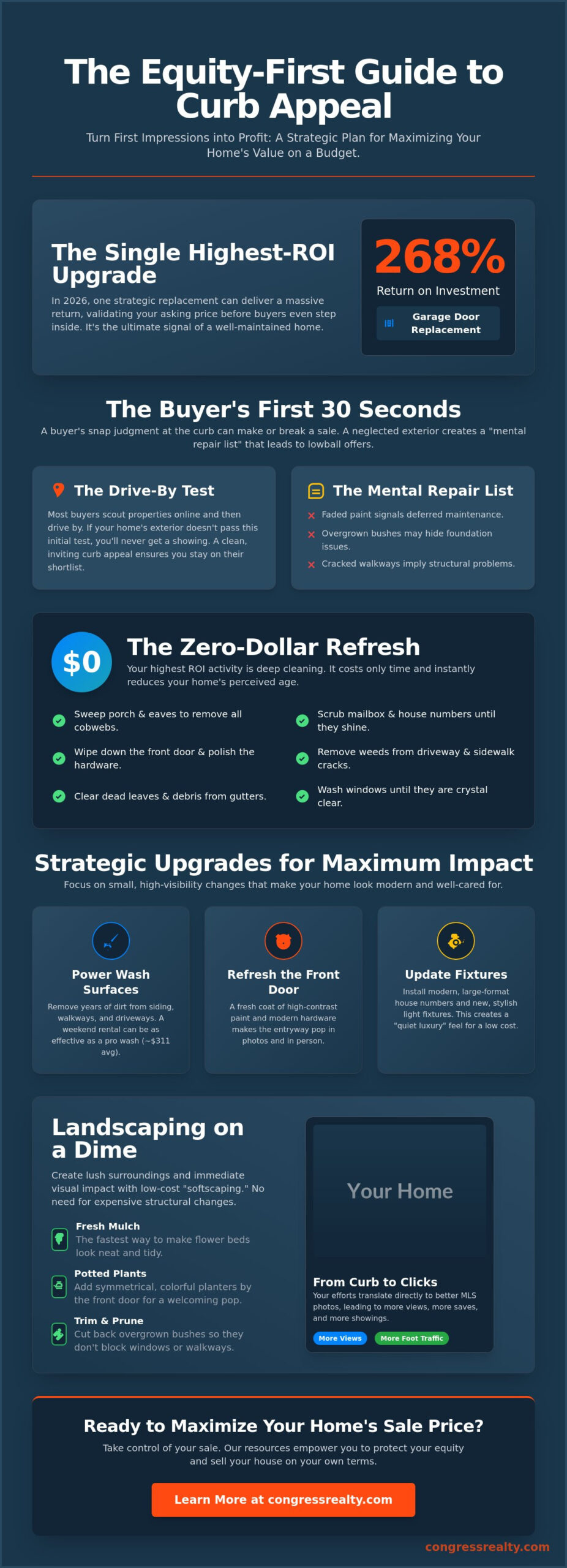
What if you could increase your home’s value by thousands without spending a fortune? In 2026, a strategic garage door replacement can deliver up to a 268% return on your investment. If you’re wondering how to improve curb appeal on a budget, you’re likely focused on one goal: protecting your equity. It’s common to worry that a tired exterior or a messy yard will invite lowball offers. You want your property to stand out in MLS photos and command a premium price, but the scale of maintenance can feel overwhelming when your budget is tight.
This guide focuses on tactical, high-impact changes that validate your asking price the moment a buyer pulls up. We’ll explore everything from the “quiet luxury” of earthy neutral tones to the strategic use of layered lighting and modern house numbers. Discover how to take full control of your home’s first impression and maximize your final sale price using simple, professional strategies designed for the savvy, independent seller. By the end of this article, you’ll have a clear, step-by-step plan to transform your exterior and increase foot traffic without overspending.
Key Takeaways
- Treat curb appeal as a tactical equity strategy that signals the overall health of your property to potential buyers before they even step inside.
- Prioritize deep cleaning and decluttering as your highest-ROI activities to instantly reduce the perceived age of your home at zero cost.
- Learn how to improve curb appeal on a budget by focusing on high-contrast entry points and modern fixtures that make your home pop in digital listings.
- Utilize low-cost softscaping techniques to create immediate visual impact and lush surroundings without the heavy expense of structural hardscaping.
- Connect your physical exterior upgrades to professional photography to maximize click-through rates and increase foot traffic from the MLS.
The ROI of First Impressions: Why Curb Appeal is an Equity Strategy
Think of your home’s exterior as the psychological entry gate for buyer trust. It isn’t just about having a pretty garden; it’s about signaling that you’ve cared for the property. Curb appeal acts as a visual shorthand for the overall health of the entire home. When a buyer sees a peeling front door or overgrown weeds, they don’t just see a weekend project. They see a potential money pit. Most buyers perform a “Drive-By Test” before they ever book a showing. If the exterior doesn’t pass, they keep driving. By learning how to improve curb appeal on a budget, you ensure your home stays on their shortlist. These low-cost improvements serve as a tactical defense for your Comparative Market Analysis (CMA) value. They prevent buyers from using minor cosmetic flaws as leverage to chip away at your equity.
The Psychology of the Buyer’s First 30 Seconds
Buyers decide if they like a house within 30 seconds of pulling up to the curb. This snap judgment is hard to reverse. If the exterior looks neglected, the buyer’s brain starts building a “mental repair list” before they even turn the key. They assume that if you didn’t mow the lawn, you probably didn’t service the furnace or fix the leaky roof either. Common items on this mental list include:
- Faded paint suggesting deferred maintenance.
- Overgrown bushes that hide structural issues.
- Cracked walkways that imply foundation trouble.
- Dirty windows that suggest a lack of general care.
This negative perception leads directly to lower offers. A clean, well-maintained exterior replaces that anxiety with confidence, allowing the buyer to focus on the home’s features instead of its flaws. You want them thinking about where their furniture will go, not how much a new driveway will cost.
Protecting Your Equity Through Visual Validation
A polished exterior justifies your asking price on the MLS. It provides the visual validation needed for successful how to sell your house on your own strategies. When you bypass traditional high-commission models, every dollar of equity you protect stays in your pocket. Using how to improve curb appeal on a budget techniques helps you avoid appraisal red flags that can derail a sale. It also prevents buyers from asking for credits at the closing table for simple fixes you could have handled for $100. You’re not just decorating; you’re securing your financial return and maintaining command over the negotiation process.
The Zero-Dollar Refresh: High-Impact Cleaning and Decluttering
Before you spend a single dollar on new mulch or hardware, look at what you already own. Cleaning is the highest ROI activity for any seller because it primarily costs your time rather than your capital. A deep, thorough scrub creates a “sparkle” that significantly lowers the perceived age of your home. Buyers associate a clean exterior with a well-maintained interior; if the outside is spotless, they assume the hidden systems are too. When you learn how to improve curb appeal on a budget, you start by removing the “visual noise” that distracts from your home’s architecture. Understanding Why It Matters When Selling a Home helps you stay focused on these high-impact, low-cost tasks that protect your equity.
Use this “Grand Clean” checklist to prepare your home for the market without opening your wallet:
- Sweep the porch and eaves to remove all cobwebs and wasp nests.
- Scrub the mailbox and street numbers until they shine.
- Wipe down the front door and polish the handle and kickplate.
- Clear dead leaves and debris from gutters and visible flower beds.
- Remove any weeds growing in the cracks of the driveway or sidewalk.
Power Washing and Window Clarity
Removing years of grit from siding and driveways is transformative. While a professional house wash averages approximately $311 according to 2026 data, many homeowners find that a weekend rental or even a high-pressure garden hose attachment can achieve similar results. Be careful with your surfaces. Use lower pressure on vinyl siding to avoid trapping water behind the panels; brick can handle more force but watch for crumbling mortar. Crystal-clear windows are equally essential. They don’t just look better from the street. They also allow more natural light to flood your interior, making your home look larger and more inviting in photos. Before you list, consider requesting a Comparative Market Analysis (CMA) to see how your refreshed home compares to recent sales in your area.
Decluttering the Exterior Landscape
Your goal is to present a blank canvas where a buyer can imagine their own life. Remove all “lifestyle” items that clutter the view. This includes children’s toys, tangled garden hoses, worn-out patio furniture, and empty planters. These items act as visual hurdles that stop a buyer’s eye from appreciating the home’s structure. Take the time to edge your walkways. Creating a sharp, professional line between your grass and the concrete costs nothing but effort, yet it provides a high-end look instantly. Finally, prune any overgrown bushes that “hide” the house. If a buyer can’t see the windows or the front door from the street, they’ll feel a subconscious disconnect from the property. Open up the view to invite them in.
Strategic Upgrades Under $200 for Maximum Impact
Once your home is spotless, it’s time to focus on “touch points.” These are the specific features buyers see and interact with as they approach your entrance. High-ROI upgrades don’t require a contractor or a massive loan. Instead, you should prioritize color and contrast to make your property stand out in digital listings. By spending less than $200 on strategic materials, you can create a premium aesthetic that justifies your asking price. Understanding how to improve curb appeal on a budget means knowing where a few dollars go the furthest. According to the National Association of REALTORS® 2023 Remodeling Impact Report, these small exterior refreshes are highly effective at recovering their costs during a sale.
The Front Door Transformation
The front door is your home’s handshake. While a full steel entry door replacement can yield an ROI of up to 216%, you can achieve a similar visual effect with a quart of high-quality paint. In 2026, the average cost to professionally paint a front door ranges between $125 and $225, but a DIY approach costs significantly less. Follow current market trends by choosing “statement” colors like navy, emerald green, or matte black. These shades provide the “quiet luxury” aesthetic that modern buyers crave. Don’t stop at the paint. Replace dated, tarnished hardware with a new handle set and deadbolt. A heavy, modern handle in a brushed nickel or matte black finish signals security and quality the moment a buyer reaches for the door.
Lighting, Numbers, and Mailboxes
Old, builder-grade light fixtures can make a 2010 home look like it’s from the 1990s. Swap out yellowing or rusted lanterns for modern, geometric fixtures. Layered lighting is a key 2026 trend, so ensure your porch light is bright and welcoming for evening drive-bys. Next, look at your house numbers. Modern, 10-inch aluminum numbers are available for around $28.80 each and provide a massive boost to readability and style. Finally, refresh your mailbox. If it’s mounted to the house, ensure the finish matches your new door hardware. If it’s at the curb, a fresh coat of black spray paint and new numbers can make it look brand new. Use the “Rule of Three” on your porch: a clean doormat, a single high-quality planter, and your new lighting. This creates a balanced, staged look that looks incredible in professional listing photos.
Landscaping on a Dime: Softscaping for the Camera
Stop thinking about expensive hardscaping projects like stone patios or retaining walls. While these additions are beautiful, they rarely offer the immediate, budget-friendly return you need when preparing for a 2026 sale. Instead, shift your focus to softscaping. This involves using living elements, ground cover, and plants to create a lush, inviting atmosphere. If you’re looking for how to improve curb appeal on a budget, softscaping is your most effective tool. It allows you to create a high-end look that translates perfectly to the camera, which is essential for driving digital engagement on listing sites.
The Magic of Fresh Mulch and Edging
Dark mulch acts like high-definition makeup for your yard. It provides a rich, high-contrast background that makes the greens of your lawn and the colors of your plants pop. In 2026, materials for mulch cost between $25 and $100 per cubic yard. If you’re handling the project yourself, bagged mulch typically ranges from $3.25 to $6.50 per bag. This is a pragmatic investment that instantly cleans up the appearance of your flower beds. Focus your efforts only on the areas visible from the street and the primary path to your front door to maximize your savings.
Don’t overlook the importance of clean lines. Use plastic or brick edging to define your garden beds and stop grass from creeping into your mulch. This simple step creates a professional, manicured look that suggests a high level of care. It’s these sharp boundaries that catch the eye in MLS photos, making your property look like a premium listing even if you’ve spent very little effort and capital.
Seasonal Color and Potted Symmetry
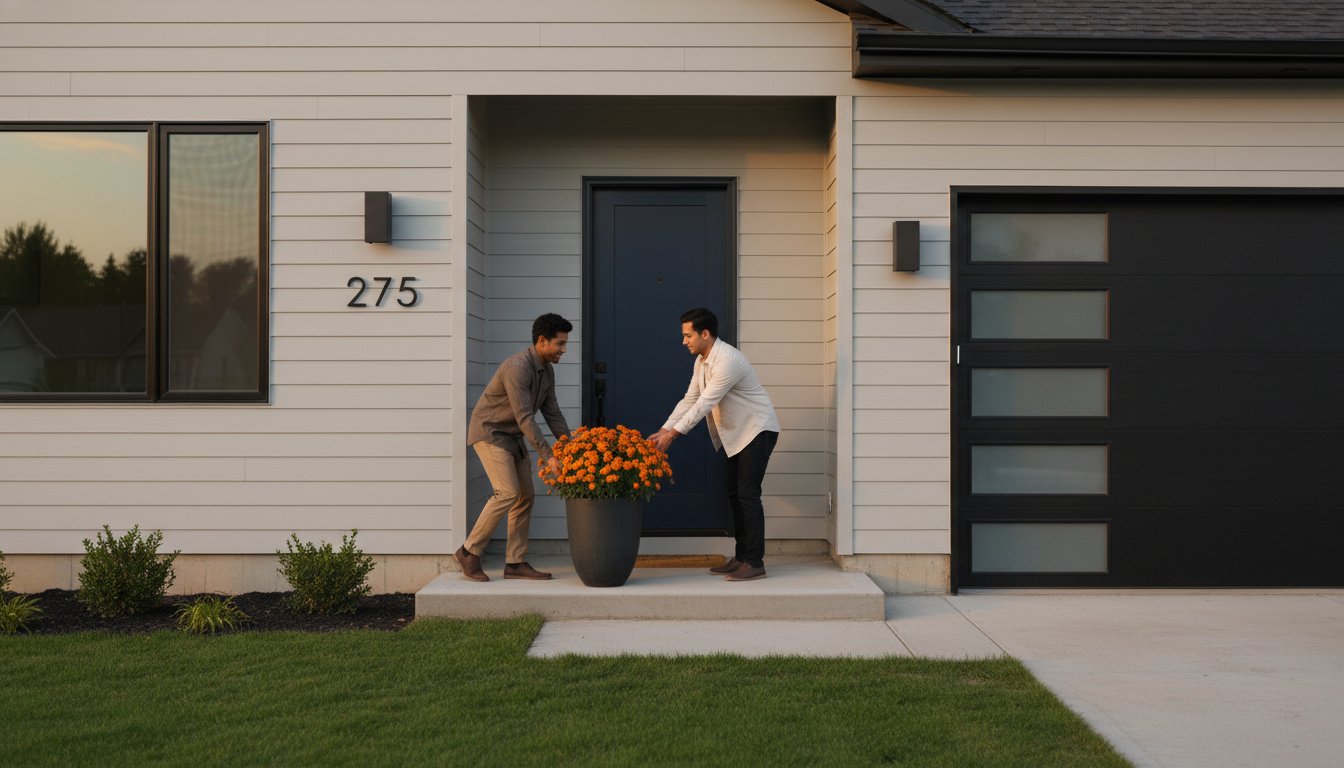
Symmetry is a visual cue for quality. In traditional home design, balanced elements create a sense of stability and trust. You can achieve this easily by flanking your front door with identical planters. Use seasonal annuals to provide “color pops” rather than investing in expensive perennials that may not be in bloom when you list. For the 2026 market, shades of emerald green and navy are trending, but classic white or red flowers against dark mulch always perform well. Choose low-maintenance plants like marigolds or petunias that won’t wilt if you have a busy week of showings.
Once your exterior looks pristine, ensure your hard work is documented correctly. High-quality Professional Photography is the final step in translating these physical improvements into a higher final sale price. By focusing on these softscaping tactics, you maintain full command over your home’s presentation while keeping your equity where it belongs: in your pocket.
Capturing the Value: Curb Appeal for the MLS Listing
The primary goal of curb appeal isn’t just to look nice for the neighbors; it’s to stop the scroll. In the 2026 real estate market, your home’s digital storefront is its most important asset. If you’ve followed the steps for how to improve curb appeal on a budget, you’ve already protected your equity by creating a premium look. Now, you must translate that physical effort into digital engagement. High-quality professional photography is the bridge between your hard work and a buyer’s click. When writing your property description, don’t be modest. Highlight your “modernized entry” or “manicured softscaping” to signal that the home is move-in ready and meticulously maintained.
Before the photographer arrives or the first showing begins, use this final Listing Day checklist to ensure the exterior is flawless:
- Mow the lawn on a high setting for a lush, carpet-like appearance.
- Water the mulch and driveway to make colors look deeper and more saturated.
- Hide all garden hoses, trash bins, and recycling containers completely out of sight.
- Turn on all exterior lights, even during the day, to create a warm and welcoming glow.
- Ensure your yard sign and post are perfectly level and free of dirt or grass clippings.
Optimizing Angles for the Digital ‘First Showing’
Identify the “hero shot” of your home’s exterior. This is usually a straight-on or slightly angled view that captures the front door, windows, and landscaping in a single, balanced frame. Timing is everything for these photos. The “Golden Hour,” which occurs just after sunrise or before sunset, provides a warm, soft light that makes your home’s colors appear richer and more inviting. Remove all cars from the driveway and the street directly in front of the house. You want the buyer to see a clear, unobstructed path to their potential new home without any visual clutter distracting from the architecture.
Yard Signs and Accessibility
A clean, professional yard sign and post act as a silent salesperson. It’s the first physical touchpoint for buyers who discover your home while driving through the neighborhood. Ensure the sign is placed prominently and that all walkways leading to the entrance are clear of debris. Accessibility is a key part of the buyer’s experience. Make sure your electronic lockbox is installed in an obvious, easy-to-reach location. Curb appeal creates the “Yes” before the buyer even enters the front door. By managing these final details, you maintain full command over the transaction and set the stage for a successful, high-value sale.
Secure Your Sale with Strategic Curb Appeal
You’ve learned that small, tactical changes like fresh mulch, deep cleaning, and a bold front door can deliver massive returns. By mastering how to improve curb appeal on a budget, you’ve transformed your home’s exterior into a high-performance sales tool. These efforts don’t just look good in professional photography; they protect your equity by validating your asking price before a buyer ever steps inside. You’ve built the value. Now it’s time to capture it.
Now that your home is ready for its hero shot, don’t let traditional commissions eat into your profits. With over 20 years of experience and national coverage for savvy sellers, we provide the professional infrastructure you need to succeed. Our flat-fee model saves you thousands in commissions compared to traditional high-cost industry standards. List your home on the MLS for a flat fee and keep your equity! Take full command of your transaction and keep the rewards of your financial intelligence. You’re ready to lead the way to a successful sale.
Frequently Asked Questions
How much should I spend on curb appeal when selling my house?
You should aim to spend between 1% and 2% of your home’s total value on exterior improvements, focusing strictly on high-ROI projects. Research for 2026 shows that specific upgrades like a garage door replacement can yield a return of up to 268%. If you’re learning how to improve curb appeal on a budget, prioritize the $200 “touch point” fixes. These small investments defend your equity and prevent buyers from mentally discounting your asking price before they enter.
What color front door sells a house fastest in 2026?
Navy, emerald green, and matte black are the top-performing front door colors for the 2026 market. These bold “statement” colors create a memorable focal point that stands out in digital MLS listings. If your home has a more traditional style, warmer earthy neutrals like clay, sand, or taupe are also highly effective. A professional door paint job typically costs between $125 and $225, making it one of the most affordable ways to modernize your home’s look.
Is professional landscaping worth it for a budget sale?
Professional landscaping is usually unnecessary for a budget-friendly sale because simple softscaping delivers a similar visual impact for much less capital. Focus on fresh mulch, which costs between $25 and $100 per cubic yard for materials. While professional installation averages between $77 and $94 per cubic yard, doing the work yourself keeps that equity in your pocket. Sharp edging and symmetrical planters are usually enough to pass the drive-by test and attract serious buyers.
Does pressure washing actually increase home value?
Pressure washing doesn’t change your technical appraised value, but it significantly increases the perceived value and helps you avoid lowball offers. Removing years of grit from your siding and driveway makes the entire property look years younger in professional photography. With an average professional cost of $311, it’s a pragmatic way to ensure your home looks premium. Clean surfaces signal to potential buyers that you’ve maintained the home’s core systems with consistent care and attention.
What are the most common curb appeal mistakes sellers make?
The most frequent mistake is ignoring the “Drive-By Test” by leaving visible deferred maintenance like weeds or dirty windows. Many sellers also over-personalize their landscape with unique statues or eccentric colors that don’t appeal to a broad audience. Stick to the “quiet luxury” trend of 2026 by using timeless materials and restrained, high-quality accents. Ensuring your home looks like a blank canvas allows buyers to imagine their own lives there, rather than focusing on your personal style.
How do I improve curb appeal if I live in a townhouse or condo?
Focus your efforts on the “touch points” you control, specifically your front door hardware, lighting, and immediate entryway. Even with HOA restrictions, you can still learn how to improve curb appeal on a budget by updating your house numbers or adding symmetrical planters. Modern aluminum numbers cost approximately $28.80 and provide an immediate style boost. These small, high-impact details distinguish your unit from others in the complex and suggest a higher level of interior maintenance.
Can I deduct curb appeal improvements from my taxes?
You generally cannot deduct curb appeal improvements as a standard annual deduction, but they can often be used to adjust your home’s cost basis. These costs are frequently classified as “selling expenses” or capital improvements. This classification can potentially reduce your capital gains tax when the sale is finalized. It’s a smart move to consult with a qualified tax professional to see how your specific exterior upgrades will impact your final financial return after the closing.
How quickly can I finish a curb appeal refresh?
You can complete a high-impact curb appeal refresh in a single weekend if you plan your workflow effectively. Most essential tasks, such as pressure washing, painting the front door, and spreading fresh mulch, require only a few hours each. By having your materials ready and focusing on the areas visible from the street, you can move from a cluttered exterior to a listing-ready “hero shot” in 48 hours. This efficiency helps you get your home on the MLS faster.