
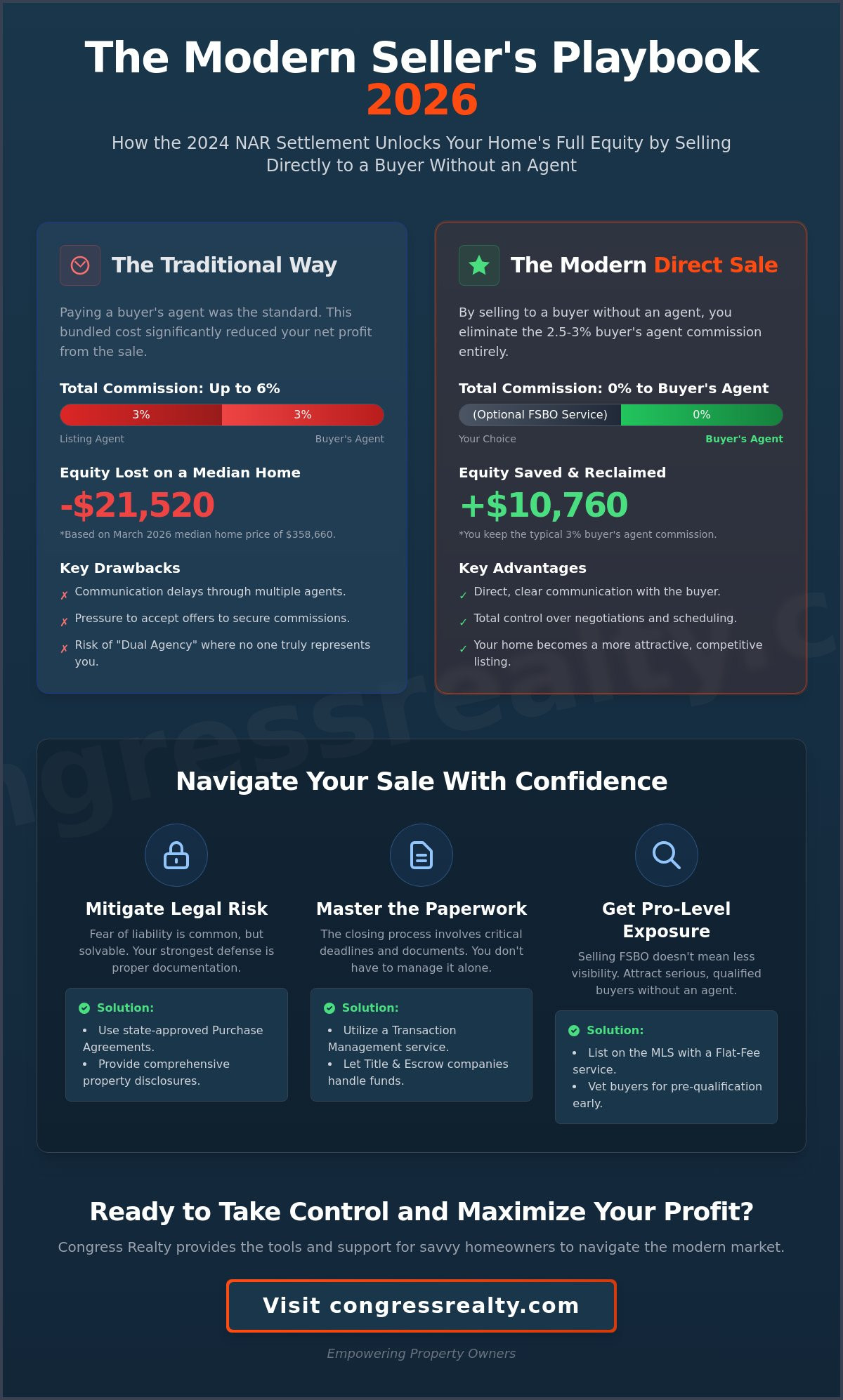
Why would you hand over more than $10,000 of your equity to a buyer’s agent when the 2024 NAR settlement already uncoupled commissions for you? With the median home sale price sitting at $358,660 as of March 2026, every percentage point you keep is a victory for your bottom line. You likely agree that traditional commission models are outdated, yet the fear of legal liability or confusing paperwork might feel like a barrier. It’s a valid concern. Handling the current market requires a clear understanding of mandatory buyer-agent agreements and the latest FinCEN reporting rules for entity-based cash purchases.
This guide shows you exactly how selling to a buyer without an agent can be your most profitable move this year. You’ll learn how to manage a no-agent transaction to save thousands in commissions while protecting your legal interests at every step. We will walk through the modern paperwork process, explain how to secure professional-level listing exposure, and demonstrate how utilizing tools like transaction management ensures you remain the expert facilitator of your own successful sale.
Key Takeaways
- Master the post-NAR settlement landscape and understand why unrepresented buyers are becoming the new standard for savvy sellers.
- Learn a professional vetting protocol for selling to a buyer without an agent to protect your time and identify serious, qualified leads.
- Identify the primary legal risks involved in no-agent transactions and how to use proper disclosures to shield your equity.
- Navigate the critical steps of the closing process, including how to handle purchase offers and inspection contingencies with confidence.
- Discover how to leverage professional tools like Transaction Management and Flat Fee MLS listings to secure high-end exposure without the 3% commission.
What Does It Mean to Sell to a Buyer Without an Agent in 2026?
Why would you pay for a service the buyer isn’t even using? An unrepresented buyer is simply a purchaser who chooses to manage their side of the transaction without hiring a licensed real estate agent. While this was once a rarity, it’s now a strategic choice for many savvy homeowners. By selling to a buyer without an agent, you eliminate the traditional requirement to pay a 2.5% to 3% commission to a buyer’s representative. When you combine this with your own choice to skip a traditional listing agent by using For Sale By Owner (FSBO) strategies, you can keep up to 6% of your home’s equity in your own pocket.
How does this impact your bottom line? This shift is largely due to the 2024 NAR settlement, which decoupled buyer agent fees from the listing process. Previously, commissions were often bundled into a single, invisible cost paid by the seller. Today, transparency is the standard. It’s vital to distinguish this from the “dual agency” trap. In dual agency, one agent attempts to represent both parties, often collecting a full commission while providing limited advocacy for either side. In a truly unrepresented transaction, you maintain total control. The buyer represents their own interests, and you represent yours; this ensures no one is skimming your hard-earned equity for facilitation fees.
The 2026 Real Estate Landscape
The market has moved toward radical transparency. As of May 2026, mandatory buyer-agent agreements are the norm. Buyers must sign these documents before they even tour a home, and the paperwork clearly outlines the fees they owe their agent. Because buyers are now seeing these costs upfront, many choose to go solo to make their offers more competitive. They know that by being unrepresented, their offer is more attractive to you. You aren’t just looking at the purchase price; you’re looking at the net gain. A buyer without an agent allows you to accept a competitive offer without losing a massive chunk of the proceeds to a middleman.
Why Sellers Are Choosing the No-Agent Route
The math is simple and compelling. With the median home sale price reaching $358,660 in March 2026, a 6% commission totals over $21,500. For most homeowners, that’s a year’s worth of mortgage payments or a significant down payment on their next property. Choosing the no-agent route isn’t just about the money, though. It’s about autonomy. You speak directly to the buyer. You set the showing schedule. You avoid the “telephone game” delays that happen when multiple people have to coordinate a single inspection time. Selling to a buyer without an agent puts you in the driver’s seat of your financial future.
Is It Safe to Sell to a Buyer Without an Agent? Risks vs. Rewards
Is it risky to manage a sale without a traditional agent? For many, the fear of legal pitfalls is the only thing standing between them and a massive equity gain. Traditional brokerages often suggest that agents are your only shield against lawsuits, but this is a common industry misconception. While professional oversight is essential, that protection doesn’t have to cost you 3% of your home’s value. By utilizing a structured process and professional documentation, selling to a buyer without an agent is not only safe; it’s often more transparent than a traditional transaction.
The primary reward of this approach is total control. You decide which offers to entertain, you set the closing timeline, and you negotiate the final sales price without a middleman pressuring you to “just close the deal” to secure their own commission. You’ll need to bridge the “professional gap” by staying pragmatic during negotiations, but removing the emotional layers of a third-party representative often leads to a cleaner, faster agreement.
Managing Legal and Financial Liability
Your strongest defense in any real estate transaction is the Real Estate Purchase Agreement. This legally binding document outlines every contingency, deadline, and financial obligation. If you are selling a house as is, you must use specific disclosure forms to document the property’s condition accurately. This transparency protects you from post-sale claims of “hidden defects.”
Professional oversight remains a priority, but you can achieve it through targeted services rather than a full-commission agent. Title companies and escrow officers handle the heavy lifting of fund transfers and deed recording. According to the National Association of REALTORS® in their guide on Working With FSBOs, sellers who provide clear, written disclosures and follow state-mandated guidelines significantly reduce their liability. You don’t need a 3% agent to stay out of court; you need a professional-grade contract and a commitment to honesty.
The Efficiency Factor
Speed is a major advantage in the 2026 market. With a median of just 21 days until a home goes pending, you can’t afford to wait 48 hours for an agent to return a phone call. Direct communication with an unrepresented buyer eliminates the “telephone game” that often stalls repair negotiations. You hear their concerns firsthand and can offer immediate resolutions. This clarity prevents small misunderstandings from becoming deal-breakers. To ensure the process stays on track, you can utilize transaction management services to handle the clerical milestones without the high cost of a traditional brokerage. This ensures the buyer is meeting their deadlines and providing proof of funds, keeping your sale moving toward a successful, high-equity closing.
How to Vet and Manage an Unrepresented Buyer
Don’t let window shoppers waste your weekend. When you’re selling to a buyer without an agent, you are the gatekeeper of your own time and equity. This requires a strict vetting protocol to ensure every person walking through your front door is financially capable of crossing the finish line. Start by establishing a clear boundary during the initial inquiry. Ask for their documentation before you ever schedule a tour. This isn’t just about convenience; it’s a professional move that signals you are a savvy seller who values efficiency and security.
You must also maintain a firm stance on your role in the transaction. It’s easy to fall into a helpful facilitator role, but you are not the buyer’s agent. Never offer legal advice or attempt to interpret contract clauses for them. If they have questions about their rights or obligations, direct them to their own legal counsel or a title professional. Keeping the relationship strictly transactional protects your negotiating position and prevents any claims of “implied agency” later on. Your goal is a clean, arm’s length sale where both parties are responsible for their own due diligence.
The Pre-Approval Checklist
Demand a formal pre-approval letter, not a simple pre-qualification. In the 2026 market, a pre-approval means a lender has already verified the buyer’s income and credit. Check the expiration date and call the loan officer to confirm the letter is authentic. If you are dealing with a cash buyer, remember the March 2026 FinCEN rules. You must verify the availability of liquid assets through a recent bank statement. If the buyer is a legal entity or trust, they will face increased identity verification requirements at the title office, so flag this early to avoid closing delays.
Showing the Property Safely
Safety and security are paramount when hosting unrepresented strangers. Set firm boundaries for tours and never show your home alone if you can avoid it. Many sellers now utilize electronic lockboxes to manage access. These tools provide a digital paper trail of exactly who entered the property and when, offering a level of security that manual keys cannot match. Limit inspections and walkthroughs to specific windows of time, ensuring you remain in control of the property until the final deed is recorded and funds are disbursed.
Steps to Safely Closing a Sale with an Unrepresented Buyer
Closing the deal doesn’t have to be a mystery. Once you’ve successfully vetted your lead, the real work begins. When selling to a buyer without an agent, you must ensure the Purchase Offer is airtight. This document is the blueprint for your entire closing process. Review every line carefully, focusing on contingencies that could allow a buyer to walk away with their deposit. Professional review at this stage is a smart investment that costs a fraction of a traditional commission. It ensures your interests are protected without sacrificing your equity.
The inspection phase is often where deals stumble. Without an agent to filter the buyer’s emotions, you might receive a laundry list of minor repair requests. Stay pragmatic. Focus on structural, safety, or mechanical issues. Because you aren’t paying a buyer’s agent commission, you have more room to negotiate. Don’t let a buyer use the lack of agents as leverage to demand unnecessary upgrades. Clear, direct communication keeps the 21-day median timeline on track and prevents small misunderstandings from becoming deal-breakers.
The Contract Phase
Use a standard, state-approved contract to avoid legal ambiguity. Every no-agent agreement should mandate a significant earnest money deposit. This ensures the buyer has skin in the game and won’t flake as the closing date nears. Set firm, non-negotiable deadlines for financing and appraisal contingencies. If the buyer misses a milestone, you need the right to terminate and move to the next offer. This level of control is exactly what makes independent selling so rewarding and financially secure.
The Disclosure Requirements
Transparency is your best defense against future litigation. You must provide federal Lead-Based Paint disclosures for homes built before 1978, along with all state-mandated property condition forms. Use a sell your home checklist to stay organized. This ensures no form is forgotten in the shuffle of a solo transaction. Full transparency regarding the home’s history is the only way to avoid post-sale lawsuits.
Coordinate closely with your title company or escrow officer. They act as the neutral third party, holding funds and ensuring the deed transfer is recorded correctly. As of March 2026, they also handle the new FinCEN reporting for cash purchases made by legal entities. Review your final Closing Disclosure (CD) at least three days before settlement to verify that every credit and debit matches your expectations. Ready to take command of your closing? Explore our Transaction Management services to ensure your paperwork is professional, compliant, and ready for a successful sale.
The Congress Realty Advantage: Professional Support for Solo Sellers
You’ve mastered the 2026 market landscape and developed a protocol for vetting leads. Now, you need the professional infrastructure to bring the deal home. Congress Realty serves as your expert facilitator, providing the tools of a high-commission brokerage without the percentage-based drain on your equity. When selling to a buyer without an agent, you don’t have to sacrifice exposure or security. Our Flat Fee MLS listings place your property on the same professional industry databases used by every traditional agent in the country. This ensures your home is visible to the widest possible audience, driving the competition you need to secure a top-market price.
We replace the traditional agent’s clerical role with precision-focused Transaction Management. This service is the engine of your sale. It manages the flow of documentation, tracks critical contract deadlines, and ensures every state-mandated disclosure is executed correctly. Many sellers worry about the “paperwork gap” when they skip the 3% commission, but our structured workflow demystifies the process. You remain in command of the transaction while we provide the professional backbone to keep it compliant and moving toward a successful closing.
Professional Infrastructure, Not Commissions
Learning how to sell your house on your own is simpler when you have a tiered support model. You can choose the level of involvement that fits your comfort zone, from a Standard Listing to a Full Service approach. Every tier benefits from the oversight of a designated broker who ensures your listing meets all regulatory standards. We also provide a Comparative Market Analysis (CMA) to help you price your home with confidence. Since home price growth was a modest 1.2% year-over-year in March 2026, accurate pricing is the difference between a quick 21-day sale and a stagnant listing.
Your Equity, Your Choice
A fixed-cost fee structure provides a level of predictability that percentage-based commissions simply can’t match. You know exactly what your costs are from day one. This transparency allows you to calculate your net gain with total accuracy. You have the absolute freedom to accept, counter, or reject offers from unrepresented buyers on your own terms. Visuals remain your best calling card; our professional photography and high-visibility yard signs ensure your home makes a powerful first impression.
Stop letting traditional commission models dictate your financial future. You have the intelligence to manage this process and the autonomy to keep your equity. Lead your sale with the confidence of a professional. Explore our listing options today and take the first step toward a high-equity, agent-free closing.
Secure Your Equity and Lead Your Sale
You now have the framework to navigate the post-NAR settlement landscape with absolute confidence. Selling to a buyer without an agent isn’t just a cost-saving measure; it’s a strategic move that puts you in the driver’s seat of your financial future. By utilizing a professional vetting protocol and a structured disclosure process, you can safely bypass traditional commission models while ensuring your legal interests remain protected. You’ve learned that the right infrastructure makes all the difference in maintaining control over your timeline and your bottom line.
Since 2002, Congress Realty has functioned as a reliable ally for savvy homeowners. With Andrew English serving as your designated broker across multiple states, you receive the same industry database exposure as traditional listings without the high-cost overhead. If you choose our Full Service Listing, we include professional Transaction Management to replace the agent’s clerical duties, keeping your closing on track and compliant. Don’t let outdated industry standards erode your hard-earned home value. Save your equity and list your home on the MLS for a flat fee today. You have the tools and the intelligence to manage this process successfully. Take command of your equity and start your next chapter with thousands more in your pocket.
Frequently Asked Questions
Do I have to pay the buyer agent commission if the buyer doesn’t have an agent?
No, you are not required to pay a commission to a non-existent representative. Since the 2024 NAR settlement, sellers have the autonomy to negotiate or entirely omit buyer agent compensation from their listings. When selling to a buyer without an agent, that 2.5% to 3% fee stays in your pocket as pure equity. This transparency is the new standard in 2026, allowing you to prioritize your financial gain over outdated industry bundles.
Who writes the contract when selling to a buyer without an agent?
Typically, the buyer submits their offer using a standard, state-approved Real Estate Purchase Agreement. If they don’t have a form, you can provide one or use professional transaction management services to ensure the documentation is compliant. While you aren’t paying a 3% commission, having a professional-grade contract is essential for defining deadlines and contingencies. This ensures both parties understand their obligations without needing a middleman to coordinate the terms.
Is it legal to sell my house to an unrepresented buyer?
It is absolutely legal to sell your property to an unrepresented buyer in every state. Homeowners have the fundamental right to sell their property to any qualified purchaser. The key is ensuring you follow all state-mandated disclosure laws and title requirements. By managing the sale independently, you take full command of the process. This legal path is often more straightforward because it eliminates the conflicting interests that sometimes arise in traditional brokerage models.
What happens if an unrepresented buyer asks me for legal advice?
You must clarify that you are not their representative and cannot provide legal or financial guidance. If an unrepresented buyer asks for advice, direct them to their own attorney or a title professional. Providing advice could create a “dual agency” risk or lead to claims of implied representation. Protecting your interests means staying pragmatic and maintaining a clear, arm’s-length relationship throughout the negotiation and closing phases of the transaction.
How do I know if an unrepresented buyer is actually qualified to buy my home?
Always demand a formal pre-approval letter or a recent bank statement for cash purchases. A pre-approval means a lender has already verified their income and credit history. Don’t rely on a simple pre-qualification, which is often unverified. Call the buyer’s loan officer to confirm the document’s authenticity and expiration date. This vetting step ensures you only spend time on serious leads who have the liquid assets or financing to close the deal.
Do I need a real estate attorney if there are no agents involved in the sale?
While not legally required in every state, hiring an attorney for a flat fee is a smart way to secure professional review. An attorney can review the Purchase Agreement and disclosures to ensure your liability is minimized. This is a pragmatic alternative to the traditional commission model. You get the same legal peace of mind for a predictable cost, keeping your hard-earned equity exactly where it belongs: in your bank account.
Can I still list my house on the MLS if I want to sell to an unrepresented buyer?
Yes, you can and should list on the MLS to gain maximum exposure. Using a Flat Fee MLS service allows you to reach the same professional databases as a traditional agent. In 2026, you can specify that you are selling to a buyer without an agent or that buyer agent compensation is not being offered. This attracts solo buyers who are looking for a competitive edge and allows you to keep more of your home’s value.
What are the most common mistakes when selling to a buyer without an agent?
The most frequent errors include failing to provide complete property disclosures and missing contract milestones. If you don’t disclose a known defect, you open yourself up to future litigation. Additionally, failing to hold the buyer to strict financing deadlines can stall your sale. Using a professional checklist and transaction management services helps you avoid these pitfalls, ensuring your solo transaction is as smooth and secure as a traditional one.