Congress Realty provides flat-fee MLS listings in Arizona, Alaska, California, Idaho, Louisiana, Montana, Nevada, New Mexico, Oregon, Texas, Utah, and Washington. What is a backup offer? It is a signed offer that puts a buyer next in line if the seller’s primary contract ends. For buyers, the key point is the commitment: once both parties sign, the contract terms govern what happens next.
A backup position can give you another chance at a home you want, but it can also limit your flexibility while the primary buyer remains first in line. Phoenix sellers, meanwhile, want a credible offer they can move forward with if the first deal ends. A higher price may help, but clear terms, sensible contingencies, and flexibility can also make your offer more attractive.
This guide explains how backup offers work in Phoenix, what to weigh before you make one, and how to shape an offer that gives the seller practical reasons to choose it. You’ll learn how to balance a competitive offer with protections that fit your needs, so you can pursue a Phoenix home without overlooking the commitment.
Key Takeaways
- Know how signing a backup contract can affect your earnest money and your ability to pursue other homes.
- Understand what may happen if the primary buyer backs out, and how the signed agreement shapes your next steps.
- Use contingencies to balance a competitive offer with protections that matter to you.
- Make your terms easier for a seller to consider by focusing on price, flexibility, and items you truly need.
- See how Multiple Listing Services, yard signs, and virtual tours can support a seller’s marketing efforts.
What is a backup contract?
A backup contract is a signed agreement that puts a buyer next in line for a home already under contract. The seller keeps the primary buyer first while the backup buyer waits in a defined position. For example, if Buyer A has the primary contract and Buyer B signs a backup contract, Buyer B may proceed if Buyer A’s purchase ends. Understanding what a backup offer is means recognizing that acceptance can create a real commitment, not just a place on an informal list.
How does a backup offer compare with an offer on another home? A backup offer targets a specific property, but the primary buyer remains ahead of you. An offer on another home starts a separate purchase opportunity, so compare each contract’s obligations before signing.
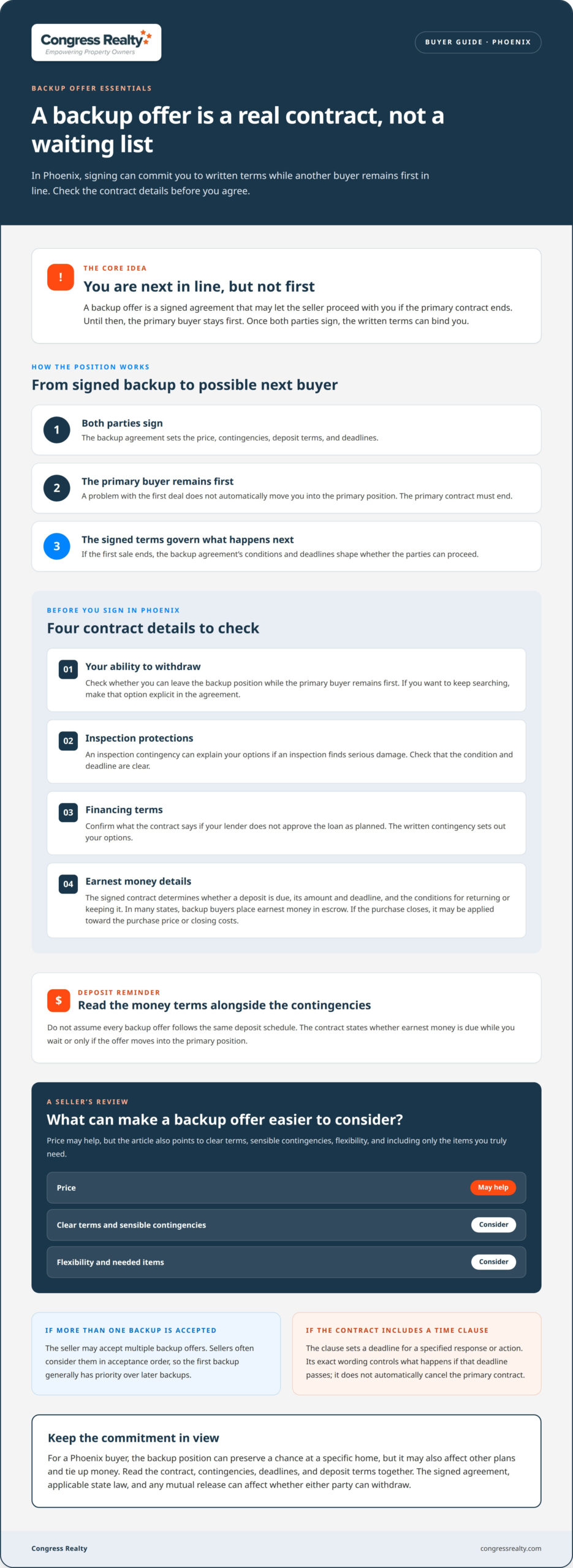
Once both parties sign, a backup agreement can become legally binding. Its terms, applicable state law, and any mutual release can affect whether either party can withdraw. Read the contingencies before committing. An inspection contingency can set out your options if an inspection reveals major damage. A financing contingency can address what happens if your loan does not come through as planned. Each clause should clearly state the relevant condition and deadline.
Whether you can continue your home search depends on the contract language. An accepted backup offer may limit your ability to pursue other listings, especially if it lacks a contingency allowing you to leave the backup position. If you want to keep looking, make that flexibility explicit in the agreement. For instance, a buyer might retain the option to withdraw if they find another home before the backup offer moves into first position. The signed terms control, so don’t assume you can walk away freely.
- Before signing: Identify whether the contract lets you withdraw while another buyer remains first.
- For inspection: Keep a contingency that addresses serious problems found during the inspection.
- For financing: Include terms that explain your options if the lender does not approve the loan.
- For another home: Decide whether you can pursue a different property without breaching the backup agreement.
Earnest money also matters. In many states, backup buyers deposit earnest money into escrow to hold their place in line. The amount, deadline, and conditions for returning or keeping the deposit depend on the signed contract. If the purchase closes, the parties apply the earnest money held in escrow toward the purchase price or closing costs. Review the deposit terms alongside inspection and financing contingencies, not as a separate detail.
A backup position can preserve your chance at one home while you weigh other options, but it can also tie up money and attention. Compare the property’s appeal with the limits in the agreement. If you want to continue searching, protect that choice in writing before the seller accepts your backup offer.
What is a backup offer in real estate?
A backup offer becomes the next offer in line if the primary buyer’s contract ends. The seller and backup buyer must sign a backup contract; without one, neither party has agreed to proceed. Once both parties execute the agreement, its terms can bind them. The primary buyer remains first until that contract ends and the backup agreement moves forward.
Can a seller accept multiple backup offers, and how does the seller rank them? A seller may accept multiple backup offers, particularly for a popular home. Sellers often consider them in the order they accept them, so the first backup buyer generally has priority over later backup buyers.
Do backup offers affect earnest money or deposit requirements? They can. The signed agreement sets whether a backup buyer must deposit earnest money while waiting or only if the offer moves into the primary position. Review the deposit timing and conditions in the contract. Those written terms, rather than assumptions about how every transaction works, determine what the buyer must provide.
If the primary contract falls through, the reason may involve financing, inspection findings, or another contingency. For example, a buyer might not secure financing or might find serious damage during an inspection. The backup buyer doesn’t automatically take over just because the first deal faces a problem. The primary contract must end, and the backup contract’s conditions must allow the seller and backup buyer to proceed.
When the original sale ends, the seller can move to the accepted backup offer according to its terms. The backup buyer then faces the obligations and deadlines in that agreement. They may not get a new chance to renegotiate simply because the first transaction failed. That’s why the original backup contract matters: its price, contingencies, deposit terms, and deadlines shape the next steps.
A time clause, when the parties include one, sets a deadline for a specified response or action. Its wording determines what happens if the deadline passes. In some contract arrangements, presenting a backup offer can prompt a primary buyer to satisfy or remove conditions within a stated window. If the buyer doesn’t meet the clause’s requirements, the seller may be able to proceed under the agreement. The clause doesn’t automatically cancel the primary contract; its exact terms control.
For a Phoenix seller, a signed backup offer can reduce the need to restart marketing if the primary sale ends. For the backup buyer, it offers a path to the property, but the contract can limit other plans. Sellers reviewing home-selling options should keep each accepted offer’s order and written terms clear. Those details determine which buyer may proceed when the primary transaction ends.
Definition and purpose of a backup offer
A real estate backup offer is a buyer’s written offer on a home that already has a primary contract. It asks the seller to accept the buyer as next in line if the first purchase ends. Before the seller accepts, it remains an offer, not a signed backup contract. Once both parties sign, the agreement sets the buyer’s position and the conditions for moving forward.
The purpose is to keep a purchase opportunity open without replacing the primary buyer. For example, a seller may accept a backup offer while Buyer A completes financing and Buyer B waits in the agreed position. If Buyer A’s contract ends, Buyer B may be able to proceed under the signed terms. Until then, the primary contract remains ahead.
This distinction matters because an accepted backup offer can create obligations during the waiting period. A buyer should read the agreement for its deposit terms, deadlines, contingencies, and any right to withdraw. For instance, a clause may allow the backup buyer to leave if they find another property before their offer moves into first position. Without that protection, the buyer may have less freedom to pursue a different purchase.
A backup offer also gives the seller a prepared alternative. If the primary transaction ends, the seller can turn to an already signed agreement instead of starting with a new offer. That can make the next steps more predictable, but it doesn’t remove the need to follow the contract. The backup buyer must still meet the agreed terms, including any applicable financing or inspection conditions.
Think of the process as two linked positions, not two equal chances to buy. The primary buyer has the first opportunity under the original contract. The backup buyer has a separate agreement that may take effect if the first sale ends. For example, a seller can accept a backup offer with a different price or contingency package, but those terms apply only if the backup agreement moves forward.
- Offer: The buyer proposes terms while another purchase contract remains active.
- Acceptance: The seller agrees in writing to the backup position.
- Contract: Both parties sign, and the agreement’s terms govern the contract.
- Transition: If the primary sale ends, the backup agreement may become the active purchase contract.
For buyers, the central decision is whether this particular home justifies a position that may limit other plans. For sellers, the value lies in having another willing buyer ready under defined terms. In either case, the signed agreement, not an informal promise, determines what happens next.
Tips for making a competitive backup offer
A competitive backup offer gives the seller a clear alternative if the primary sale ends. Start with the price, then review every condition, deadline, and requested item. In a buyer’s market, a buyer may be able to offer at or slightly below the list price. In a seller’s market, a buyer may need to offer more than asking to stand out. The right approach depends on the property and market, not a fixed formula.
Make the terms easy to understand. State the proposed purchase price and keep requests focused on needs that affect your decision. For example, don’t ask the seller to cover closing costs or include items you don’t need. Extra requests can make an offer less attractive beside another buyer’s cleaner terms. A concise, complete offer helps the seller see what you’re willing to do if the primary contract falls through.
Review contingencies carefully before deciding where you can offer flexibility. A buyer might keep an inspection contingency while tightening other terms that matter less to their purchase. Don’t remove a protection without understanding the risk it addresses. Once both parties sign, the backup agreement can become legally binding. Its conditions and deadlines may control what happens if the buyer moves into first position, so make each term deliberate.
Competition can also affect what happens after the primary deal ends. Sellers may have accepted other backup offers, and an offer’s position can depend on the order of acceptance. Make your terms attractive from the outset rather than assuming you can improve them later. If the purchase price or a contingency would stop you from proceeding, address it before signing.
- Set a price you can support. Consider the market and the home’s asking price before submitting terms.
- Keep requests necessary. Remove closing-cost requests or other items you don’t need.
- Choose contingencies intentionally. Balance flexibility with protections tied to inspection or financing.
- Read the signed terms. Confirm that the price, deadlines, and conditions match your decision.
For example, a buyer interested in a popular home could propose a clear price, retain an inspection condition, and avoid asking for unnecessary seller concessions. That package may be easier for the seller to assess than an offer with several extra requests. It still needs to fit the buyer’s budget and comfort with the contract. A higher price alone doesn’t resolve unclear terms or make an unsuitable commitment sensible.
Before submitting, compare the complete offer with your priorities: purchase price, financing, inspection, deposit terms, and ability to proceed if the primary buyer exits. A seller values a buyer who appears willing and prepared, but the agreement must also work for the buyer. Strong terms clearly state specific, realistic conditions that you understand before signing.
Making a backup offer attractive to a seller
A seller weighing backup offers wants terms that support a smooth next step if the primary sale falls through. Price matters, but so do clear conditions, workable deposit terms, and a buyer who can meet the agreement. Make the offer easy to assess: state the purchase price, financing terms, contingencies, and proposed timeline without adding requests that don’t serve your needs.
Match your price to the market and property. In a buyer’s market, a buyer may be able to offer at or slightly below list price. In a seller’s market, a buyer may need to offer more than asking to stand out. For example, a buyer competing for a popular property can pair a considered price with straightforward terms instead of relying on price alone.
Keep the offer focused. Avoid asking for closing costs or other items you don’t need. A seller comparing offers can see the difference between a clean proposal and one with several extra requests. Remove unnecessary concessions, but keep any contingency that protects an important buying need. Flexibility should strengthen the offer, not leave you unable to proceed.
Show that the deposit terms are practical and understood. Earnest money requirements depend on the contract and the process. In the Phoenix process described in the research, a backup buyer doesn’t provide a deposit unless the offer moves into the primary position. Other agreements may require a deposit earlier. State the terms clearly so the seller can assess what happens if the backup offer advances.
- Present a clear price: Relate your offer to the property and the market, rather than choosing a figure without context.
- Limit extra requests: Leave out seller-paid costs or items you don’t need.
- Make conditions readable: State financing and inspection terms plainly, with deadlines that fit your plan.
- Understand the deposit: Specify when you must pay it and what the contract says about it.
- Be ready to proceed: Build an offer around terms you can meet if the seller calls on you.
A seller may accept multiple backup offers, often in the order accepted. That makes a complete offer important: a later buyer shouldn’t assume they can replace or renegotiate earlier terms when the primary contract ends. For example, if you need financing approval or an inspection period, include those conditions before signing. A signed backup agreement can become binding, so offer flexibility only where you can follow through.
To prepare for a sale and understand the listing process, review these home-selling options. A strong backup offer gives the seller a credible path forward while keeping your price, conditions, and deposit terms clear. Focus on the agreement you can honor, not terms that merely look attractive on paper.
Congress Realty
Congress Realty supports home sellers with Multiple Listing Services, which provide the same exposure as listings for which agents charge a full commission. The National Association of REALTORS® reports that MLS listings average a 7% higher net sales price. This is an average, not a promise for an individual sale.
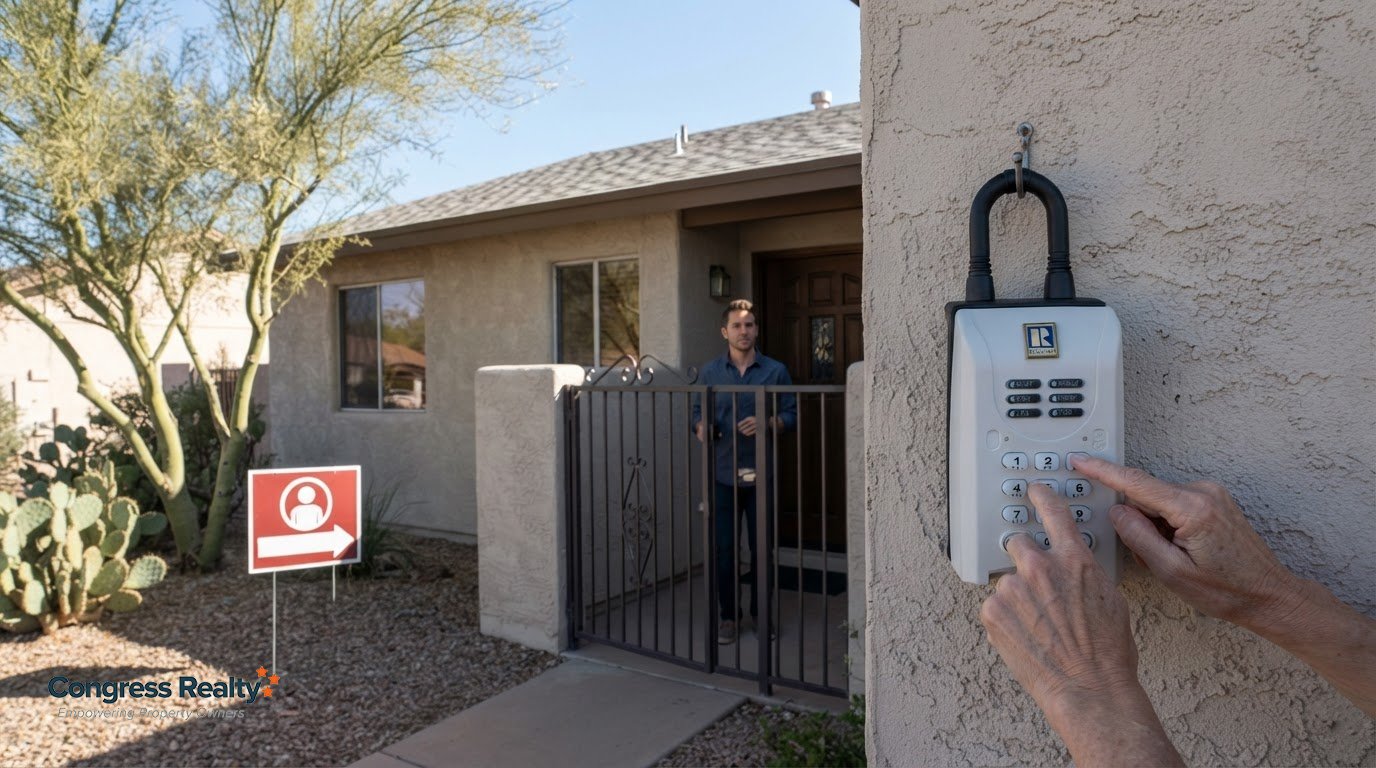
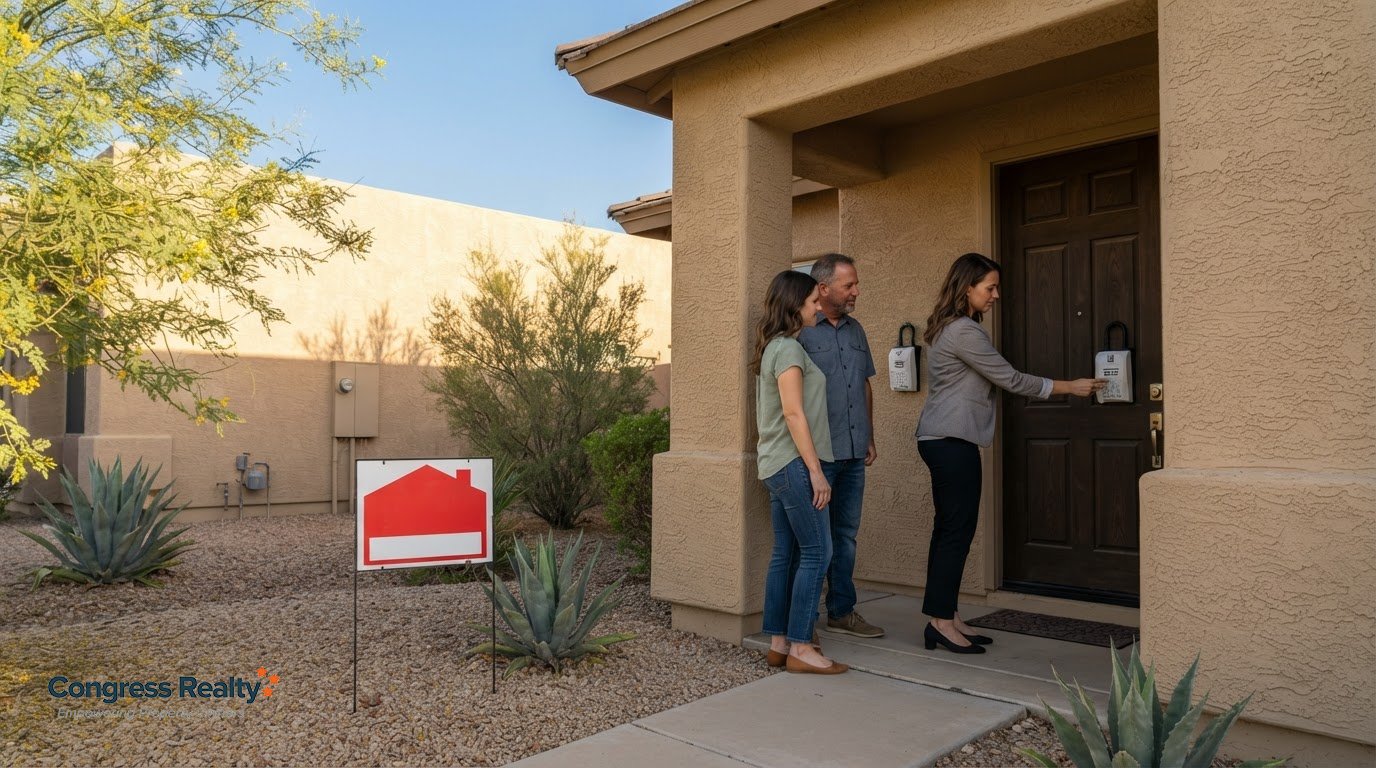
For sellers preparing a Phoenix property, Yard Signs and eLockbox can support marketing and access. These tools help with the listing process while sellers retain control of offer decisions and contract terms.
For support with your listing, contact Congress Realty.
Set your next move with confidence
Before making an offer, decide what you can commit to if the home becomes available. Set your price limit, identify the contingencies you need, and consider whether the agreement leaves room to pursue other properties. Knowing what a backup offer is matters most when you use that understanding to choose terms you can live with, even if the primary sale takes time to resolve.
Sellers can take a similar practical approach. Think about how you’ll evaluate a backup offer alongside your current agreement and what terms would make a transition straightforward if the first transaction ends. A clear plan helps you respond deliberately instead of making a rushed decision when circumstances change.
If you’re preparing to sell and want support with your listing, explore your home-selling options. Take the next step with a clear plan and stay in control of your decisions.
Frequently Asked Questions
How do buyers make a backup offer on a house?
Buyers submit a written offer that clearly identifies the home and the terms they propose if the primary sale ends. Include the purchase price, financing and inspection contingencies, deposit terms, and any conditions for withdrawing while waiting. The seller must accept the offer, and both parties must sign a backup contract to establish the buyer’s position. Review every deadline before signing, since the agreement sets the next steps.
Why do sellers accept backup offers?
Sellers may accept a backup offer to have another buyer ready if the primary transaction ends. That gives them a defined next option instead of restarting the offer process. For example, a seller who receives a signed backup agreement can review its price and conditions before the first sale closes. The backup buyer’s terms still matter, and the seller must follow the signed agreement if the offer moves forward.
How does a backup offer work when a home is under contract?
The primary buyer remains first while the seller considers a separate backup offer. If both parties sign the backup agreement, it establishes a conditional next position rather than replacing the active purchase contract. For example, a seller may keep showing the home under the primary agreement while retaining a signed alternative. The backup buyer should understand the agreement’s withdrawal terms and conditions before committing to wait.
What happens to a backup offer if the primary buyer’s deal falls through?
If the primary contract ends, the seller can proceed with the backup buyer under the signed backup agreement. The parties must follow its terms, including any financing, inspection, deposit, and deadline provisions. The change in position does not automatically create a new negotiation period. For example, if the backup buyer’s contract sets an inspection condition, that condition applies as written when the buyer proceeds.
How do buyers submit and negotiate a backup offer?
Buyers submit complete proposed terms for the seller to consider, including price, contingencies, deposit conditions, and deadlines. They can negotiate by proposing changes before signing. Once both parties sign the backup contract, buyers shouldn’t assume they can renegotiate if the primary transaction ends. For example, settle any price limit or inspection protection in the written offer rather than relying on a later discussion.
Is a backup offer legally binding, and when can a buyer withdraw it?
A backup offer can become legally binding once both parties sign the agreement. Whether a buyer can withdraw depends on the contract’s contingencies, applicable state law, and whether the parties mutually release each other. For example, an agreement may include a condition that permits the buyer to leave the backup position in stated circumstances. Read the withdrawal language before signing, because an accepted offer alone doesn’t explain every obligation.
What contingencies and deadlines should a backup offer include?
Consider contingencies that address financing and inspection, then state the conditions and deadlines clearly in the contract. A financing contingency can address what happens if the buyer doesn’t secure a loan. An inspection contingency can provide an option if an inspection reveals major damage. The agreement should also explain deposit timing and any deadline affecting the buyer’s backup position, so all parties understand what must happen next.
What are the risks and benefits of making a backup offer?
A backup offer gives buyers a chance at a specific home if the primary sale ends, while giving sellers a ready alternative. The tradeoff is commitment: a signed contract may tie up earnest money and limit the buyer’s flexibility to pursue other properties. For example, a buyer who finds another suitable home may still face the backup agreement’s terms. Weigh the property’s appeal against the contract’s obligations before signing.