Congress Realty provides flat-fee MLS listings in Phoenix for homeowners who want to manage their own sale. When is selling FSBO in Phoenix a good idea? It may suit an experienced seller who can price, market, and negotiate confidently and has time to coordinate showings, paperwork, and closing details.
Avoiding a traditional listing commission can be appealing, and it’s reasonable to want more control over the process. But the decision involves more than commission costs. Weigh the time involved, other sale expenses, and the possibility that the home sells for less than expected.
This article explains the work FSBO sellers take on, the closing costs that may arise, and why experience can help with the demands. You’ll get a practical way to assess whether the trade-off fits your situation in Phoenix.
Key Takeaways
- Build a closing-cost picture that includes more than commission, and understand which expenses may depend on the transaction.
- For homes built before 1978, a federal lead-based-paint disclosure applies, according to the U.S. Environmental Protection Agency.
- Weigh potential commission savings against the time and responsibility involved in pricing, marketing, negotiations, and paperwork.
- Plan how buyers will find the home and how you’ll manage inquiries, showings, and offers.
- FSBO may fit an experienced seller prepared to take an active role; listing tools can help with visibility and property access.
Who pays closing costs when selling a house by owner?
In a U.S. FSBO sale, the buyer and seller may share closing costs. The purchase agreement records which party pays each expense, so review those terms before accepting an offer. Sellers often cover title insurance and transfer taxes, while buyers typically handle inspection and loan fees. The exact division varies by transaction, and negotiated terms affect the seller’s proceeds.
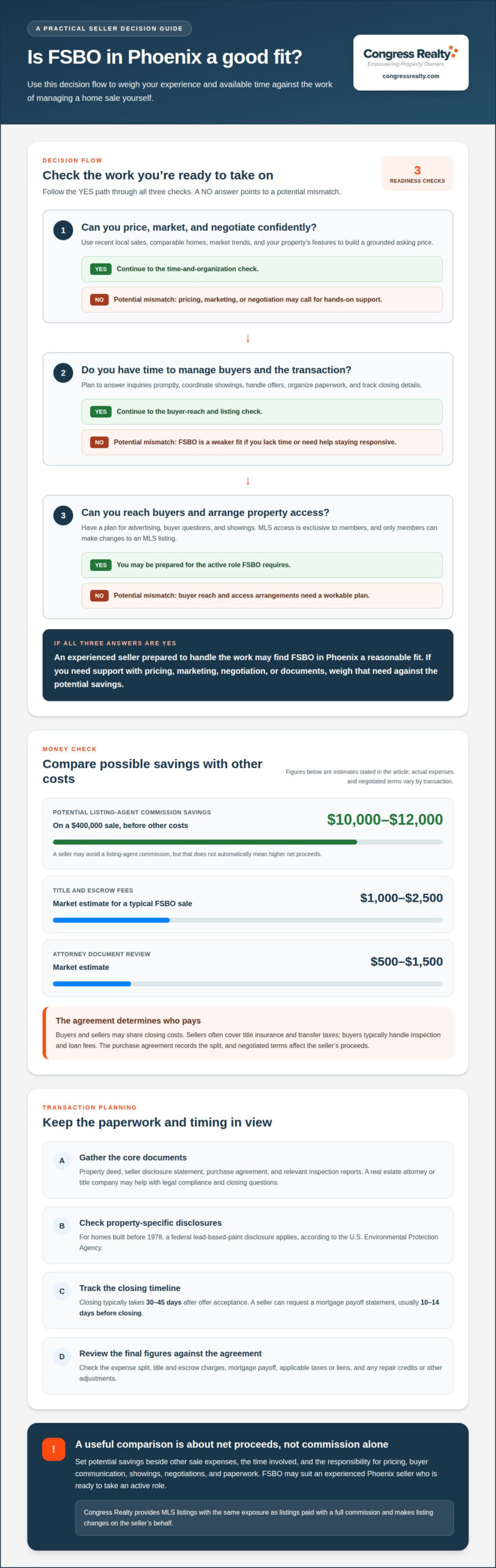
Budget for expenses beyond those assigned to one party. Market estimates place title and escrow fees for a typical FSBO sale at $1,000 to $2,500. Depending on the transaction, sellers may also face title insurance, transfer taxes, escrow services, pre-listing inspections, repairs, attorney fees, document preparation, property taxes, or liens. List each known expense beside its expected payer to see the likely effect on your net proceeds.
Professional help adds another line to the closing budget. Market estimates put a real-estate attorney’s review of FSBO documents at $500 to $1,500. An FSBO seller may hire a title company or real estate attorney to help with closing and legal requirements. These professionals can help organize paperwork and address transaction questions, especially when the purchase agreement, title work, or disclosures need attention.
Prepare the real estate paperwork early. An FSBO seller may need to provide the property deed, seller disclosure statement, purchase agreement, and relevant inspection reports. The seller can draft the purchase contract, but a real estate attorney or title company can help with legal compliance. Keep the signed offer and agreed changes together so the closing file reflects the final terms.
Property age can add a specific disclosure to the paperwork. According to the U.S. Environmental Protection Agency, a federal lead-based-paint disclosure applies to homes built before 1978. Include that disclosure in the transaction documents when the home falls within that age range. Missing or incomplete paperwork can complicate closing, so organize documents around the property, the agreement, and any applicable disclosures.
After the buyer deposits earnest money, escrow holds it and applies it to the purchase price at closing. The closing process typically takes 30 to 45 days after offer acceptance. A seller can request a mortgage payoff statement from their lender, usually 10 to 14 days before closing. That statement helps the seller account for the remaining loan balance when calculating sale proceeds.
Before signing, compare the closing statement with the purchase agreement. Confirm that it reflects the agreed expense split, title and escrow charges, mortgage payoff, and any applicable taxes or liens. If the agreement includes a repair credit or other adjustment, make sure the paperwork includes it. A clear record helps both parties understand the final transaction figures and reduces last-minute confusion.
Is selling your home by yourself a good idea?
Selling FSBO may suit an experienced homeowner who can manage pricing, marketing, showings, negotiations, and paperwork. It’s a weaker fit if you need hands-on help with those tasks or lack time to respond promptly to buyers.
Marketing Without an Agent
Marketing without an agent means handling the listing’s presentation, advertising, buyer inquiries, and showings yourself. That control also means creating a plan to reach buyers. MLS access is exclusive to members, and only members can make changes to an MLS listing. Congress Realty provides MLS listings with the same exposure as listings paid with a full commission and makes listing changes on the seller’s behalf. In Phoenix, prompt replies and clear showing arrangements help keep interested buyers engaged.
Market Research and Home Pricing
Use recent local sales, comparable homes, market trends, and the property’s features to guide your asking price. Start with homes in similar condition and with similar features, then compare their sale prices and listing status. A well-supported price helps buyers understand the home’s value and gives you a grounded starting point for offers. A comparative market analysis can help organize these details. An appraisal offers another valuation approach, but neither replaces your assessment of presentation, competition, and buyer interest.
Selling in a Buyer’s Market
A buyer’s market gives shoppers more options and can make an FSBO listing harder to distinguish. You may need to respond to competing homes with accurate pricing, flexible showing times, and prompt answers about the property. Review new listings and recent sales as conditions shift, then reconsider whether your asking price and presentation still match buyer expectations. Consider professional support if you need help with marketing, negotiation, or pricing; consult a real estate attorney when contract terms or transaction documents need legal review.
FSBO and Agent-Assisted Sale Prices
FSBO homes often sell for less than agent-assisted homes, so avoiding a listing commission does not automatically produce higher net proceeds. Compare the likely sale price with the total costs and responsibilities of each approach, not just the commission line. When is selling a home FSBO a good idea? It can make sense when you already understand the local market, can reach buyers, and can negotiate confidently. Explore options for selling your home if you want listing support while staying involved in the sale.
Potential commission savings and greater seller control
FSBO can reduce listing-agent commission costs, but you also take on the work of managing buyers and the sale. Compare potential savings with the time, marketing responsibilities, and transaction tasks you’ll assume.
Potential Commission Savings
A seller may avoid paying a listing-agent commission by selling without a listing agent. For a $400,000 sale, the potential listing-agent commission savings are about $10,000 to $12,000 before other costs. That figure represents a possible reduction in commission, not guaranteed savings in your final proceeds.
Your savings depend on the sale price, any buyer-agent compensation, and other transaction expenses. Compare estimated net proceeds under each approach rather than treating the avoided commission as money saved in full. A lower sale price or negotiated credit can reduce the difference. Include the purchase price, commissions, and other closing adjustments in the same calculation.
Buyer-Agent Fees
A buyer-agent fee is separate from the listing-agent commission, so avoiding one doesn’t automatically remove the other. Most FSBO sellers still pay a buyer’s-agent commission of 2% to 3%. Offering to cover a buyer’s-agent fee of 2% to 3% remains a popular marketing strategy for U.S. FSBO sellers.
Decide how any proposed buyer-agent compensation affects your net proceeds before responding to an offer. The August 2024 NAR settlement terms decouple listing-agent and buyer-agent commissions. Consider the proposed compensation alongside the price, contingencies, and closing terms. A clear comparison helps you assess the whole offer instead of focusing on one commission line.
Seller Control and Time Commitments
FSBO gives the homeowner direct control over the listing, pricing, buyer communication, and offer decisions. That control requires active management: sellers may spend 5 to 15 hours per week marketing, showing the home, and negotiating during the listing. Across preparation, showings, paperwork, and closing logistics, an FSBO seller may spend 50 to 150 hours on the sale.
What are the risks of selling without a real estate agent? You may spend substantial time coordinating the sale, miss marketing opportunities, or misjudge an offer’s overall value. Without experienced pricing and negotiation support, you also take on more responsibility for weighing competing terms and managing each step toward closing.
FSBO may work for a seller who can handle those tasks and wants to make decisions directly. It may be a poor fit if work or other commitments leave little time for buyer inquiries, showings, and negotiations. Compare the potential commission savings with the hours and responsibilities you’ll take on. That comparison shows whether greater control is worth the extra work.
Advertising and finding qualified buyers
A sale by owner depends on reaching buyers and turning interest into serious offers. Start by deciding whether you already have a likely buyer or need broad exposure. In 2024, 38% of FSBO sellers had a buyer lined up. That can make direct outreach practical, but sellers without an identified buyer need a clear advertising plan and a reliable way to handle inquiries.
For broad exposure, build a listing that answers buyers’ first questions. Include accurate room details, property features, recent improvements, and clear photos. Share consistent information across your advertising channels so buyers don’t encounter conflicting prices or descriptions. A yard sign can help nearby shoppers notice the home, while online posts can reach buyers beyond the neighborhood. Reply to inquiries promptly and specifically.
Choose channels based on the buyers you want to reach. For example, a seller with a family-sized home might highlight the number of bedrooms, storage, and nearby amenities. Avoid vague claims such as “perfect for everyone.” Instead, describe observable features and explain how to arrange a showing. Track inquiries and showing requests, then note which messages lead to serious interest.
An existing buyer changes the advertising task. If a neighbor, relative, or colleague already wants the property, direct discussions may reduce the need for a broad campaign. Still, treat the proposed price and terms as a business transaction. Put the offer in writing, identify the agreed price and important conditions, and keep a record of changes. A known buyer can simplify outreach, but you still need to negotiate clearly.
Buyer representation can affect reach. The research estimates that refusing to compensate a buyer’s agent may narrow an FSBO seller’s buyer pool by 70% to 80%. Consider how your position on buyer-agent compensation could affect who sees the listing and how potential buyers respond. Include any proposed compensation in the offer discussion, then assess it alongside price and other terms.
Qualified interest means more than a message asking whether the home is still available. Ask prospective buyers about their timing, intended purchase process, and readiness to make an offer. Keep your answers consistent and arrange showings with a clear schedule. If several buyers express interest, compare written offers by price, requested conditions, and proposed closing timing before deciding how to negotiate.
A focused FSBO plan combines accurate advertising, organized inquiries, and deliberate offer review. If you already have a buyer, concentrate on clear terms and transaction coordination. If you’re seeking new buyers, you’ll need broader outreach and a consistent process for responding. In either case, track concrete signals: qualified inquiries, completed showings, and offers that match your priorities.
When FSBO may suit an experienced seller
FSBO may suit sellers with substantial real estate experience who can manage the sale and aim to maximize their home’s value. Experience matters because pricing, buyer communication, negotiation, and paperwork all require decisions. Someone who has handled property transactions can draw on that knowledge when buyers ask about repairs, offer conditions, or closing dates. For a first-time seller, those same questions may create a steeper learning curve.
Start with a practical capacity check. Can you keep listing details accurate, respond to inquiries, arrange showings, and review offers while handling your other commitments? For example, a seller with flexible work hours may be able to accommodate a buyer who requests an evening tour. A seller who travels often may struggle to answer questions quickly or coordinate access. Your available time should match the attention the sale requires.
Experience also helps you assess an offer beyond its headline price. Read each offer as a full set of terms, including contingencies, requested repairs, financing details, and the proposed closing timeline. If a buyer asks for a repair credit, consider its effect on your overall proceeds before negotiating. Sellers who can stay objective during difficult conversations may find it easier to protect their priorities without losing sight of the transaction.
Preparation matters when an unexpected issue arises. A buyer may question a feature, request more information, or ask to change a term after inspection. An experienced seller can keep records organized, answer using documented details, and seek professional legal guidance when contract language needs review. If you’re unsure how to manage a document or negotiation, that uncertainty signals a need for support, not a reason to rush.
FSBO makes the most sense when your experience, time, and confidence align with the work. Ask yourself whether you can manage the sale from the first inquiry through closing, not just decide how to market your home. Sellers who understand the local market and can handle buyer conversations may value direct control. If you lack time or feel uncomfortable reviewing offers, support can reduce the tasks you manage alone.
Make the decision by listing your strengths and gaps. Write down which tasks you can confidently handle, such as organizing property details, and where you need help, such as reviewing contract terms. If a listing service fits your approach, explore home-selling options that support your role in the sale.
Congress Realty
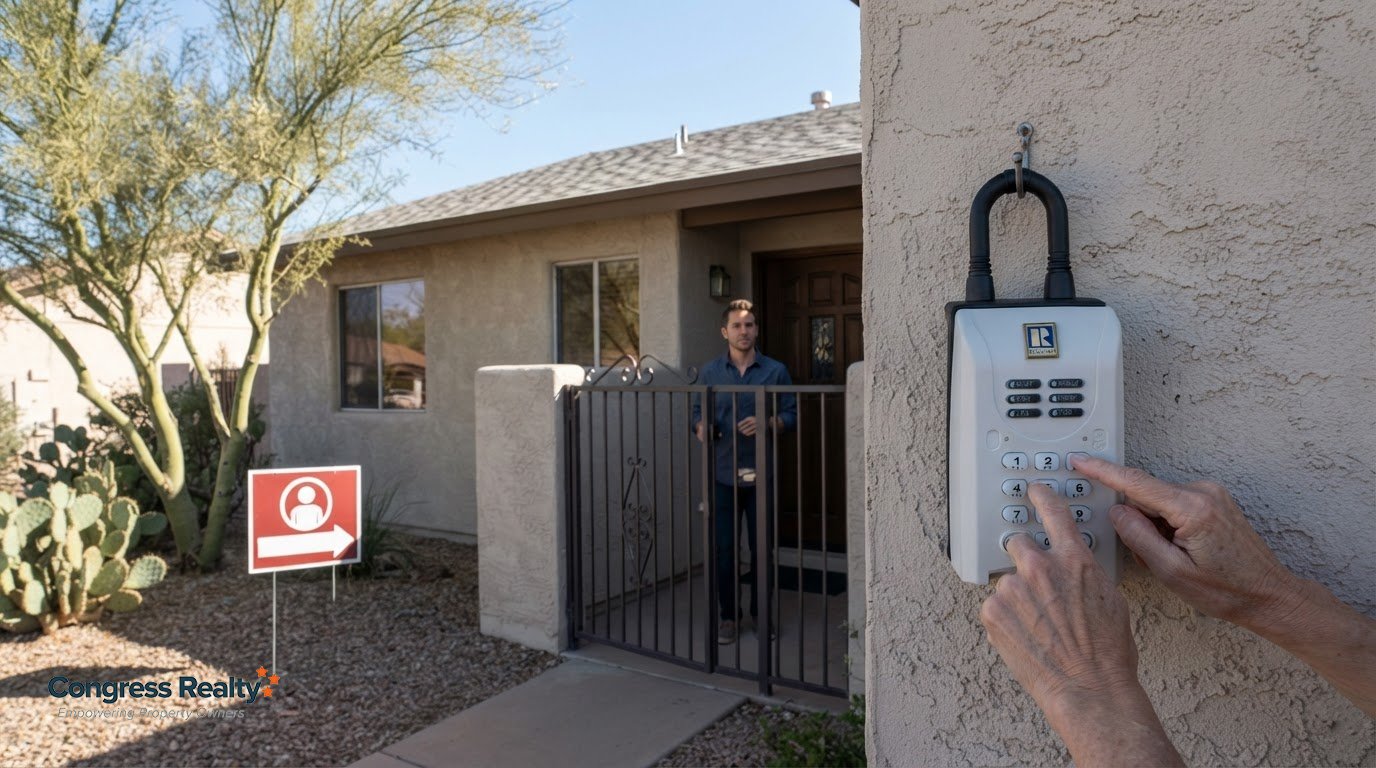
Congress Realty helps Phoenix homeowners who want to manage their sale while using professional listing tools. Multiple Listing Services can give a property exposure through the MLS, while yard signs and a virtual tour support how buyers discover and view the listing. An eLockbox can help with property access. These tools can suit experienced sellers who want to stay involved without handling every part of listing visibility alone.
If you’re weighing FSBO against a supported listing approach, consider which parts you want to manage yourself and where listing tools would help. You stay in command of your decisions. Contact Congress Realty to discuss selling your home.
Make your next move with confidence
Choose the selling approach that fits how you want to manage the transaction. Before you commit, write down what you want to control, where you need support, and how much time you can give the sale. This simple framework can help you move forward without letting commission alone decide your strategy.
To decide when selling FSBO is a good idea, weigh your confidence in handling the process against the value of listing support. You can stay actively involved while using professional tools for parts of the sale that matter to you. For a homeowner in Phoenix, Arizona, the next step is to choose a selling plan that fits the property, schedule, and level of involvement you want.
When you’re ready to map out that plan, explore your home-selling options. Make a deliberate choice, set the process around your priorities, and move forward with confidence.
Frequently Asked Questions
Why would someone do for sale by owner?
Sellers choose an FSBO approach to make decisions directly, manage buyer conversations, and avoid a traditional listing-agent commission. It can be especially practical when a potential buyer already knows the property, such as a neighbor familiar with the home. You still need to assess the offer carefully, coordinate the transaction, and account for other sale expenses. The approach works best when you value direct involvement and can handle the associated tasks.
What Is FSBO and Is It Ever a Good Idea?
FSBO means selling a home without hiring a real estate agent to represent you as the seller. It can suit an experienced homeowner who understands local pricing, can manage inquiries, and has time for sale-related decisions. For example, a seller who has previously handled property transactions may feel comfortable reviewing offers and coordinating details. Someone who wants substantial help with negotiations or paperwork may prefer a different level of support, such as partnering with a full-service regional brokerage like arrowheadrealtycompany.com to handle marketing, showings, and closing details.
What is required to sell a house by owner?
A homeowner generally needs authority to sell the property, accurate information for buyers, a written purchase agreement, and organized closing documents. The exact documents depend on the home and transaction. MLS access is exclusive to members, and only members can make changes to an MLS listing. Congress Realty provides MLS listings with the same exposure as listings paid with a full commission and makes listing changes on the seller’s behalf.
What are typical FSBO costs, including listing, marketing, attorney, and closing fees?
FSBO expenses vary with the property and transaction. Professional real-estate photography is estimated at $150 to $400, while an attorney’s review of FSBO documents is estimated at $500 to $1,500. Title and escrow fees for a typical FSBO sale are estimated at $1,000 to $2,500. Repairs, inspections, taxes, liens, and negotiated buyer credits can also affect proceeds. Account for each applicable expense before comparing offers or deciding what to spend on marketing.
What legal disclosures and paperwork are required for FSBO home sales in the United States?
Common sale documents include the deed, purchase agreement, seller disclosure statement, and relevant inspection reports. Disclosure and transfer paperwork can depend on the property and its location. According to the U.S. Environmental Protection Agency, a federal lead-based-paint disclosure applies to homes built before 1978. Keep signed agreements and revisions together so the closing file reflects the terms both parties accepted. An attorney or title company can help organize transaction documents.
What steps are involved in selling a home FSBO?
A typical sale moves from preparing property details and setting an asking price to advertising, responding to buyers, reviewing offers, and completing closing paperwork. Keep a record of buyer inquiries and written offer terms as they arrive. Once both parties agree, coordinate the transaction documents, title work, and closing details. A known buyer may reduce the need for advertising, but you still need to document the agreement and prepare for closing.
How can FSBO sellers price and market a home effectively?
Use recent local sales and comparable properties to understand how buyers may view your asking price. Then describe the home with verifiable details, consistent photos, and accurate information about its condition and features. For example, mention a replaced roof only if the work was completed and records support the claim. Review buyer responses and showing feedback to judge whether the price and presentation attract serious interest, rather than relying only on online estimates.
What FSBO rules and transaction requirements vary by state or locality?
Local requirements can affect seller disclosures, contract forms, transfer taxes, deed recording, and which party handles particular closing expenses. The property’s location also matters when preparing transaction paperwork and arranging the transfer of ownership in Arizona, Alaska, California, Idaho, Louisiana, Montana, Nevada, New Mexico, Oregon, Texas, Utah, and Washington. Before accepting an offer, identify which forms and steps apply to the property and transaction. A real estate attorney or title company can explain relevant paperwork and help address closing requirements.