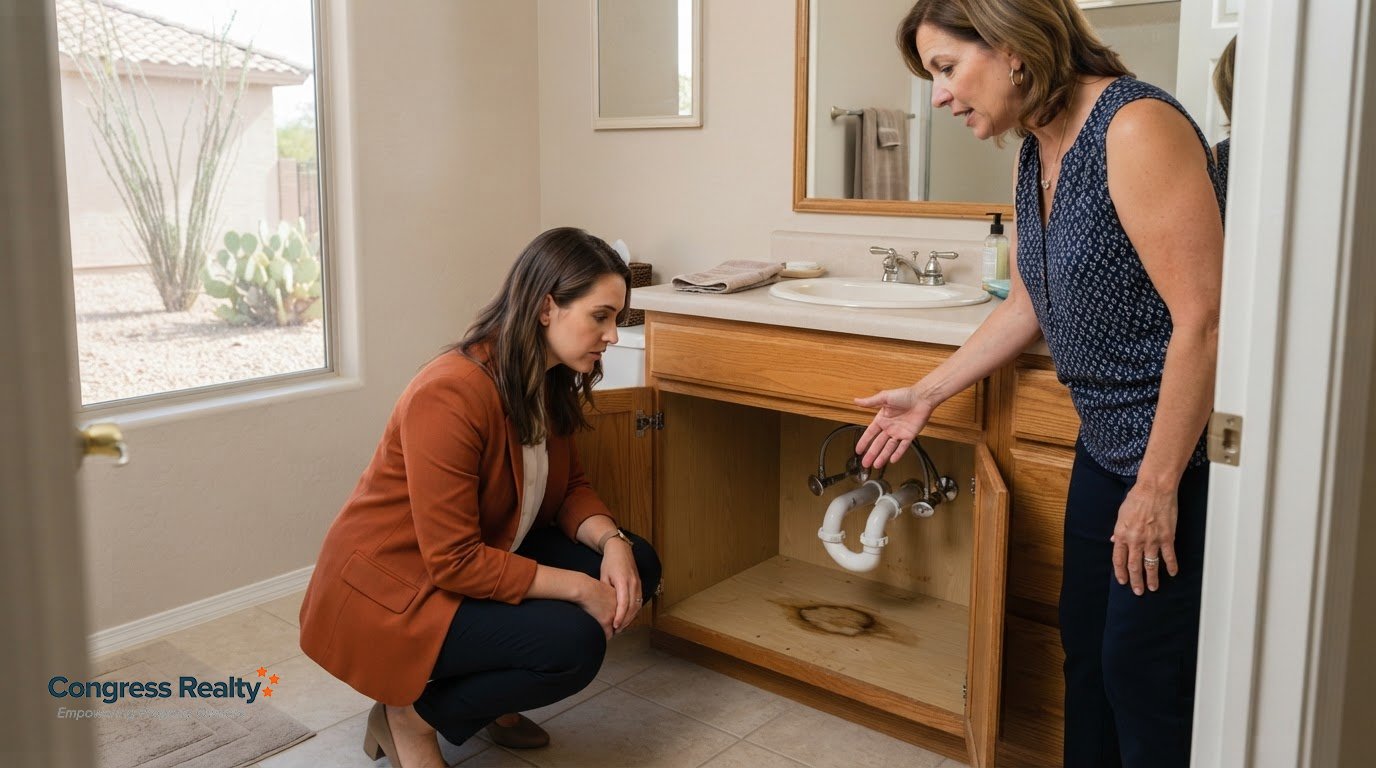
Congress Realty provides flat-fee MLS listing services for homeowners in Arizona, including Phoenix. For Phoenix sellers, disclosure duties can involve both the seller and the real estate licensee. This guide explains how to disclose property defects and why clear, accurate information matters in a home sale.
Disclosure requirements vary by state, and the details can depend on what the seller knows, the property’s condition, and what the licensee learns. Phoenix homeowners can use this guide to understand those responsibilities and prepare for the decisions involved in a sale.
Learn which conditions may require disclosure, how state rules apply, and what can help show intentional concealment. You’ll also see when a licensee may need to disclose a defect, giving Phoenix sellers a clearer starting point for managing their transaction.
Key Takeaways
- Learn how material defects and latent defects differ, and why a problem’s visibility can matter.
- See why disclosure requirements depend on state law, seller knowledge, and the property’s condition.
- Understand when a real estate licensee may have a separate duty to disclose a known defect.
- Explore what records and other evidence can help show whether someone knowingly concealed a property problem.
- Get a clearer picture of the defects sellers may need to disclose before a home sale moves forward.
What Are Adverse Material Facts and Latent Defects in the Sale of Real Property?
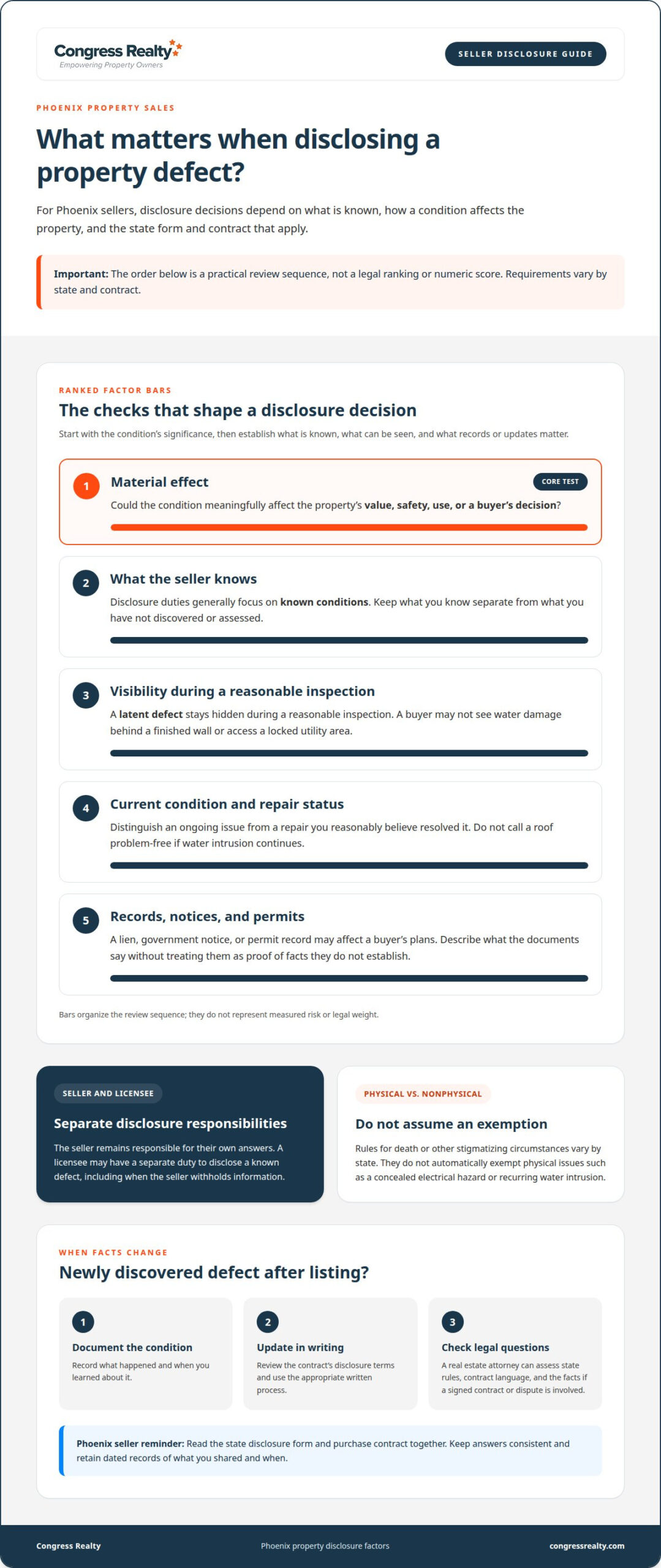
Disclosure duties focus on known conditions that could affect a property’s value, safety, or use. State law and contract terms shape what sellers and licensees must tell a prospective buyer.
Seller Disclosure of Defects
A material defect is a known property problem that could affect its value or a buyer’s decision. A latent defect stays hidden during a reasonable inspection, such as water damage behind a finished wall. These distinctions matter because a buyer may not spot a hidden problem before making an offer.
State disclosure requirements vary, but many focus on material defects. A seller’s knowledge matters: the duty generally concerns known conditions, not conditions the seller has not discovered. To understand how to disclose property defects, describe the condition accurately and distinguish an ongoing issue from a repair the seller reasonably believes resolved it.
Standard-form contracts may also address property condition and disclosure. Read the form and contract together so your answers do not conflict. For example, if you report a repaired roof leak, avoid describing the roof as problem-free if water intrusion continues.
Licensee Disclosure When Sellers Withhold Information
A licensee may have a disclosure duty separate from the seller’s form. If the licensee learns that a seller is withholding information about a known defect, the licensee must disclose it to the buyer. A seller’s decision to omit a recurring leak does not make that known condition confidential.
This distinction matters when the seller’s paperwork leaves out a defect the licensee knows about. The seller remains responsible for their own answers, while the licensee must address known information under applicable duties. Written disclosure helps create a record of what the parties shared and when.
Exempt Defects and Stigmatized Property
There is no single nationwide exemption for deaths or stigmatized property; state rules differ. Sellers should distinguish those nonphysical circumstances from physical defects, such as a concealed electrical hazard or recurring water intrusion.
For a death or another circumstance unrelated to the home’s physical condition, the applicable state rule and contract language determine disclosure duties. Do not assume that a rule about stigmatizing information exempts known structural or safety problems. The relevant question is whether the condition falls under the disclosure requirements that govern the property.
Newly Discovered Defects After Listing
If you discover a defect after listing, document what happened and update the disclosure process promptly. After signing a contract, review its disclosure terms and provide the new information through the appropriate written process. How to disclose property defects can change when new facts emerge, so keep dated records of the condition and communication.
Consult a real estate attorney if a newly discovered problem affects a signed contract, creates disagreement, or raises questions about legal duties. The attorney can assess the state’s rules, contract language, and facts. A dated update helps establish when the seller learned about the issue and shared it.
Material defects and state disclosure requirements
For a home sale in Phoenix, disclosure decisions should follow the applicable state form and purchase contract. Focus on the questions each document asks, the information available to you, and any updates before closing.
Material Defect Definitions and Standards
Materiality asks whether a condition could meaningfully affect a buyer’s decision, property value, or occupant safety. A reasonable-person standard helps separate consequential information from minor details that do not change how someone evaluates a purchase.
For an Arizona seller, apply that test to the facts rather than the label. Consider the condition’s scope, its effect on use, and whether it remains unresolved. A recorded lien or a notice concerning required work may affect a buyer’s plans even though neither shows damage during a property walkthrough.
Latent Material Defect Criteria
Assess a hidden condition by considering whether an ordinary inspection could reveal it and what its consequences might be. Those questions help distinguish information a buyer can readily observe from facts the seller’s knowledge makes important to disclose.
Inspection access can affect what becomes visible. A buyer may not enter a locked utility area or see behind stored belongings during a showing. For a transaction in Arizona, record the condition’s location and the basis for your knowledge, then answer the disclosure form as written. Don’t turn uncertainty into a definitive statement about a system you haven’t assessed.
Examples of Material Latent Defects
Potential concerns can include an unresolved government notice, a property lien, or work someone completed without the required permit. These issues may affect a buyer’s intended use or future plans, even when the home looks orderly during a visit.
Use documents to distinguish what you know from what you assume. A notice may identify required action, while a permit record may show that authorities approved the work. Neither document automatically answers every question about present condition. Arizona sellers should describe the information they have and avoid presenting a document as proof of facts it does not establish.
Broker Duties to Disclose Adverse Facts
A broker’s role includes addressing adverse facts the broker actually knows under the applicable rules. The details can depend on the transaction role and the information available, so do not treat a broker’s silence as a substitute for your own accurate responses.
Keep communications consistent across the disclosure form, contract, and later updates. If a buyer raises a concern about a document or property condition, respond with the known facts rather than a broad assurance. Organizing the listing and sale documents together can support a clearer transaction record. For help with the listing process, selling a home starts with keeping property information organized.
Real estate licensees’ disclosure responsibilities
A licensee’s disclosure duties can exist alongside the seller’s responsibilities. The facts the licensee observes or learns, and the state’s rules, shape those duties.
Describe repairs, prior damage, and recurring problems in writing. State what happened, what work addressed the problem, and whether the issue returned.
Agent Disclosure Obligations
A real estate agent may need to disclose a known material defect even when the seller has filled out a disclosure form. That separate duty matters when the agent learns something the form omits or sees a problem during a property visit.
In California, licensees must visually inspect the property and disclose defects they spot. A stained ceiling, for example, may prompt further questions about a leak. The agent’s responsibility does not make the seller’s answers unnecessary; each party’s duties depend on applicable rules and the information each knows.
Disclosure Best Practices
Written, dated disclosures help preserve a clear record of what the seller and buyer communicated. The seller and buyer should date and sign disclosure documents, according to the stated recommendation for real estate disclosures.
Use direct descriptions instead of broad claims. For a repaired roof leak, identify the affected area, describe the repair, and state whether water returned. Keep supporting records with the transaction documents, and make clear which details come from your personal knowledge. A buyer’s building inspection can provide additional information, but it does not remove the seller’s or licensee’s disclosure obligations.
Reporting Repairs and Prior Damage
A repair does not automatically make the history irrelevant. Distinguish prior damage from the work completed, because that context helps a buyer understand the property’s condition.
For example, describe a past plumbing leak, the affected room, and the repair performed. If you have an invoice or other record, identify what it documents without treating it as proof that no further problem exists. Accurate detail also helps the licensee communicate your account without turning it into a broader assurance about the home.
Disclosing Recurring Problems
A recurring condition needs a description that captures its pattern, not just its most recent appearance. For example, report basement water that returns after rain and identify any known repair attempts.
If you discover a recurrence after submitting disclosures, update the information through the applicable written process. The licensee should communicate known material facts under the rules that apply. A dated update helps distinguish the original disclosure from later developments and gives the buyer a more accurate picture before the transaction proceeds.
Real estate licensee disclosure duties
In an Arizona sale, a real estate licensee’s disclosure duties depend on applicable law, the transaction role, and the facts the licensee knows. Distinguish your disclosure responsibilities from the licensee’s separate obligations.
Licensees must disclose known material defects that could influence a buyer’s decision or the purchase price. The duty concerns information they actually know; it does not make the licensee responsible for guaranteeing every seller statement or uncovering every hidden condition.
For example, a licensee who notices a visible defect during a property visit should not ignore that observation simply because the seller’s form says nothing about it. The observation and the seller’s own account remain distinct information, and the disclosure process should not blur who knew what.
Keep the communication precise. A licensee can identify the known condition and share relevant information without making unsupported claims about its cause, severity, or repair. If a question involves technical details beyond the licensee’s knowledge, the buyer may need an appropriate professional to assess them.
For Arizona sellers, clear records can help track what the licensee learned and when. Preserve relevant written communications and updates with the transaction documents. If new information emerges before closing, address it through the applicable disclosure process rather than relying on an earlier statement that no longer reflects current knowledge.
A buyer’s inspection adds another source of information, but it does not erase a licensee’s disclosure duty for known defects. Treat inspection findings and licensee disclosures as separate parts of the transaction record, and make sure each reflects the information each party had at that point.
The practical takeaway is straightforward: sellers should provide accurate information, and licensees should communicate known material facts under the rules that apply to the Arizona transaction. Clear, factual communication helps each party understand their responsibilities without overstating what anyone has verified.
What property defects must sellers disclose to buyers in the United States?
Across the United States, disclosure rules vary by state, but they often focus on known conditions affecting a home’s value, safety, or use. The property’s condition, the seller’s knowledge, and the state’s disclosure form shape what the seller must report.
Material conditions can involve more than visible damage. A roof leak, foundation movement, basement water intrusion, or failing electrical system may affect a buyer’s decision. Environmental hazards, unpermitted renovations, property liens, and demolition orders can also matter under applicable state rules. Report known information accurately, including whether a problem continues or you believe it was corrected.
State forms may ask about specific systems or conditions. Illinois sellers, for example, generally must disclose defects and structural issues they personally know about. The Illinois form focuses on current conditions and asks the seller to explain responses marked “yes” or “not applicable,” except for statement 1. It also records the date of the seller’s information. These details show why sellers should read every question and answer from personal knowledge rather than guess.
Federal lead-based paint rules add a separate requirement. According to the U.S. Environmental Protection Agency, the Residential Lead-Based Paint Hazard Reduction Act of 1992 applies to homes built before 1978 and requires sellers to give homebuyers 10 days to examine a home for lead. Sellers must also disclose known lead-based paint and provide the EPA pamphlet “Protect Your Family from Lead in Your Home.” The sale contract must include lead-paint warning clauses and signed statements acknowledging disclosure.
Disclosure forms do not replace inspections or warranties. Illinois’ form advises prospective buyers that they may request an inspection by a qualified professional. A seller can agree to sell residential property “as-is,” but that agreement does not erase the form’s disclosure requirements. Buyers may also investigate electrical systems, pests, and property encumbrances. These checks address different questions from the seller’s own knowledge.
For a clear record, keep answers consistent across the disclosure form, contract documents, and written updates. Describe the condition, its location, and any known repair or recurrence. If information changes before closing, Illinois sellers must supplement disclosures before closing. State rules determine the applicable timing and process, so follow the requirements tied to the property’s location.
Preparing to list? Explore home-selling support as you organize property information and sale documents.
Congress Realty
Congress Realty supports the listing side of a home sale while you manage accurate property disclosures. Our flat-fee MLS listings give your property the same exposure as listings for which sellers pay a full commission. An eLockbox, Yard Signs, and a Virtual Tour support other parts of presenting it to buyers. These tools do not replace your responsibility to provide truthful disclosure information or follow the rules that apply to your sale.
When you’re ready to move from understanding disclosure duties to preparing your home listing, review the services Congress Realty offers. Keep your records and disclosure documents organized so you can make informed decisions throughout the process.
For help with your home sale, contact Congress Realty.
Move forward with a clear record
Make disclosure part of your ongoing sale process, not a form you complete and forget. Knowing how to disclose property defects means updating your communication when you learn relevant information and keeping your records organized as the transaction progresses. Clear, timely communication gives everyone a better basis for making decisions.
Before moving ahead, gather the property information you already have and keep new updates with your transaction documents. If a question concerns your legal obligations or contract language, get advice that addresses the rules where the property is located. That advice helps you make decisions in the right context.
When you’re ready to move forward with your home sale, review Congress Realty’s selling information. Stay informed, keep control of the process, and take the next step with confidence.
Frequently Asked Questions
Can Real Estate Agents Face Joint Liability for Undisclosed Flaws?
Yes, an agent and seller may both face liability when each has a disclosure duty and the facts support a claim. The result depends on state law, the agent’s knowledge, the seller’s statements, and what each person did. For example, a seller may omit a known leak while an agent independently knows about it. A buyer’s inspection does not automatically erase either party’s disclosure responsibilities.
What Is a Material Defect in Real Estate Compared to Normal Wear and Tear?
A material defect can substantially affect a home’s value, safety, or use; normal wear and tear generally reflects ordinary aging. A cracked foundation or recurring water intrusion may raise concerns beyond worn carpet or faded paint. The distinction depends on the condition’s actual impact, not simply its appearance. Sellers should describe conditions accurately rather than decide that a buyer will consider them minor.
What Is a Material Defect in Real Estate Under Property Disclosure Laws?
Property disclosure laws commonly treat a material defect as a known condition that significantly affects residential value, health, or safety. The exact definition depends on the state. Illinois, for example, focuses on conditions that substantially harm property value or significantly impair occupants’ health or safety, unless the seller reasonably believes someone corrected the problem. A defect’s severity and current status can affect how the rule applies.
When Is Disclosure Required?
Disclosure timing depends on state law and the sale contract. Pennsylvania requires residential sellers to disclose known material defects before executing an agreement of sale. Illinois requires its residential property disclosure report before the buyer signs the contract. A condition discovered later may require an update before closing under applicable rules. Treat a newly discovered issue as a reason to review the required disclosure process promptly.
Are Sellers Legally Required to Disclose Known Defects in Every State?
Disclosure laws vary by state, so do not assume one nationwide rule applies everywhere. Most state requirements concern material defects, but the covered conditions, timing, and forms differ. Pennsylvania and New Jersey have moved away from pure “buyer beware” approaches toward affirmative statutory disclosure duties. A seller’s obligations may also depend on the contract and common law, not just a disclosure form.
How Do State Property Disclosure Laws and Forms Differ?
States differ in what they ask sellers to report, when buyers receive the form, and how sellers explain answers. Illinois uses a prescribed residential disclosure report and requires explanations for “yes” or “not applicable” responses, except statement 1. Pennsylvania law requires disclosure of known material defects before the sale agreement. Colorado’s residential contract addresses adverse material facts and later disclosures in § 10.2.
How Should a Seller Complete a Real Estate Property Disclosure Form?
Read each prompt carefully, answer from personal knowledge, and describe the condition plainly. For a repaired roof leak, distinguish the original damage, the repair, and any later recurrence. Don’t guess about a system you haven’t evaluated. Keep supporting records with the transaction documents, date the information as the form requires, and follow the applicable process if facts change before closing. In Pennsylvania, sellers complete the disclosure form themselves.