Congress Realty is a flat-fee MLS brokerage serving Phoenix, offering Multiple Listing Services that provide the same exposure as listings paid with a full commission. For Phoenix sellers, how to make your FSBO listing agent-friendly starts with accurate property details, simple showing arrangements, and prompt, reliable communication.
Selling by owner lets you make the decisions, but agents and buyers still need timely answers. In Phoenix, a consistent process makes listing information easier to share and showing requests easier to manage. Keep your preferred contact method current, provide useful property details, and make appointment instructions easy to follow.
This guide covers practical ways to prepare listing information, organize showings, and follow up with interested buyers. It also explains how a floor plan or virtual tour can clarify the home’s layout, and how useful resources can support seller conversations. Use these steps to build a process that works for your Phoenix sale while keeping you in control. Phoenix homeowners can adapt each step to their property and preferred level of involvement.
Key Takeaways
- Make your listing easier to work with by providing accurate property details, clear showing instructions, and an organized way to respond to inquiries.
- Keep a simple showing schedule and record buyer feedback so you can spot interest and follow up thoughtfully.
- Use prompt, helpful communication to build trust with buyers and the agents representing them.
- Add a floor plan or virtual tour to help buyers understand the home before they book a visit.
- Consider Multiple Listing Services, an eLockbox, yard signs, or a virtual tour to support your FSBO marketing and showing process.
Helping FSBO sellers navigate the selling process
Help FSBO sellers make clear decisions about price, buyer access, and communication. A well-organized process preserves seller control while making cooperation practical for real estate agents.
- Ask what the seller wants to manage independently and where support would help. The National Association of REALTORS® reported that 31% of FSBO sellers in its 2024 survey wanted to avoid paying a commission fee. Another 36% sold to a relative, friend, or neighbor. These figures give you useful context, not a reason to assume every seller has the same goal.
-
Discuss Commission Savings and Compensation
Consider potential savings alongside the practical work you’ll handle. Discuss any buyer-agent compensation directly, and put agreed amounts, conditions, and responsibilities in writing. A customary rate isn’t mandatory. A clear written record helps everyone understand the arrangement before an offer is made.
How do FSBO sellers negotiate and document buyer-agent compensation? Discuss the proposed terms directly, decide what you’re willing to offer, and put any agreement in writing. State the amount and conditions clearly so everyone understands the arrangement.
- Prepare for concerns before they become objections. If a seller says, “I want to avoid fees,” acknowledge that goal, then explain that compensation can be discussed rather than assumed. If they say, “I already know my buyer,” ask what support would make the remaining steps easier. The National Association of REALTORS® found that 15% of FSBO sellers surveyed in 2025 identified getting the right price as their biggest challenge.
- Answer questions about legal requirements carefully. What disclosure and fair housing rules apply to FSBO listings in my state? Requirements vary by state and property, so use state-specific disclosure guidance and accurate, non-discriminatory listing language. Don’t assume one form or checklist covers every state.
Explain risks plainly when sellers work with buyer’s agents. What risks do FSBO sellers face when working with buyer’s agents? Unclear compensation terms can create disagreement, while missed questions, inaccurate property details, or weak negotiation can complicate a transaction. The National Association of REALTORS® reported that 7% of FSBO sellers surveyed in 2025 identified paperwork as a challenge.
-
Follow Up to Build Trust
Follow up with a specific, useful next step, then honor the seller’s preferred communication method. For example, send a concise recap of the compensation discussion and answer any open question without pressuring them to decide. The National Association of REALTORS® reported that 5% of FSBO sellers in its 2024 survey did not want to deal with an agent, so respect their boundaries and keep the conversation focused on their priorities.
Organizing showings and tracking buyer interest
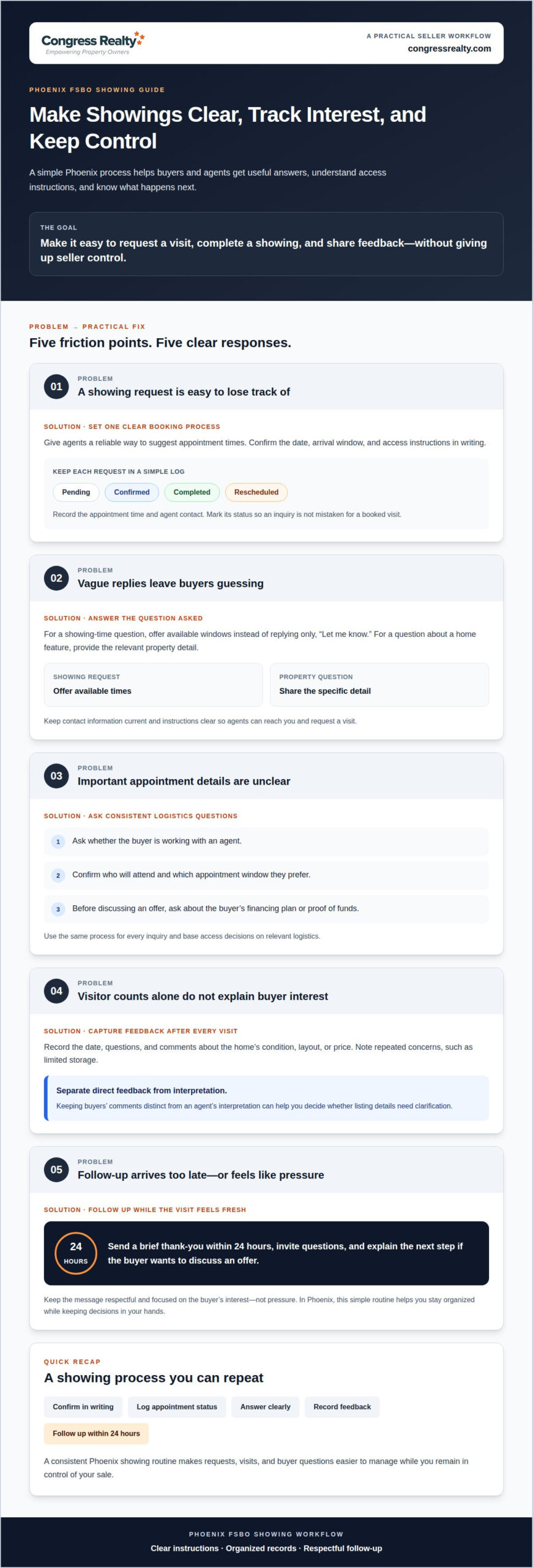
- Set a clear process for requesting and confirming showings. Give agents a reliable way to suggest appointment times, then confirm the date, arrival window, and access instructions in writing. Track each appointment in a calendar or simple log, including the time, agent contact, and status. Mark requests as pending, confirmed, completed, or rescheduled so an inquiry isn’t mistaken for a booked visit.
- Reply to buyer inquiries promptly and answer the question asked. If a buyer asks about showing times, offer available windows instead of saying only, “Let me know.” If an agent asks about a feature, provide the relevant property detail. Clear, current instructions are a practical part of making your FSBO listing agent-friendly.
- Use consistent questions to understand a buyer’s plans. Ask whether they’re working with an agent, who will attend, and which appointment window they prefer. Before discussing an offer, ask about their financing plan or proof of funds. Follow the same process for every inquiry and base access decisions on relevant logistics.
- Track feedback after each showing, not just the number of visitors. Record the date, questions, and comments about condition, layout, or price. If several visitors raise the same concern, such as limited storage, note the pattern. Distinguishing direct buyer feedback from an agent’s interpretation helps you decide whether listing details need clarification.
- Follow up with each prospective buyer while the visit feels fresh. Send a brief thank-you within 24 hours, invite questions, and explain the next step if they want to discuss an offer. Clear, respectful follow-up is another way to make your FSBO listing agent-friendly without surrendering control. Keep communication focused on the buyer’s interest, not pressure.
A simple showing record helps you spot where buyers engage and where questions remain. If you want structured support for your home sale, explore options for selling your home.
Keep the showing schedule organized and answer buyer messages and calls promptly. For an open house, prepare a guest sign-in sheet. Apply the same care when considering buyer qualification and discussing offers. Common FSBO challenges include incorrect pricing, not screening qualified buyers, and limited negotiation skills. Keep these risks in mind as you manage interest and decide how to proceed.
Making initial contact and staying in touch
Make it easy for buyers’ agents to reach you, get accurate listing details, and request a showing. Effective marketing pairs clear contact information with timely, useful follow-up.
What are the best ways to market an FSBO home to buyer’s agents? Share accurate property information through visible marketing channels, provide clear showing instructions, and respond directly when agents ask questions. In the National Association of REALTORS®’ 2024 survey, 20% of FSBO sellers said buyers contacted them directly, so make your contact path easy to find.
-
Add Contact Details to the Listing
Include a reliable phone number or email address in the listing and on any property flyer. Give clear showing instructions, including how to request an appointment and what details to provide. Check every channel for outdated information before sharing it. For example, if your flyer lists email but you now prefer calls, update both the flyer and listing.
Give buyers’ agents enough information to make an informed inquiry. Include the home’s key features and a straightforward way to ask about access or property details. Put contact information where it’s easy to find, not at the end of a long description. Agents can then pass accurate information to interested buyers without unnecessary back-and-forth.
- Keep details consistent everywhere you promote the home. If your listing says appointments require advance notice, use the same instruction on flyers and social posts. Consistency reduces confusion and helps buyers’ agents plan visits. Keep a simple record of where you shared the listing, when you updated it, and which contact details each version displays.
-
Maintain Contact with the Seller
If you’re an agent contacting FSBO homeowners, introduce yourself, explain why you’re reaching out, and ask how they prefer to communicate. Use their contact information carefully and keep your first message focused on their needs. For example, ask whether they want help reaching buyers’ agents or organizing inquiries instead of opening with a sales pitch.
After your first conversation, follow the homeowner’s preferred method and agreed timing. Send a brief recap of useful details, then make each follow-up relevant to their goals. Don’t send repeated generic messages or imply that they must hire a realtor. Respectful contact gives sellers room to consider their strategy while keeping the conversation useful.
- End each conversation with a clear next step. If an agent asks for property information, send it and invite specific follow-up questions. If a homeowner isn’t ready to discuss assistance, ask whether they’d like to talk again later. Record the outcome so future contact reflects your last exchange rather than repeating your introduction. This creates a professional record from first contact through a possible closing.
Adding a floor plan or 3D tour
Give buyers a clearer sense of the home before they book a visit. A floor plan or virtual tour can show how rooms connect while you stay in control of selling your home by owner.
- Start with a floor plan that reflects the home’s current layout. Label rooms clearly, including bedrooms, bathrooms, the kitchen, living areas, and distinct spaces such as an office. Show hallways, stairs, and doorways so buyers can see how rooms connect. For example, showing the kitchen beside the dining area helps viewers picture the layout without relying on a long description.
- Check every label and layout detail against the property before sharing the plan. Confirm that room names match the listing and that the drawing doesn’t show a wall, doorway, or feature the home doesn’t have. Include measurements only if you can verify them. A clear, accurate diagram helps buyers compare the layout with what they see during a showing.
- Build a 3D tour around a simple route through the home. Begin at the entry, then move through connected living spaces before showing bedrooms and other areas. Keep the route logical, so buyers don’t jump from the front door to a distant room without context. For example, show the hallway between the living room and bedrooms to explain the home’s flow.
- Prepare rooms before capturing tour views. Open curtains, turn on lights, and move items that block doorways or key features. Put away personal documents and photographs that reveal private details. Keep the presentation consistent with the listing photos. If a room has changed, update the images or describe the change accurately. These steps help viewers focus on the home.
- Place the floor plan or tour alongside the property details, where buyers and agents can find it. Add a short caption explaining what it shows, such as “Main-floor layout” or “Tour from entry through living areas.” Pair it with clear showing instructions so online interest can lead to an appointment. If buyers repeatedly ask how rooms connect, check whether the plan or tour answers that question.
A useful visual answers layout questions before a visit. For a sale by owner, accurate visuals help buyers assess the home and give agents a clear way to explain its features.
Building trust through helpful resources and consultation
Offer useful guidance before suggesting that a FSBO seller change their plan. A practical resource, such as a photo checklist or neighborhood pricing worksheet, gives homeowners something they can use.
- Ask what part of selling the home feels most difficult, then offer a resource that addresses that concern. If the seller is worried about presentation, share a checklist covering clean rooms, natural light, and photos that highlight useful features. If they need neighborhood context, explain how similar recently sold homes can inform a pricing discussion. Match the resource to the homeowner’s question instead of sending a generic packet.
- Prepare a concise seller guide that separates marketing tasks from transaction decisions. Include sections for listing details, showing communication, buyer questions, and offer paperwork. The National Association of REALTORS® reported that 5% of FSBO sellers surveyed in its 2025 Profile identified helping buyers obtain financing as a challenge. A guide can help sellers identify questions to raise as they consider an offer.
- Use a short consultation to understand the seller’s priorities before suggesting next steps. A 15-minute conversation can focus on the homeowner’s goals, current marketing, and points of friction. Ask what response they have received, which questions keep recurring, and what they want to handle themselves. Summarize the answers in plain language, then share one useful action rather than overwhelming them with every possible service.
- Make advice specific to the property and its audience. If photos show a dining area but not its connection to the kitchen, suggest adding a view that clarifies the layout. If a listing mentions a nearby park, explain where it is in relation to the home. Use accurate examples and don’t promise that a platform or marketing change will produce a sale.
- Follow up with a resource related to the conversation. If the seller asks about buyer financing, provide questions to discuss when reviewing an offer. If they want to attract more interest, suggest reviewing the listing photos, description, and showing instructions together. Ask permission before sending more material, and respect the homeowner’s choice to sell independently.
Use helpful guidance to make the next selling decision clearer. Explore home-selling support when you want practical listing resources while keeping your process in your hands.
Following up after initial contact can help build trust between an agent and an FSBO seller. In the United States, 60% of homeowners do not trust real estate agents, so keep contact useful and respectful.
Congress Realty: Multiple Listing Services
Congress Realty offers Multiple Listing Services for sellers who want their FSBO property details available to real estate brokers through the MLS. An MLS listing provides the same exposure as listings paid with a full commission, and the MLS is exclusive to members. Only members can make changes, so Congress Realty handles listing changes on your behalf. Add an eLockbox to support access, a yard sign for local visibility, or a virtual tour to help buyers preview the home. Choose the tools that suit your marketing approach and keep listing details and showing instructions consistent across channels. If you’re ready to make your FSBO listing easier for agents and buyers to work with, contact Congress Realty to discuss your selling goals.
Keep Your Sale Moving on Your Terms
Turn your plan into a routine you can maintain throughout the sale. Decide who handles each question, how you’ll record decisions, and when you’ll review your plans. This structure helps you stay responsive without letting every inquiry dictate your day.
The practical answer to how to make your FSBO listing agent-friendly is to make cooperation clear while keeping decisions in your hands. Set expectations early, communicate changes directly, and make each next step easy for buyers and agents to understand. As offers develop, keep your priorities in view so you can weigh terms thoughtfully rather than react under pressure.
If you want support for the listing side while remaining in control, contact Congress Realty to discuss FSBO support. Take the next step at your pace, with a process that fits your goals.
Frequently Asked Questions
What makes a for-sale-by-owner listing attractive to buyer’s agents?
A clear, complete listing helps buyers’ agents quickly assess whether a home suits their clients. Include a realistic asking price, accurate room details, recent improvements, known property limitations, and clear showing instructions. State whether you’ll consider buyer-agent compensation and how you’ll discuss it. For example, an agent can prepare a buyer more effectively when the listing explains parking, storage, and access arrangements upfront.
How much buyer-agent commission should FSBO sellers offer?
There’s no required amount that every FSBO seller must offer. Decide whether you’re willing to offer compensation based on your budget, the transaction terms, and the value you place on buyer-agent participation. Discuss terms directly instead of treating a customary percentage as mandatory. Put any agreement in writing, specifying who receives compensation, the amount or calculation, and the conditions for payment.
What information and documents should an FSBO listing provide to agents?
Provide accurate property facts, current photos, showing instructions, and documents relevant to the home and sale. Examples include a seller disclosure, records of completed improvements, and homeowners’ association details when applicable. Keep sensitive personal or financial records private until they’re needed for a legitimate transaction step. If your home is listed on the MLS, remember that it’s exclusive to members, only members can make changes, and it receives the same exposure as listings paid with a full commission.
How should FSBO sellers handle agent inquiries and showing requests?
Respond to every inquiry using the same professional process, whether it comes from a buyer or an agent. Confirm the property address, requested visit time, attendees, and any questions the agent needs answered. If you can’t accommodate the proposed time, offer another option instead of leaving the request unresolved. Keep important decisions in writing, especially changes to access, offer terms, or compensation.
How can FSBO sellers schedule showings and provide secure property access?
Use a calendar to confirm appointment windows and record who will attend each visit. Share access details directly with the confirmed agent, not in public listing text or social posts. Secure valuables and personal documents before visitors arrive. If you use a lockbox, control who receives its access information and update access arrangements when permissions change. A clear process makes visits easier to coordinate while protecting your privacy.