Congress Realty provides flat fee Multiple Listing Services for Phoenix homeowners who want MLS exposure while selling independently. In Phoenix, there’s no standard 3% commission you must pay to sell FSBO because real estate commissions are negotiable. The reasons why some agents avoid FSBO listings often involve expected compensation, workload, and concerns about coordinating a sale with an owner.
Wanting to save on commission and stay in control makes sense for Phoenix sellers. An agent’s reluctance doesn’t automatically mean your home can’t sell without a listing agent or that you must agree to a particular fee. This article explains when a buyer’s agent may expect compensation and how an offered amount can affect your net proceeds in Phoenix.
You’ll also learn how listing exposure, showings, negotiations, and transaction paperwork can influence an agent’s decision. Understanding these factors helps Phoenix homeowners weigh the trade-offs and choose the level of professional support that fits their sale.
Key Takeaways
- Treat commission as negotiable, and weigh any buyer-agent compensation against your expected net proceeds.
- Consider how MLS exposure and marketing materials may affect the pool of buyers who see your home.
- Assess a home’s likely sale price and the costs involved before deciding whether selling FSBO makes financial sense.
- Plan for showing coordination, buyer qualification, negotiation, and transaction paperwork, not just the listing.
- Learn how Multiple Listing Services can support an owner-led sale while you remain in control of key decisions.
Commission and net-proceeds objections
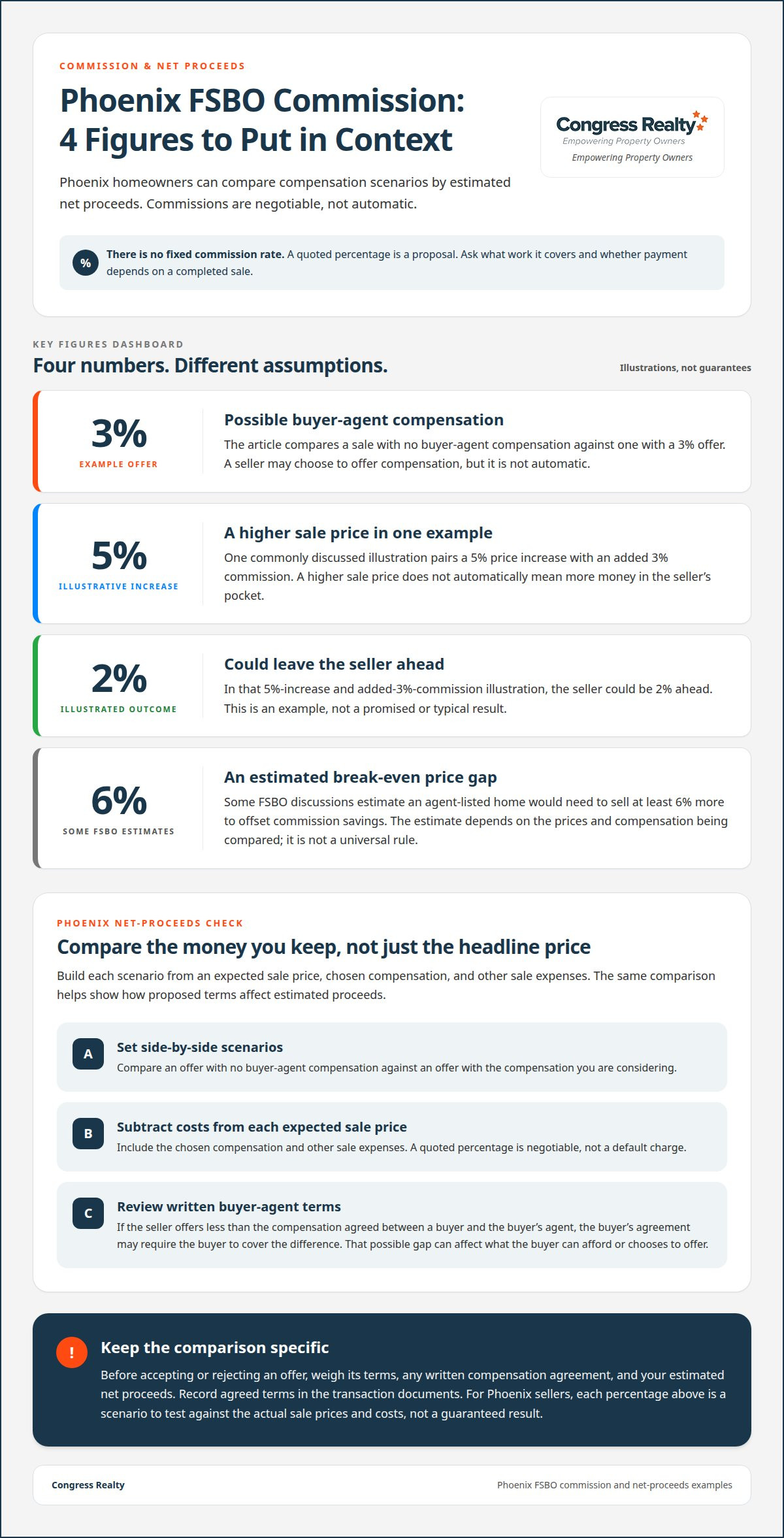
- Separate the listing fee from any buyer-agent compensation. A seller who lists without a listing agent avoids that service, but may still choose to offer compensation to an agent representing a buyer. Commissions are negotiable, not fixed by law, an MLS, or a Realtor® association. A quoted percentage is a proposal, not an automatic charge. Ask what work it covers and whether payment depends on a completed sale.
- Calculate net proceeds using more than one offer scenario. For example, compare a sale with no buyer-agent compensation against one with a 3% offer. Subtract the chosen compensation and other sale expenses from each expected sale price. A higher price does not automatically mean more money in your pocket. One commonly discussed example says a 5% price increase paired with an added 3% commission could leave the seller 2% ahead. Treat that as an illustration, not a promised outcome.
- Understand what a buyer’s agreement may mean for the buyer. If the seller offers less than the compensation agreed between buyer and agent, the buyer’s agreement may require the buyer to cover the difference. That potential gap can affect what a buyer can afford or chooses to offer. Discuss proposed compensation clearly during negotiations and record agreed terms in the transaction documents. Don’t assume an agent’s fee automatically comes from the seller.
- Compare the break-even point with your own pricing plan. Some FSBO discussions estimate that an agent-listed home would need to sell for at least 6% more to offset commission savings from selling without an agent. That estimate depends on the sale prices and compensation being compared. It is not a universal rule. Build your own side-by-side calculation using realistic offers, rather than assuming a neighborhood sale price proves your home will command the same amount.
- Consider these factors when assessing why some agents avoid FSBO listings, without assuming every agent thinks alike. An agent may view a proposed fee as too low for the work involved or expect disagreement over who pays. A seller may reasonably prioritize proceeds and control. Before accepting or rejecting an offer, compare its terms, any written compensation agreement, and your estimated net. This turns a commission objection into a specific negotiation, not a default obligation.
FSBO sellers may choose to offer buyer-agent compensation, but it isn’t automatic. They can also proceed without offering it.
Limited marketing and MLS access
- Map where buyers can find the listing. A sign or social post reaches people who use those channels, but neither automatically puts a home in the Multiple Listing Service (MLS). The MLS is exclusive to members, and only members can make changes to a listing. An MLS listing provides the same exposure as listings paid with a full commission, including to agents and buyers using platforms that receive MLS data. Before choosing a marketing route, identify which channels it covers and how buyers can access the property details. Limited exposure can make a listing a harder prospect for an agent.
- Make the MLS entry useful on its own. Include accurate property details, clear photos, and showing instructions so agents can assess the home without chasing missing information. Most public real estate portals no longer allow links to custom property websites in listing descriptions. Build the listing description to carry essential facts directly, such as the home’s layout, features, and location context. A custom website can supplement those details, but it cannot replace information buyers expect to see in the listing itself.
- Prepare marketing materials before publishing. Arrange professional listing photography and present each room in clean, bright condition. Show the kitchen, living areas, bedrooms, bathrooms, and useful outdoor features. A virtual tour can help buyers understand the layout before requesting a visit. Keep captions factual: describe a kitchen as renovated only if it was, and distinguish included appliances from items you’ll remove. Consistent materials make it easier to present the property across channels.
- Make access straightforward and keep property records organized. Set clear showing windows, explain how buyers request appointments, and respond promptly to scheduling messages. Confusing access can discourage agents from coordinating a visit. Keep repair and inspection details together so you can answer questions consistently. For example, if a buyer asks about a roof repair, provide the same dates and documents each time. Reliable information reduces friction without implying every buyer will make an offer.
- Choose the reach you want, then align the workflow. Compare an owner-only approach with an MLS-supported listing, considering the audience, property details, photos, and showing process. An MLS route can place listing information in professional channels, while the seller still manages decisions and buyer communication. If you want to review home-selling options that include MLS exposure, consider how that approach fits your preferred level of control. Clear distribution and accurate materials make it easier for interested buyers to evaluate the home.
Negotiation and sale-price outcomes
- Compare similar homes before setting an asking price. Review recent nearby sales with similar size, condition, and features rather than relying on one headline price. A home with updated systems may attract a different offer than a similar property needing repairs. Account for differences in location, layout, and condition. Buyers make their own comparisons, so a price that overlooks those details can weaken your negotiating position.
- Use sale-price comparisons carefully. A commenter cited a National Association of Realtors report comparing an average FSBO sale price of $185,000 with an average agent-represented sale price of $245,000. Those figures do not show that representation alone caused the difference. Property type, market, sale timing, and whether the seller already knew the buyer can all shape the result. Treat broad averages as context, not as a forecast for your home.
- Set a response plan before the first offer arrives. Compare each offer’s price, financing, contingencies, requested repairs, and closing timeline. A buyer may request a repair or closing credit after an inspection identifies an issue. Decide which terms matter most before responding. For example, a slightly lower offer with fewer unresolved conditions may deserve a closer look than a higher offer with costly requests.
- Keep the showing and offer process consistent. Record buyer questions, showing feedback, and follow-up commitments in one place. If several buyers mention the same concern, such as an outdated fixture, use that pattern to guide your next response. Don’t treat one comment as proof that every buyer sees the home the same way. Clear, accurate answers help prevent avoidable misunderstandings during negotiations.
- Evaluate the net result, not just the headline offer. Compare each offer after accounting for any seller-paid compensation, repair credits, and other agreed costs. A buyer who asks for a closing credit changes the amount you keep, even if the offer price stays the same. Put your options side by side and identify the terms that affect your proceeds. This helps you negotiate from the numbers instead of reacting to pressure or one attractive figure.
A commenter cited a $60,000 difference between average agent-represented and FSBO sale prices. The page reports that the median sale price for agent-assisted homes in the United States was $435,000 last year, while FSBO homes in the United States sold for $380,000 last year. It also reports that the typical FSBO home in the survey sold for $184,000. These figures describe different measures, including a median and a typical survey result, so they should not be combined or treated as a forecast for an individual property.
Use figures as context for estimating your proceeds, not as a substitute for comparable local sales or a review of your costs. Your home’s condition, location, buyer demand, and agreed terms all affect the result. If an offer is below your expectations, revisit the evidence behind your asking price and identify terms that could improve the net outcome. Weigh timing, contingencies, or requested credits alongside price, while keeping your minimum acceptable proceeds in view. A clear comparison helps you decide whether to counter, accept, or continue marketing without assuming national results will apply to your sale.
Agent compensation
Agent commissions for FSBO transactions are negotiated, not set by law, a Realtor® association, or an MLS. The seller and agent can discuss the amount and terms, then document any agreement clearly.
Sellers may discuss compensation with a buyer’s agent as part of an FSBO transaction. A 3% offer appears in commonly described FSBO arrangements; it remains a choice, not an automatic charge.
- Decide what compensation you are willing to offer. Start with your sale goals, expected proceeds, and the work an agent may perform. Some FSBO sellers offer compensation to encourage buyer-agent participation; others choose not to. Either way, decide before negotiating with a buyer and consider the effect on your net proceeds. A proposed amount should never be mistaken for a standard every seller must follow.
- Put the payer and terms in writing. If you agree to compensate a buyer’s agent, document who pays, how much, and what conditions apply. Don’t rely on a conversation or assumed custom. For example, clarify whether payment depends on a completed sale and how the agreement handles a changed offer. Written terms give the buyer, seller, and agent a shared reference throughout the transaction.
- Connect compensation to the actual service. Ask what the agent will do for the proposed amount, such as arranging a showing, communicating an offer, or helping the buyer understand transaction steps. Don’t assume every agent provides the same work or accepts the same terms. An agent who expects no compensation may decline involvement, while another may discuss an arrangement. This helps explain why agents may avoid a particular FSBO listing.
- Use market figures as context, not a required rate. The national average combined real estate commission rate had fallen below 5.1% since the 2024 rule change. That figure combines compensation across transactions; it does not establish the rate for your sale. A flipper, for example, reported offering a 2.5% buyer-agent fee on homes listed through a flat-fee agency. Individual offers can differ.
- Compare the full cost of each route. Selling without agents on either side may save up to 6% in agent commissions, according to the market estimate. But an FSBO seller may still choose to offer buyer-agent compensation. Compare the actual proposed amount with your expected sale proceeds, then consider which services matter to you. This keeps the decision focused on your transaction rather than a presumed commission split.
Real estate commissions are not set by law, a Realtor® association, or an MLS, and are fully negotiable. Buyer’s agents may avoid showing FSBO homes if they expect not to be fairly compensated.
Risks that may make agents avoid FSBO listings
Can real estate agents legally refuse to work with FSBO sellers? Real estate rules differ by state, so the legal answer depends on applicable state rules and any existing agreement. An agent’s decision to take on a transaction also depends on the services and compensation the parties discuss.
What extra work comes with representing a buyer purchasing a FSBO home? The buyer’s agent may need to coordinate directly with the owner, arrange showings, clarify property details, and manage offer communication. The transaction may also require extra coordination around inspections, appraisal questions, contracts, title, and closing documents.
How can FSBO sellers find agents willing to represent them? Explain the property’s status, showing process, and proposed compensation clearly from the outset. A specific scope of work helps an agent assess the transaction without guessing what the seller expects.
What should FSBO sellers ask before agreeing to work together? Ask which tasks the agent will handle, how compensation works, and how the agent will communicate offers and deadlines. Clarify responsibilities before signing an agreement.
- Reduce friction before an agent brings a buyer. Prepare accurate property details, a reliable showing process, and a clear way to get in touch. An agent may avoid a home if arranging access requires repeated calls or the seller can’t answer basic questions. For example, organize repair records and inspection information so buyers receive consistent responses. Clear logistics make the buyer’s agent’s role easier to define and perform.
- Make the transaction workload visible. A buyer’s agent may need to coordinate with an owner who has no transaction support, rather than another agent. That can mean extra follow-up on access, property facts, offer terms, and document timing. One agent described a transaction unlikely to close as potentially requiring 20 hours of work. That example shows why perceived workload and closing prospects can affect an agent’s willingness.
- Discuss the agreement before requesting services. Set out the agent’s role, communication expectations, and compensation in writing. Ask who will coordinate showings, relay offers, and track deadlines. If the buyer needs help understanding inspection findings or appraisal issues, clarify how that fits the agent’s work. These details prevent mismatched expectations from surfacing after negotiations begin.
- Keep your options open while retaining control. Some agents assume FSBO sellers oppose working with real estate agents, while sellers may simply want control over selling. State what support you need and what decisions you will manage yourself. If MLS exposure fits your plan, review home-selling options that support an owner-led sale. A clear scope helps both sides decide how to proceed.
Congress Realty: Multiple Listing Services
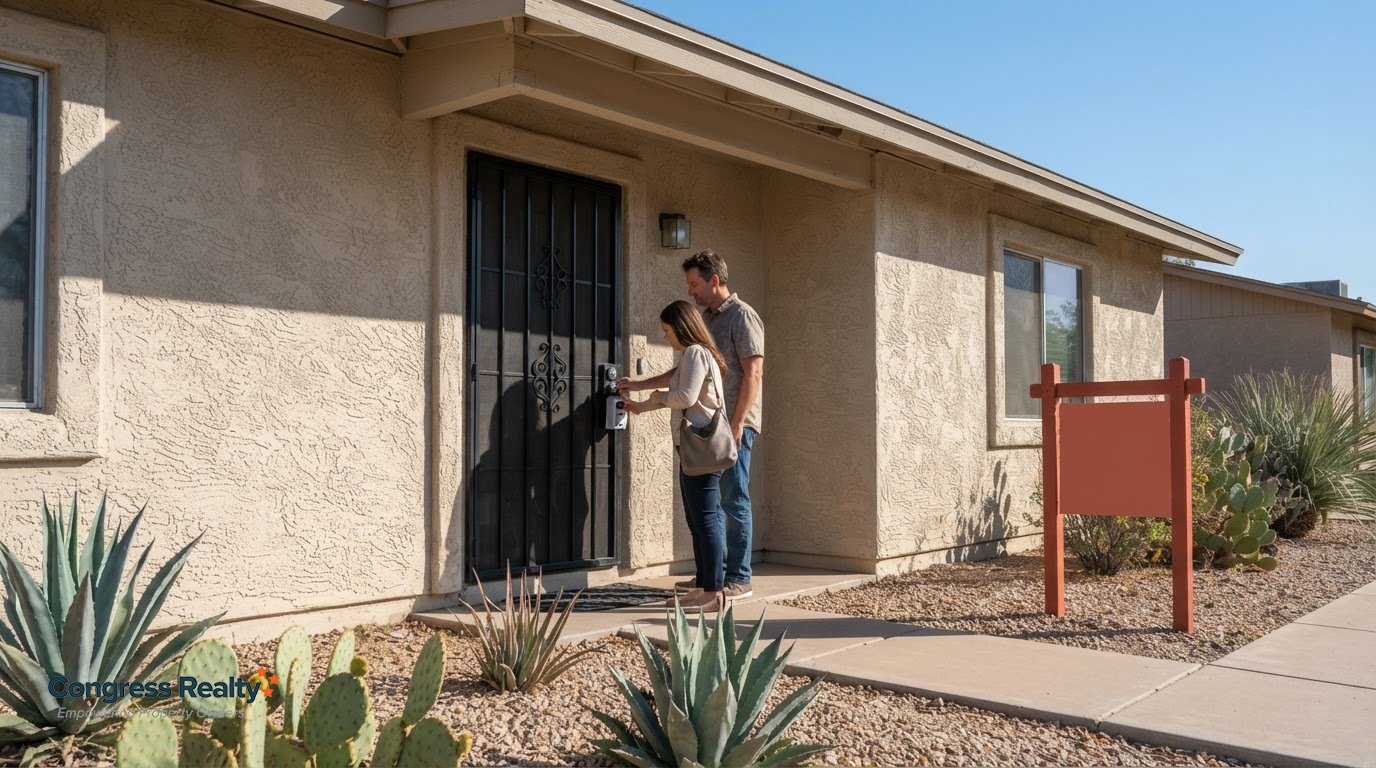
Congress Realty offers Multiple Listing Services for Phoenix homeowners who want their property listed on the MLS while managing the sale themselves. An MLS listing provides the same exposure as listings paid with a full commission. Sellers can pair the listing with an eLockbox, Yard Signs, or a Virtual Tour to support property access and marketing.
If you’re selling in Phoenix and want MLS exposure while staying involved in pricing, offers, and communication, consider how these options fit your plan. Contact Congress Realty to discuss your home sale needs.
Choose the selling approach that keeps you in control
Understanding why some agents avoid FSBO listings can help you decide which responsibilities you’re ready to manage and where you want support. Before taking the next step, outline your priorities for communication, access, and decision-making. A clear plan helps you choose an approach that fits your Phoenix sale.
Think about what you want to handle directly, then identify the tasks where added structure could make the process easier. Keep your priorities at the center of each decision.
Contact Congress Realty about your sale to discuss your next step. Move forward with a plan that reflects your goals and keeps you in command.
Frequently Asked Questions
Why would I still need to pay a 3% commission when selling FSBO?
You don’t automatically owe a 3% commission when selling FSBO. You may choose to offer buyer-agent compensation, and the buyer’s agreement may make the buyer responsible for any difference between that agreement and your offer. For example, if you offer no compensation, the buyer and their agent must follow their own agreement. Review proposed terms carefully before accepting an offer.
Why do some real estate agents avoid FSBO listings?
A short answer to why some agents avoid FSBO listings: the work, access, and compensation may feel uncertain. An agent bringing a buyer might need to coordinate directly with the seller, gather property details, and manage communication without another listing agent. Some agents may also assume FSBO sellers don’t want professional involvement. Explain your preferred process clearly so an agent can assess the specific transaction.
What legal and disclosure risks arise in FSBO transactions?
FSBO sellers are responsible for accurate property disclosures and contract compliance, so missing or incorrect information can lead to disputes, fines, or lawsuits. Requirements differ by state, and a seller without transaction experience may overlook an inspection or disclosure issue. For example, organize known repair records, inspection documents, and property details before answering buyer questions. Consistent written records can help reduce confusion during negotiations and closing.
How do FSBO deals compare with agent-listed homes in price and time to sell?
FSBO homes in the United States sold for about $55,000 less than agent-assisted homes in 2023, according to the market figure cited for that year. That difference doesn’t prove representation alone caused the gap. Time to sell also depends on pricing, exposure, showing access, buyer financing, and negotiation. Compare similar local properties and track buyer interest to judge how your sale is progressing.
Do FSBO sellers typically offer buyer-agent compensation?
FSBO sellers may offer buyer-agent compensation, and a 3% offer is commonly described, but it is optional and negotiable.
What does FSBO mean in real estate?
FSBO means “for sale by owner”: the homeowner sells independently rather than hiring a listing agent.