
Congress Realty is a flat-fee MLS brokerage serving Phoenix homeowners who want professional listing exposure and flexible support. If you’re deciding how much earnest money should I ask for, compare the proposed deposit with the buyer’s financing, contingencies, and the rest of the offer.
A larger deposit can signal a buyer’s willingness to commit more funds, but it does not make every offer stronger. A smaller deposit does not automatically mean the buyer is less serious. The purchase contract explains how the deposit is handled, including the delivery deadline and the conditions that may affect its return.
Use the full offer and relevant local evidence to evaluate the amount instead of relying on a one-size-fits-all rule. The steps below help you compare deposit size with price, financing, contingencies, and timing, then review the contract terms before you decide.
Key Takeaways
- Decide how much earnest money to request by weighing the property, buyer interest, and full offer terms, not by relying on a fixed rule.
- Compare deposit size with price, financing, contingencies, and closing timing to judge the offer as a whole.
- In Phoenix, use reliable, recent market evidence to inform your decision instead of assuming every offer follows the same pattern.
- Review the purchase contract’s deposit terms carefully, and document any negotiated changes in the signed agreement.
- Assess a buyer’s commitment without treating earnest money as a guarantee that the sale will close.
What Earnest Money Means for Phoenix Home Sellers
Congress Realty is a flat-fee MLS brokerage serving Phoenix sellers with MLS listing options.
Earnest money is a deposit connected to a buyer’s purchase offer. The buyer and seller agree on the amount and terms in the purchase contract. For a seller, the deposit can indicate that the buyer intends to move forward, but it cannot guarantee that the transaction will close or prove that the buyer can complete the purchase.
Evaluate the deposit alongside the price, financing, contingencies, and proposed closing timeline. A large deposit may look reassuring, but it cannot offset terms that raise other concerns. The contract sets the deadlines and explains how the parties and escrow holder should handle or disburse the funds. Review those written terms rather than relying on assumptions about what should happen.
What does an earnest money deposit communicate?
A deposit shows that a buyer is putting funds into the purchase process. It does not prove the buyer has strong financing, will meet loan requirements, or will complete the sale. Read the amount alongside the other offer terms. For example, compare a substantial deposit with the buyer’s financing plan and contingencies instead of treating the deposit as a stand-alone measure of offer strength. For a broader overview, see this reference on earnest money deposits.
Who holds the deposit and what controls it?
The purchase agreement identifies the process, including when the buyer must deliver the deposit and how the parties should handle it. A title or escrow company commonly holds the funds and follows the contract and applicable requirements. Don’t assume you can automatically keep the deposit if the transaction falls through. The contract’s conditions, deadlines, and disbursement terms govern what happens.
Separate your expectations from the written agreement. If you expect a particular amount or delivery date, make sure the offer states those terms. Then review the signed contract to confirm the final agreement. Pay attention to when each party must act, what happens if a deadline passes, and how the parties should handle a disagreement. Clear contract language matters more than assumptions about the deposit.
To decide how much earnest money to request, assess the full offer and the terms that control the funds. Use the deposit as one factor, not as a prediction of the outcome. That approach keeps your expectations grounded in the agreement and helps you compare offers carefully.
How to Decide How Much Earnest Money to Request
Weigh the property, buyer interest, and full offer terms together. No single deposit amount fits every sale. A higher amount can make a buyer’s commitment more visible, but it also asks the buyer to put more funds at risk. Set a reasoned position based on the offer, not an automatic percentage rule.
Use this process to evaluate a proposed deposit or decide what to negotiate:
- Start with the agreed price. Consider whether the proposed deposit feels proportionate to the purchase price. The same deposit represents a different share of two different offer prices, so don’t assess it in isolation.
- Gauge buyer interest. Consider how many offers you’ve received and how their terms compare with your priorities. Competing interest may affect your negotiating position, while the buyer’s comfort with the terms may affect what they are willing to offer.
- Review the complete offer. Compare the financing type, any information about funds, contingencies, and proposed closing timing. These terms help you understand the offer’s structure, though they do not prove the buyer’s ability to close.
- Check current local evidence. If you want to use a customary amount or range, base it on reliable, recent transaction information that matches the property and current conditions. The National Association of REALTORS® provides general context in its guide to Earnest Money & Escrow in Real Estate, but a broad reference is not a substitute for relevant local evidence.
Which property and market factors matter?
Price gives you a starting point, not a formula. Also consider the property’s characteristics and the level of buyer interest it has attracted. Several credible offers may give you more room to negotiate than limited interest. For a Phoenix sale, compare offers with recent, relevant local evidence rather than assuming one customary deposit applies to every property.
How should the buyer’s offer terms affect the amount?
Read the financing plan, stated funds, contingencies, and closing timing as a package. Terms that fit your priorities may make a moderate deposit acceptable. Terms that raise questions may lead you to review the agreement more closely or negotiate. Don’t infer financial strength from deposit size alone. A larger deposit can signal commitment, but it does not confirm loan approval or guarantee closing.
If you’re deciding how much earnest money should I ask for, use the offer and relevant market evidence to set a reasoned position, then consider the buyer’s response. A request that stretches the buyer’s comfort may not improve the offer overall. If you’re preparing your listing and offer strategy, Congress Realty’s home-selling support can help you keep the sale process organized.
How to Compare Earnest Money With the Rest of an Offer
A larger deposit can catch your attention, but it does not automatically make an offer stronger. Compare the terms that affect price, certainty, and timing. That gives you a clearer basis for choosing than ranking offers by deposit alone.
Deposit size is one component of offer strength. Assess it alongside price, financing, contingencies, and closing timing.
Use this framework to compare the terms in each written offer. The questions in the last column can help you spot trade-offs without treating any single answer as a guarantee.
| Offer term | What to compare | Question to ask |
|---|---|---|
| Deposit | Amount and contract terms for delivery and handling | Does it fit the offer as a whole? |
| Price | Proposed purchase price and other financial terms | Does the price meet your goals? |
| Financing | Financing type and information provided in the offer | What uncertainties should you consider? |
| Contingencies | Conditions and related deadlines | How might these affect the transaction timeline? |
| Closing timeline | Proposed date and fit with your plans | Can you work with this timing? |
Which offer terms can matter as much as deposit size?
Consider price alongside financing and contingencies. A higher price may come with terms that introduce more uncertainty, while a lower price may include conditions that better fit your priorities. Deadlines matter too. A proposed closing date that works for your next move can have practical value, while a timeline that conflicts with your plans can create pressure. Judge each offer by its written terms rather than by a general market assumption.
When might a smaller deposit still support a strong offer?
Hypothetical example: Offer A proposes a larger deposit but includes a financing plan and timing that leave you with questions. Offer B proposes a smaller deposit, a price you find acceptable, and a closing date that fits your plans. The smaller deposit does not prove the buyer lacks commitment. It gives you one more detail to weigh against the other terms and information available to you.
To compare offers fairly, write down your priorities before choosing: acceptable price, workable timing, and terms you understand. Then assess how each offer meets those priorities. Don’t assume a larger deposit resolves concerns about financing or contingencies, and don’t dismiss a smaller one without considering the full agreement.
If you’re still deciding how much earnest money to request, use the comparison to identify what matters most in your situation. The deposit can inform your decision, but the complete offer gives you the context to make it.
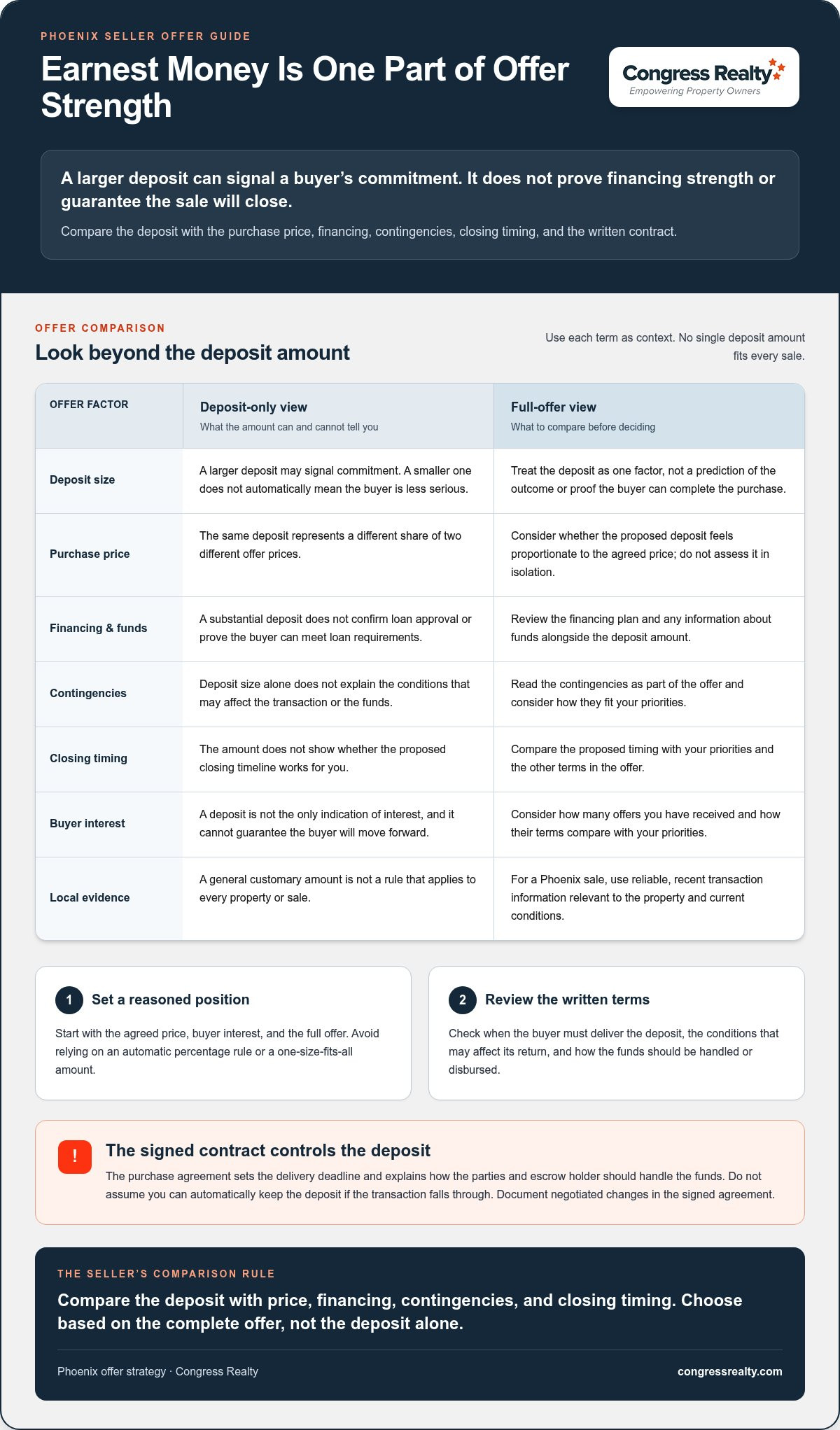
How to Negotiate Earnest Money and Protect the Contract Process
Negotiate the deposit as part of the written offer, not as a separate promise. Review the amount, delivery deadline, and contract language together. A clear process helps you understand what you agreed to and avoids relying on assumptions if the transaction changes course.
A negotiated deposit is part of the offer, not a guaranteed payment to the seller. A buyer who does not complete the purchase does not automatically forfeit the funds. The signed agreement and applicable requirements control how the deposit is handled.
Use this sequence to keep the discussion focused:
- Review the complete offer. Read the proposed deposit alongside the price, financing, contingencies, and timing. Consider whether the terms work together and fit your priorities.
- Identify the concern. Decide what you want to address. You may have questions about the amount, delivery deadline, or wording that leaves a term unclear.
- Negotiate specific terms. Discuss the deposit and related language in the context of the buyer’s interest and the full offer. A higher amount may show greater financial commitment, but it may also affect the buyer’s comfort.
- Document the agreement. Put any accepted changes in the written contract and make sure the signed version reflects the final terms. Don’t rely on informal conversations to change the contract.
What can a seller negotiate with the buyer?
You can negotiate the proposed deposit amount, when the buyer must deliver it, and the contract wording that describes how it will be handled. Be precise. If you and the buyer agree to a different deadline, record it in the agreement rather than treating a verbal understanding as a change. Evaluate each request against the full offer, including buyer interest, contingencies, and timing.
What happens if the sale falls through?
The signed agreement and applicable requirements determine what happens to the deposit. Contract terms may describe when the buyer can receive a refund and how the parties should handle the funds if they disagree. Your expectation of keeping the deposit does not replace those provisions. Review the relevant language carefully, and seek qualified legal guidance if you need an interpretation or face a dispute.
Before signing, confirm that the written terms match what you negotiated. Check the amount, delivery deadline, and any provisions that affect how the deposit may be released. Keep a copy of the fully signed agreement with your transaction records. When deciding how much earnest money should I ask for, focus on the full offer and the exact terms that govern the deposit, not on a promise about what might happen later.
For support with the broader sale process, explore Congress Realty’s home-selling options and keep your offer review organized from the start.
Plan Your Phoenix Sale With a Clear Offer Strategy
A clear sale plan helps you assess earnest money in context. Use relevant market evidence to understand buyer interest, then compare each offer’s price, financing, contingencies, timing, and contract language. The deposit matters, but it works best as one part of a consistent review process.
What should sellers prepare before reviewing offers?
Write down your priorities before offers arrive. Include the price you hope to achieve, your timing needs, and the conditions you’re prepared to consider. Then compare every offer using the same core terms. This approach makes trade-offs easier to spot and helps keep a striking deposit from overshadowing a term that matters more to your plans.
- Price: Note how each proposed amount fits your goals.
- Buyer terms: Review financing details and stated funds alongside the deposit.
- Contingencies: Identify the conditions and deadlines in each offer.
- Timing: Compare proposed closing dates with your next steps.
- Contract language: Check that the written terms match the offer you’re evaluating.
Keep this list nearby as you review offers. If you’re planning to sell your home independently, organizing your priorities in advance can help you approach each decision with a consistent framework.
How can a listing plan support informed decisions?
Your listing plan shapes how you reach prospective buyers and prepare for their offers. MLS exposure can help put your home in front of buyers and agents searching for properties. A thoughtful approach to pricing and buyer outreach can support an organized review of incoming offers, without promising a particular deposit or sale outcome.
Congress Realty provides flat-fee MLS listing options and seller support, including valuation guidance and transaction management. Choose the level of support that fits your needs while keeping your priorities in view. That support can help you stay organized across listing decisions and offer review, while you keep contract questions grounded in the written agreement.
If you’re still deciding how much earnest money should I ask for, return to the same practical framework: consider reliable market evidence, assess the buyer’s full terms, review contingencies, and understand the contract language. This gives you a reasoned basis for comparing offers without relying on a one-size-fits-all amount.
Explore Congress Realty’s flat-fee MLS listing and seller support as you prepare for your sale.
Make Your Next Sale Decision With Confidence
Before your home goes on the market, decide how you’ll organize offer details and what information you’ll need to make a confident choice. A simple plan can help you move from listing preparation to buyer conversations without letting one number drive every decision. Keep your priorities in view and judge each proposal on its own terms.
Congress Realty offers flat-fee MLS listing options and seller support that ranges from listing services to full-service assistance. Choose the level of support that fits how you want to manage your sale while keeping control of your decisions.
Ready to plan your Phoenix sale? Explore seller listing options with Congress Realty and choose the support that fits your needs.
Frequently Asked Questions
How much earnest money should I ask for when selling my house?
Choose an amount that fits the proposed price and the full offer instead of relying on a fixed formula. If you’re asking how much earnest money should I ask for, consider how the buyer’s financing, contingencies, and proposed timing affect your comfort with the offer. If you compare local norms, use recent evidence that matches your property and situation. The deposit alone cannot show whether a buyer can complete the purchase.
Is earnest money negotiable between a buyer and seller?
Yes. Buyers and sellers can negotiate the deposit amount and related terms as part of an offer. For example, a seller might discuss the amount or delivery deadline while also considering the buyer’s proposed price and closing date. Put any agreed changes in the written purchase contract so both parties can refer to the same terms.
Can a seller keep the earnest money if the buyer backs out?
Not automatically. Whether the seller can receive the deposit depends on the signed contract, the reason the buyer ended the transaction, and the steps each party took under the agreement. A buyer who cancels under a contract condition may have different rights from one who fails to meet an obligation. Don’t treat a buyer’s cancellation as proof that the seller can keep the funds.
What happens to earnest money when a home sale falls through?
The signed agreement and applicable requirements determine how the funds are handled. The contract may describe circumstances that allow a refund and the process for resolving a disagreement about disbursement. For example, the timing of a buyer’s cancellation notice may matter under the agreed terms. Review the specific provision before deciding what to expect, and seek qualified legal guidance if the parties dispute the deposit.
Does a larger earnest money deposit make an offer stronger?
A larger deposit can signal that a buyer is willing to commit more funds, but it does not automatically make the offer stronger. Compare it with the purchase price, financing details, contingencies, and closing date. A smaller deposit paired with a workable timeline may suit your plans better than a larger deposit attached to terms that create uncertainty. Consider the entire proposal before ranking offers.
When does a buyer typically deposit earnest money?
In many transactions, the buyer delivers the deposit within one to three business days after both parties accept the contract, but the written agreement sets the deadline. Some contracts may allow more time. Check the exact date and delivery instructions in the signed documents, then track the deadline as part of the transaction calendar. Don’t substitute an assumed local custom for the deadline stated in the contract.
Is earnest money the same as a down payment?
No. Earnest money is a deposit submitted during the transaction, while the down payment forms part of the buyer’s funds at closing. If the sale completes, the deposit is generally credited toward the buyer’s down payment or closing costs, according to the transaction terms. That credit does not make the deposit an extra fee or mean the seller receives it separately from the sale proceeds.