
Congress Realty is a flat fee MLS brokerage serving Phoenix with seller-focused listing and transaction support. For a homeowner, understanding real estate contracts for sellers means knowing what you’re agreeing to, what you can negotiate, and which obligations could affect the sale.
Unfamiliar terms can be difficult to interpret, especially when a missed deadline or unmet condition could disrupt closing. In Arizona, the standard purchase contract calls for sellers to deliver a completed Seller’s Property Disclosure Statement within three days of contract acceptance, according to iBuyer.com. That example shows why it’s important to track dates and responsibilities. This guide explains the key sections of a purchase agreement, including price, deadlines, contingencies, and disclosures. You’ll learn what to review before signing, where negotiation may come into play, and how to choose a level of support that fits your needs. Treat the contract as a decision map, not just a signature page, so you can approach your sale with more confidence and control.
Key Takeaways
- Understanding real estate contracts for sellers starts with identifying terms that affect your choices and obligations.
- Review earnest money, closing dates, included property, and financing conditions before accepting an offer.
- Your next step after accepting an offer depends on the signed contract and its conditions.
- Use a consistent review process to compare the full offer with your priorities before signing.
- Choose whether to manage documents independently or use professional transaction support. Congress Realty was founded in 2002.
What Does a Real Estate Contract Mean for a Home Seller?
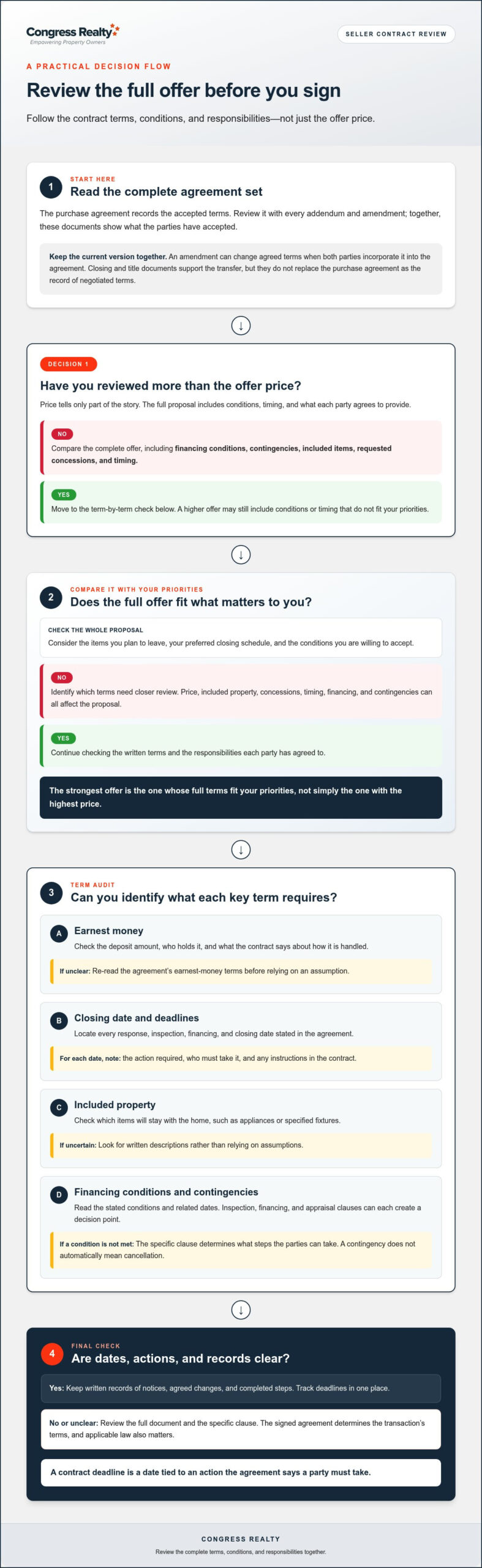
For a homeowner, understanding real estate contracts for sellers starts with recognizing that an accepted purchase agreement records the terms the buyer and seller agree to follow. It outlines the deal, from the proposed price to each party’s responsibilities. The signed agreement, any included addenda or amendments, and applicable state requirements shape the transaction. Read the complete set of terms, not just the signature page.
What documents make up a home-sale agreement?
The purchase agreement is the central record of the buyer’s offer and the seller’s response. It can identify the property, price, timing, and conditions the parties accept. Addenda can supply additional terms, while amendments can change agreed terms when both parties incorporate them into the agreement. Together, these documents show what the parties have accepted. A basic overview of a real estate contract can explain the general concept, but the documents and requirements that apply to your transaction matter most.
Keep the agreement distinct from later closing and title documents. Those documents support the transfer and closing process, but they don’t replace the purchase agreement as the record of negotiated terms. Keep the signed agreement and any later changes together so you can refer to the current version.
Why should sellers read beyond the offer price?
Price tells only part of the story. Review financing conditions, contingencies, included items, requested concessions, and timing. These terms can affect what you agree to provide, what steps the buyer must complete, and how the transaction may proceed. An offer with a financing condition, for example, may follow a different path to closing than an offer with different financing terms. A request to include appliances or provide a concession also changes the overall proposal.
A higher offer may include conditions or timing that don’t fit your priorities. Compare the complete terms with what matters to you, such as the items you plan to leave, your preferred closing schedule, and the conditions you’re willing to accept. This approach helps you evaluate offers without letting the headline number make the decision.
The strongest offer is the one whose full terms fit your priorities, not simply the one with the highest price.
Which Real Estate Contract Terms Should Sellers Understand First?
Start by locating the terms that define money, timing, property, and conditions. Their meaning depends on the signed agreement, so read each clause in context instead of assuming one rule applies to every sale. This is a practical foundation for understanding real estate contracts for sellers and tracking what you’ve agreed to do.
- Earnest money: Money the buyer deposits under the agreement to show intent to proceed. Check the amount, who holds it, and what the contract says about its handling.
- Closing date: The date the agreement sets for the parties to complete the sale. Review it alongside any other dates that affect the timeline.
- Included property: Items the parties agree will stay with the home, such as appliances or other specified fixtures. Look for written descriptions rather than relying on assumptions.
- Financing conditions: Terms that address how the buyer plans to pay and what happens if the buyer doesn’t meet the financing requirements. Read the stated conditions and related dates carefully.
- Contingencies: Conditions that may affect whether or how the transaction proceeds. The agreement’s wording determines what steps the parties can take if a condition isn’t satisfied.
How do contingencies affect the seller?
Inspection, financing, and appraisal conditions can each create a decision point, depending on the contract. An inspection condition may describe how the parties handle inspection findings. A financing condition may address the buyer’s ability to obtain financing. An appraisal condition may explain what happens if the appraised value differs from the price. None automatically means cancellation. Review the specific clause before deciding what an event means or what options it creates.
Which dates and responsibilities need close attention?
Find every response, inspection, financing, and closing date stated in the agreement. Note the action connected to each date, who must take it, and any instructions the contract gives. Keep written records of notices, agreed changes, and completed steps. The Arizona real estate law resource offers access to state laws and rules; the signed agreement still determines the transaction’s specific terms.
A contract deadline is a date tied to an action the agreement says a party must take. Track deadlines in one place and review the full document if a date or responsibility seems unclear. Sellers who want help managing the transaction can explore Congress Realty’s seller support options.
Can a Seller Back Out After Accepting an Offer?
Not automatically. The result depends on the signed contract, its conditions, and applicable law. Accepting an offer doesn’t create a simple, consequence-free exit. In Arizona, a seller generally can’t cancel a signed purchase contract just because a higher offer arrives. The contract may provide options if a buyer misses an obligation or a stated contingency isn’t met, but the specific wording controls.
Understanding real estate contracts for sellers means distinguishing among three situations that can look similar but have different implications:
- An open contingency: A contract condition remains active. The agreement may explain what happens if a party doesn’t satisfy it and what steps or choices follow. Read the clause and related dates before assuming the sale ends.
- A negotiated amendment: The buyer and seller discuss a change, such as revised timing or another term. Put any agreed change in writing and make sure it becomes part of the contract record.
- A unilateral decision: One party tries to end or change the agreement without the other party’s consent or a contract-based reason. That move may trigger a dispute or other consequences under the agreement and applicable law.
Don’t treat a contingency as an automatic cancellation button. It may create a decision point, and the contract may outline notices, deadlines, or other steps. A seller who walks away without an applicable contractual basis could face a claim for damages or other remedies, depending on the agreement and circumstances. Avoid assuming what will happen without reviewing the complete, signed documents.
What options may a seller have when circumstances change?
Start with the relevant clause and identify what changed, which party must act, and whether the contract sets a process or deadline. If both parties want to adjust the deal, they may discuss a written amendment or mutual agreement. If a buyer appears to have missed an obligation, the contract language and any required notice process matter. Don’t rely on a verbal understanding or assume that a difficult situation gives you an automatic right to cancel.
When should a seller seek contract-specific guidance?
Get careful review if a clause seems unclear, the parties disagree about performance, or you’re considering an action that could count as a default. Congress Realty’s Full Service support includes contract review and negotiation assistance, helping sellers understand the terms and consider next steps. The signed agreement and applicable law determine the outcome.
How Should Phoenix Sellers Review an Offer Before Signing?
Use a consistent review process before you sign or respond. It helps you catch missing details, compare the full offer with your priorities, and keep a clear record of what you accept.
- 1. Confirm the people and property. Check the buyer and seller names, property description, and identifying details against your records. Correct errors before signing.
- 2. Check the response window and proposed dates. Find the offer expiration, closing date, and other dates in the agreement. Make sure the timing works for your plans and clarifies what happens next.
- 3. Review the financial and financing terms. Compare the offered price with the buyer’s stated financing plan and any financing conditions. Consider the complete proposal, not just its headline amount.
- 4. Read the contingencies and requests. Note each stated contingency, requested concession, and item the buyer wants included. Review all attached documents, since they may add details or conditions.
- 5. Compare the offer with your priorities. Ask whether the price, timing, conditions, and requested items fit your preferred transaction. If a term seems unclear or conflicts with your plans, resolve the question before signing or responding.
- 6. Save the final signed version. Keep the original offer, any counteroffer, the signed agreement, addenda, and amendments together. Confirm that your records reflect the version both parties accepted.
How can sellers keep contract changes organized?
Use a simple checklist to track each open item, the person responsible, and the due date stated in the agreement. Update it as the parties complete steps or agree to changes. Keep written records of amendments and other agreed terms with the contract documents. Don’t rely on informal conversations as your only record of a change.
This process can make How to Sell Your House on Your Own easier to manage, from reviewing an offer to keeping transaction documents in order. Homeowners who want support while retaining control of their decisions can explore Congress Realty’s seller support.
How Can Contract Support Help Sellers Stay in Control?
You can manage transaction documents yourself or get professional support with the steps that follow an accepted offer. The right fit depends on how involved you want to be, how comfortable you are with contract details, and how much help you want tracking the transaction. Support can organize the process without taking decisions out of your hands.
Congress Realty, a flat fee MLS brokerage founded in 2002, offers Full Service support that includes contract review, negotiation assistance, and transaction coordination. These services can help you understand the agreement, work through proposed changes, and track transaction steps. You remain in control of the decisions you make.
What can transaction management help sellers track?
Transaction coordination can help keep milestones, documents, communications, and contract-stated deadlines organized. A clear record makes it easier to see what has happened, what remains open, and which action comes next. For example, you can track an outstanding document alongside its stated due date rather than relying on memory or scattered messages.
Cost also plays a part in choosing how much support you want. Compare the services involved with your preferred level of guidance as you consider listing costs. A broader look at Understanding Real Estate Commissions and Fees can help frame that decision.
How can sellers choose a support level that fits?
If you’re comfortable organizing documents, tracking dates, and reviewing contract terms, you may prefer to manage more of the process yourself. If you want experienced help with contract details and transaction follow-through, professional support can add structure while leaving you in charge. Congress Realty’s Full Service support combines contract review and negotiation assistance with transaction coordination, so sellers can get guidance at key stages while keeping their role in decisions.
For more context on listing options, explore The Ultimate Guide to Flat Fee MLS Listings. Understanding real estate contracts for sellers means knowing both the agreement and the level of support that helps you follow through on it. Homeowners can choose the amount of guidance that fits their needs and stay active in the process. Explore Congress Realty seller services to see how listing and transaction support can fit into your sale.
Congress Realty provides listing services in Arizona, Alaska, California, Idaho, Louisiana, Montana, Nevada, New Mexico, Oregon, Texas, Utah, and Washington.
Review the Terms, Then Choose Your Next Step
Understanding real estate contracts for sellers means looking beyond the offer price, tracking the conditions and dates that shape the sale, and keeping the signed agreement and updates organized. Before you sign or respond, compare the full offer with your priorities and clarify terms you don’t understand.
You can manage the process independently or choose professional help with contract review and transaction coordination. Congress Realty provides seller listing services in Arizona. Its Full Service support includes contract review, negotiation assistance, and transaction coordination, so sellers can get guidance while remaining involved in their decisions.
Take the next step at your own pace. Explore seller listing and support options and choose the level of assistance that fits your sale. With a clear review process and suitable support, you can move toward closing with greater confidence and control.
Frequently Asked Questions
What does a real estate contract include for a seller?
A seller’s purchase agreement typically records the property, parties, offer terms, deadlines, contingencies, and responsibilities the parties accept. It may also refer to addenda or later written amendments that add or change terms. The exact sections depend on the form and transaction. Read the entire document, not just the price, and make sure you understand what each condition requires before you sign or accept an offer.
Is a seller legally bound after accepting a real estate offer?
A seller’s obligations depend on the signed agreement, applicable law, and whether the parties have completed the steps the contract requires. Don’t assume you can ignore or change an accepted offer without consequences. Review the contract’s contingencies, deadlines, and other relevant terms. For a sale in Arizona, check the current state-specific requirements that apply to your transaction instead of relying only on general real estate guidance.
Can a seller back out of a contract after signing?
Sometimes the contract may provide a way to end the transaction, but the answer depends on its terms, the parties’ actions, and applicable law. Don’t assume you can cancel without consequences. Review any relevant contingency or termination language and keep written records of communications. If the parties dispute what the agreement requires or you’re unsure how to proceed, get guidance based on the specific contract before acting.
What happens if a seller misses a contract deadline?
The effect depends on the deadline and what the agreement says about a missed date. A deadline may connect to a notice, response, or other transaction step, or it may affect a contingency. Don’t assume every missed date has the same result. Identify the date and required action, record what happened, and review the relevant contract language promptly so you can understand what steps may follow.
Can a seller negotiate the terms of a purchase agreement?
Yes, a seller can respond to an offer by accepting it, rejecting it, or proposing changes, subject to the offer’s terms and applicable rules. Possible negotiation points include price, timing, contingencies, and included property. Put agreed changes in the written form required for the transaction, and keep the updated documents together. Review each revised version carefully before signing or accepting it so the final agreement reflects the terms you intend.
Should a seller have a real estate contract reviewed before signing?
A careful review helps you understand the offer, contingencies, dates, and responsibilities before you commit. Choose the level of support that reflects your experience and comfort managing the transaction. Congress Realty’s Full Service support includes contract review and transaction coordination. These services can help you follow the transaction and understand its documents while you remain part of the decision-making process. Review the Arizona-specific requirements that apply to your sale.